

Gigabyte W775-V10-L01 Power Consumption and Noise
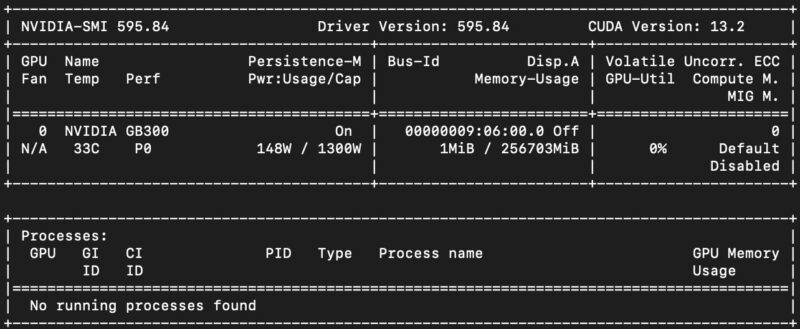
The NVIDIA Blackwell Ultra GPU uses around 148W at idle with a 1.3kW power cap.
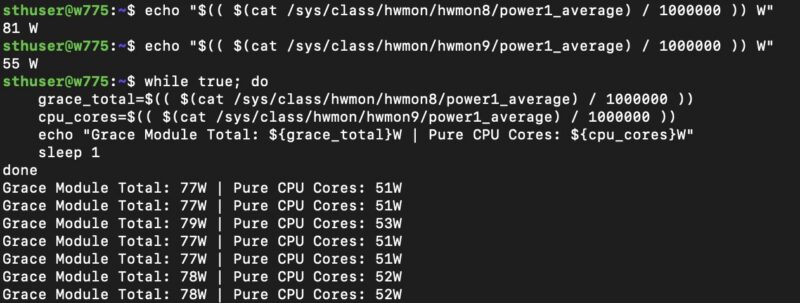
The NVIDIA Grace CPU module has a 300W power cap in the Gigabyte W775 but uses about 77-82W at idle for the module, and 51-54W of that is for the CPU cores.
Realistically, we did not see idle power running below 250W, but the 1.6kW limit is a big one. The Grace CPU and the Blackwell Ultra GPU have combined power limits of up to 1.6kW. There is still the NVIDIA ConnectX-8 SuperNIC, the cooling subsystem, NVMe storage, and various system bits like the Marvell AQC113 NIC, BMC, and more that are also competing for that 1.6kW power ceiling. On the noise scale, the Gigabyte W775 is impressive. We were generally in the 36-38dba range under lower loads, and we ramped into the 44-46dba range under a full load. You could hear it if it was churning, but it is nothing short of impressive what high-end liquid cooling does for the platform, as a 1.6kW desktop tower can easily turn into a jet engine that you would not want in an office. Gigabyte did a great job of making this something that can be deployed on working floors.
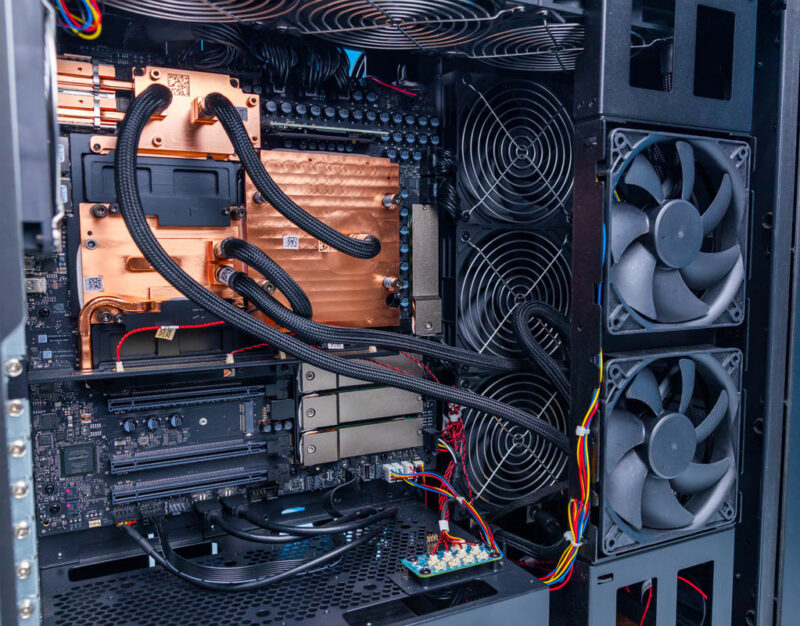
You may recall that NVIDIA allows a user to put a 300W+ GPU in the PCIe Gen5 x16 slot, and there are two other PCIe Gen5 x8 slots onboard. One idea is that you can use those slots to add storage. Still, all of these devices are competing for the same 1.6kW in the system, so a question becomes whether you would want to add local resources and lower the power available to NVIDIA’s high-end components.
Key Lessons Learned
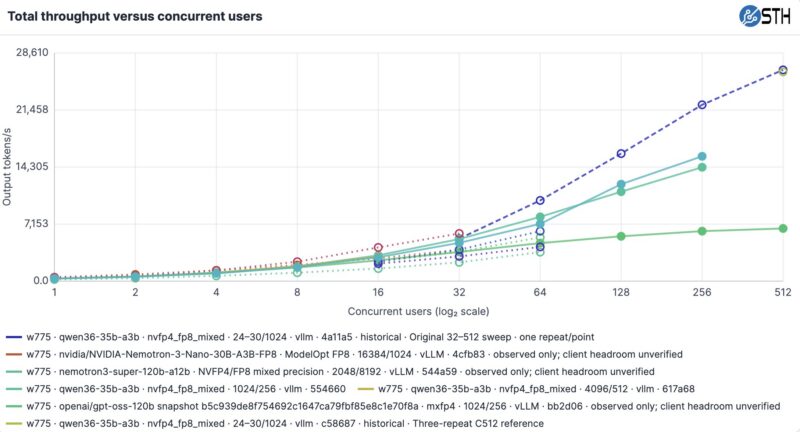
Whether you are running big models at 40-100T/s for a single user, or scaling smaller models to crazy numbers of concurrent agents and thousands, or tens of thousands of tokens per second, the performance of the Gigabyte W775 is truly awesome.
What we did not appreciate before getting these systems in-house is that they are not architected like a traditional workstation, where you would have a CPU, a GPU or two, and some memory, perhaps with a 10GbE or 100GbE NIC. Instead, NVIDIA architected this to have absolutely massive interconnect bandwidth when scaling out the Blackwell Ultra GPU and not limiting it by sending it through the PCIe Gen5-based Grace CPU. If you missed the networking or topology sections, they are worth going back to. We condensed the networking section because in the first draft it was almost two-thirds of this entire giant review. Perhaps that is worth a dedicated piece. Here is the diagram you need to see, though:
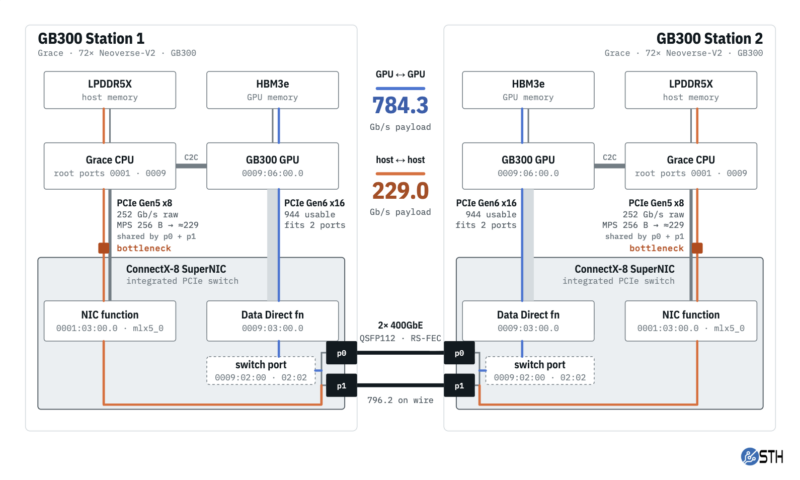
We have seen the NVIDIA Grace CPU before. We have seen a Blackwell Ultra. We have seen ConnectX-8 SuperNICs. Across generations, we have seen workstations with GPUs. The Gigabyte W775-V10-L01 is fundamentally different. It is designed around the Blackwell Ultra GPU. By “designed around the Blackwell Ultra,” I mean the system is built to maximize Blackwell Ultra performance locally and scale out to many of them on a network. That is easier to do in a data center. Gigabyte and NVIDIA did it in a relatively compact workstation that looks good and is surprisingly quiet.
Final Words
First off, the Gigabyte W775-V10-L01 is designed to go into an office, not a data center. It not only has solid acoustics, but it also looks good. When Sam and I were unboxing it, he had a giant smile because he loved the faceplate and thought it looked great. Sam is notably more hip than I am and has taken apart many of these GB300 AI Station-class systems, so that is a solid endorsement. Aside from the hardware, which I am excited about, success in this class depends on getting huge compute in a package that looks like it belongs in an office. Even pre-pandemic, I remember visiting Silicon Valley startups that had offices full of 8x GPU servers screaming. Those servers did not belong, but the W775 does.
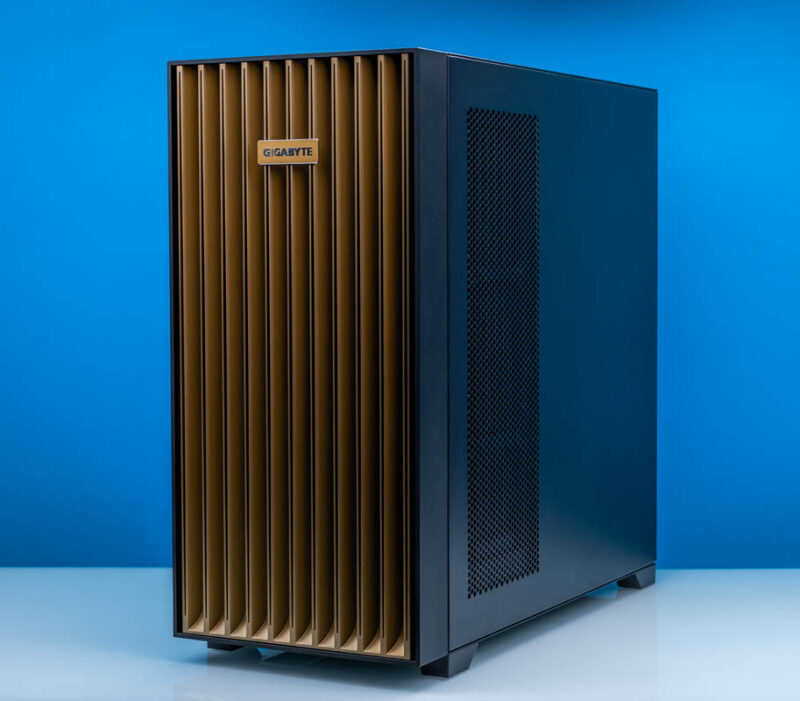
I know many folks are thinking of this as a scale-up from perhaps a standard workstation with 2-4 NVIDIA RTX Pro 6000 Blackwell Edition GPUs. After testing these systems, I think that is part of the story. What gets lost thinking of this as just a Blackwell Ultra GPU with HBM3E in a desktop form factor is that the Grace CPU with LPDDR5X offers a lot of performance both locally to the CPU and even when using the LPDDR5X over the C2C link to expand the GPU memory. Also, the network bandwidth on this platform is enormous, so using the Blackwell Ultra GPU over the high-speed network is a key design focus even if that is something we have not seen much buzz about.
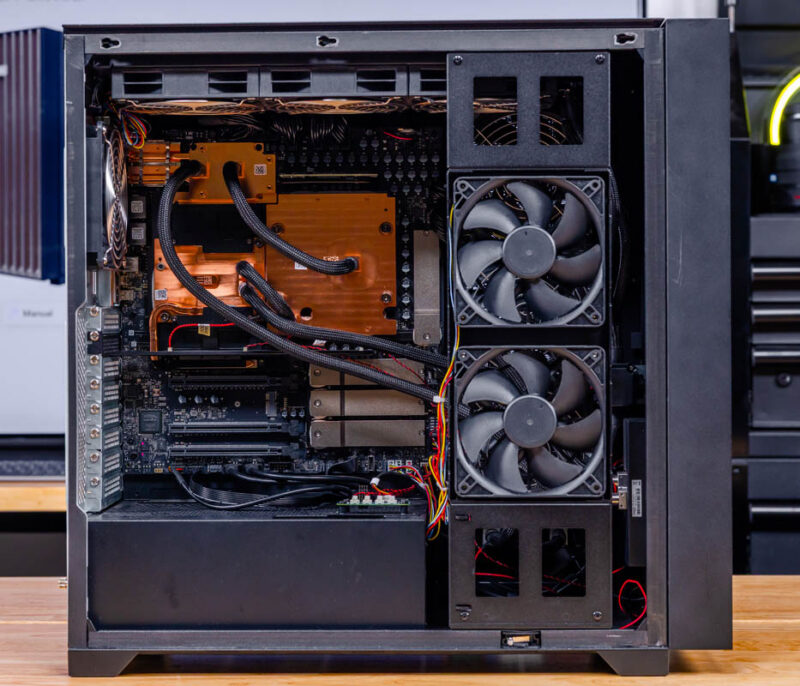
Building a hands-on piece like this takes a long time and our team across Ryan, Rohit, Sam, Eric, and Alex, so I just wanted to say thank you to them, while also acknowledging that this is so unlike other systems we have reviewed that it takes a lot to put together a perspective we can share. We were excited about the Gigabyte W775-V10-L01 when we thought of it as a better workstation. We ended up thinking of it more as a high-end developer workstation, and one of many that may serve the local AI needs of a workgroup or office.




There’s so much more in here than in the early reviews that made it sound like it’s a normal workstation. I watched and read other GB30 reviews, and I didn’t know about the 229Gbps limit. It’s a prime example of why STH is the best at this today, now that Anand is done.