

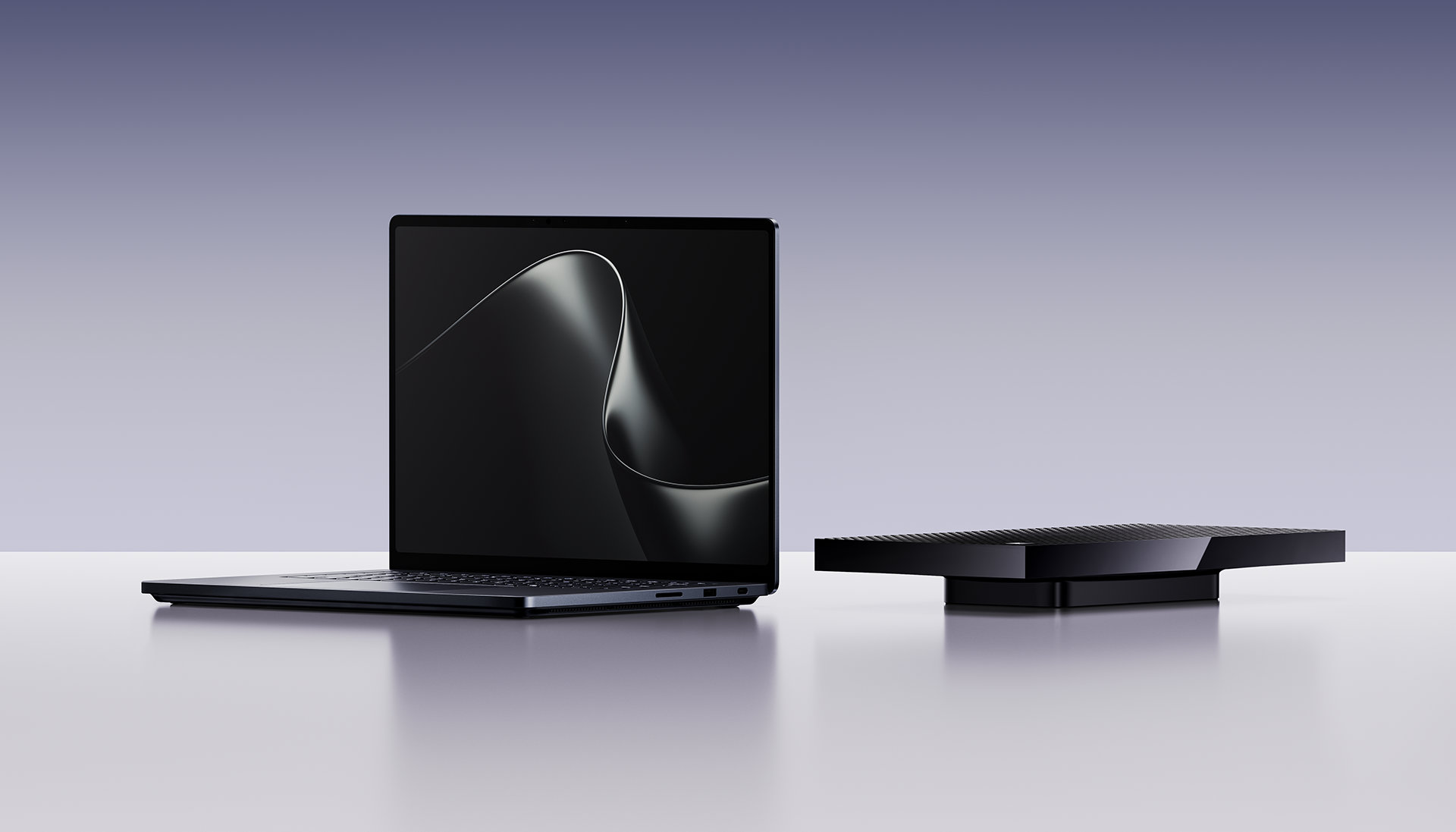
Microsoft today has formally launched its Surface Laptop Ultra, the first in a series of developer-focused machines from the company that are based around NVIDIA’s RTX Spark processor. The consumer iteration of NVIDIA’s GB10 chip, which has been gracing Linux-based AI mini-PCs for the past year as part of NVIDIA’s DGX Spark ecosystem, RTX Spark marks the chip’s formal entrance into the consumer market. And, for partner Microsoft, the company gets the honor of being one of the first vendors to ship an RTX Spark laptop with its Surface Laptop Ultra.
Itself the new face of Microsoft’s high-end laptop lineup, the Surface Laptop Ultra is a fresh effort to jump-start the Windows-on-Arm ecosystem with some powerful mobile hardware, all the while serving as Microsoft’s latest effort to woo developers and impress upon them the importance of developing for Arm, and not just for x86. The new Surface laptop is also a fresh broadside at perennial rival Apple and their MacBook Pro laptops, which have for the last several years successfully captured a surprisingly large chunk of the software developer market thanks in part to the strength of their Arm-based Apple-designed SoCs.
Consequently, the Surface Laptop Ultra is set to become an important product for Microsoft on multiple levels. Even though it is not a laptop for the broadest parts of the consumer market – with pricing starting at $2600, well above the standard Surface Laptops or Surface Pros – it has the potential to be the most important Surface laptop release from Microsoft in the last several years. But it also means that Microsoft has more riding on the Windows-on-Arm ecosystem than ever before, so the Surface Laptop Ultra needs to be a clear flagship showcase for the ecosystem, and for what Microsoft’s hardware design teams can do in conjunction with NVIDIA’s.
Meanwhile, launching alongside the Surface Laptop Ultra on the desktop is the Surface RTX Spark Dev box, Microsoft’s even more developer-focused RTX Spark mini-PC.
Microsoft Surface Laptop Ultra Specifications
First off, let us take look at the Surface Laptop Ultra’s specifications.
| Microsoft Surface Laptop Ultra Key Specs | |
| Processor Options | NVIDIA RTX Spark N1X 18-core, NVIDIA RTX Spark N1X 20-core |
| Operating System | Windows 11 Home (Entry-Level SKU) Windows 11 Pro (All Others) |
| Memory Options | 24GB – 128GB LPDDR5X |
| Storage Options | 512GB SSD (M.2 2280, PCIe Gen4), 1TB SSD (M.2 2280, PCIe Gen5), 2TB SSD (M.2 2280, PCIe Gen5) |
| GPU Options | NVIDIA Integrated Blackwell RTX 5120 GPU core, NVIDIA Integrated Blackwell RTX 6144 GPU core |
| Display | 15-Inch PixelSense, 3270×2180 120Hz, 2000nits Max Brightness, 100% DCI, Touchscreen |
| Battery | 92Wh |
| Form Factor | Laptop |
| Dimensions | 328.8 x 238.7 x 19.16 mm (12.95 x 9.40 x 0.75 in) |
| Weight | 2.0 kg (4.41 lbs) |
| Wireless | Wi-Fi 7 + Bluetooth 5.4 |
| Colors | Platinum (Gray) Nightfall (Black) |
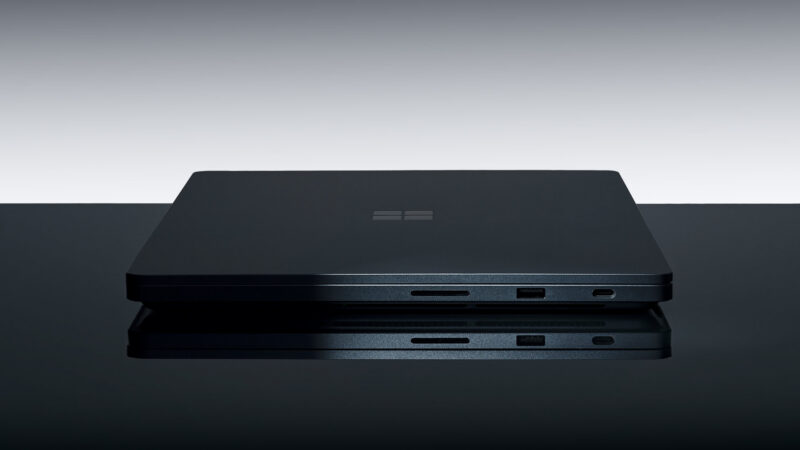
| Ports | Left: 1x HDMI 2.1b, 2x USB-C 40Gbps, 3.5mm Combo Audio Jack Right: 1x USB-C 40Gbps (Magnetic), 1x USB-A 10Gbps, SD Card Reader |
Microsoft is positioning the Surface Laptop Ultra as a premium laptop, and the specifications largely back that up. The 15-inch laptop weighs 2kg, in line with other productivity laptops and underscoring that although this is not an ultraportable laptop, it is not on the DTR-side of the spectrum, either.
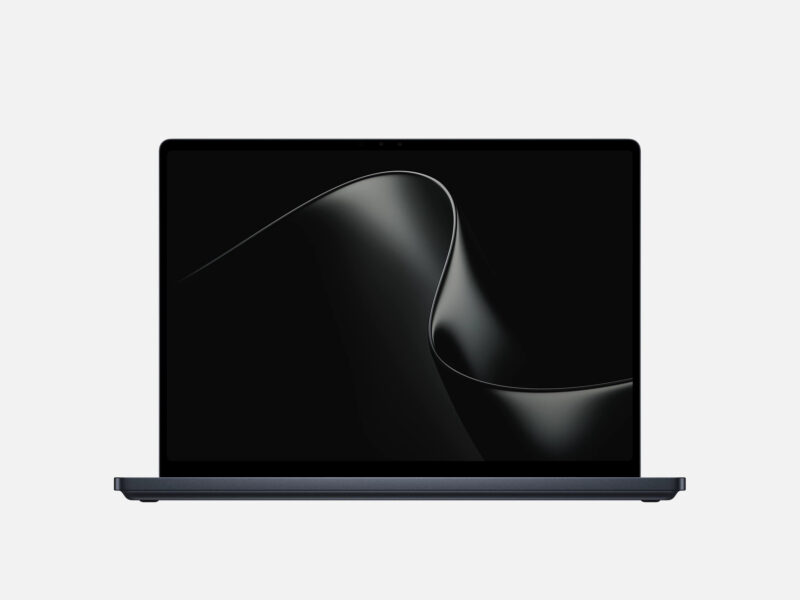
There are several configurations of the Ultra available, with the SoC, memory, and storage all configurable to an extent. The entry-level configuration features a cut-down version of the RTX Spark N1X chip, with 18 CPU cores and a 5120 core GPU configuration. On the CPU side of matters, Microsoft has not clarified whether the cut CPU cores come from the performance (Cortex-X925) or efficiency (Cortex-A725) core pools, so it is not entirely clear right now what the performance ramifications are for the lower-tier chip. Though at 2 CPU cores it is only a small fraction of the overall core collection.
The most configurable option is system RAM, which is unsurprising given the current extreme cost of RAM. Underscoring that this is not a standard consumer laptop, the minimum memory configuration here is 24GB, with further configurations for 32GB, 48GB, 64GB, and finally 128GB of LPDDR5X memory. Microsoft is taking a page from Apple’s book here and is tying memory and SoC options together: the 18 core RTX Spark can only be had with 24GB or 32GB of RAM, while the 20 core part cannot be had with anything less than 32GB.
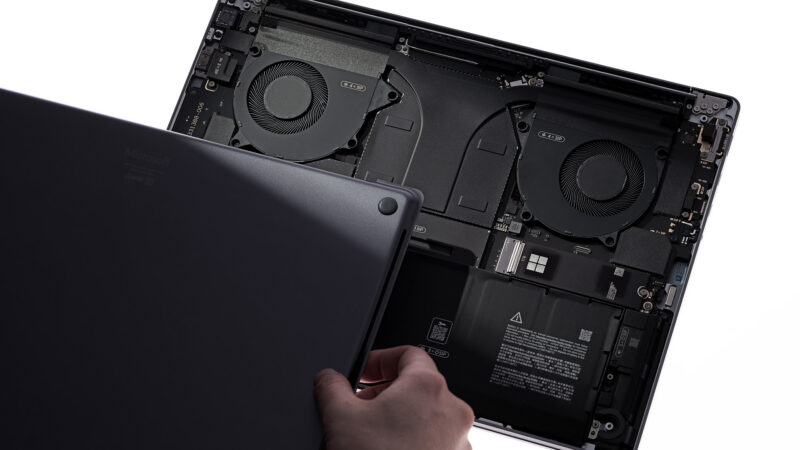
Meanwhile storage options range from a 512GB PCIe Gen4 SSD to a 2TB PCIe Gen5 SSD. Microsoft has confirmed that this storage is not soldered down and is user upgradable, and photos of the laptop posted by the company show that it accepts M.2 2280 form factor SSDs, allowing for a significant variety of upgrades if Microsoft’s offerings do not fit the bill.
All models of the Surface Laptop Ultra ship with the same 15-inch “PixelSense Ultra” touchscreen display. This is a 3270×2160 pixel panel in Microsoft’s Surface-trademark 3:2 aspect ratio. The LCD panel can run at refresh rates up to 120Hz and is capable of covering 100% of the DCI-P3 color space (with a D65 white point), thanks in part to its mini-LED backlighting system. This also means that the panel can provide HDR as well, with Microsoft touting a peak brightness of a staggering 2000nits. Though it is notable that Microsoft has not received DisplayHDR certification for the display, so we will have to see how accurate (and under what conditions) those brightness figures are once the system reaches consumer hands.
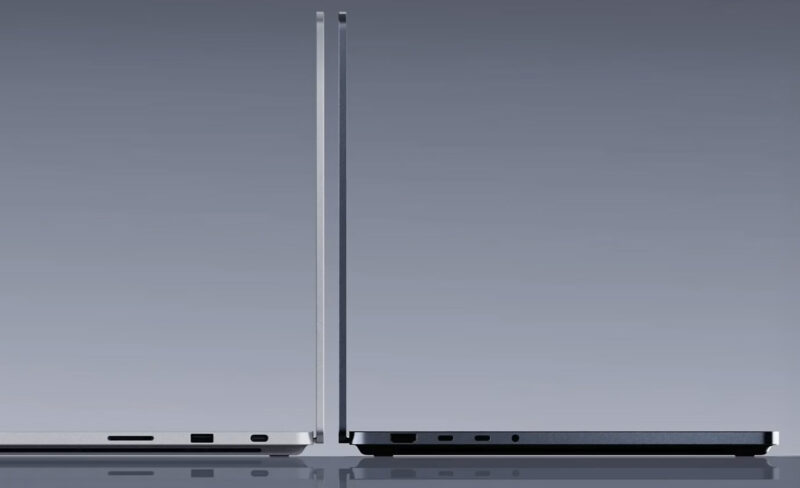
As for connectivity, Microsoft is making heavy use of USB-C here. All told, the laptop features three USB-C ports, all of which offer 40Gbps data rates. Meanwhile a lone USB-A port sits on the right side of the device for older devices. Alongside a dedicated HDMI 2.1b port, these USB-C ports also double as display outputs via DisplayPort Alt Mode. And being that this is a professional laptop, there is also a SD card reader on the right side of the laptop (though Microsoft has not specified what generation of cards it can accept).
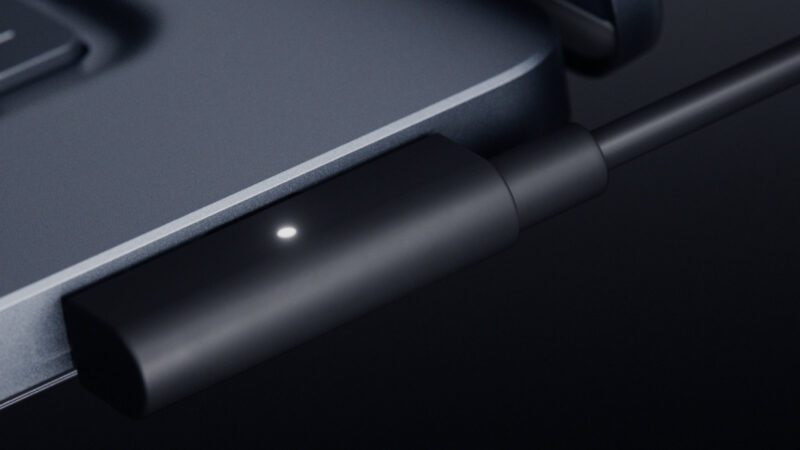
The most novel aspect here is arguably Microsoft’s solution to offering a magnetic charging port, which has traditionally been accomplished via their proprietary Surface Connect port. But for the Surface Laptop Ultra, the company has instead developed a magnetic USB-C port, which they have dubbed “Magnetic Connect.” The magnetic USB-C port places magnets around both sides of the port to secure the charging cable, allowing the area around the port to be magnetized while keeping the port itself to USB specifications. The laptop is capable of charging from any of its USB-C ports, and Microsoft’ magnetic charging cable is not required, but only the USB-C port on the right side of the system is magnetized.
Powering the system when it is not plugged in is a 92Wh battery. Microsoft has not said too much about its chemistry or cell structure, though it is otherwise just a bit under the maximum ceiling for a laptop battery. In terms of real-world performance, the company is making high-level claims of 15 hours of video playback, or 12 hours of “active web usage.”
As for operating systems, in a curious move, the version of Windows that ships with the Ultra will depend on the memory configuration. 32GB and higher configurations all come with Windows 11 Pro. However, the entry-level 24GB configuration gets downgraded to Windows 11 Home, despite the laptop’s overall price tag and professional audience target.
Finally, taking a look at pricing, with multiple system configurations the Surface Laptop Ultra covers a wide swath of prices. The entry-level tier laptop with an 18 core CPU, 24GB of RAM, and a 512GB kicks things off at $2600. Meanwhile the cheapest model with a full configuration RTX Spark chip, which also brings the memory up to 32GB and 1TB of storage, carriers a $3700. Finally, at the very high end, the most expensive configuration with 128GB of RAM and a 1TB SSD runs for $5900. While a hefty price tag for a laptop, this high-end configuration is surprisingly competitive; the cheapest 14-inch MacBook Pro with the same amount of memory is $800 more, so Microsoft is noticeably undercutting Apple on this front.
Surface Laptop Ultra: For Creators, Developers, and AI Builders
The Surface Laptop Ultra’s hardware specifications paint a picture of a laptop chiefly aimed at the professional market, and this is primarily how Microsoft is promoting the system as well. Rather than being an all-around consumer and professional laptop ala the Surface Pro or Surface Laptop lineups, the company has their eye especially focused on professional users and their workstation-light workloads for this latest laptop.
The biggest factor here is that this is the most powerful (and highest memory capacity) laptop with a unified memory pool that they have been able to offer to date. We have spilled plenty of ink about the GB10 SoC in this regard over the last year, so we will not repeat ourselves in depth here, but the integrated Blackwell RTX GPU is leaps and bounds ahead of the integrated GPU in any previous Surface portable device. And because it uses the same LPDDR5X memory pool as the rest of the system, it can gain access to far more memory than any discrete NVIDIA laptop chip (which top out at 24GB). All of which allows the system to run far larger AI models than any earlier Surface laptop.
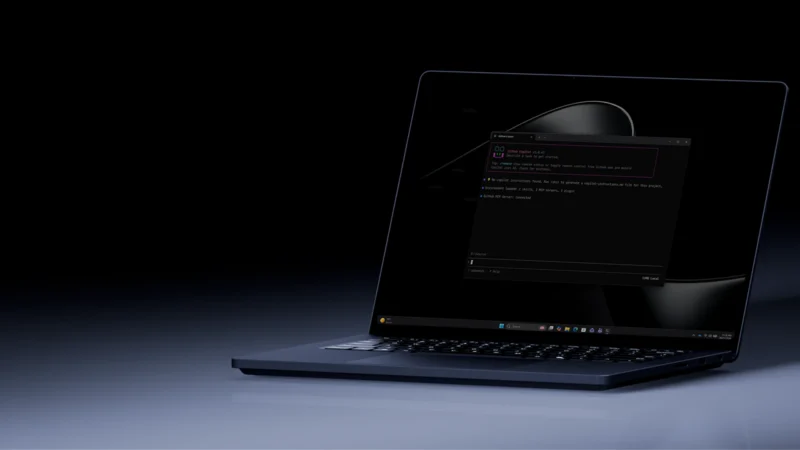
The launch of the laptop comes alongside a broader push for AI at Microsoft, which is putting together a fresh take on the subject after 2024’s Copilot+ efforts fizzled. Microsoft’s new tack is “hybrid intelligence,” using local models where appropriate, while making it easy for tasks to switch over to cloud services when additional performance is required. Though it is certainly a more developer-focused approach overall.
Besides the hardware itself, Microsoft has begun to ship its new container format, Microsoft Execution Containers (MXC) to Windows users, providing a native alternative to Docker containers. In regards to AI workloads in particular, Microsoft’s containers are one means to contain AI agents by keeping them boxed up in their own instances.
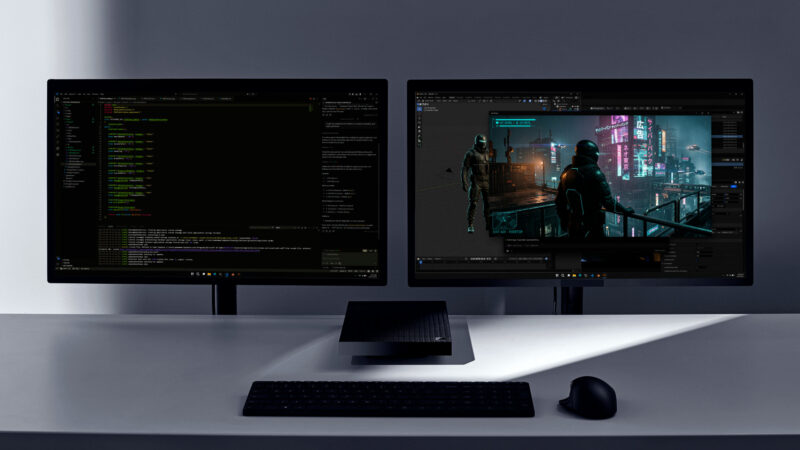
The company is also in the process of rolling out a few different AI models to developers for coding purposes. Given their partnership with NVIDIA, it should come as no surprise that they will be bringing a Nemotron model to the market, planning for a 70B parameter model – albeit one quantized to 2-bits to keep the overall size around 20GB. Microsoft’s own MAI Code 1.1 Flash model is also available, which is a 3-bit model that Microsoft recommends using systems with 128GB+ of memory (e.g. the top Surface Laptop Ultra configuration).
Though even with their developer focus, Microsoft is still improving their user-focused agentic Autopilot offerings as well. The latest hybrid intelligence version of Copilot is designed to take a more active role (when requested), reviewing local files and activity for context, and then taking action on the local system. The actual compute driving all of this can be done locally, or via cloud services.
Surface RTX Spark Dev Box Launching as Well
Finally, alongside Microsoft’s RTX Spark-powered Surface Laptop Ultra, the company is also launching their even more strongly developer-focused RTX Spark mini-PC today, the Surface RTX Spark Dev Box.
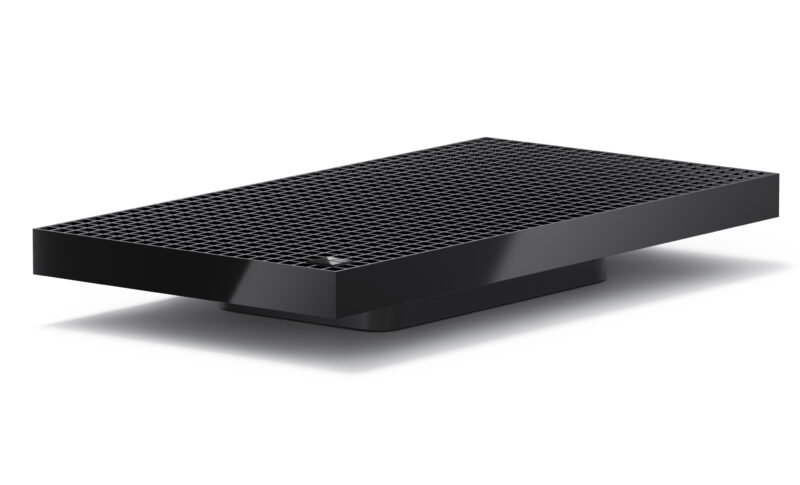
First announced alongside the Surface Laptop Ultra earlier this summer, the Surface RTX Spark Dev box is essentially Microsoft’s Windows-centric take on the Linux-based DGX Spark/GB10 development boxes that NVIDIA and its OEMs have been releasing over the last year.
| Microsoft Surface RTX Spark Dev Box Key Specs | |
| Processor | NVIDIA RTX Spark N1X 20-core |
| Operating System | Windows 11 Pro |
| Memory | 128GB LPDDR5X |
| Storage | 2TB SSD (PCIe Gen5) |
| GPU | NVIDIA Integrated Blackwell RTX 6144 GPU core |
| Form Factor | Mini-PC |
| Dimensions | 326.5 x 172.0 x 42.9 mm (12.85 x 6.77 x 1.69 in) |
| Weight | 2.0 kg (4.4 lbs) |
| Wireless | Wi-Fi 7 + Bluetooth 5.4 |
| Ethernet | 1x 10(?)GbE |
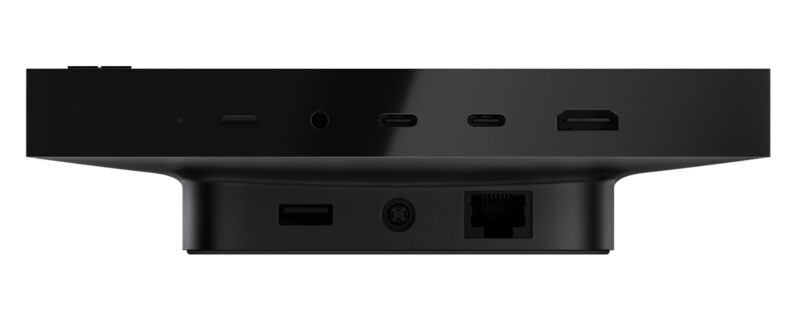
| Ports | Rear 1x HDMI 2.1b, 2x USB-C 10Gbps, 3.5mm Combo Audio Jack, 1x USB-A 5Gbps, 1x RJ45 Ethernet Jack |
The Dev Box is available in a single configuration, with a full RTX Spark SoC that’s paired with 128GB of LPDDR5X and a 2TB SSD. The Windows software stack aside, the hardware is very similar to the GB10 boxes we have seen so far, including a pair of 10Gbps USB-C ports, an HDMI 2.1b display output, and an Ethernet port (presumably 10GbE, though this remains unconfirmed).
The biggest difference setting apart the RTX Spark Dev Box from its DGX counterparts is high-speed networking. There are no ConnectX-7 powered QSFP ports here, and as a result the system is not trying as hard to be a miniature GB200 system as the DGX Spark was. Though this also makes it a lot cheaper than the DGX Spark, especially considering the recent price hikes.
Internal specifications aside, the Surface RTX Spark Dev Box is housed in an all-aluminum chassis with a rather distinctive layered design, with a larger layer stacked over a smaller layer – something akin to an inverted ziggurat. The entire top of the system is all ventilation, with Microsoft stating that there are 1000 holes altogether.
Microsoft is pre-loading the system with Windows 11 Pro and a full suite of development tools. These include Visual Studio Code, GitHub Copilot, WSL, and PowerShell 7. By and large this is comparable to what we have seen with Linux AI dev kits released thus far, though with a distinct Windows twist.
All of this hardware and software will come with quite the price tag, however. The Surface RTX Spark Dev box will retail for $6000, making it even more extensive than the top-end Surface Laptop Pro configuration.
Final Words
The launch of the Surface Laptop Ultra and adjacent Surface RTX Spark Dev Box marks an important moment for Microsoft both as a hardware company and as a software company. On the hardware side of matters it is Microsoft’s most forceful push into the professional laptop space yet – and really, their most explicit effort to directly counter Apple’s MacBook Pro lineup, especially with the use of an Arm-based SoC. Meanwhile on the software side of matters, this marks the first time this decade that a vendor besides Qualcomm has been tapped to provide the SoC for a Windows box, expanding the Windows-on-Arm ecosystem by that much more.
Today’s announcements also mark the embarkation point for NVIDIA’s RTX Spark platform as a whole. Alongside Microsoft’s own announcements, Dell, Asus, and several other vendors have all similarly announced their RTX Spark-based offerings today, all of which are making a similar play for the high-end/developer markets. The SoC itself is not as new as NVIDIA likes to portray it, as this is fundamentally the same GB10 we have been looking at for the last year, but along with marking the first time we have seen it powering Windows machines, this marks the first time that it has been available in laptops. Though with today’s event being a Microsoft event rather than an NVIDIA event (despite an appearance from NVIDIA CEO Jensen Huang), we do not expect that this will be the final word from NVIDIA on the RTX Spark ecosystem.
All of this will kick off in earnest for consumers on October 16th. That is when Surface Laptop Ultra, Surface RTX Spark Dev Boxes, and the rest of the RTX Spark devices announced today will begin shipping. In the meantime, Microsoft and other retailers have already begun taking pre-orders for devices.




No Linux no use. Nvidia should instead create a consumer (prosumer) version of DGX OS for this. (It can even run Steam games. Would probably run the new Googlebook OS too.)