

HP ZGX Nano G1n Power Consumption
Our ZGX Nano G1n came with a 240W Delta power adapter that terminated into a USB PD Type-C connector.
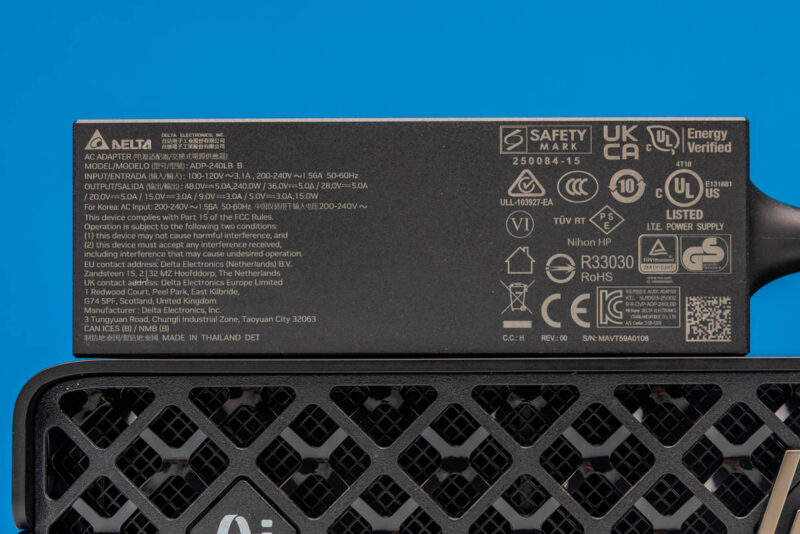
At idle, we were in the 37-40W range. This is much higher than mobile-focused Arm CPUs and iGPUs. On the other hand, one should remember that this also includes the NVIDIA ConnectX-7 NIC. Removing the connection can save something like 18W, but you are likely going to have it connected if you scale up.
Officially, this is a 240W box, but we saw peaks just under 200W, and the sustained load was generally in the 100-158W range, depending on what was running. Frankly, with many LLMs, this will run in the 110-140W range. There is probably room to increase power consumption from where we were, but overall, this is a good result.
Final Words
While HP’s GB10 system is largely chained to NVIDIA’s design specifications in terms of functionality and configuration, HP has still been able to put together a solid system that rivals NVIDIA’s flashy gold box.
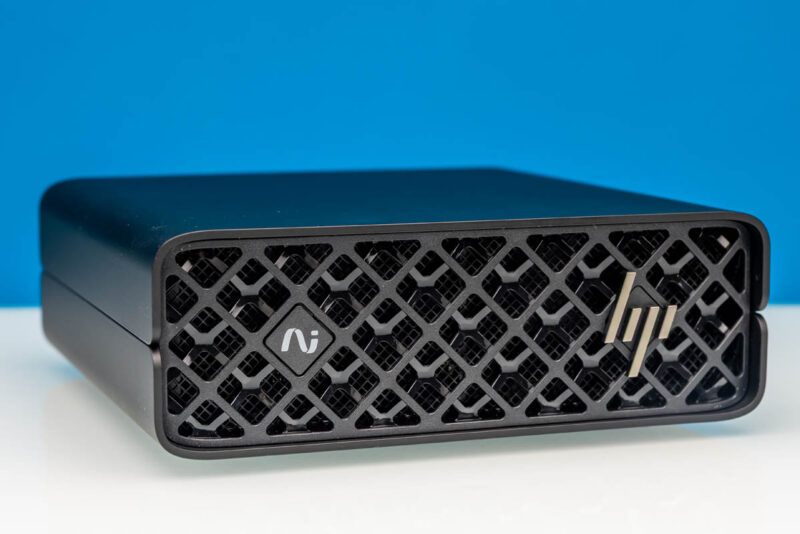
On the whole, all of these GB10 systems are quite similar to each other, and this is by design. There is no such thing as a bad GB10 box, and as we have seen in our benchmarks, they all perform quite similarly to each other. That also means that, outside of pricing – which continues to be highly volatile – most of what differentiates these GB10 systems from one another are the aesthetics and the vendor providing the final system. In this case, the vendor is, of course, HP, one of the world’s largest OEMs.
HP’s name comes with a lot of weight, as its corporate customers can attest to. It also comes with the heaviest price tag of them all. At the time this review was written, the ZGX Nano G1n had the highest price we have ever seen for a GB10 system, at $7,399 for the 4TB model we reviewed today when ordering directly from HP. Even the 2TB model is $6,499, and the 1TB model is completely sold out. Meanwhile, NVIDIA is currently selling its own comparable 4TB DGX Spark for just $4,699.
At thousands of dollars more than other GB10 systems, there simply isn’t a compelling reason to buy HP’s GB10 system unless you specifically need an HP system. It is a perfectly fine AI development workstation, but with all of these GB10 systems being so close to one another, NVIDIA’s partners cannot avoid competing on price. Which means systems like HPs are inevitably going to be positioned against the other, cheaper GB10 boxes available elsewhere.
The silver lining for HP’s bread-and-butter corporate customers, at least, is that they rarely pay sticker price for the hardware. So while the ZGX Nano G1n has all but priced itself out of the retail market, corporate customers may find something more to their liking.
Where to Buy
If you wanted to find the HP ZGX Nano G1n online, here is an Amazon Affiliate link and an HP affiliate link.

Why is the power port labeled 20gbps? Can you power it with a dock and use that for connectivity?
The prices of this one has been in flux quite a bit. I picked a 1TB one up at the start of the year at a retailer here in NYC for $3200, and it was the cheapest of the GB10 systems available at the time.
I wonder what HP’s pricing strategy is for this
@Jack
We haven’t specifically tested this, but that is a fully functional 20Gbps USB-C port. So if you do have a device that can pass power as well as data (such as a docking station), then it would absolutely work.
It just happens to be the only USB-C port on the PC that can work as a power input.
Is there any power indicator on the front of this box – glowing logo or otherwise or is it like the Lenovo PGX? I expected the PGX to have the glowing red LED in the ThinkStation lit up as the power indicator like it is on literally every other Lenovo machine I have and was surprised that it didn’t light up, so curious about this one.