

HP ZGX Nano G1n Internal Hardware Overview
Hidden beneath the rubber feet of the G1n are four screws, which hold the bottom plate of the system on the machine. Removing those gives us access to the only user-serviceable parts in the system.
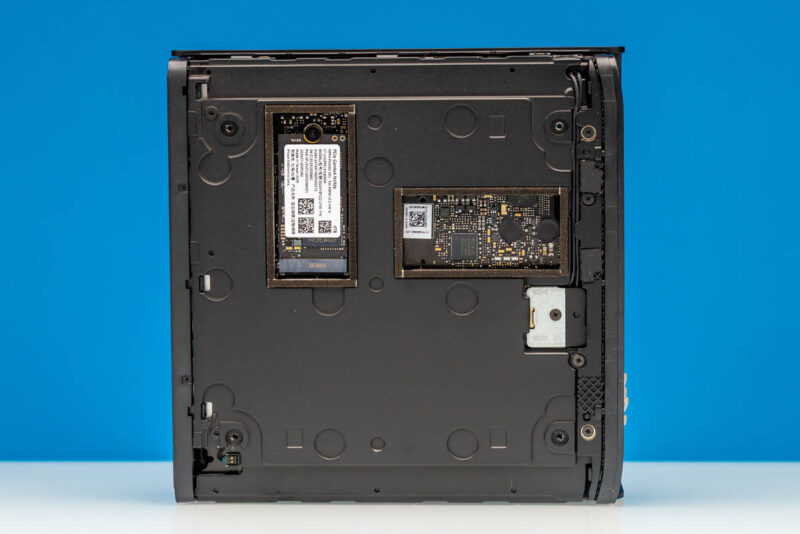
Inside the system, we find a second metal plate running around most of the system with two metal cutouts in it. Towards the top, we have the SSD. Towards the right, we have a seemingly vestigial cutout with no obvious purpose or user-accessible components to access. Of all of the GB10 systems we have looked at, this is the first time we have seen something like this.
In any case, housing the SSD we have a M.2 2242 (42mm) slot, so the G1n is not able to take full-size (2280) SSDs. That said, the 2242 form factor still provides enough space for up to 4TB of NAND in the current generation of drives, and HP offers G1n configurations with 1TB, 2TB, and 4TB configurations for storage.
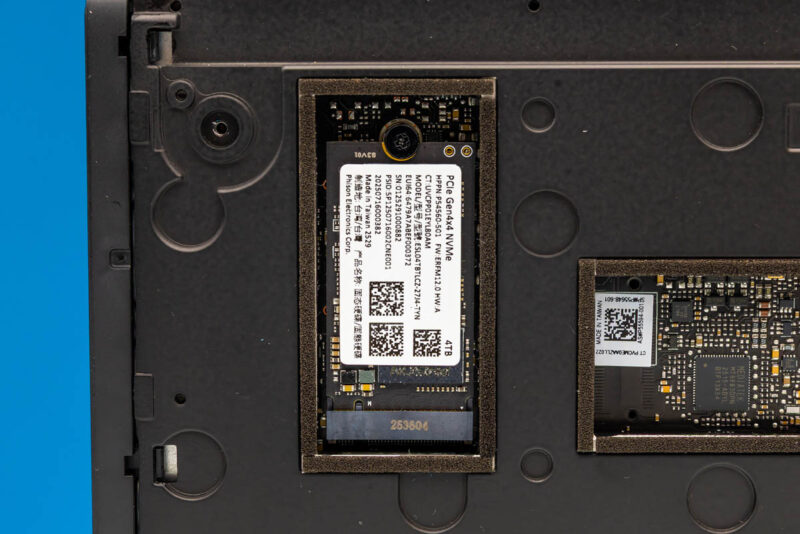
Internally, the M.2 slot is wired up to a PCIe Gen5 x4 root port, meaning the slot supports the latest and greatest in SSDs. However, checking out HP’s spec sheet, the G1n only ships with PCIe Gen4 drives in all configurations, so HP is not taking advantage of the additional I/O bandwidth. This means that GB10 buyers needing the greatest possible SSD bandwidth (for burst workloads, at least) will want to take note, as there are other GB10 systems that do ship with faster PCIe Gen5 SSDs.
The 4TB drive included with our review sample is labeled ESL04TBTLCZ-27J4, which to the best of our knowledge is 4TB SSD based on a Phison ET27 controller and paired with TLC NAND.
Meanwhile, with a little more work, we are able to remove the top of the system as well. Gaining limited access to the cooling system.
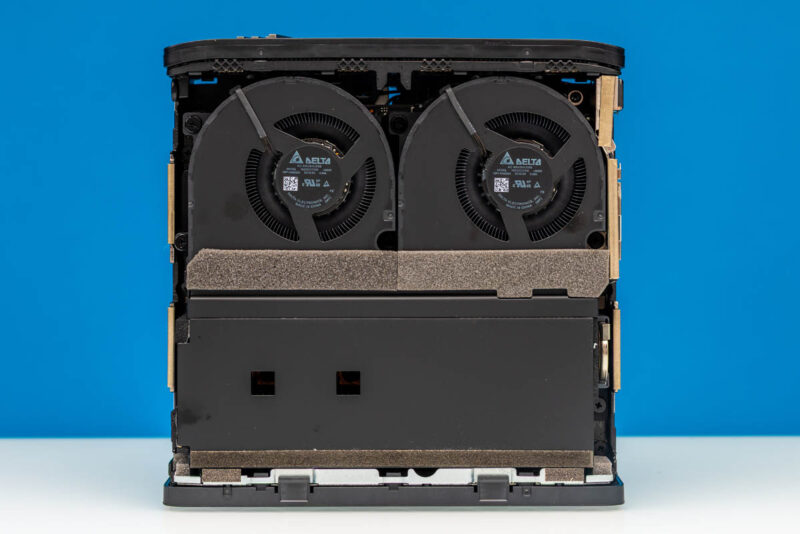
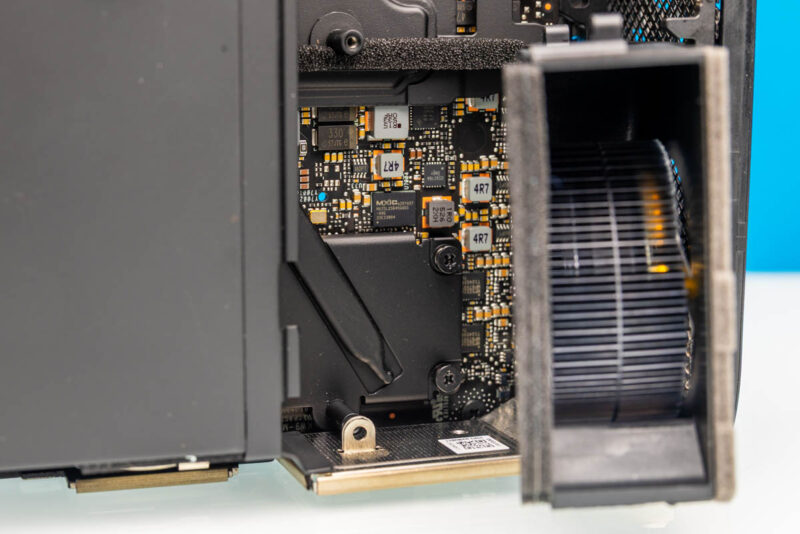
Providing cooling for the system is a sizeable heatsink, with two Delta fans pushing air through it. Each is labeled as consuming 6 Watts of power.
Moving the fans out of the way, we get a bit of access to the motherboard for the system.
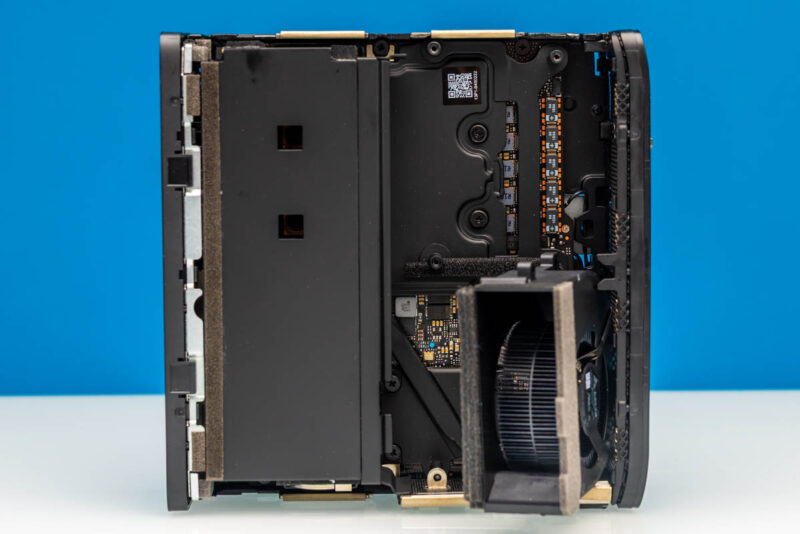
Though with its high cooling needs relative to its compact size, we find that pretty much every chip of note is covered by a copper base plate, with heat pipes leading back to the heatsink.
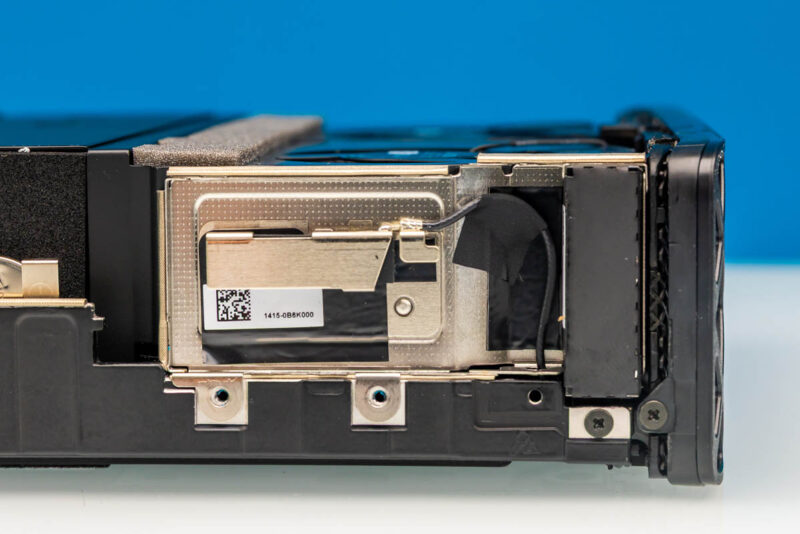
Looking elsewhere, we can also catch a glimpse of one of the two antennas in the system. HP has placed it along the left edge of the chassis.
And that is the insider’s tour. With the heavy use of soldered-down components and the compact nature of all of these Spark-alike systems, we are essentially looking at a large cooler very firmly attached to a motherboard full of high-performance components.
With the tour complete, it is time to get the ZGX Nano G1n up and running.


Why is the power port labeled 20gbps? Can you power it with a dock and use that for connectivity?
The prices of this one has been in flux quite a bit. I picked a 1TB one up at the start of the year at a retailer here in NYC for $3200, and it was the cheapest of the GB10 systems available at the time.
I wonder what HP’s pricing strategy is for this
@Jack
We haven’t specifically tested this, but that is a fully functional 20Gbps USB-C port. So if you do have a device that can pass power as well as data (such as a docking station), then it would absolutely work.
It just happens to be the only USB-C port on the PC that can work as a power input.
Is there any power indicator on the front of this box – glowing logo or otherwise or is it like the Lenovo PGX? I expected the PGX to have the glowing red LED in the ThinkStation lit up as the power indicator like it is on literally every other Lenovo machine I have and was surprised that it didn’t light up, so curious about this one.