

Dell VEP4600 Power Consumption
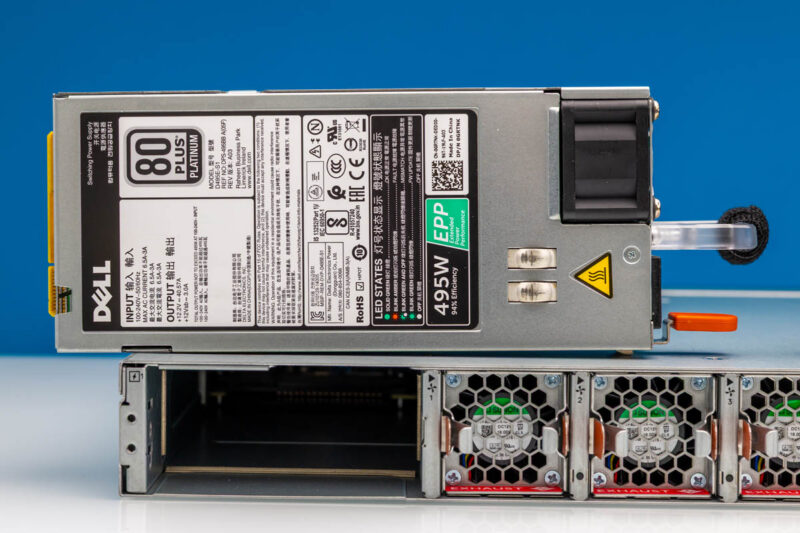
Our system came with two 80Plus Platinum 495W Dell power supplies. For this era and class of edge systems, that was actually a high-efficiency and premium power supply.
Idle was not great, at 65-70W in our configuration. That is lower than modern large servers, but it probably does not qualify as a low-power device.
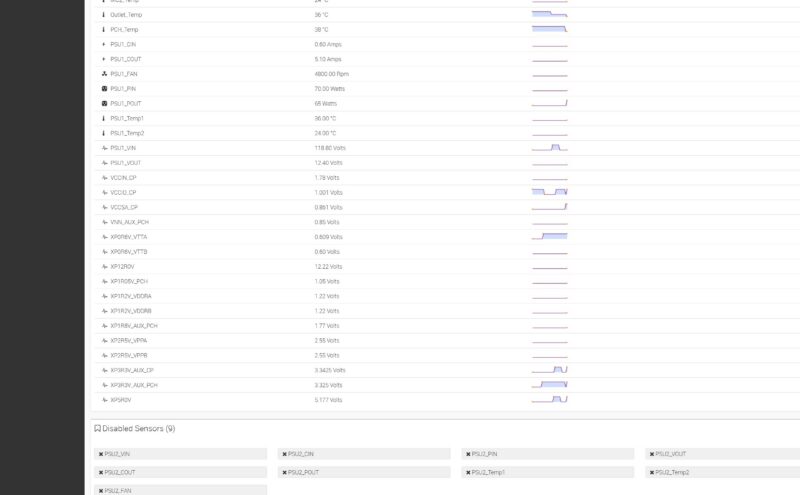
We got this system up to around 180W without much effort, and there is room to go up from there. Think of this more like a Skylake-era single-socket server than some kind of super-low-power Atom device.
STH Server Spider: Dell VEP4600
In the second half of 2018, we introduced the STH Server Spider as a quick reference to where a server system’s aptitude lies. For this system, networking and form factor are major parts of the story.
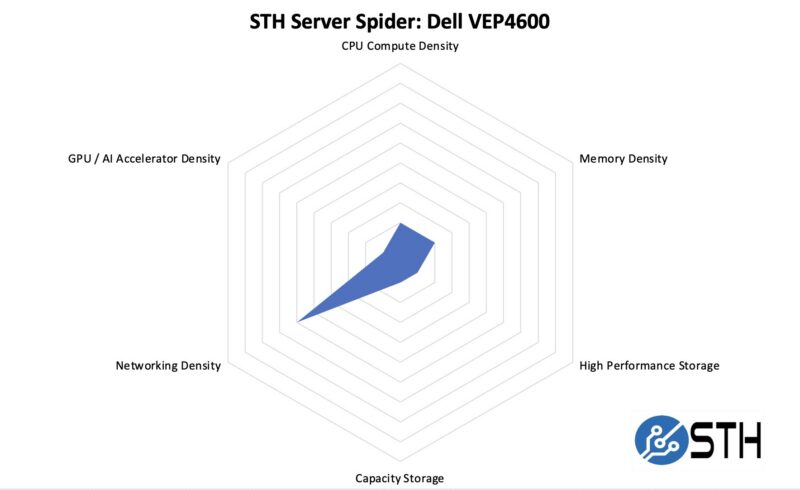
This system does not have hot swap drives, so you are stuck with two SATA M.2 drives, which are getting harder to find these days. It has a modest CPU for today’s standards. Really, you are buying this because you want an edge appliance with 1GbE/ 10GbE NICs. You might be able to modify that by appending “that says Dell on the label.”
Why Intel Skylake(-D) is Rough in 2026
When the Dell VEP4600 arrived, Hyper-Threading or SMT was actually turned off. This is common for network devices to reduce jitter. Still, when we deal with used hardware, very few folks online mention why Xeon E5 and Skylake generation hardware is so inexpensive. The 2nd Gen Intel Xeon Scalable was rushed as basically a bugfix because of side-channel attacks with 2018’s Spectre/ Meltdown. Modern OSes, like Ubuntu 26.04 LTS, apply mitigations to safeguard against these vulnerabilities. With AgentSTH V7, we test many configurations, and one view we get is what SMT offers in a platform. We are testing physical cores with a single thread per core and with two threads per core, and here are a few recent processors:
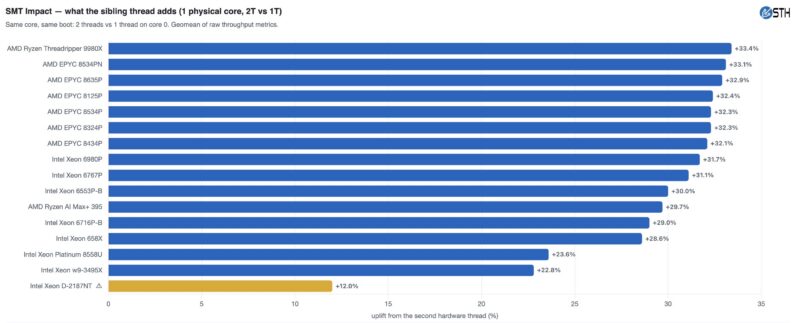
We actually denote that heavy mitigations are present in the Skylake-D result, and you can see just how much lower the SMT benefit is. Since these tests tend to model a bit more optimistic view of SMT performance uplifts, a good way to look at it is that SMT on with Skylake-D might get you 12% these days. In the real world, under a loaded CPU scenario, we might expect low-to-mid single-digit performance gains from SMT. To us, it probably makes sense to just leave SMT off and close that threat vector rather than getting a few percent more performance by leaving it on. Comparing that to something like the Xeon 6 SoC (Granite Rapids-D), you can see how the newer parts are getting a much larger SMT benefit, so turning SMT off would not be something we would do lightly on newer platforms.
Many folks wonder why we have not joined an online chorus of folks showing how many cores you can get inexpensively with older hardware. This is one of the key reasons. Still, turning hyper-threading off for the VEP4600 makes it a bit more interesting, so long as you are OK with using older, and slower cores without SMT.
Final Words
This review had a really neat performance section. At 16 cores, we compared it to a modern 16-core processor and found that the new model is roughly 3x the performance, which is huge. The SMT challenges of Skylake, which impacted an entire generation of Skylake-D series platforms, are ones to watch out for. Beyond that, the hardware was extra neat. Just having a device where you can have ten 10G NICs, some extra 1GbE NICs, out-of-band IPMI management, and a decent processor is nice. Finding a 16-core CPU with 64GB of memory and all of these NICs in a nice little system for $495 was also great. At that price, you can disable SMT and have an excellent edge appliance.
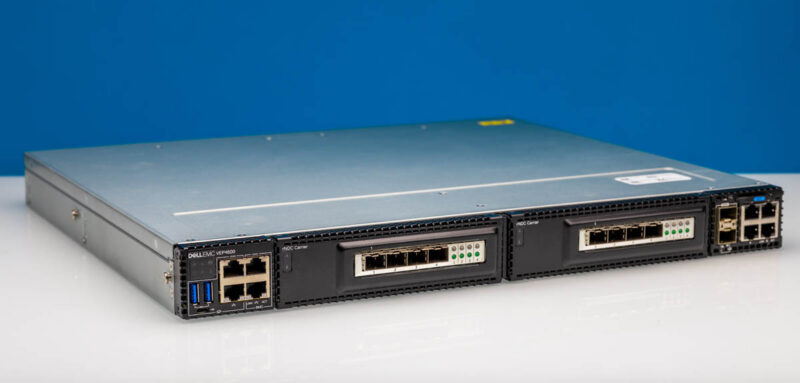
Overall, this is a system I wanted to try for many years, and finally getting one did not disappoint. It is a great little box, assuming it has the specs you are looking for. It also felt nice to get an entire system for a quarter of what we are spending for DDR5 RDIMMs of the same 64GB capacity these days.

the only thing I find for that price is the 4-core version of this, not the 16 core
A really interesting hands-on review of the Dell VEP4600. I liked the personal perspective combined with the detailed look at its networking capabilities, making it easy to understand why this system stands out.
It looks like Dell are flogging the last few units before they are gone for good.
Nice to see home lab style kit on STH again :)
What the heck is this thing supposed to be? Is it a server or a switch or something else altogether? The article doesn’t seem to make that clear. Can somebody answer this for me? Thank you.
@Stephen either a lower power server, or more likely a router/firewall
@Stephen these boxes are made for Velocloud SD-WAN, so they’re essentially a networking appliance. In the end they are essentially servers with a switch chip linked to some of the PCIe lanes to provide additional connectivity.
So is lack of HTML5 iKVM a license issue, or is it just plain not provided in this model?