

Dell VEP4600 Internal Hardware Overview
Inside the system, there are a few main areas. There is an area for the rNDCs, NICs, and carriers in the center. On either side, there are the NICs and management interfaces with power supplies behind them. In the center, we have the M.2 storage and the main CPU and memory area. Finally, there are the fans and power supplies along the rear.
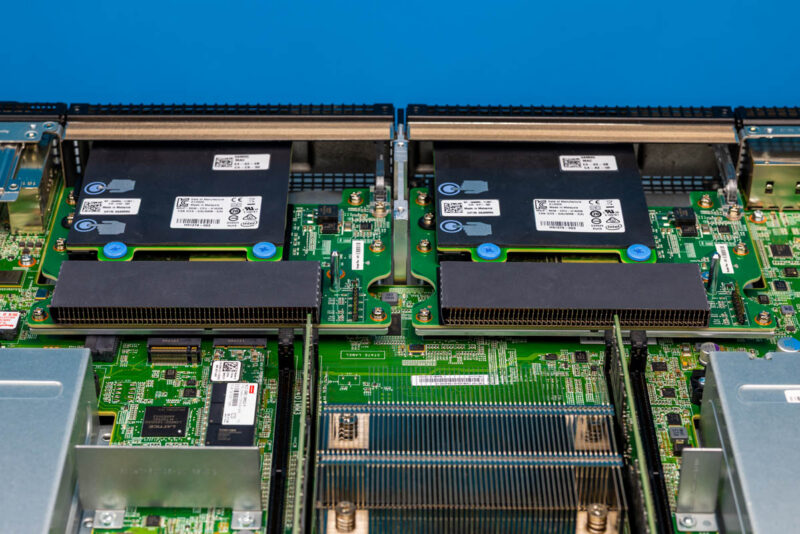
Starting with the Dell rNDC NICs, this is a Dell form factor of the era for network cards in some of Dell’s systems. I am not positive on this one, but it feels like this has largely been displaced/ replaced by the OCP NIC 3.0 form factor in newer Dell systems. Still, we had two quad-port Intel X710 NICs in here. They have custom heatpipe coolers to work in this form factor and system.
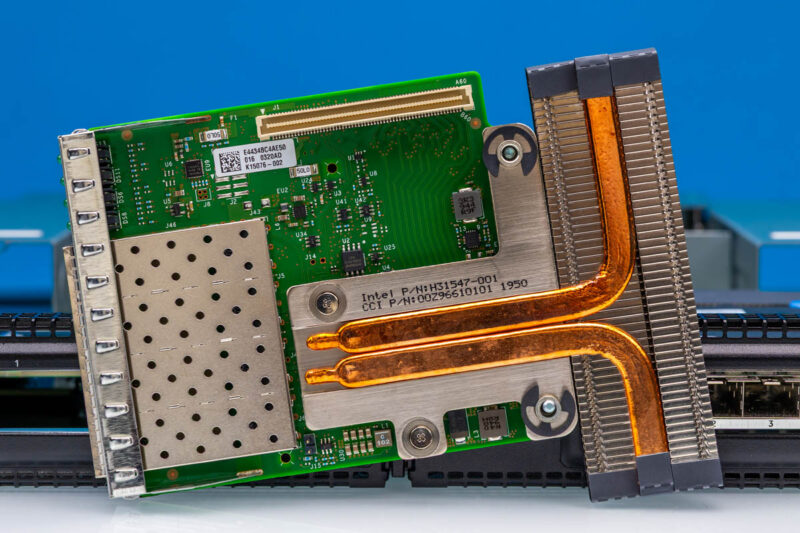
Those rNDCs are mounted on the rNDC carrier cards.
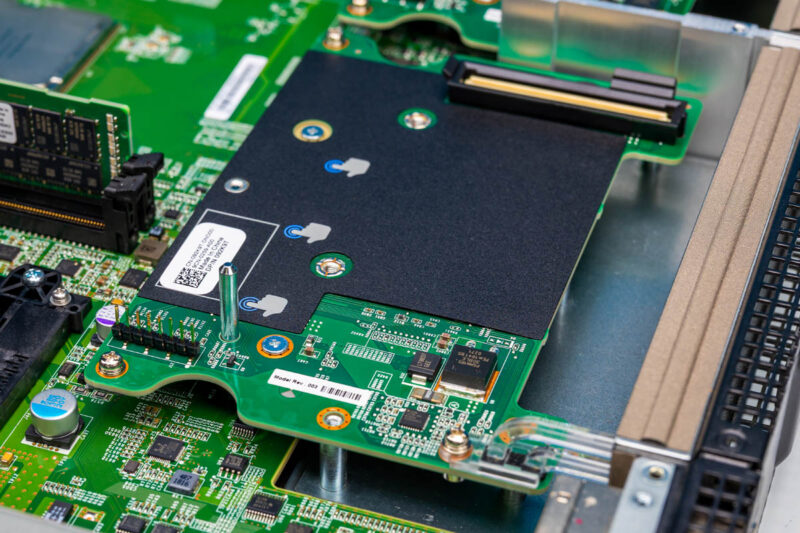
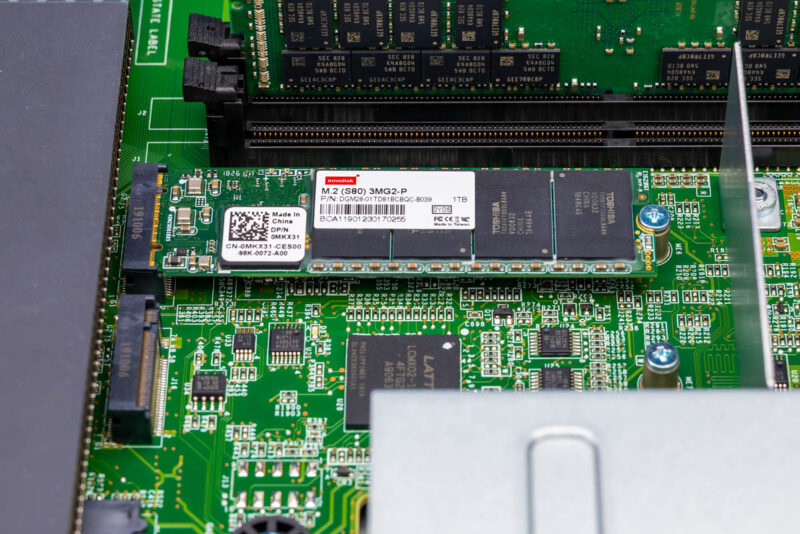
Behind them, and you can see how close the rNDC NIC heatsinks are when installed, you can see the dual M.2 SATA drive slots.
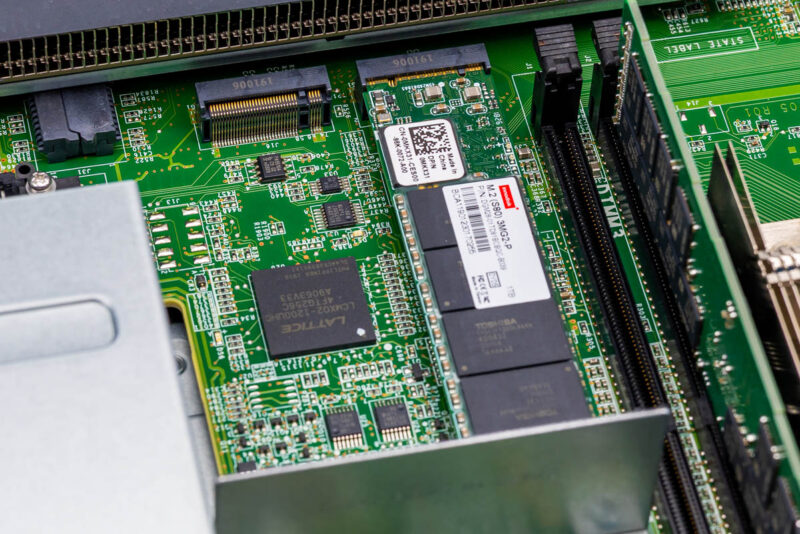
We got a 1TB Innodisk SATA SSD. Just as an aside, SATA M.2 SSDs are becoming much harder to find these days as NVMe has taken over. This is just a neat sign of the era of these systems.
The main feature in this center section between the rNDC NICs and the fans is the Intel Xeon D CPU. There are a number of different offerings from lower-cost 4-core SoCs to this 16-core version.
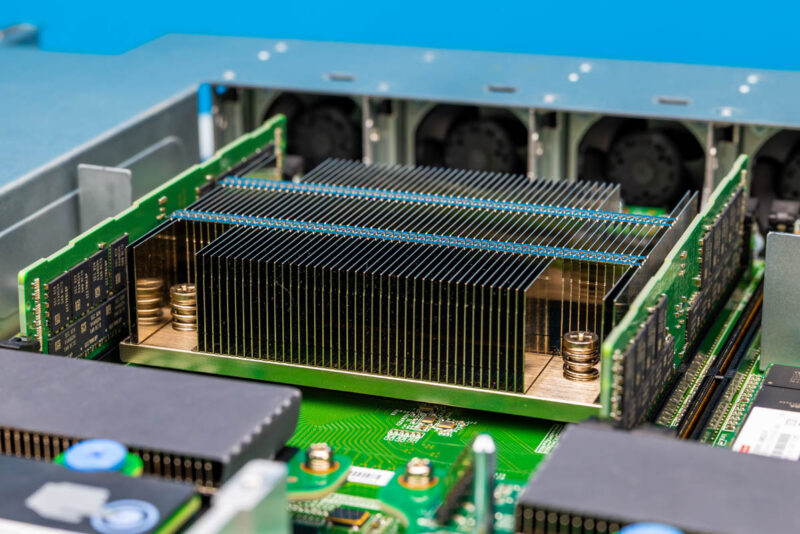
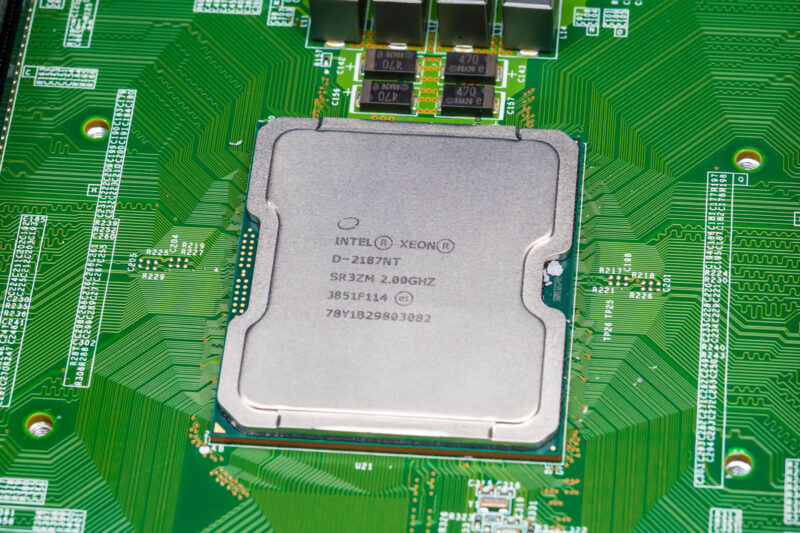
We removed the heatsink and found the 110W Intel Xeon D-2187NT. If you just want to see something cool, the PCB traces coming from this processor just look neat in Sam’s photograph. This SoC also provides the host for the Intel X722 10GbE NICs onboard.
That SoC supports quad-channel DDR4-2666 memory. These days, it is nice to have DDR4 on a box like this, especially pre-DDR4-3200 memory, just because it can be less expensive to get capacity.
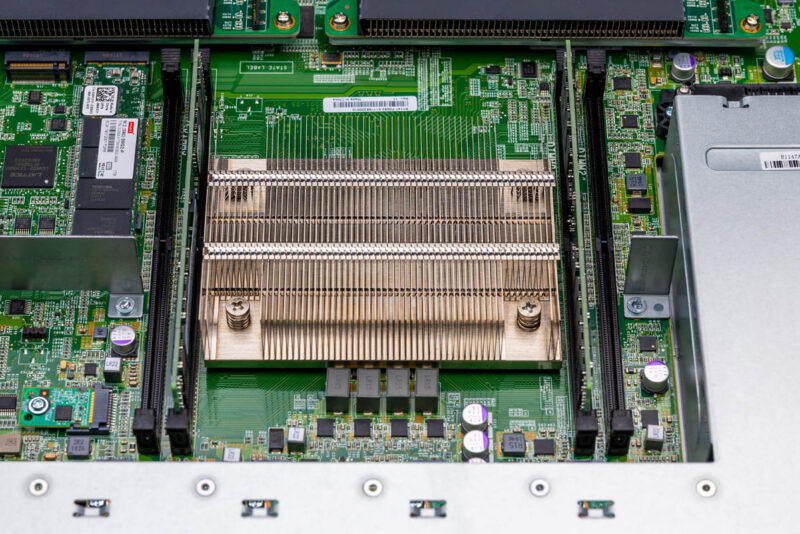
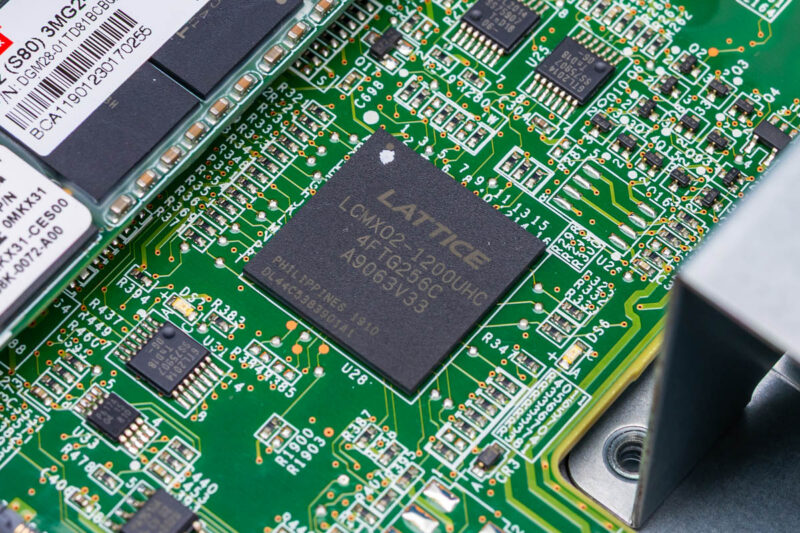
Taking a quick look at some of the chips on the board, you can see a Lattice LCMXO2-1200UHC FPGA that helps bring up the system as it is an “instant on” device.
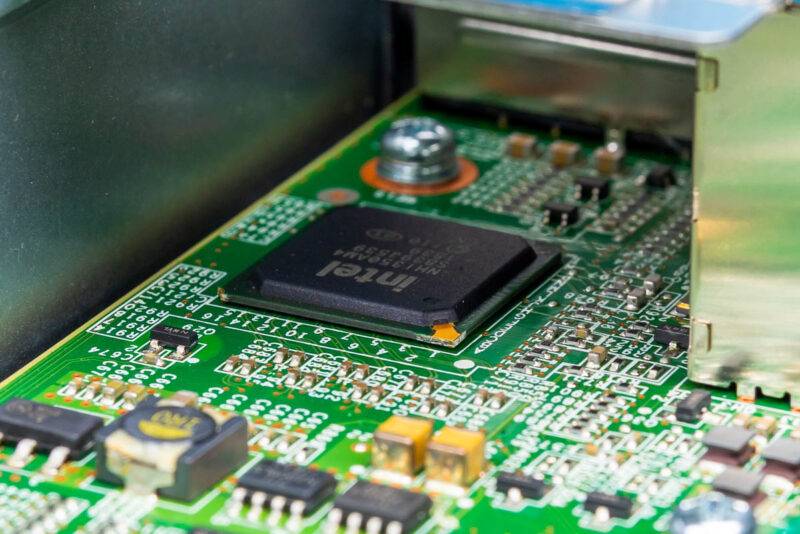
Onboard we saw an Intel i350-AM2.
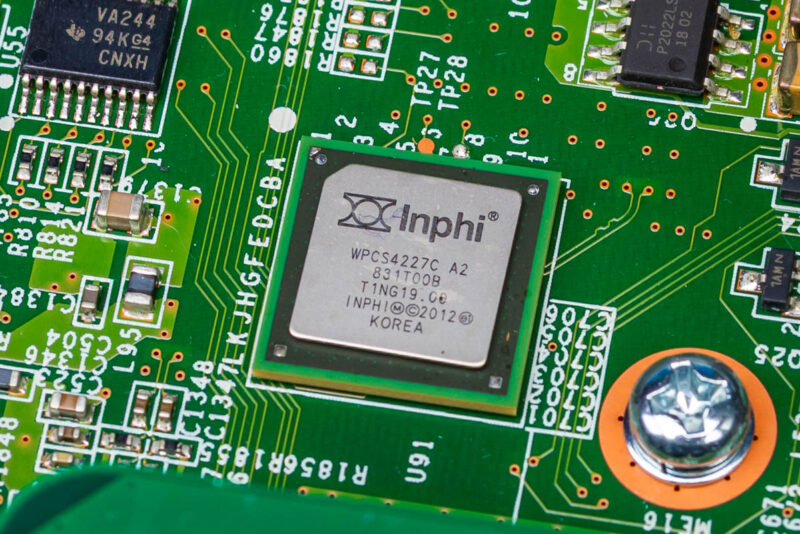
For the onboard 10GbE SFP+ ports, we found an Inphi. This was several years before Inphi’s acquisition by Marvell.
Next, let us get to the topology and management.

the only thing I find for that price is the 4-core version of this, not the 16 core
A really interesting hands-on review of the Dell VEP4600. I liked the personal perspective combined with the detailed look at its networking capabilities, making it easy to understand why this system stands out.
It looks like Dell are flogging the last few units before they are gone for good.
Nice to see home lab style kit on STH again :)
What the heck is this thing supposed to be? Is it a server or a switch or something else altogether? The article doesn’t seem to make that clear. Can somebody answer this for me? Thank you.
@Stephen either a lower power server, or more likely a router/firewall
@Stephen these boxes are made for Velocloud SD-WAN, so they’re essentially a networking appliance. In the end they are essentially servers with a switch chip linked to some of the PCIe lanes to provide additional connectivity.
So is lack of HTML5 iKVM a license issue, or is it just plain not provided in this model?