

Dell Tech World and the Density Picture
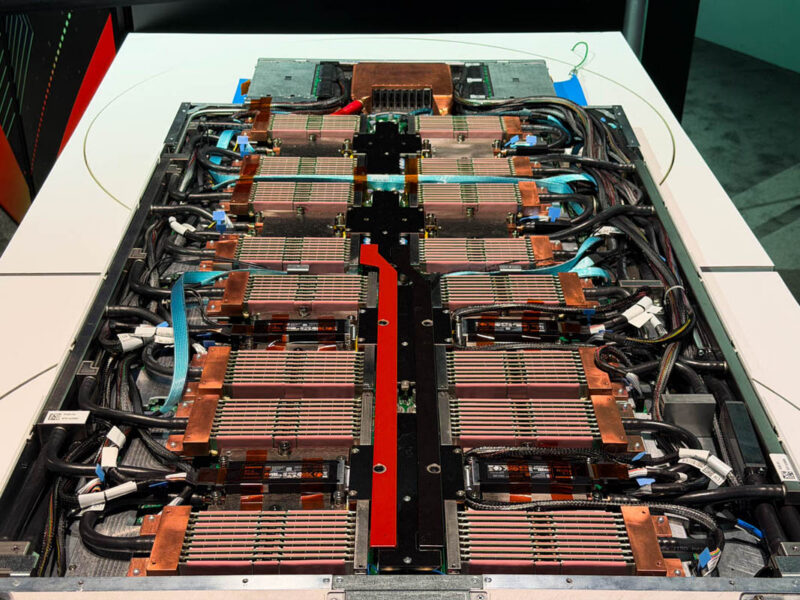
Dell showed a 2U dual-socket PowerEdge at Dell Tech World 2026 that illustrates the density story. Two sockets per 2U chassis is not the densest option available, especially compared to liquid-cooled solutions, but it shows the baseline approach.
Dual-socket nodes let you pool larger memory spaces and share NICs and boot drives, which keeps costs down. The larger fans in a 2U chassis also mean less power dedicated to cooling, since they do not need to spin as fast to move the same volume of air.
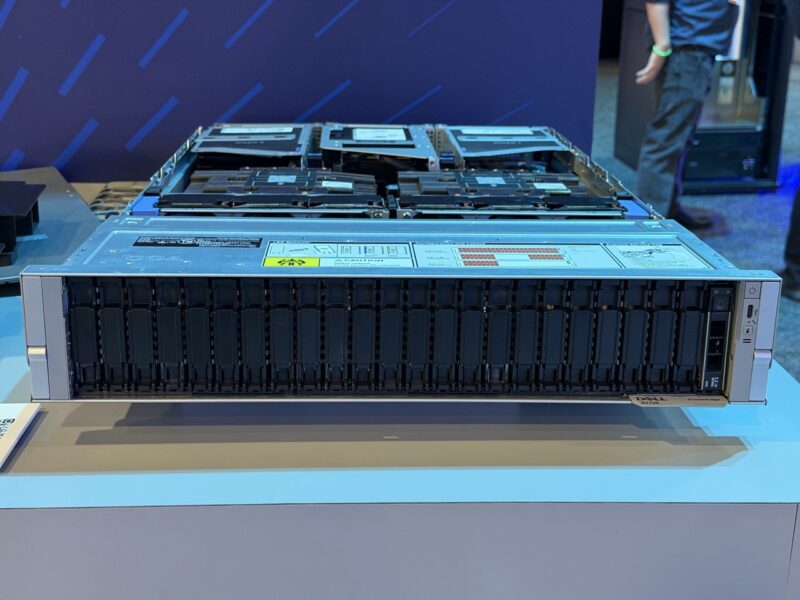
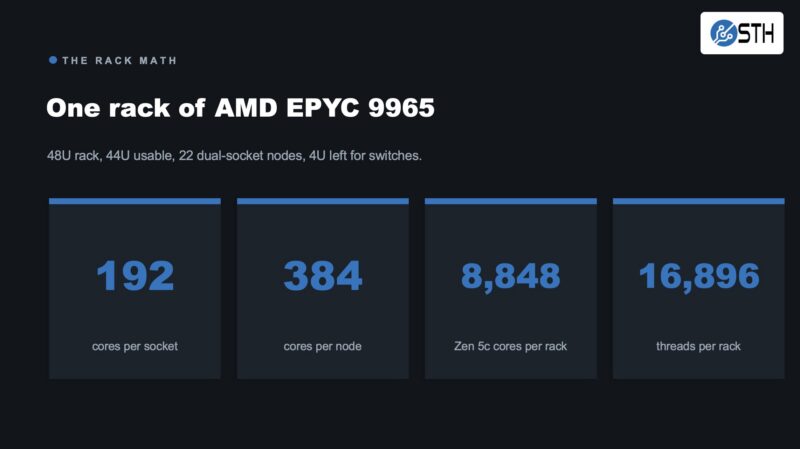
In a 48U rack, you can fit 44U worth of 22 dual-socket nodes with 4U left for switches.
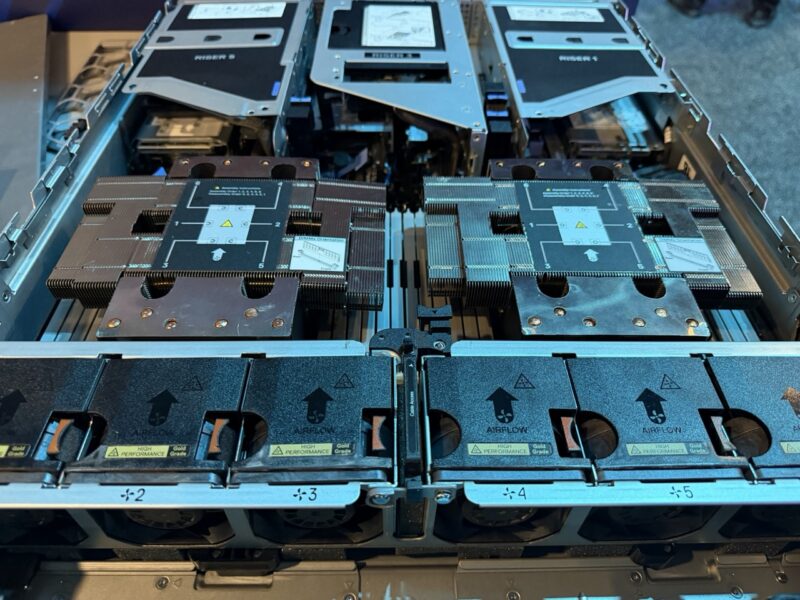
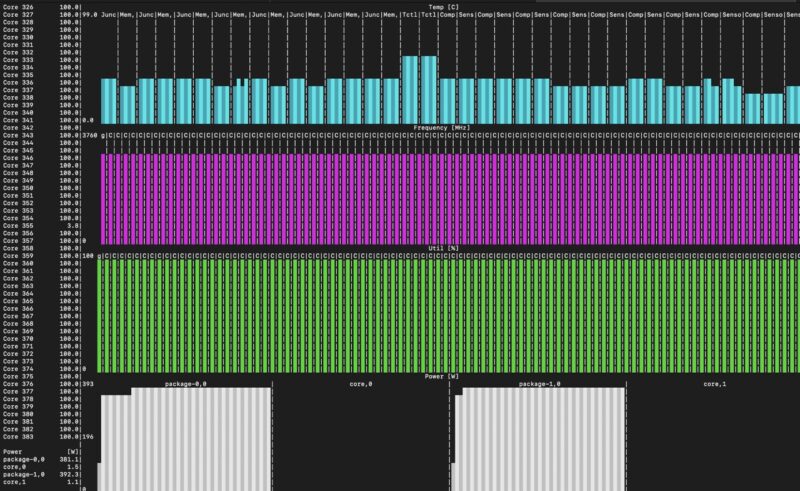
Using AMD EPYC 9965, that gives you 192 cores per socket, 384 cores per dual-socket node, and 8848 Zen 5c cores across the rack.
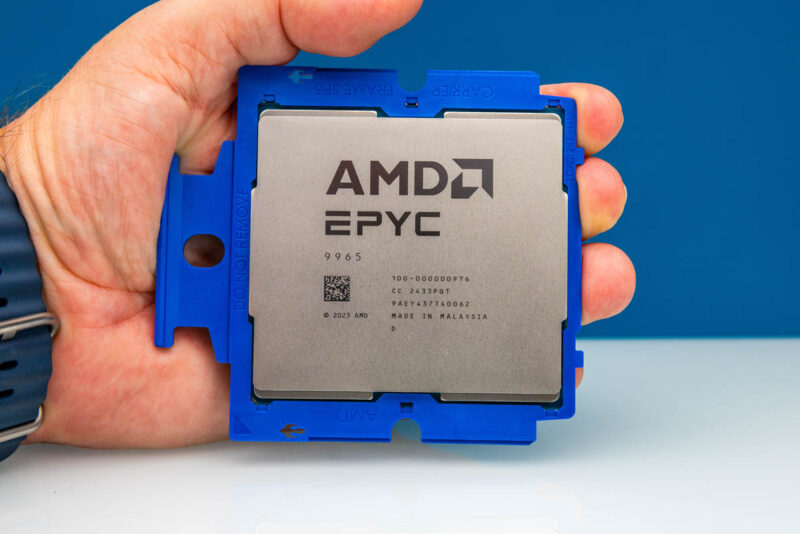
That is 8,848 cores and 16,896 threads to work with using today’s readily available servers and CPUs in what is likely a sub 30-32kW rack. Note that we have not tested the PowerEdge R7725 yet, so it is an estimate based on what we have seen in other 2P EPYC 9005 systems.
That is certainly a lot for today’s air-cooled racks, but we are already seeing next-gen liquid-cooled racks with more than 80,000 cores per rack.
That brings us back to the Cloudflare data point. More than half of internet traffic is now agentic AI. Web servers have been around for decades, and agentic AI is putting huge demand on that legacy infrastructure. Internal applications such as ERP systems and material-handling systems are under the same pressure. Some STH readers report that applications running happily in an 8-core VM at 15 percent normal utilization and 70 percent end-of-quarter utilization are now consistently hitting 100 percent.
Big companies are rushing to secure CPU capacity because agentic AI is not just creating a new application space. It is generating a second-order demand on existing applications. You can either get ahead of this now or pay big dollars to cloud providers to rent the capacity you need later.
Final Words
Many companies are saving money by deferring CPU upgrades so they can spend on tokens and LLM infrastructure. As agents come online, agentic AI harnesses and tool calls become net-new high-growth workloads that put real pressure on existing infrastructure. You need to figure out how to handle agentic AI tool calling at scale. That is only part of the new workload as the underestimated impact is what happens to the existing and new application base to service requests that these agentic AI tools are calling for.
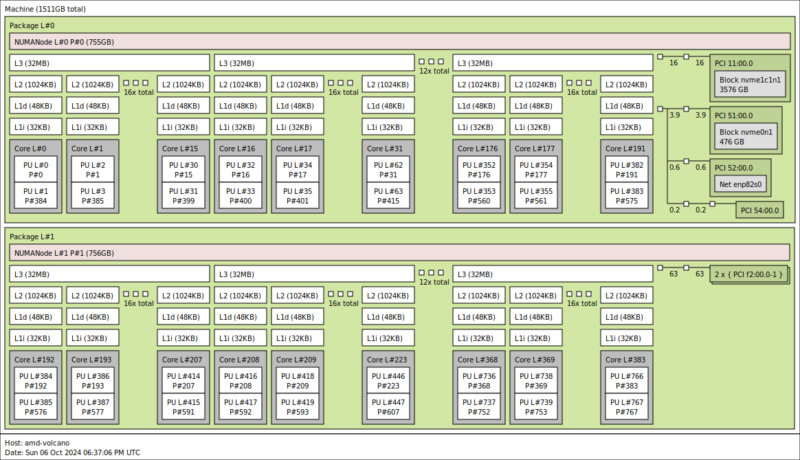
High-density today means AMD EPYC 9965 with 192 cores and 384 threads per socket. If you are upgrading infrastructure to handle agents in 2026 or the first half of 2027, AMD is the mainstream choice. Intel still has a few workloads where its architecture performs well, but AMD is gaining share across the board. There is a lot of buzz around Venice, but at the end of the day, the demand is being driven by both the net-new workload of running AI agents, plus the increase in the load on existing applications.
STH readers with many years of server infrastructure experience are well-positioned to help their companies navigate this build-out or to consult with organizations that need to set up servers for agentic AI workloads. That opportunity is real, and the window to get ahead at work, or helping others is now.


Very useful Friday read. I run a MSP and we’ve got a customer where we’ve seen 18% of our inventory systems’ load is now coming from a dedicated openclaw server we’ve setup. They’re still on epyc 7003 but it’s true there’s important load on the trad apps as well.
I don’t understand this. The agents are running shell commands and Python scripts, mostly, not heavy data processing workloads. Surely you don’t need more than a fraction of a core per agent instance.
Sick article. You’d think it’s just shell scripts, but there’s so many little tasks. When I first started the claw on a Mac mini cpu utilization was less than 10%. My setup’s now got 48 cores running at 45-90%. You didn’t mention that the workloads can get spiky. Say if you’ve got agents that every minute are running crons that all fire at once.