

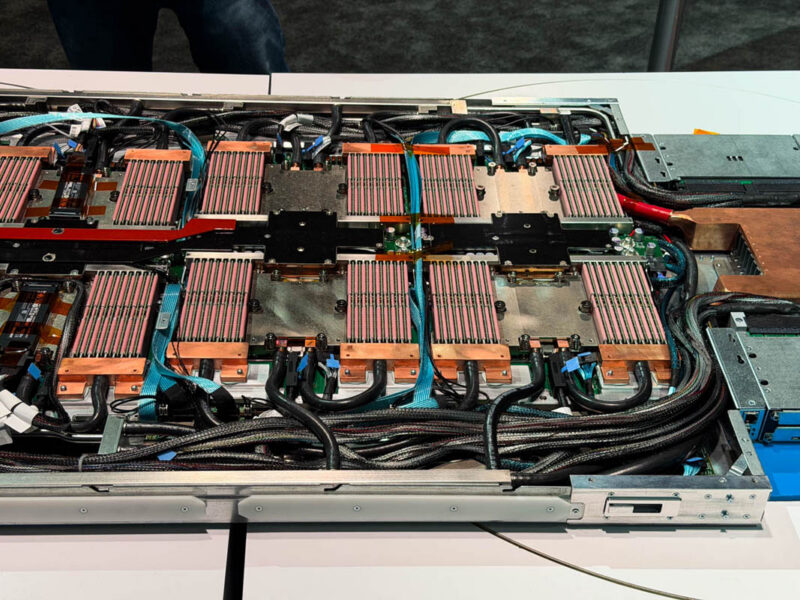
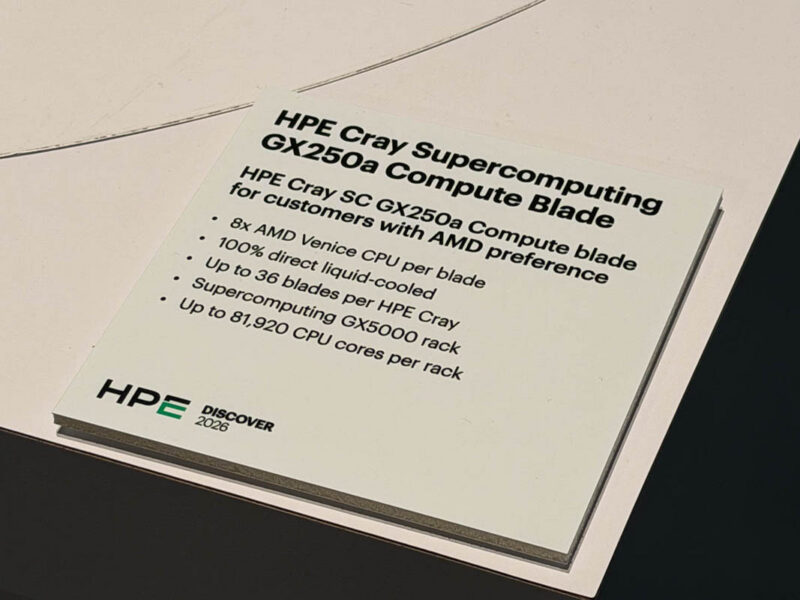
At HPE Discover, the company showed some neat hardware. We have hundreds of photos. Luckily, at the end of Wednesday, the show floor was fairly empty, and we grabbed some really neat photos. One example is this was the HPE Cray GX5000 nodes. HPE had one of its next-gen AMD EPYC “Venice” sleds on display. The HPE Cray GX250a Compute Blade houses 8x AMD EPYC Venice CPUs. The company said this totals 81,920 cores per rack.
HPE Cray GX250a Compute Blade with AMD EPYC Venice
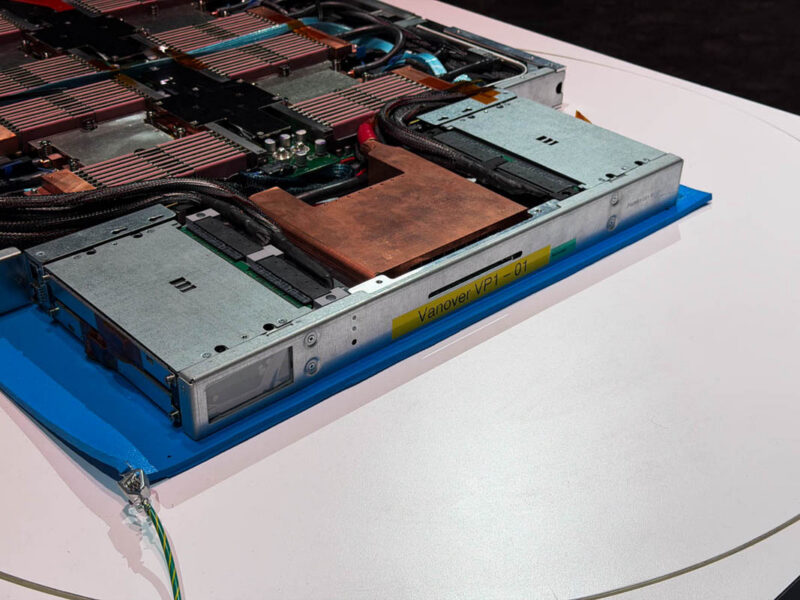
Here is the HPE Cray GX250a compute blade looking from the rear. You can see the center busbar for power. There are also hot and cool mating points on either side for the liquid-cooling loop. At a high-level, this is like ORv3, but it is also quite different in its implementation.
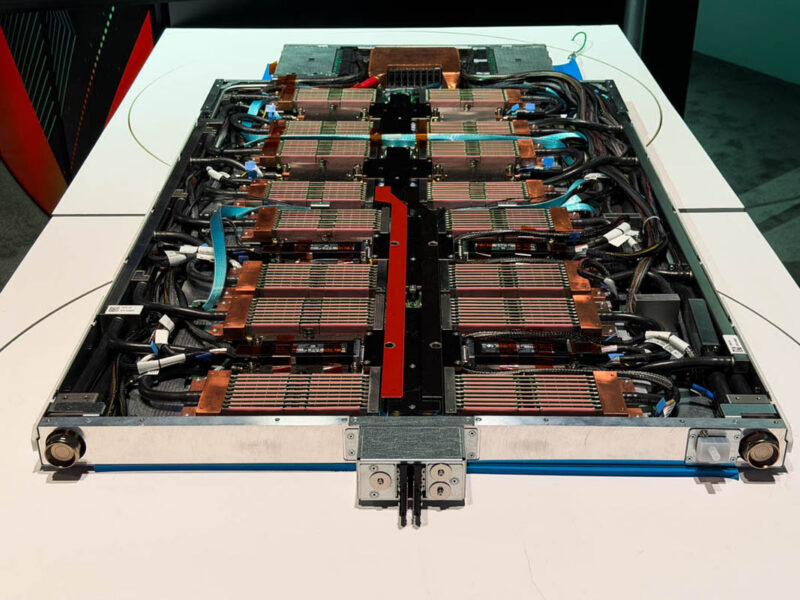
Between that and the front of the sled, you can see power running through the middle, cables and liquid cooling tubes running on the far sides, and then eight AMD EPYC Venice CPUs with their 16-channel memory running through the chassis.
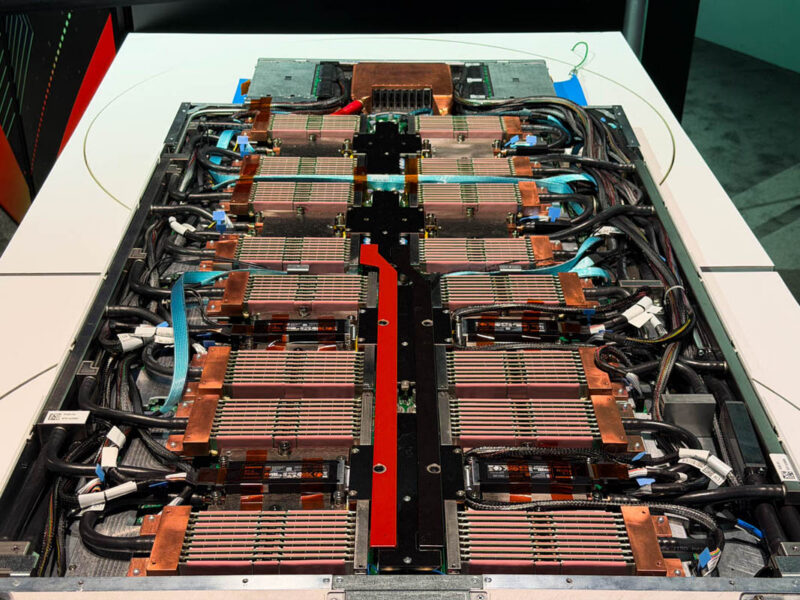
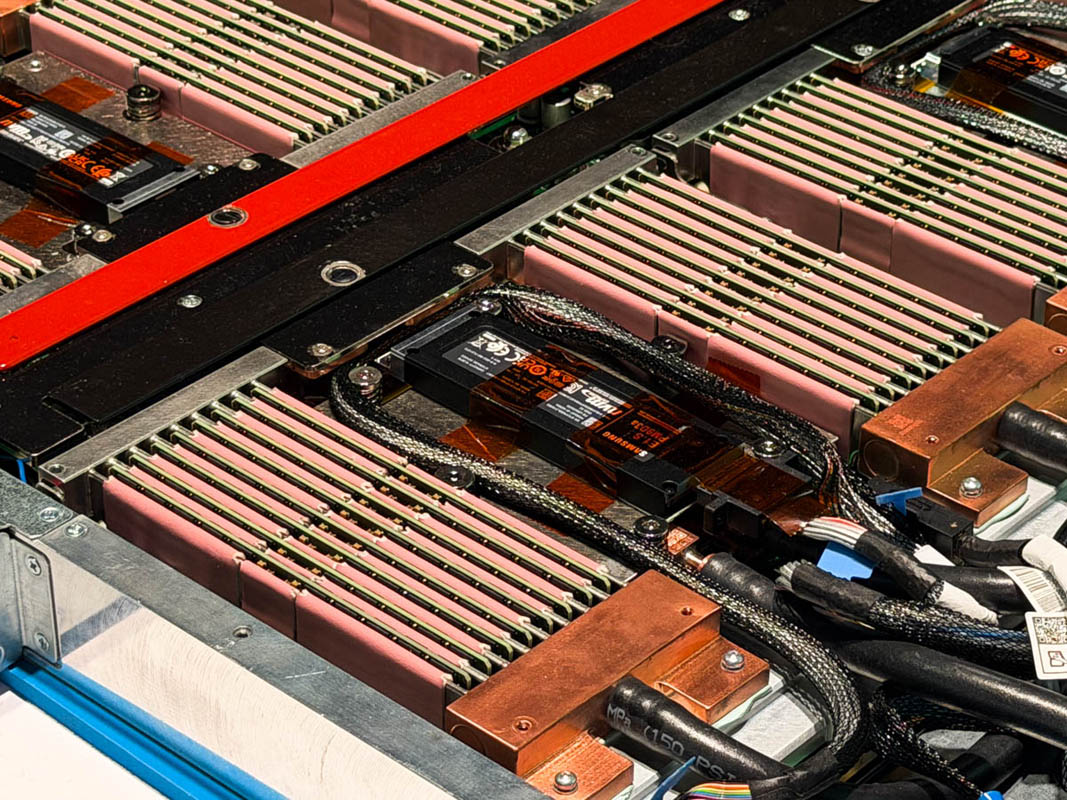
Four of these nodes looked different. This is crazy. There are small Samsung E1.S EDSSF SSDs on top of the CPU coldplates. We were told these were local fast scratch storage.
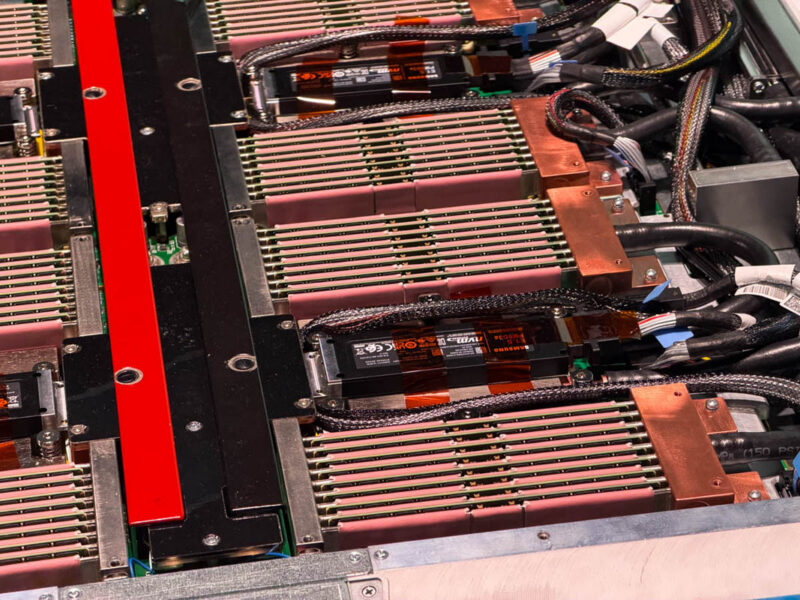
The memory is all liquid-cooled and is in standard DIMM form factors. The DIMMs looked like MRDIMMs, but we could not fully see them.
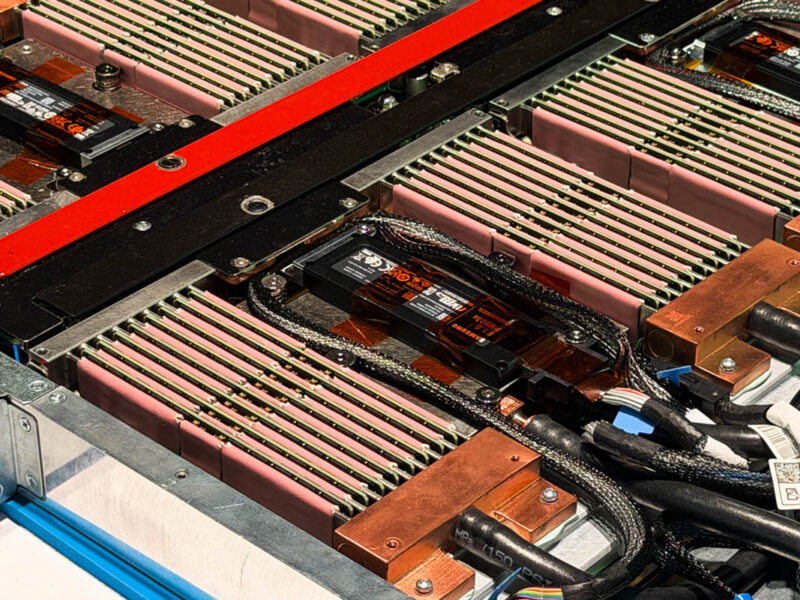
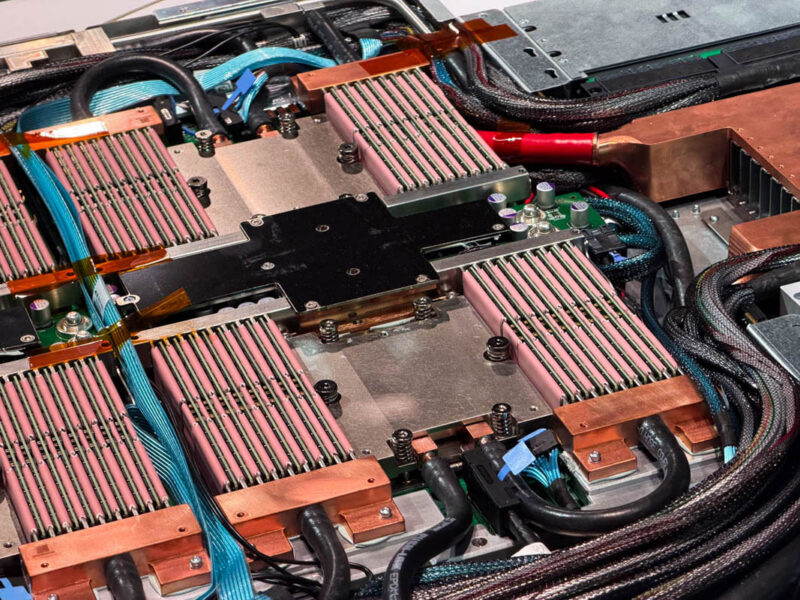
Four of the CPUs did not have the top SSDs so we could see the coldplates a bit better.
Here is the AMD EPYC coldplate with six screw points. This angle also provides a clear view of the DIMM cooling.
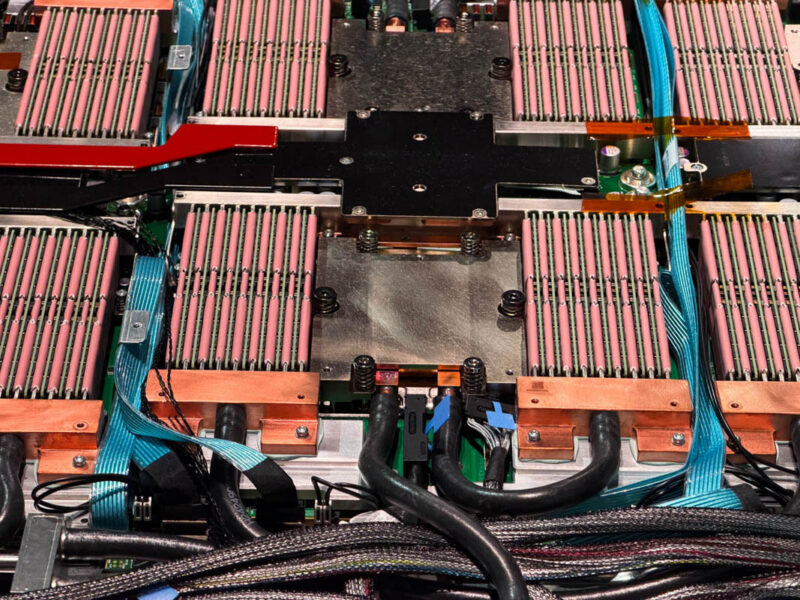
Here is another angle showing how the liquid-cooling nozzles are connected.
On the front, we see something neat. This is the Vanover VP1-01 node, and that label usually means this is not just a static demo dummy but a working system. Another clue is the SSDs and DRAM installed in the system.
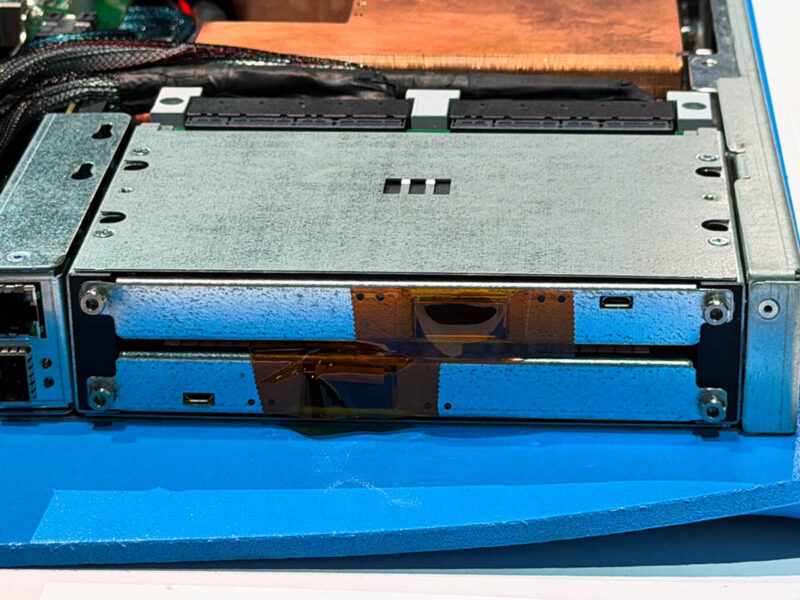
You might be wondering about those side pods. We were told this is Slingshot 400, with two NICs on either side, and that the future Slingshot 800 would go in here as well. Also, the connectors are really interesting. They almost look like OCP NIC 3.0 connectors, cabled to each CPU.
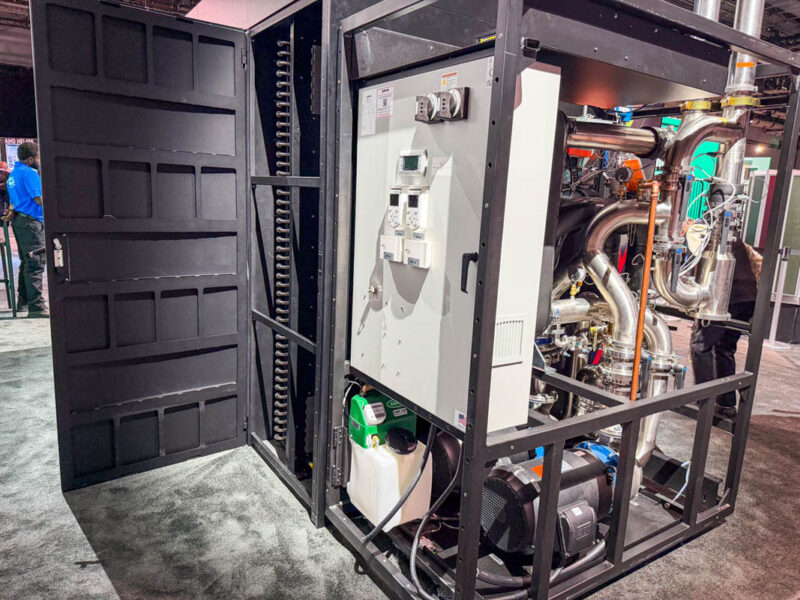
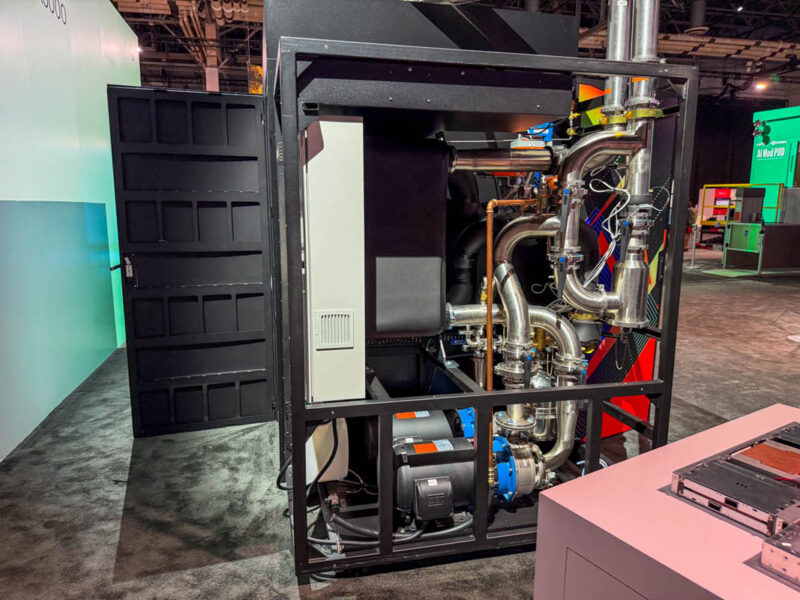
In this generation, HPE is using a CDU capable of cooling 1.6MW and that was on display as well
Here is a side view.
The faceplate of the system was for the Mission supercomputer destined for Los Alamos with NVIDIA, but you can see the basic rack structure here, with the front networking parts jetting out.
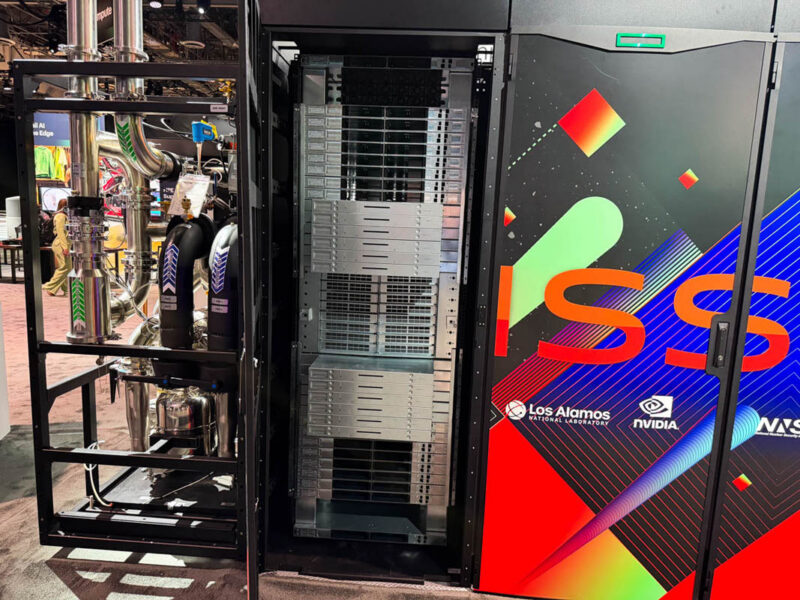
That is going to make the cabling really neat here, since pulling an optic out from where it is installed is at a 90-degree angle compared to most servers.
Final Words
With 8x AMD EPYC Venice CPUs per blade, and 36 blades in a rack, it seems like a lot to say that you can get 81920 CPU cores per rack (81920/36/8 = 284.44 cores/ socket?) but perhaps they are including other CPUs that are in a rack beyond just the 36 compute blades.
Venice is coming, and it is set to bring massive core counts to racks. While we are talking about 8000 cores being decently dense in an air-cooled rack today, these HPE Cray nodes are aiming to be roughly 10x as dense. Perhaps more exciting is that this looks like a working system. It is far more advanced than when we saw HPE Shows off AMD EPYC Venice and SP7 Supercomputing Node at SC25, which looked like it was a prototype setup in November 2025. The one on the show floor was roped off, and it sounds like it is a working node.

The 81920 CPU cores seems to be calculated from standard 40U per rack which would be 40 x 8 Socket x 256 Venice CPU Core. = 81920. With 2U for other things.
Still really impressive whether it is 36U or 40U.
I’m a rocket/space enthusiast and some of the larger plumbing in the CDU looks like what you’d see on/around a liquid rocket engine. Nice!
SP7 is supposedly rated 700w-1400w for Venice.
5.6k-8kw per U, that use to be nearly a normal full rack deployment. We would build to a 10-15kw rack load and usually be below that. This is 250kw to 320kw per rack (40U, before networking).
Awesome power, although it’s too bad that this hardware will all be in landfills in 6-10 years. Will HPE still be vendor locking Venice CPUs? Are these blades 8x single socket nodes, or 4x dual socket? I’m curious if ATX Supermicro/Gigabyte/etc boards for Venice EPYCs will all be single-socket since power will be so high.