
Supermicro Super AI Station Power Consumption and Noise
The NVIDIA Blackwell Ultra GPU inside the Super AI Station uses around 152W at idle with a 1.3kW power cap. We saw this generally range in the 147W-150W range on the different systems we tried. We will use a 148W figure for the platform just to keep things consistent.
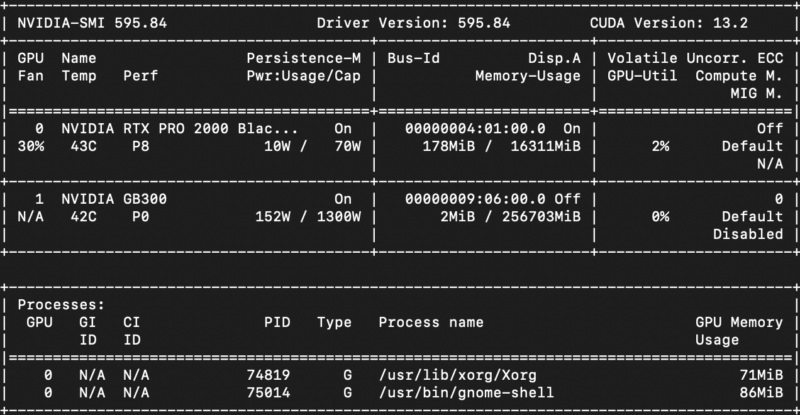
The NVIDIA Grace CPU module has a 300W power cap and is using about 78W at idle, with just over 50W of that being tied to the CPU cores themselves. Idle power never dropped below 250W and was usually well above that, but the 1.6kW limit remains.
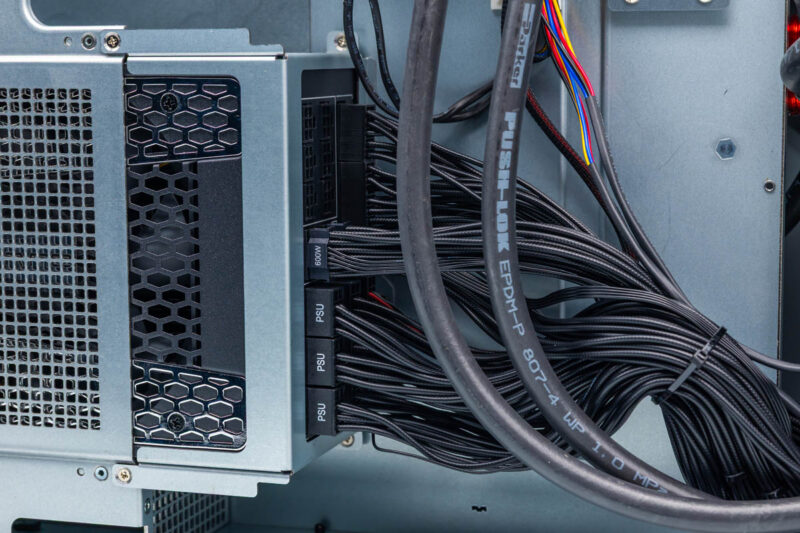
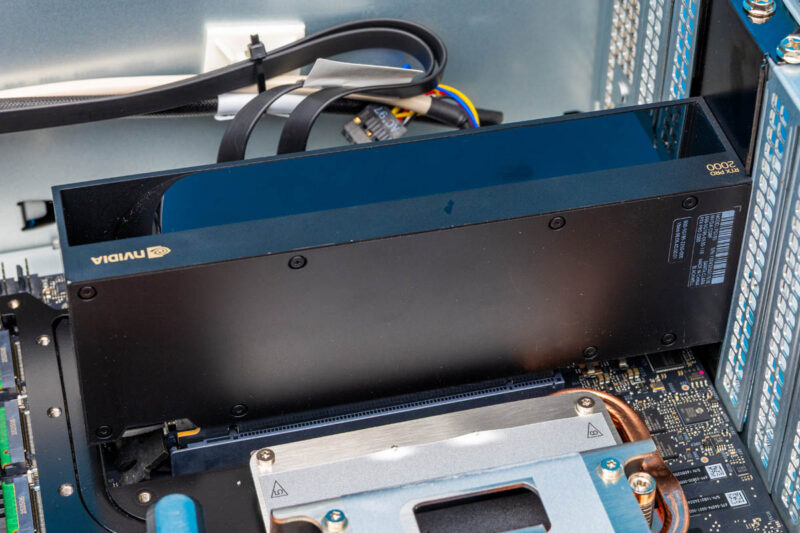
Complicating matters slightly on Supermicro’s Super AI Station in particular is that the company has included a discrete video card with the system: NVIDIA’s RTX PRO 2000 Blackwell. While this is the lowest-end video card that can be installed in a DGX Station system, it still adds another component that draws on the system’s 1600 Watt power supply, which is already almost entirely consumed by the high-end processors that come with the system. As a result, video cards can eat into the TDP for the rest of the system, and in the case of higher-end options like the RTX PRO 6000 Blackwell Edition and its 300 Watt TDP, they absolutely will.
The good news with the Super AI Station, then, is that at only 70 Watts, the impact of the RTX PRO 2000 Blackwell is negligible enough that it did not impact our benchmark performance on the bulk of our testing. NVIDIA’s cards can idle pretty low (the 2000 uses a chip that also goes into a laptop), so the impact of a 10W idling card is quite limited. Even at load, the RTX PRO 2000 simply does not draw all that much power in the context of a system like this. It does not even need an external PCIe power connector to run it. Still, we would not recommend adding a video card unless you did need to render a desktop, and even then, a more powerful card is only going to make sense if you need the extra graphics performance, as it would come at the cost of AI performance.
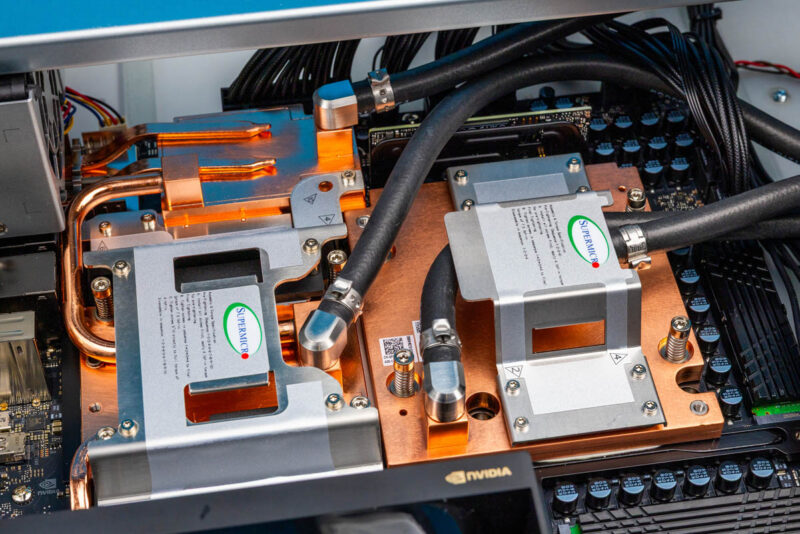
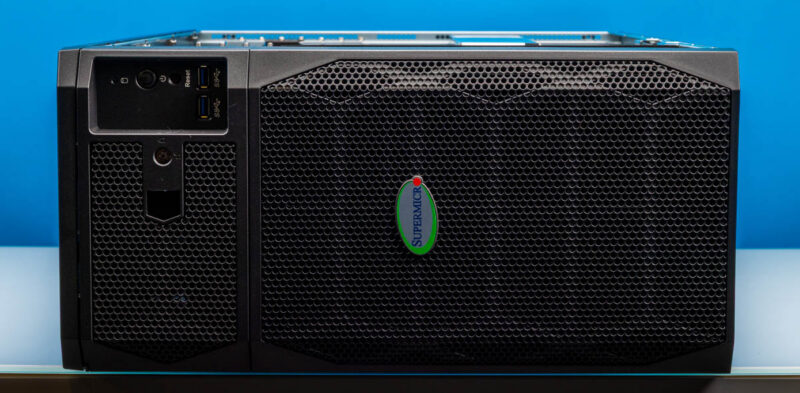
Finally, let us talk about acoustics. Because cooling and airflow are among the few areas where a system vendor has wide latitude, acoustics can be a major differentiator between DGX Station systems. The Super AI Station, in particular, is defined by its ability to switch between a tower workstation and rackmount server, so Supermicro relies entirely on server-style front-to-back flow-through cooling here, unlike the earlier systems we have seen from MSI and Gigabyte.
So how well has Supermicro’s design fared here? As it turns out, very well. If you will pardon the wordplay, the Super AI Station turned out to be super quiet. Under full load, we measured around 39-42dBA of noise, while at idle the system dropped down to 36-37dBA. Perhaps the craziest part of this system is really how quiet it was. A number of times the team in the lab and studio had this system on and did not notice it was even running except for the blinking lights.
While it absolutely can be used as a desktop, or maybe really a desk-side workstation, it has the other option of running as a server. As we showed with the networking side, these also have a strong case to be deployed as many in a rack that have high-speed networking between them.
Final Words
A lot has been said about DGX Station systems since they were first announced last year, and for good reason. This DGX Station adds up to an incredible amount of server-grade hardware in a PC case, and the six-digit price tag for all of it can be quite a shock. Even among high-end workstation systems, these are unlike anything else on the market in terms of hardware or intended use case.
For their part, Supermicro has taken an interesting route toward bringing server hardware to the desktop by being more flexible than most while staying close to its server roots. The end result, a DGX Station system that can be converted between a full tower desktop and a 5U rackmount server, is unlike any other DGX Station system we have seen so far. More to the point, it does not just work, but it works well. You would think that such flexibility and the constraints it introduces would limit or otherwise compromise the system, but instead the Super AI Station is as fast and as quiet as any other DGX Station we have seen to date.
That means Supermicro can deliver the full performance potential of the DGX Station concept and the GB300 hardware inside. The Grace CPU plus Blackwell GPU plus ConnectX-8 SuperNIC combination offers immense performance in a single system, and with 800G networking, even more when multiple systems are linked. This means that while a single Super AI Station is fast on its own, there is a clear path to even more performance (and pooled memory) for the largest models.
Supermicro is one of NVIDIA’s core partners, and systems like the Super AI Station illustrate why. The combination of NVIDIA’s powerful hardware and Supermicro’s excellent system design is what makes DGX Station systems so formidable in the market, and why NVIDIA’s ecosystem has remained the gold standard for so long.