
MSI WS300 NVIDIA Blackwell Ultra Performance
Now, it is time for the big show, the NVIDIA Blackwell Ultra or B300.
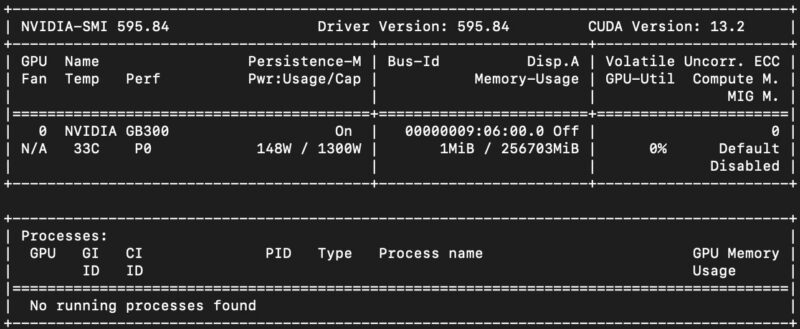
We generated a ton of data across different models. Originally, we planned to run a few big models, but that quickly led us down the rabbit hole of trying different draft models. In this review, we wanted to give you some sense of what that looks like.
NVIDIA GB300 on Two Models
For this one, we took a decently optimized Qwen3.8 Flash Next model and compared it to the model folks were excited about a year ago, GPT-OSS-120B, and a test we were using roughly a year ago. This is for two reasons. First, it just gives a then-and-now comparison. Qwen3.8 Flash Next is just a bigger, better model. Perhaps the key is that if you invest in something like the MSI WS300, you want a system that will be useful for a longer period of time.
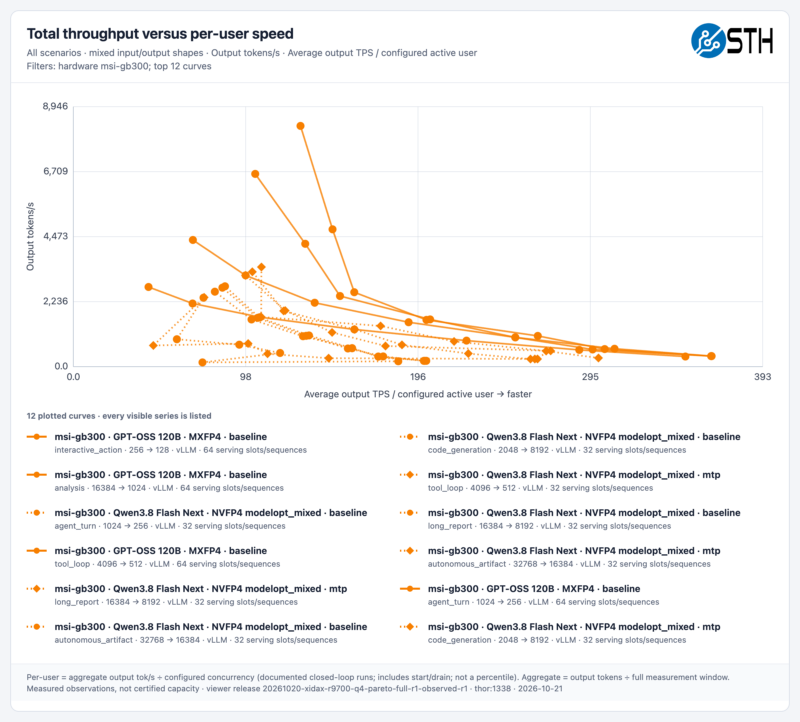
Here is a quick look at the TTFT figures compared with throughput.
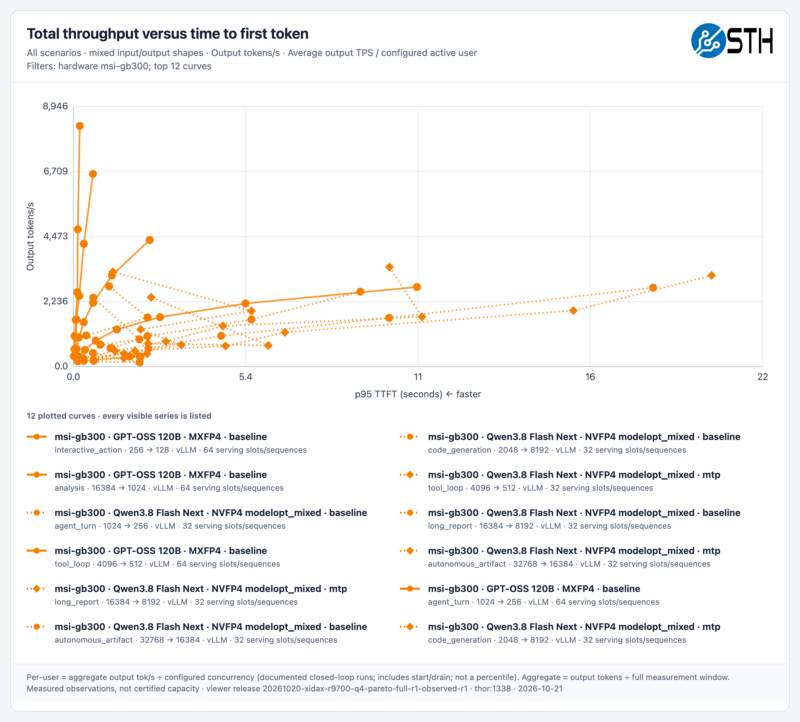
Instead of showing you Qwen3.6-35B-A3B again at 26,000 tokens-per-second on a short 24-30 input length, 1024 output length, we wanted to give you some other interesting data points.
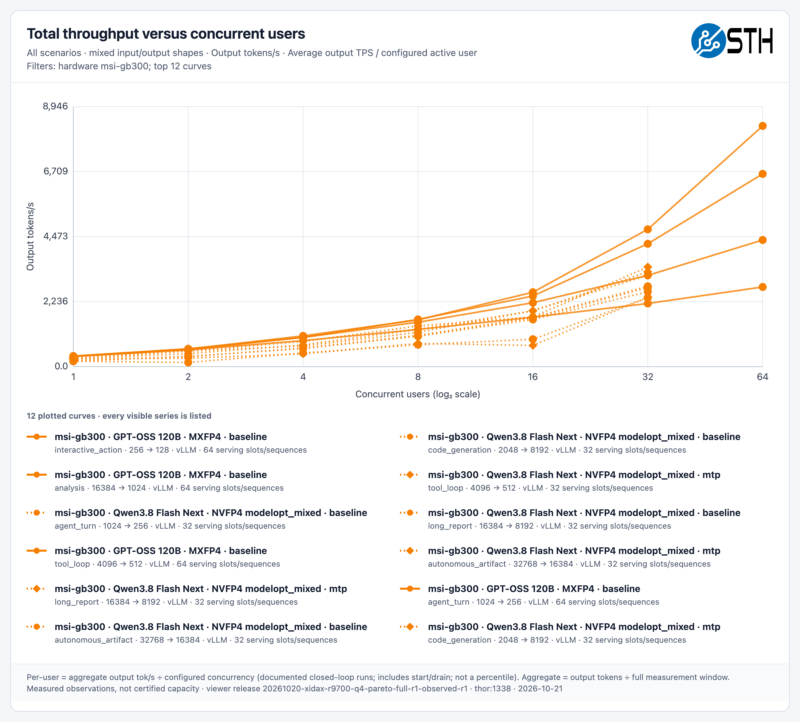
32 concurrency is a decent little agent swarm that can run on a system like this, and it performs well. Of course, MTP really helps results here.
NVIDIA GB300 Qwen3.8 Flash Next Performance
We wanted to test a newer/ larger model than we had previously, so we are using Qwen3.8 Flash Next on this machine. This is a great model that does some excellent work.
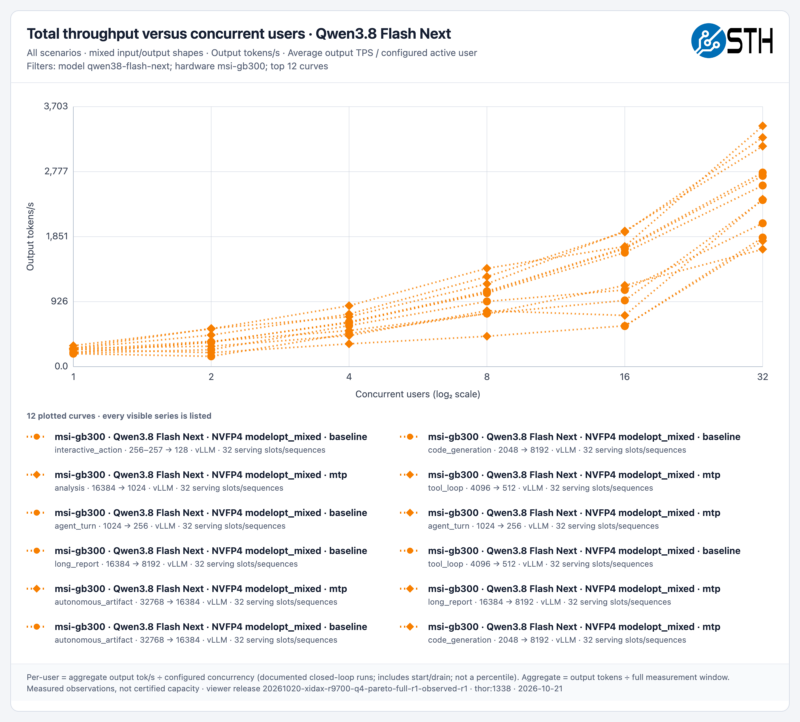
We did different tool call input/ output patterns with MTP and without MTP turned on, and then did a sweep of c=1 to c=32.
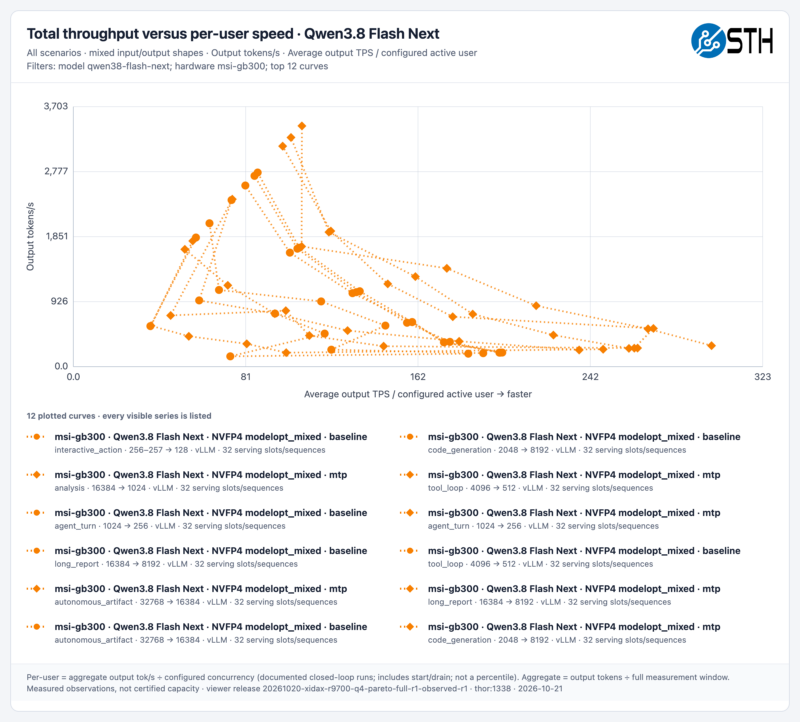
Several scenarios we tried exceeded 3000 Tokens/second at c=32, and the numbers were still rising.
At this point, you may be wondering about networking, so let us get to that next.