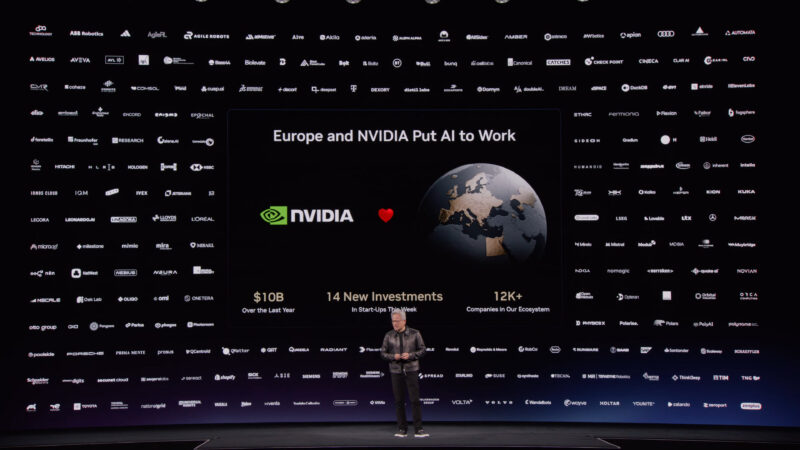


A bit earlier today, NVIDIA kicked off its 2026 GTC Berlin trade show with the event’s lead keynote. Headlined, as always, by CEO Jensen Huang, the GTC Berlin keynote has in recent years become one of NVIDIA’s most important secondary keynotes, as it is the company’s principal trade show for Europe. As the visibility of the GTC Berlin keynote has risen, so has the importance of the show’s announcements.
For their 2026 show, NVIDIA has a mix of hardware and software-related announcements, anchored around AI inference and agentic AI. Of note, NVIDIA is gearing up to put Vera Rubin servers in shipping containers, while on the software side of matters, the company has a slew of updates as well as some new reference architectures for how to use their ever-expanding software ecosystem.
The keynote comes against the backdrop of NVIDIA’s plans for continued growth in Europe. The company has previously said it considers Europe an underserved market and has been eager to expand there. With sovereign AI and new supercomputer builds on the horizon, along with ongoing AI infrastructure build-outs, the company wants to show how European clients are adopting NVIDIA hardware, and why others should too.
DSX POD Puts Vera Rubin NVL72 in a Shipping Container
For hardware news, the highlight of NVIDIA’s 2026 GTC Berlin keynote is the announcement of the DSX POD reference design, a blueprint to build a turnkey Vera Rubin system inside of a container.
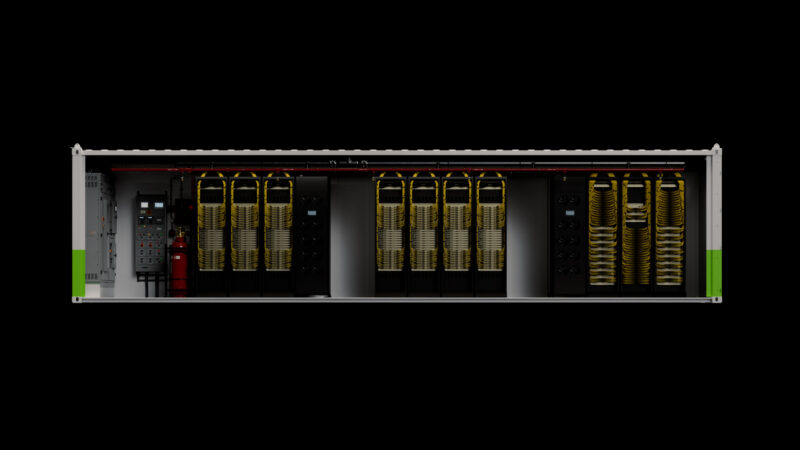
Not to be confused with NVIDIA’s DGX SuperPOD offerings, which are blueprints to build large DGX system clusters, the DSX POD takes things more literally. It is, in short, a modest multi-rack Vera Rubin system that is built as a fully assembled server container and designed to be transported on-site for installation.
Within the intermodal-sized container (NVIDIA has not confirmed the size, but we suspect it is 40ft), the DSX POD reference design calls for installing seven Vera Rubin NVL72 racks within the container, along with the associated networking, cooling, and management hardware. The resulting containers are not fully self-contained, since they still need to be hooked up to power, networking, and a larger cooling system to run, but beyond utilities, a DSX POD is a fully capable, fully equipped computing system on its own. More likely, multiple PODs will be installed at once to form a larger cluster and quickly fill out a data center, 25 EFLOPs of AI inference at a time. Europe has a history of using modular container-based data center builds.
The containers are fully assembled, tested, and validated at their point of construction. The overarching goal is to further move Vera Rubin system construction from being an on-site activity to something that is done in a factory, with the benefits of scale and quality that come with mass production. A standardized DSX POD, in turn, can be shipped to a site and installed within 14 days, rather than months for an on-site build, ultimately allowing data centers to get their hardware up and running and start making their operators money as soon as possible. Meanwhile, because they use a standard intermodal container size, these PODs can be shipped by truck (as opposed to heavy rail), allowing them to reach virtually anywhere.
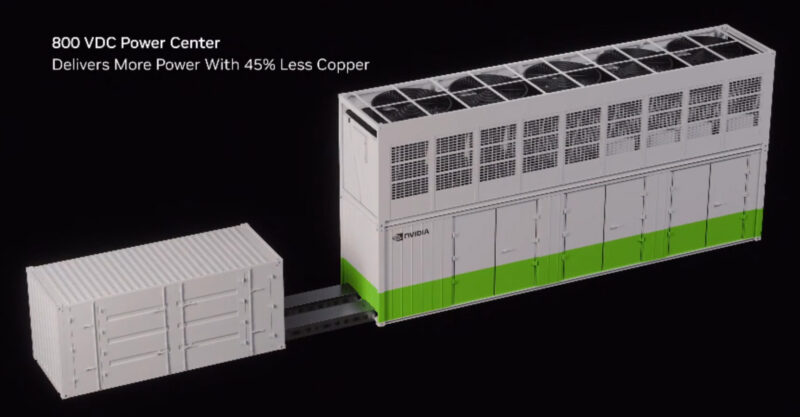
The DSX POD announcement comes as the latest effort from NVIDIA to streamline the installation of NVIDIA’s hardware, following their earlier DSX blueprint announcements. The company’s long-term goal is to keep ramping up hardware sales to hyperscalers and other data centers, and a server-in-a-container is one more tool in its kit. Meanwhile, the fact that they are announcing this at GTC Berlin is not a coincidence, as the European market has become a high priority for NVIDIA as the company eyes upcoming supercomputer builds on the continent and a broader push for sovereign AI. That said, DSX PODs will be available worldwide. This is not a project limited to Europe.
Otherwise, the key point about DSX PODs is that, like NVIDIA’s other DSX blueprints, these are reference designs for NVIDIA’s immediate customers to build. NVIDIA will not build or sell DSX PODs itself. The project’s partner list, in turn, is a general who’s who of hardware vendors, including Gigabyte, HPE, Dell, Delta, QCT, and more. According to NVIDIA, it expects partners to start delivering DSX PODs worldwide in early 2027.
Supply Chain Expansions: From Substrates to Optics
Another key point of Huang’s presentation was an update on NVIDIA’s plans to work with its suppliers to further scale up supply chain capacity over the coming years. NVIDIA has been pushing its partners to the limit for most of the last half-decade, and the company continues to be bottlenecked by supply capacity in one form or another, whether in obvious areas like wafers and memory or in less visible areas such as packaging and testing.
With their latest supply chain push, NVIDIA has set some very lofty goals for its partners. Of note, the company’s plans call for the following capacity improvements over the next three years:
- Substrate: 2.5x capacity increase over the next three years, sourced from IBIDEN, Samsung Electro-Mechanics, and Unimiron.
- Advanced Packaging: a 4x increase in interposer wafers from Amkor by the end of 2028.
- Testing: a 2x capacity increase by 2027 at KYEC.
- Co-packaged optics: a whopping 15x increase in capacity of optical engines for co-packaged optics from SIL. And doubling that again to a 30x increase by the end of 2028.
Among these, the optics announcement is especially significant since NVIDIA is moving heavily into co-packaged optics as part of the Vera Rubin generation and beyond. This is a key enabler for allowing for denser networking hardware, and ultimately will be what succeeds large uses of copper networking down the line. NVIDIA’s use of optics is ramping up from relatively small amounts here, which is why there is such a need to ramp things up so heavily.
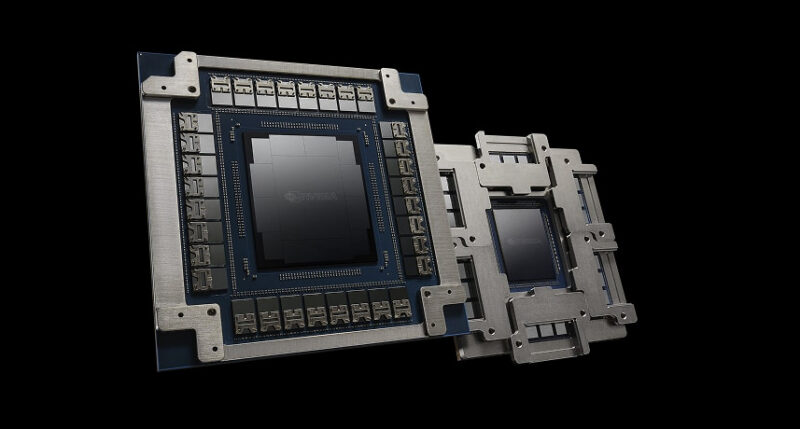
Meanwhile, looping this back around to the target audience at GTC Berlin, these supply chain improvements are intended in part to ramp up NVIDIA’s capacity to supply hardware for AI factory build-outs in Europe. If the company’s plans to grow its sales in Europe are to come to fruition, it will need the capacity to do so.
OpenShell Reference Architecture for Agentic Safety
On the software side, NVIDIA’s GTC Berlin keynote has focused heavily on software, once again underscoring that NVIDIA is, by headcount, a software company first and foremost. Of these announcements, the most significant is arguably the announcement of NVIDIA’s OpenShell reference architecture, which is intended to further flesh out the company’s suite of agentic AI safeties. By providing a blueprint on how to build a safe system around NVIDIA’s hardware and software, NVIDIA is looking to remove some of the friction in building safe agentic AI
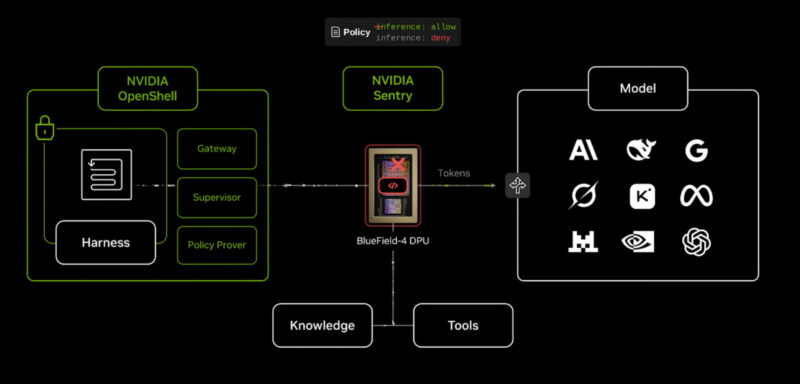
Like other NVIDIA reference architecture projects, OpenShell is not a new hardware or software project, but a guide on how to best use NVIDIA’s hardware. Specifically, the OpenShell reference architecture builds on its Vera Rubin platform at the hardware level, while the software side leverages its OpenShell secure runtime software, which the company introduced earlier this year.
The reference architecture document, in turn, lays out the rationale and best practices for using OpenShell as part of a complete and secure agentic AI operating environment. NVIDIA’s vision (and marketing pitch) is to use Vera Rubin for the LLM reasoning, Vera CPUs to handle the execution of agents and to run the OpenShell software stack, and finally using BlueField-4 DPUs as the hardware security enforcement mechanism. The reference architecture document, along with the relevant software, is being made available today.
Little Nugget for STH Readers
Several months ago, we did our BIG AI Cluster Little Power the 8x NVIDIA GB10 Cluster.
Since we built that cluster, the NVIDIA GB10s we used have recently doubled in price, and a new NVIDIA DGX Spark 64GB has launched to fill the void. The MikroTik CRS804-4DDQ-hRM that we used has become scarce.
The big news from GTC Berlin is an update to NVIDIA Sync Cluster Assistant. The update will allow DGX Spark to support clusters of up to eight units.
Final Words
NVIDIA’s GTC Berlin keynote comes as the AI boom continues unimpeded, or at least as fast as current supply chains allow. It is no coincidence that one of NVIDIA’s focal points for this year’s keynote is ramping up its supply chains, especially if they intend to facilitate large infrastructure buildouts in Europe. With DSX PODs in tow and a complex software ecosystem to run on top of them, NVIDIA aims to give European providers the tools they need to build and operate their own AI factories, and, in the process, fewer and fewer reasons to say no to NVIDIA.