

Lenovo ThinkStation PGX Power Consumption
Our Lenovo ThinkStation PGX came with a 240W Lenovo power adapter that terminated into a USB PD Type-C connector.
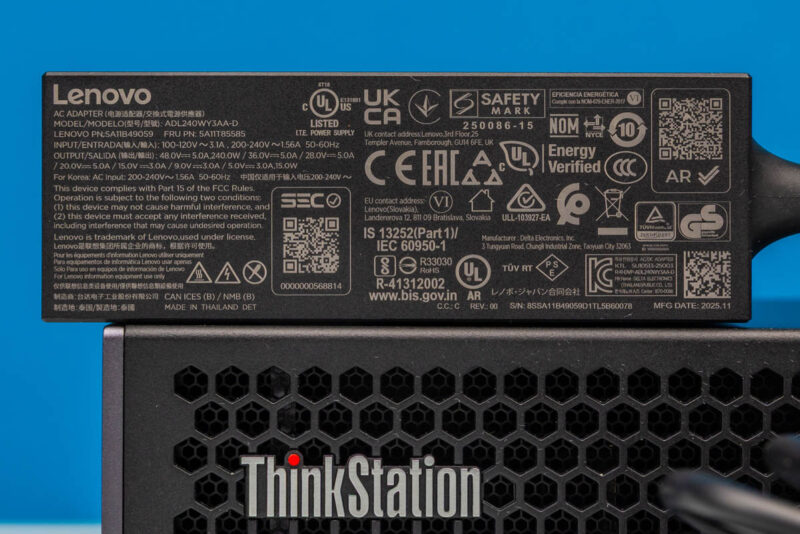
At idle, we were in the 38-40W range. This is much higher than mobile-focused Arm CPUs and iGPUs. On the other hand, one should remember that this also includes the NVIDIA ConnectX-7 NIC. Removing the connection can save something like 18W, but you are likely going to have it connected if you scale up.
Officially, this is a 240W box, but we saw peaks just under 200W, and the sustained load was generally in the 104-160W range, depending on what was running. There is probably room to increase power consumption from where we were, but overall, this is a good result.
Final Words
While Lenovo’s GB10 system is largely tied to NVIDIA’s design specifications in terms of functionality and configuration, Lenovo has still managed to put together a corporate counterpart to NVIDIA’s flashy gold box.
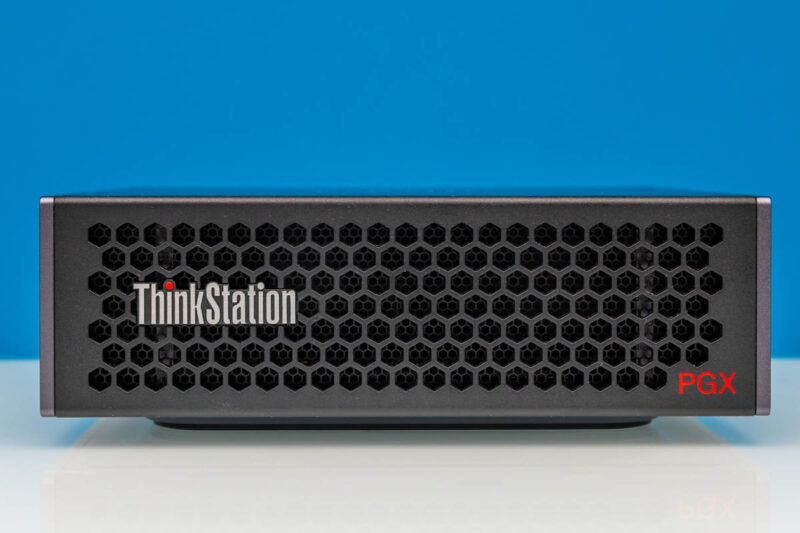
Chassis aesthetics and colors aside, the other big differentiator for Lenovo at the moment is minimum configurations and pricing. While NVIDIA only sells its flagship DGX Spark in a 4TB storage configuration for $4699 (previously $3999), Lenovo also offers a 1TB configuration for around $4100, making it a good way to shave $500 off the price of a GB10 system if you do not need the extra storage. Notably, these are post-adjustment prices, so with NVIDIA’s changes already reflected in Lenovo’s official pricing, you will not find any especially good deals here. On the other hand, many organizations have corporate discounts with Lenovo, and there are often coupons that can adjust the pricing.
Still, for curious developers who could find utility in a DGX Spark but may not need all that storage space, the 1TB ThinkStation PGX offers a tantalizing, meaningfully cheaper option for stepping into NVIDIA’s Grace Blackwell ecosystem.
With the current price of DRAM and ConnectX-7 NICs, the 1TB model is like buying an ultra-fast Ubuntu-based Linux Arm mini-PC with an NVIDIA GPU for a few hundred dollars.
When we first saw NVIDIA roll out its partner GB10 systems, we were a bit skeptical of the vendors’ ability to differentiate. But at a $500 lower price point and great cooling, GB10 boxes such as the ThinkStation PGX have become a strong alternative to NVIDIA’s in-house design, especially if your domain is the corporate world.
Where to Buy
If you wanted to find the Lenovo ThinkStation PGX online, here is a Lenovo web store affiliate link.


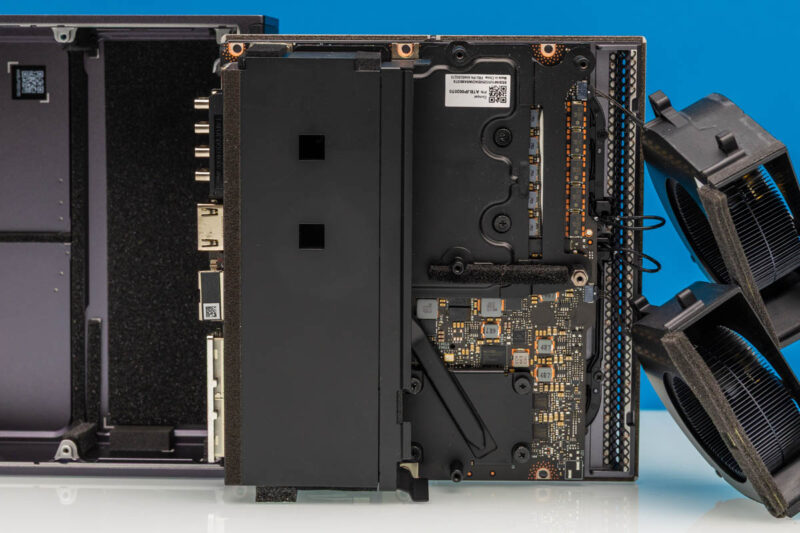
Why is the SSD controller called as *T*27? The chip is marked as PS5027-*E*27, and Phison website call it PS5027-E27T, the T, if any, should be a suffix rather than a prefix.
@eorof
Good catch! Thank you. That was indeed meant to be the E27T.
It’s possible that this is one of the features that Nvidia controls; but I’m a bit surprised by Lenovo not going with their squared off DC plug for the 240w input.
They use it for basically everything else that exceeds typical type-c power: mobile workstations, docking stations, mini-PCs; and so far the market for type-C PD monitors and docks and so on seems to have vanishingly few 240w options, so one gains little from a port that is technically more capable but will be filled by power adapter 100% of the time.
Not a giant dealbreaker or anything; but of all the outfits that have done a reskin of the Nvidia box I’d have expected a ‘think’-brand lenovo to have gone with an ecosystem-appropriate DC input instead.
That’s a very interesting point, Fungus. I hadn’t even considered the fact that most other Lenovo systems use the proprietary connector.
I strongly suspect your assumption is correct, and that this is something NVIDIA controls. But it is an interesting little deviation from how Lenovo normally designs/powers their SFF PCs.
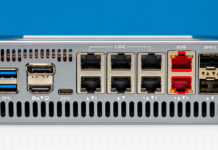
So whole it has 2×200 ports for 400 total, internally it is only able to handle 200 at most? Why not put 2×100 on this box if that is all that is usable anyway?
Good point Anne, but one decent reason is that it lets you just do 200G in a single DAC or optic so it is slightly more flexible.
You have mistaken wifi antennas with speakers
this is a really interesting direction for lenovo to take with their thinkstation line. the gb10 gpu in a workstation form factor is intriguing – i’ve been curious about how nvidia is positioning these smaller gpu solutions for enterprise ai workloads versus the traditional rack-mounted approach.
a few questions come to mind:
1. what’s the actual thermal performance like under sustained ai inference loads? workstations can sometimes struggle with thermals when pushed hard.
2. how does the 128gb memory ceiling impact model sizes? i imagine it’s fine for inference, but training would be quite limited.
3. what’s the upgrade path looking like? can users expand storage and memory easily, or is this more of a fixed configuration aimed at specific deployment scenarios?
the corporate angle makes sense – not every company needs a full data center setup, and having a quieter, office-friendly ai workstation could open up llmops to smaller teams that don’t have dedicated server rooms.
would be great to see some benchmark comparisons against other workstations in this emerging “ai workstation” category, especially against some of the amd-based alternatives that are starting to appear. the pricing will also be a key factor for adoption.
thanks for the detailed review!
@David:
#1: Very good question. I have some Asus GX10 boxes (same platform) and if they get thermally overloaded it seems they just hard shutdown. I solved that problem by orienting them vertically and pointing a fan at the front for good measure, but it’s not a great look for something that should be a reliable appliance.
#2: I have a cluster of 2 directly connected together via a QSFP56 DAC and it’s a quite capable inference machine for MOE models. The best info for this platform is on the nvidia developer forums and eugr’s “spark-vllm-docker” github repository. Takes a bit of terminal work to get going but it’s pretty stable. After a bit of experimentation, Qwen3.5-122b is my daily driver at about 40t/s with real-world agentic workloads.
As far as training, I haven’t tried that at all I’m afraid…
#3: Mostly a fixed platform; the SSD is upgradeable but it’s the uncommon 2242 format. Everything else is soldered down.