

I am here in New York City for Qualcomm Investor Day 2026 (thanks to Qualcomm for covering my travel). This is the event Qualcomm has been talking about as its venue for re-launching its data center offerings. Earlier today, with the OpenAI Jalapeño Intelligence Platform Shown Powered by Broadcom piece, we noted that Qualcomm announced a big acquisition of Modular today to help bolster its AI story. The company is going to go into more than just the datacenter, but that is what I wanted to focus on today.
Also, I am typing this live, so please excuse typos.
Qualcomm Investor Day 2026 Datacenter Announcements
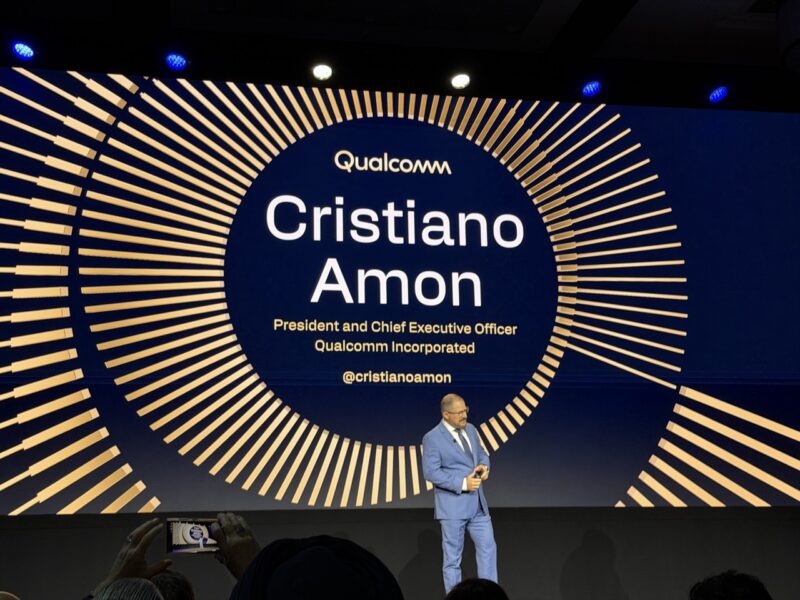
Christiano Amon, Qualcomm’s CEO is up first.
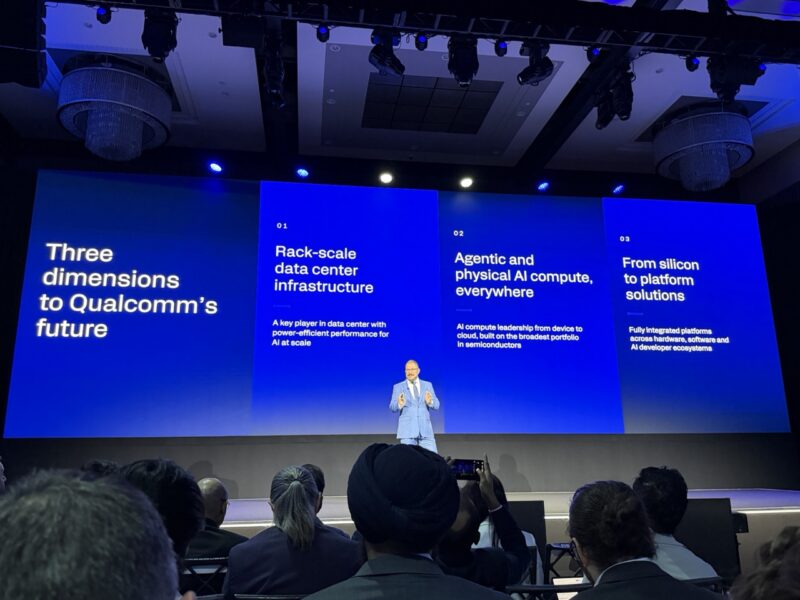
In the three dimensions to Qualcomm’s future, number one is rack-scale data center infrastructure.
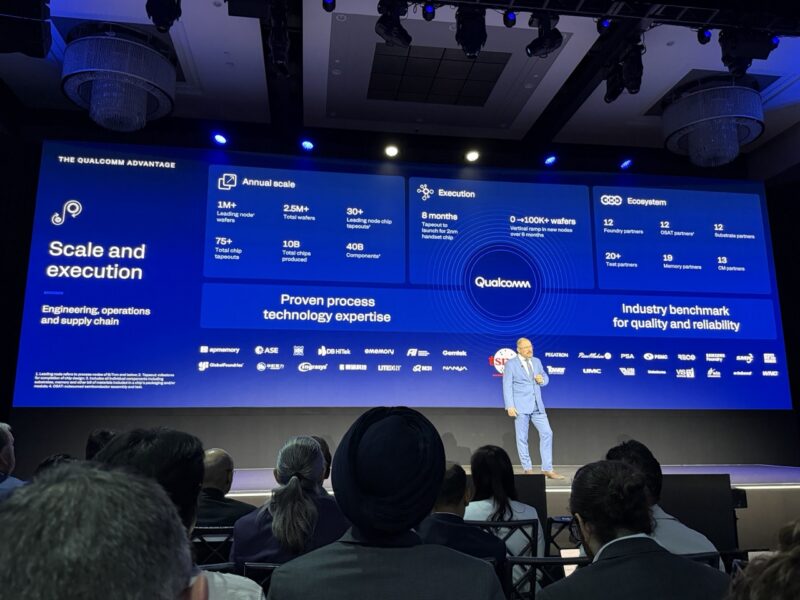
Christiano has a slide on the scale of Qualcomm’s IP.
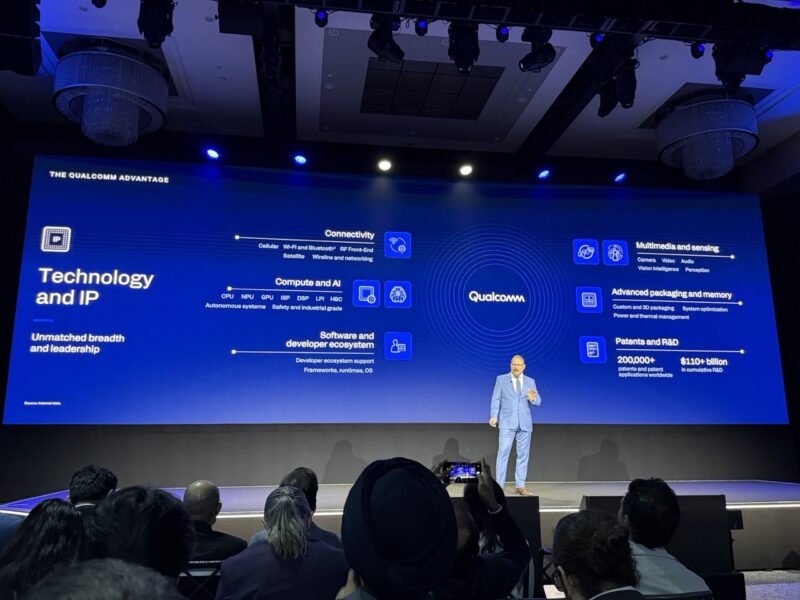
Here is a slide on just how Qualcomm consumes over 1M leading-edge wafers, and has a lot of technology.
Next up is Tony Pialis, Qualcomm’s head of data center.
The agentic AI era requires new compute infrastructure.
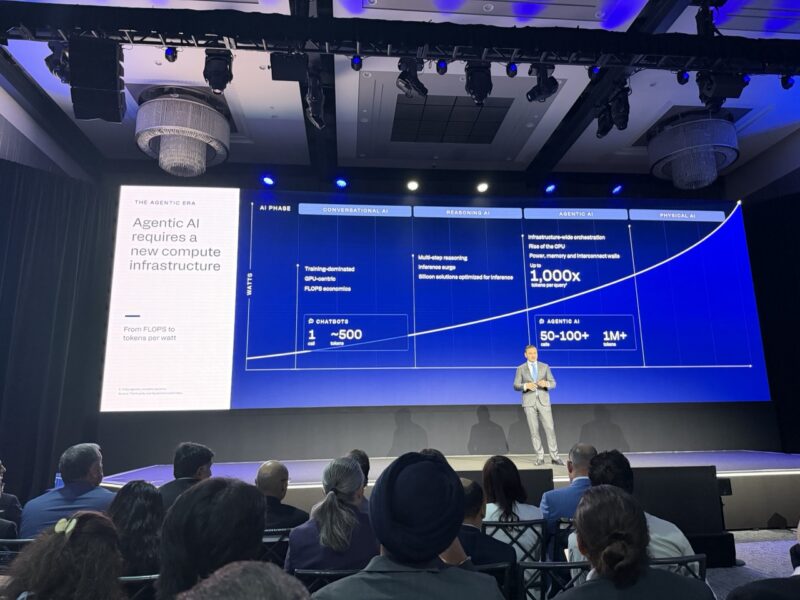
Qualcomm is saying that agentic AI will reshape infrastructure.
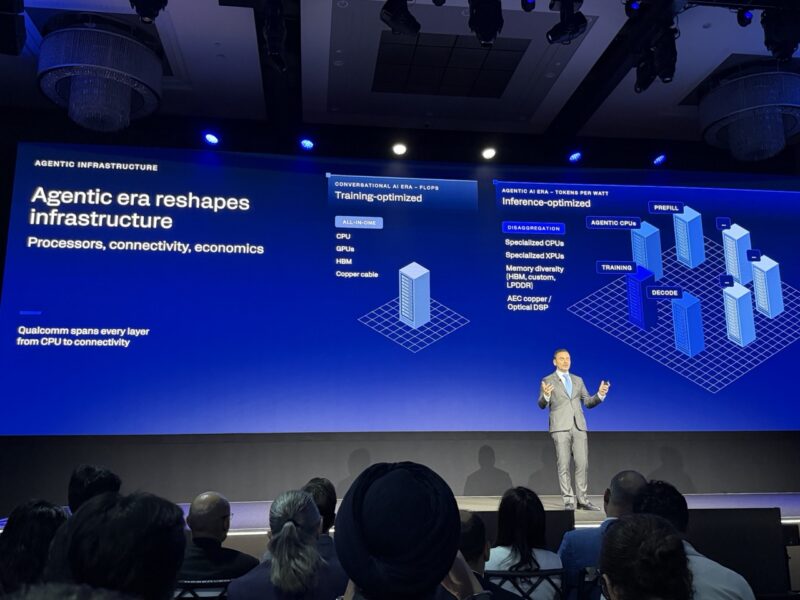
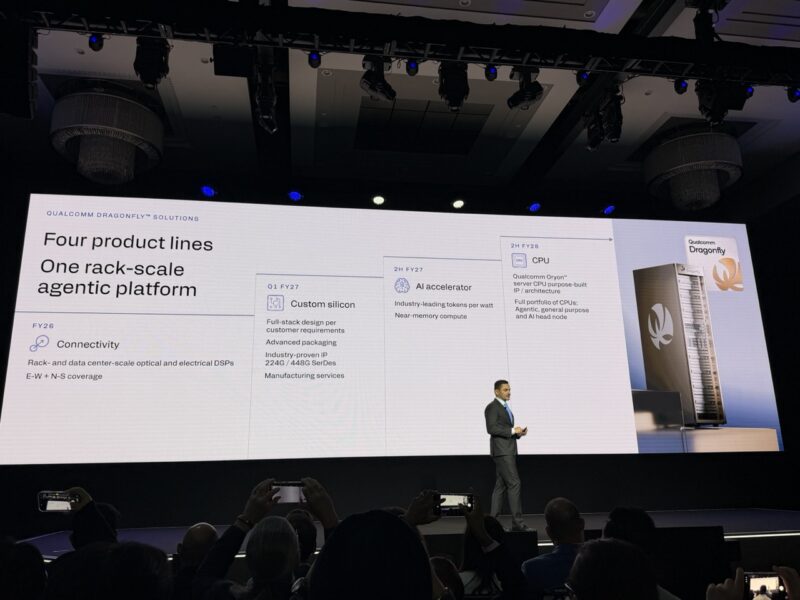
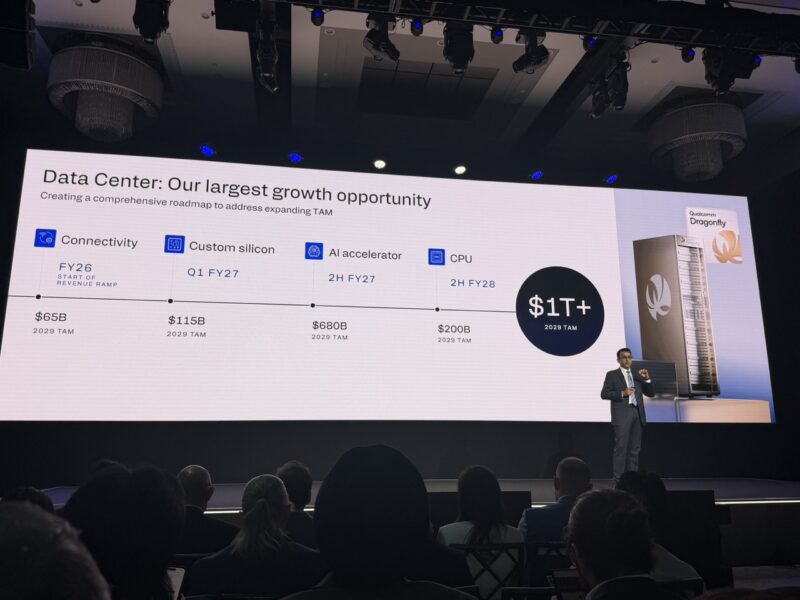
The company is now qualified on its connectivity solutions from Alphawave. Next will be custom silicon. Then a new AI accelerator. There is also a new CPU on the roadmap for agentic AI.
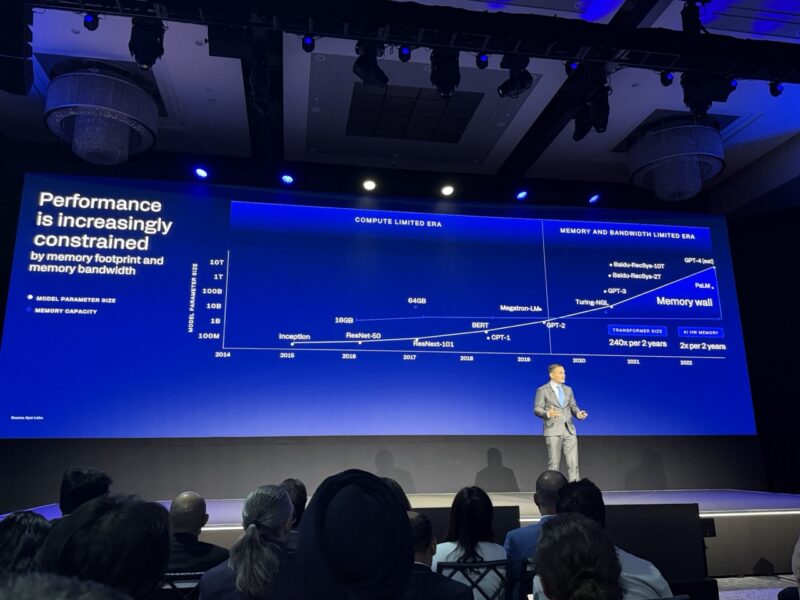
Setting up the challenge, performance is constrained by memory footprints as models get much larger. This makes sense as we often see AI inference performance and capabilities limited by memory capacity and memory bandwidth.
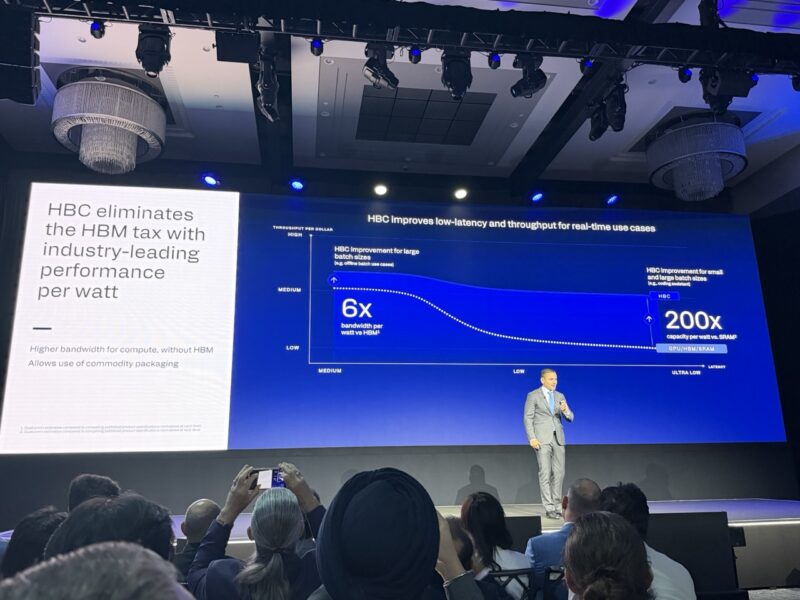
This is one of the huge innovations. High Bandwidth Compute (HBC). Instead of HBM over CoWoS interposer, Qualcomm is saying that it will stack memory on top of compute tiles. Details are a bit light, but it seems like 768GB or so of LPDDR memory and a base die with compute that operates as an accelerator. It also sounds like there are going to be different versions of this for other markets such as smaller versions that can go into maybe automotive or client devices.
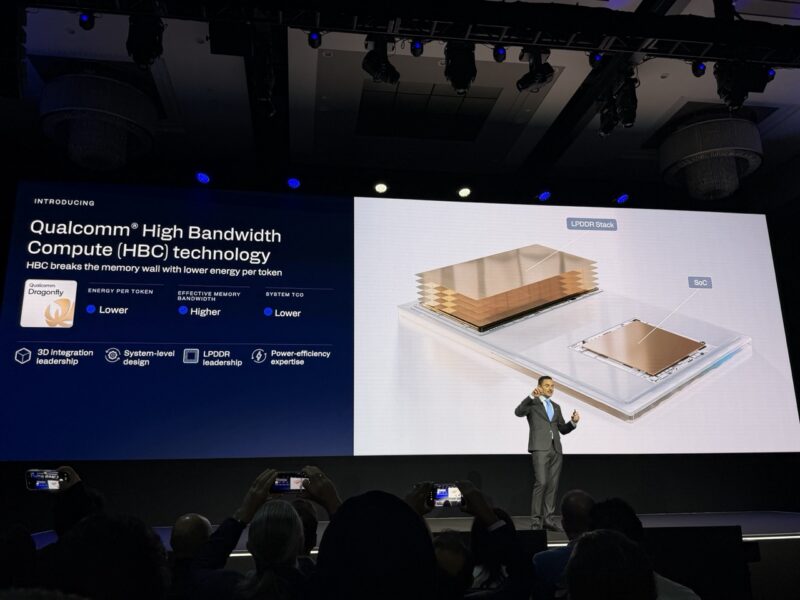
Qualcomm says HBC is the best performance per watt because it saves power from having to move across an interposer to HBM. The idea is that this will compete with HBM in capacity and SRAM performance because it is closer to the CPU or accelerator.
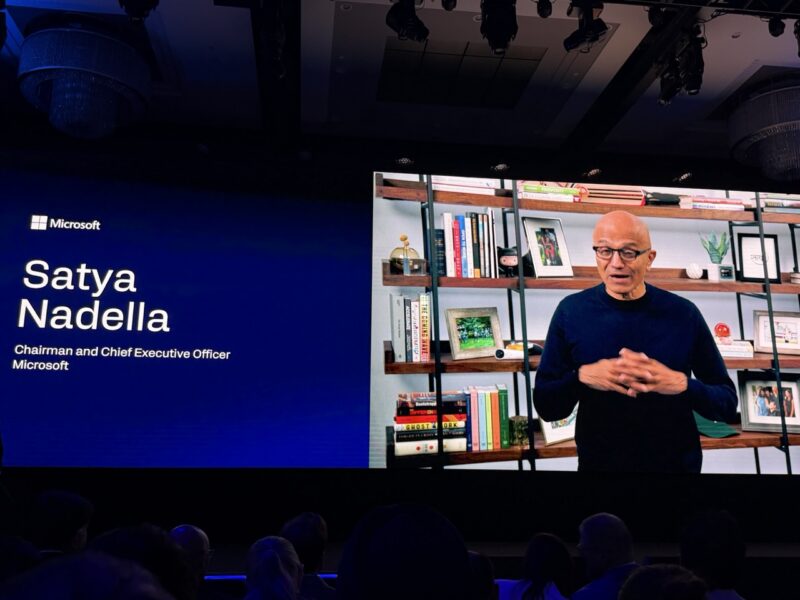
Qualcomm has a message from Satya Nadella, who is talking about the partnership from PCs to AI agents, and HBC in the data center.
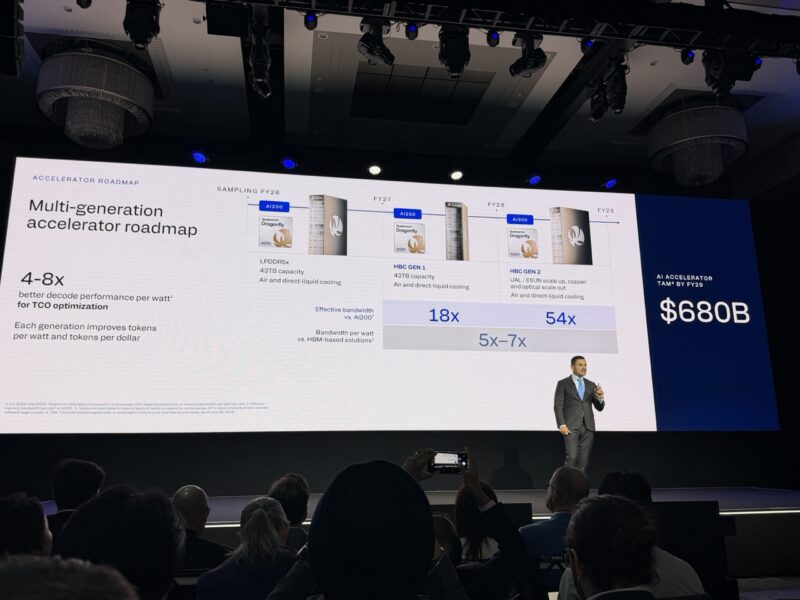
Qualcomm says HBC is coming with the AI250 generation in 2027. Then alongside HBC Gen2 (AI300?) Qualcomm will integrate fabrics like ESUN and UALink.
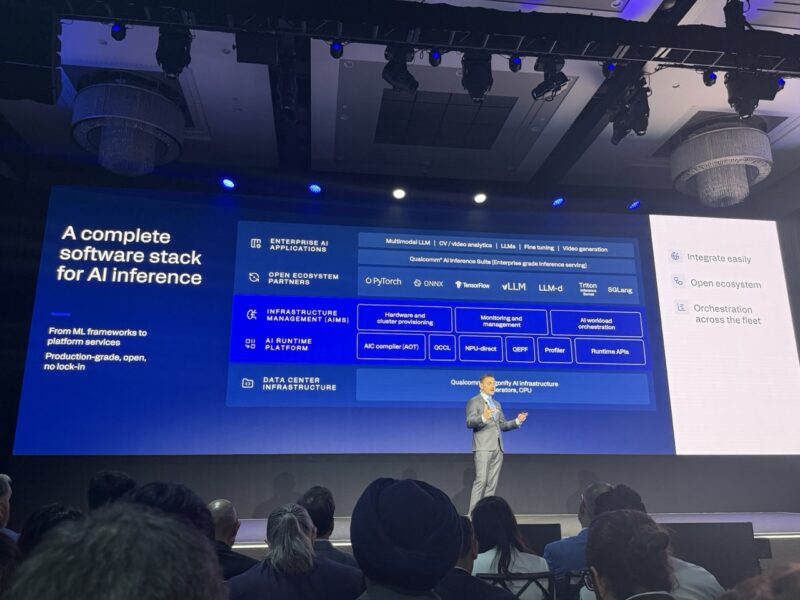
Qualcomm is talking about its stack, something that has been challenging for Qualcomm’s AI100 series.
Qualcomm has Tim Davis, co-founder of Modular.
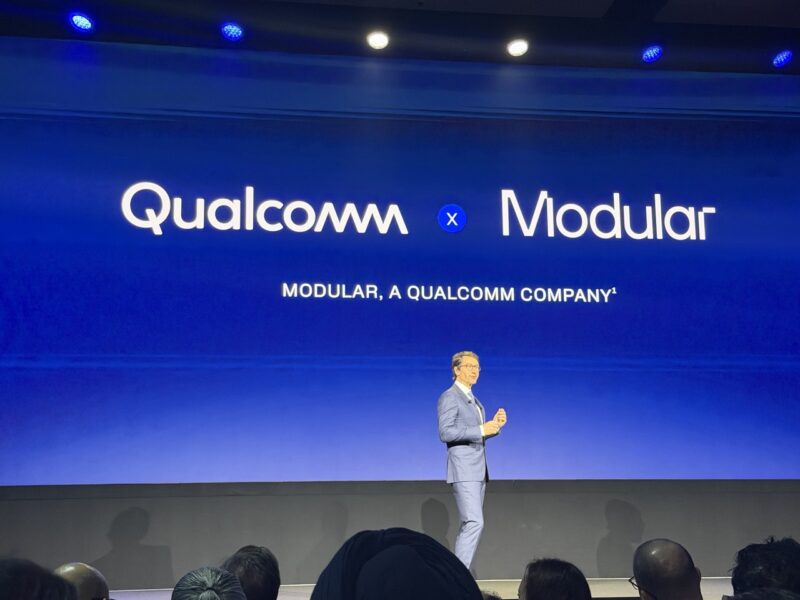
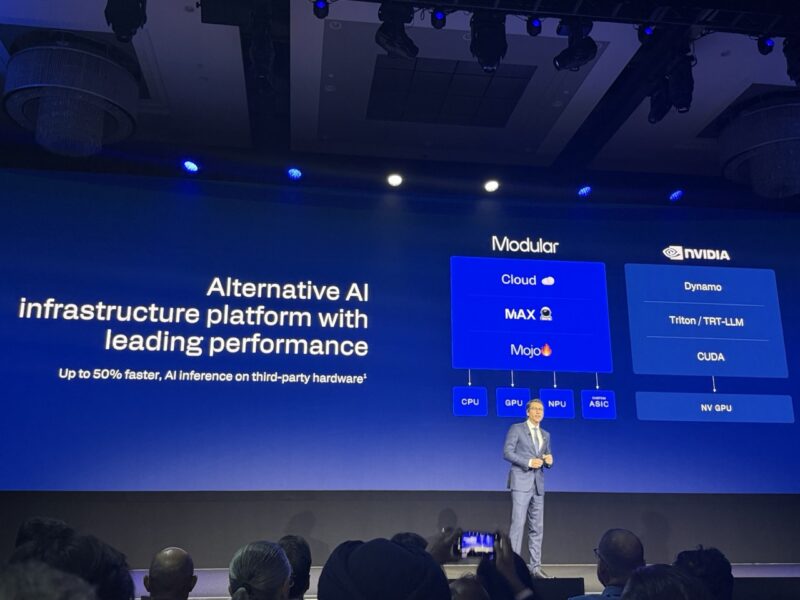
This is Qualcomm’s stack to take on CUDA, Dynamo, and Triton, among others. The idea is that you use Modular and then you can use heterogeneous compute.
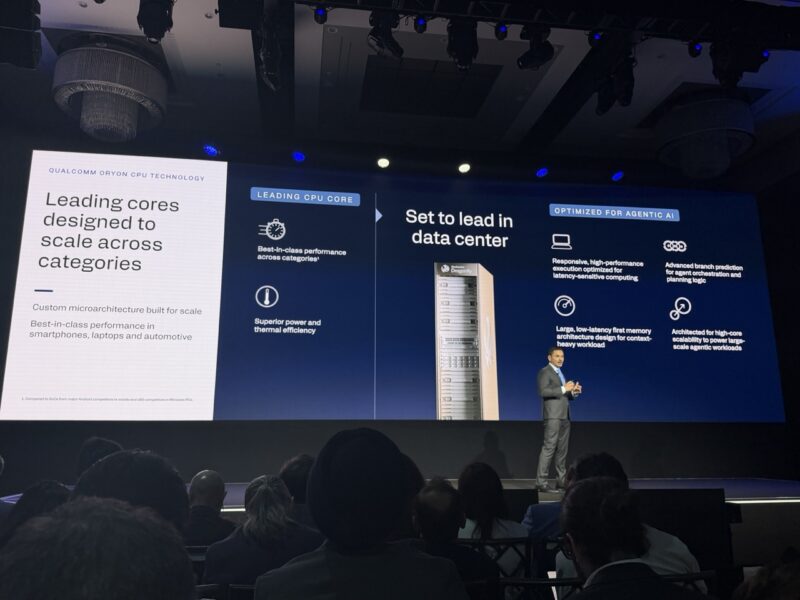
Qualcomm says that having leading cores allows it to win in industries. Tony is pushing back on the idea that Qualcomm is late to the data center.
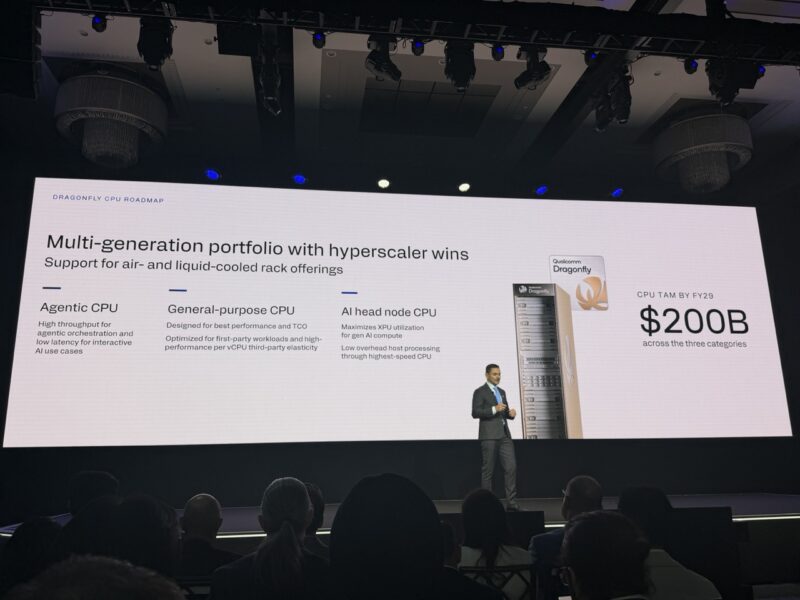
Qualcomm says that it has multi-generational lines in its portfolio and has hyperscale wins. That makes sense given some of the cameos we are seeing.
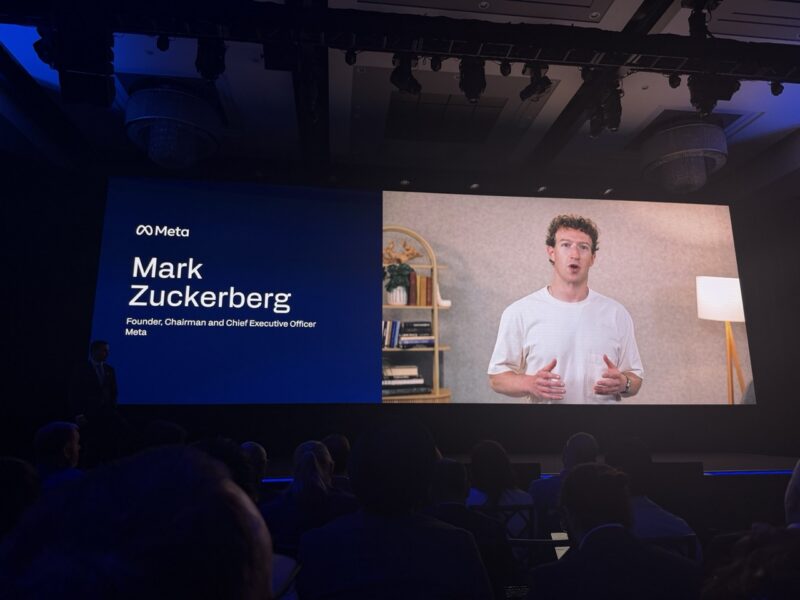
Mark Zuckerberg is saying that Meta entered a multi-generational agreement to use Qualcomm’s processors. This is a big deal since Arm AGI CPU Launched with Meta on stage.
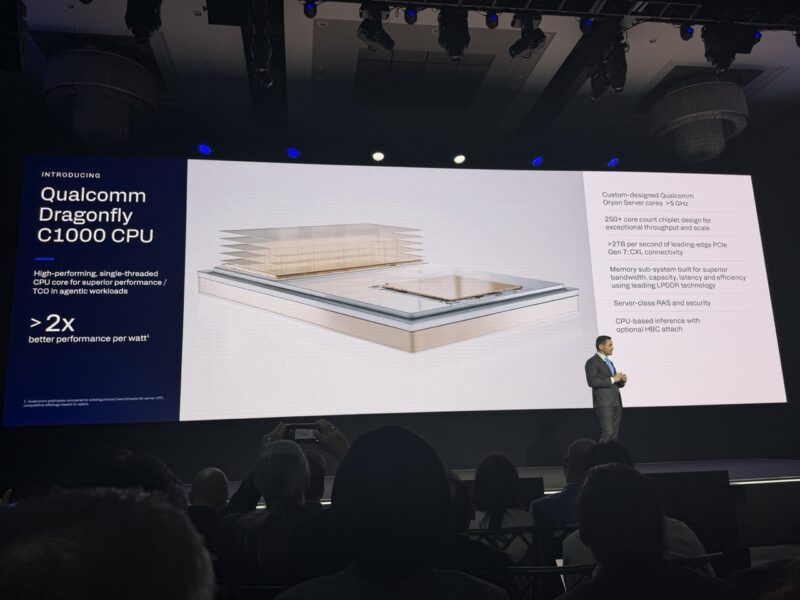
Here is another one of the company’s new announcements: The Qualcomm Dragonfly C1000 CPU. This is a chiplet design with 250+ cores, with PCIe Gen7, CXL, LPDDR memory, optional HBC attach, and enterprise RAS features. One interesting part is the 250+ core count, which is a level Intel will argue it hit with Intel Xeon 6+ “Clearwater Forest” and AMD will hit with Venice this year. So a PCIe Gen7 era chip with 250 cores will not be notable during its release window. What will be interesting is those cores running at 5GHz. Clearwater Forest and AMD EPYC’s Turin Dense generation are not running at those clock speeds. That is what makes the 2x better performance per watt claim interesting, since increasing clock speed is not normally what folks think of when they think of better performance per watt. Perhaps the other interesting part is the memory with the option for HBC attach.
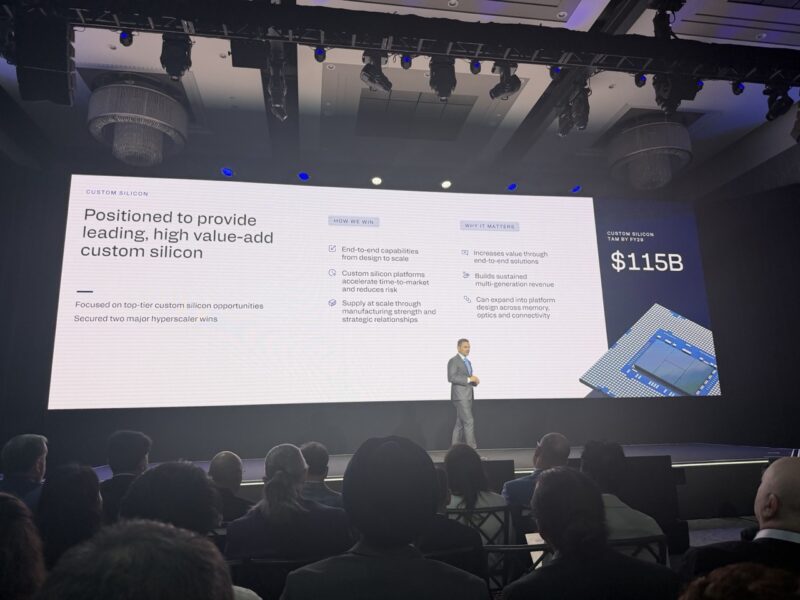
Qualcomm says that it is positioned to provide value with custom silicon with a $115B TAM.
The company says that it is using a number of engagement models for those looking to engage Qualcomm on custom silicon.
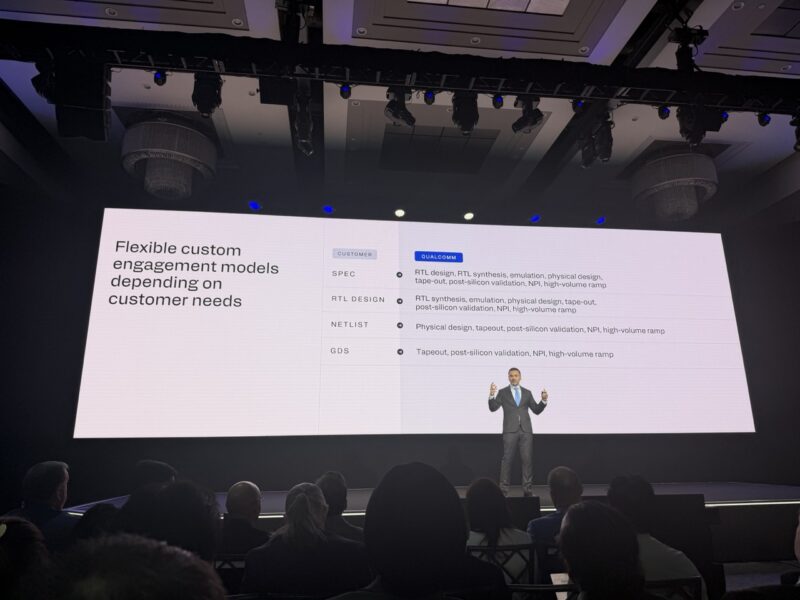
This is one of the reasons for the Alphawave acquisition. Qualcomm needs to have solid connectivity as well, so that will be important in future generations of custom silicon.
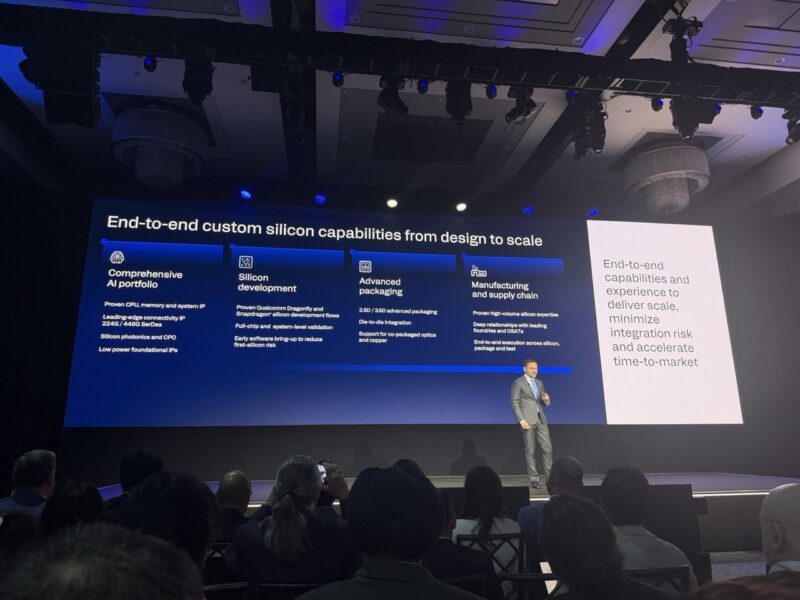
Now the company is getting into hyperscaler connectivity.
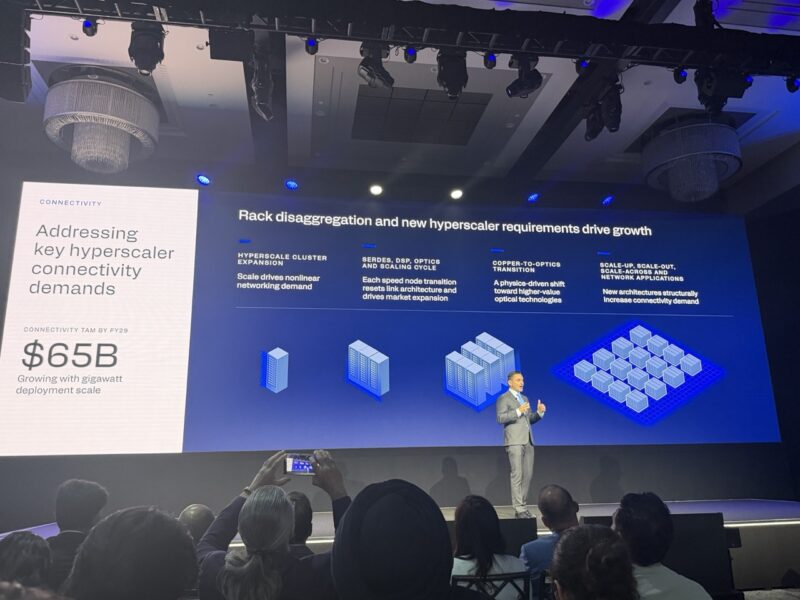
Here is a look at the connectivity portfolio from die-to-die, co-packaged optics, PAM4 electrical SerDes, PAM4 optical SerDes, and QAM16 coherent light. If you want to learn more about coherent optics, we did a lab tour at Marvell with Marvell’s 800G ZR Optics. That will be a big industry for longer reach high-speed networking.
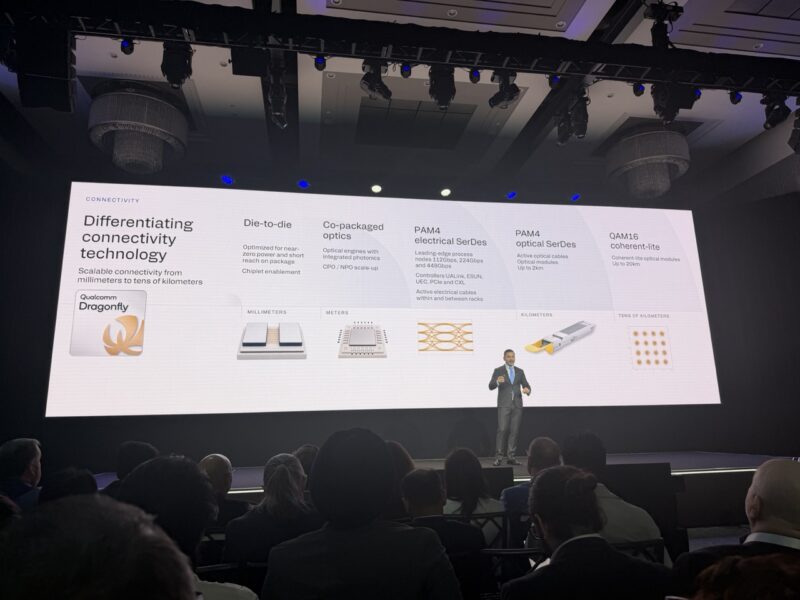
Here is Qualcomm’s connectivity roadmap in 2026 with Broadcom, Marvell, and others in their crosshairs.
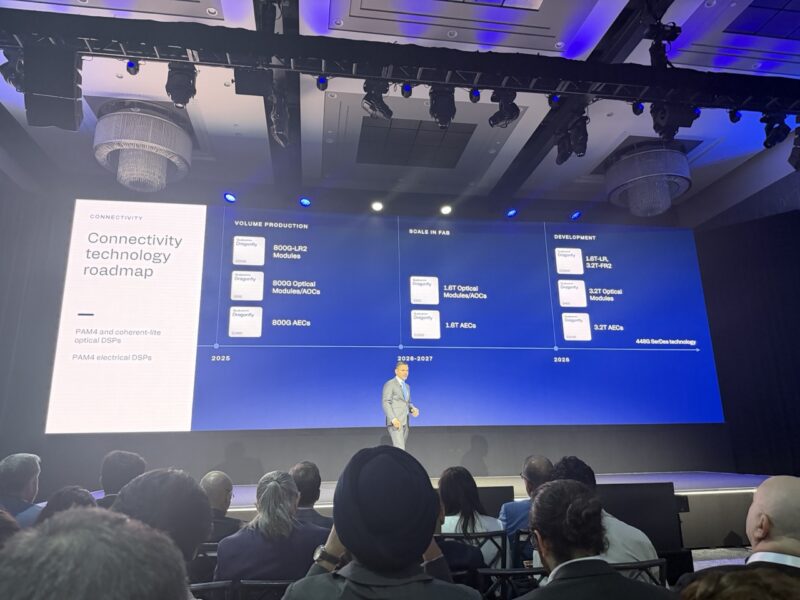
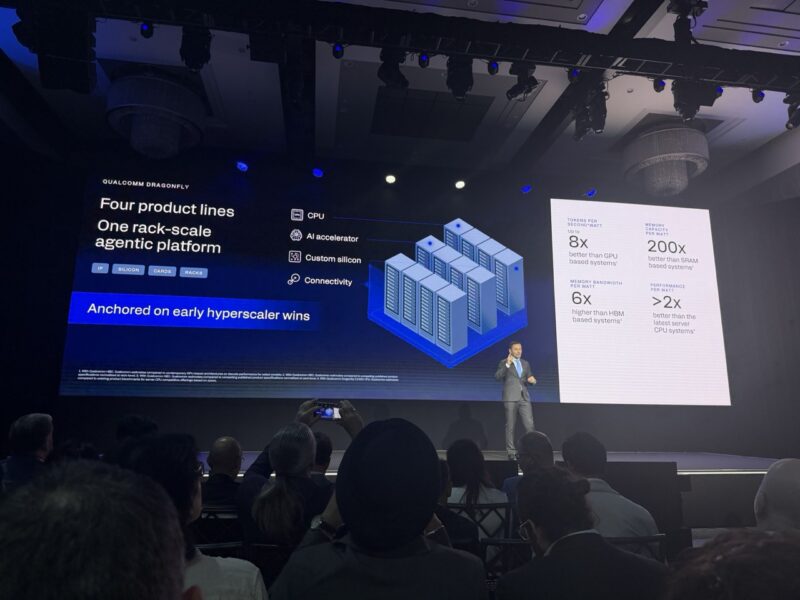
We are starting to wrap up. Here are the four lines for Qualcomm: CPU, AI accelerators, custom silicon, and connectivity.
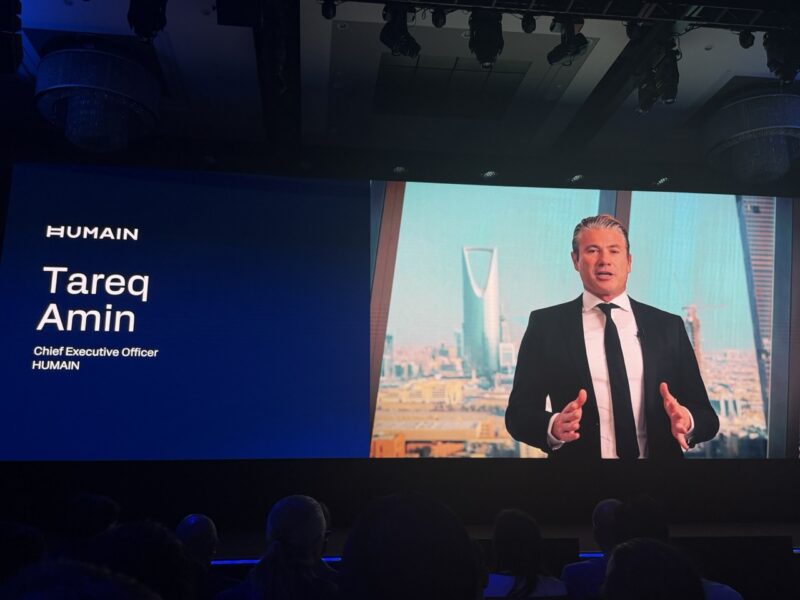
As the last guest, one of Qualcomm’s big partners, Humain’s CEO Tareq Amin, is talking about their partnership. Humain and Qualcomm have a long partnership, so perhaps this is not the most surprising.
Ok, wrapping up and moving to automotive so I am going to cut it here.
Bonus: Arduino Ventuno Q With Qualcomm Dragonwing
As a bonus, as I was wrapping up this piece, I heard “upstream Linux” looked up, and there is a new Arduino Ventuno Q platform coming with Qualcomm Dragonwing.
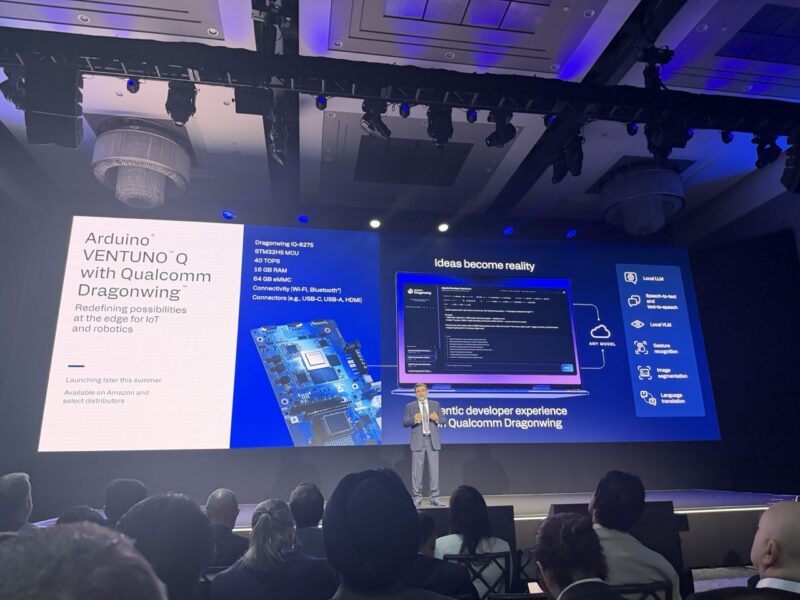
This will have a Dragonwing IQ-8275, STM32H5 MCU, with 40 TOPS, 16GB of RAM, 64 GB eMMC, and Wi-Fi plus Bluetooth. Best is that it looks like you will be able to buy this at Amazon later this summer? I wonder how much this will cost, but I feel like we need to get one for the lab.
Qualcomm Data Center Growth Forecasts
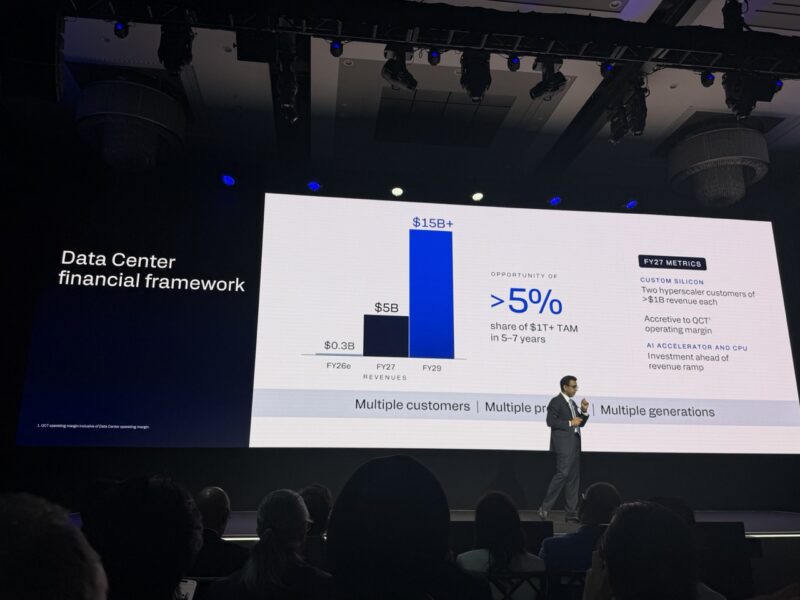
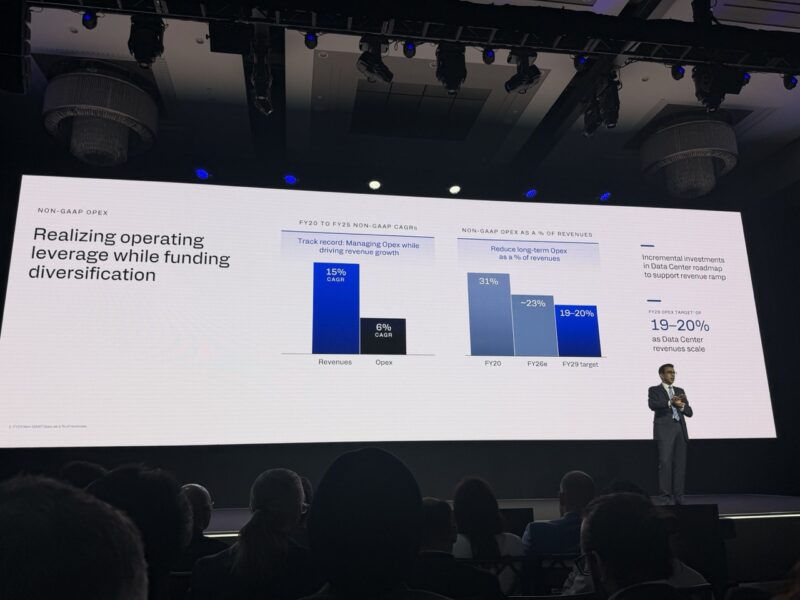
Since this is a financial event, first off the disclosure that this is not investment advice. Please watch the livestream for what Qualcomm precisely said. Get your own investment advice, but this is not it. The big number is that, compared to the forecasts that Qualcomm gave 18 months ago for its FY29, it updated its revenue target from $22B to $40B. A major part of that is the data center.
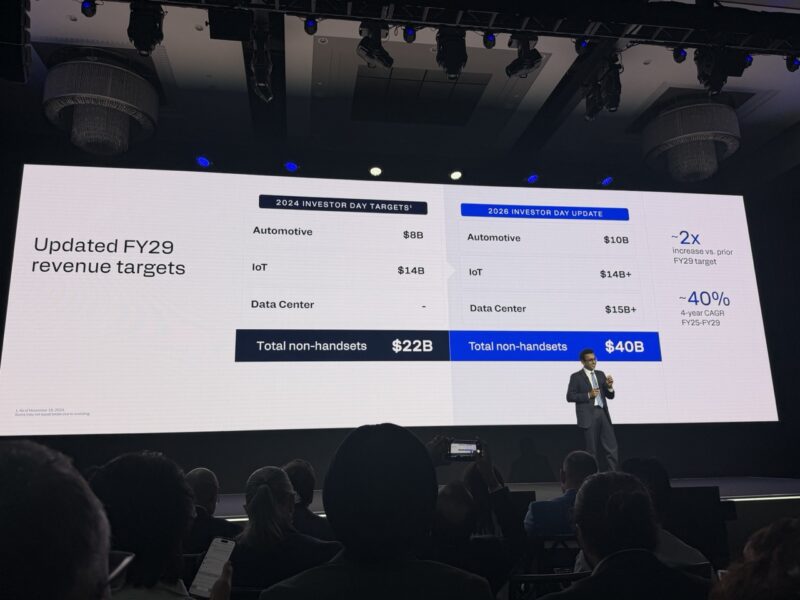
Qualcomm’s FY26 already has data center revenue due to connectivity. Over the next few years, it will add the products above to new markets.
In FY27, two hyperscaler customers are driving over $1B each. Then the AI accelerator and CPU products will arrive. Qualcomm is looking for over 5% of a $1T+ TAM share in 5-7 years.
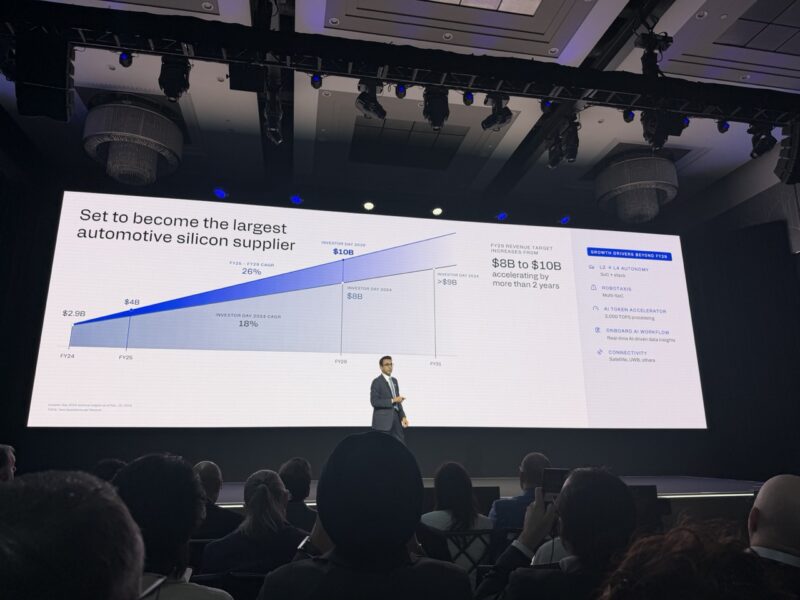
On the automotive side, Qualcomm is also raising its forecasts as it leans into covering more silicon in vehicles.
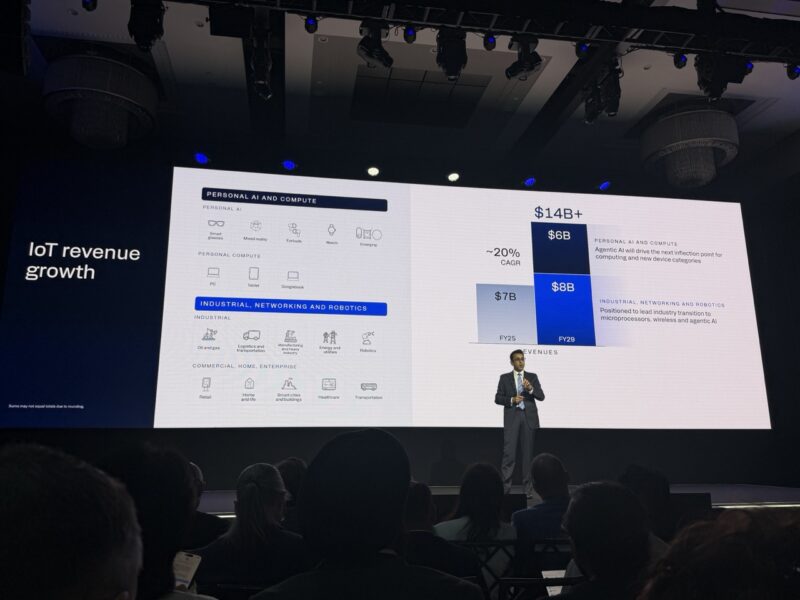
IoT is also likely to be a high-growth area for Qualcomm.
Phones and PCs got some discussion, but it was clear that the data center is the big growth driver. It is also becoming an industry theme due to rising memory and NAND pricing, and cooling sentiment on the consumer side. On the other hand, when you see the financial model, it makes a lot of sense to reallocate engineering resources (and memory/ NAND) to the data center segments.
Cristiano said that all the server CPUs produced are selling. He also thinks that if the environment is more competitive when they launch in 2028, the C1000 will be a very competitive part.
Final Words
Starting off, I do not think the Qualcomm Dragonfly C1000 is going to be mainly targeted at enterprises. This feels like Qualcomm is focusing on a few large customers (this is not the Centriq 2400). It is also notable that Arm and Qualcomm both had Meta talking about their upcoming server CPUs, so that brings into question what roles Arm will play in the future, as well as AMD (and Intel once Coral Rapids arrives). The Modular acquisition is really important. As we discussed in a recent Substack post, even after years, the Qualcomm AI100 that you can buy in a new Dell laptop has a challenging software stack to say the least. This feels like a reset from Qualcomm. New hardware, a new software framework, and a focus on connectivity. It also feels like Qualcomm’s initial generations are focused on running in a heterogeneous environment with other CPUs and accelerators, and that is what makes Modular make more sense.
Cool announcements, but I am excited to see the hardware.


AI250 looks interesting – but what does “effective bandwidth” really mean?
What’s AI250 TOPs/TFLOPs rating (as it’s supposed to do in-memory compute)?