

The Parts Where We Do Not Expect AMD EPYC 9006 Series to Play
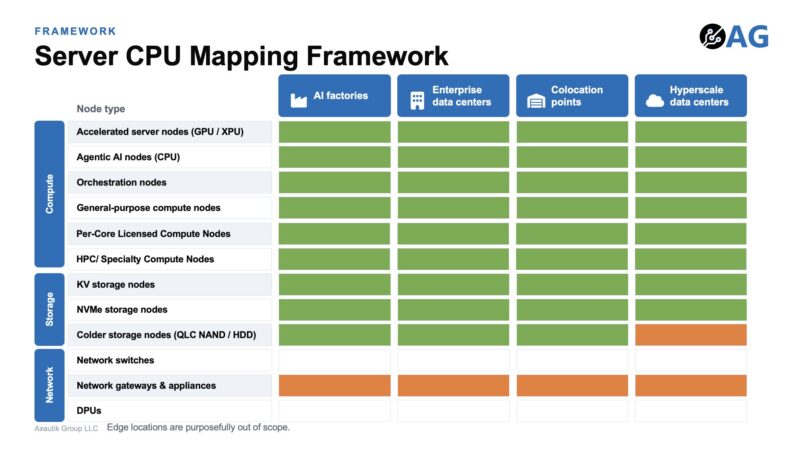
For completeness’ sake, you probably noticed that there is a final Network section. We should cover that. Instead of going row-by-row as we have done with the rest of them, we are going to simplify this, because this is probably the area in the data center we expect the EPYC 9006 series to have the lowest impact.
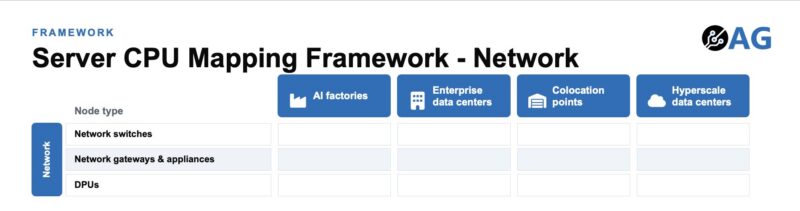
Currently, lower-end network switches (e.g. the 1GbE management network switches) use low-performance Arm processors that do not meet our definition of data center processors. You can contrast that with higher-end switches, which often use x86, since many of the SONiC and other distributions work really well with an x86 processor. Generally, these use Intel Atom-derived lines, Xeon D lines, or something like an AMD EPYC 3001 series control plane processor. Even at 130W on the SP8 platform, it feels like that is too high for a network switch, even in the 102T and faster era.
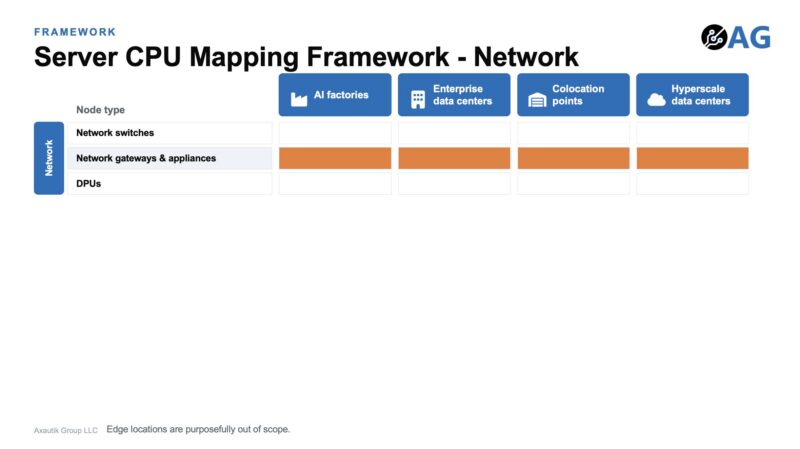
On the DPU side, that is also easy. DPUs have largely migrated to Arm-based designs at this point. AMD Pensando, Intel, NVIDIA, AWS, and Marvell all use Arm cores in their primary DPUs, although some hyperscalers use other architectures. A 130W+ x86 CPU is not really the right design for the current DPU scope.
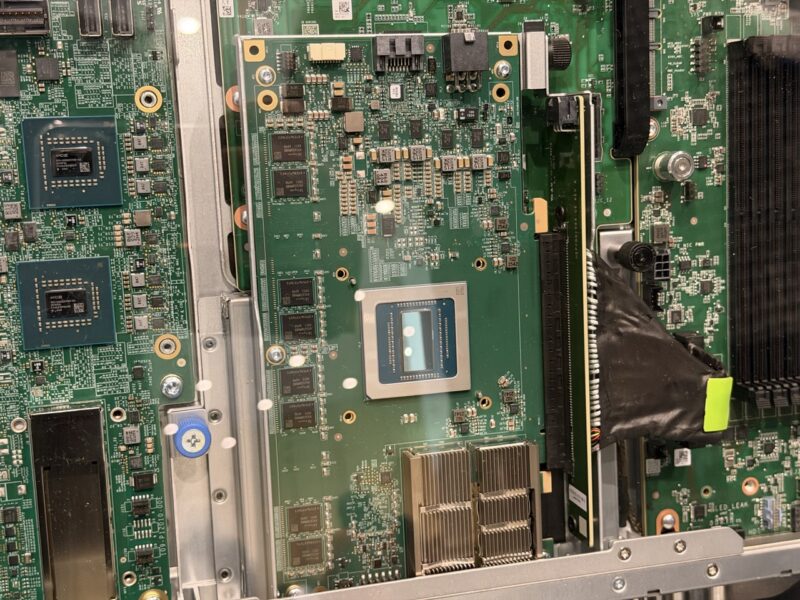
The network gateways and appliances are an interesting space. We have toured Neocloud providers and enterprise data centers where they use VPN and security appliances based on larger Xeon/EPYC CPUs. I think that area is diverse enough that there is probably some market opportunity for the EPYC 9006 series, but it is also one where lower-end devices end up going to lower-power chips. I say this, but there are a few Xeon 6 SoC parts sitting at over 300W TDP, so perhaps this market is larger than I am giving it credit for.
Final Words
Overall, AMD’s approach differs from the Arm AGI CPU or the NVIDIA Vera CPU in terms of expansiveness. It somewhat reminds me of the legacy Intel Xeon approach to market segmentation. I say legacy because Intel in 2026 is very different from Intel in 2019 in its approach. AMD will have 2-4 distinct platforms, and its focus on single-socket over the years means it effectively gets even more coverage.
In this generation, AMD has a tailwind because it will have a full stack out before Intel’s Diamond Rapids, and Clearwater Forest targets a different market. The x86 market is what will run 2026-2027 enterprise servers, and even NVIDIA knows this, given its collaboration with Intel to eventually bring an Intel-NVIDIA x86 platform alternative to its own Arm-based CPUs. Perhaps the biggest takeaway is that the 2026-2027 cycle will be extremely supply-constrained, from everyone we have talked to. We expect AMD to compete on enterprise AI head nodes, Helios head nodes (of course), agentic AI CPU racks, and many traditional server CPU segments where AMD has gradually expanded its scope each generation.
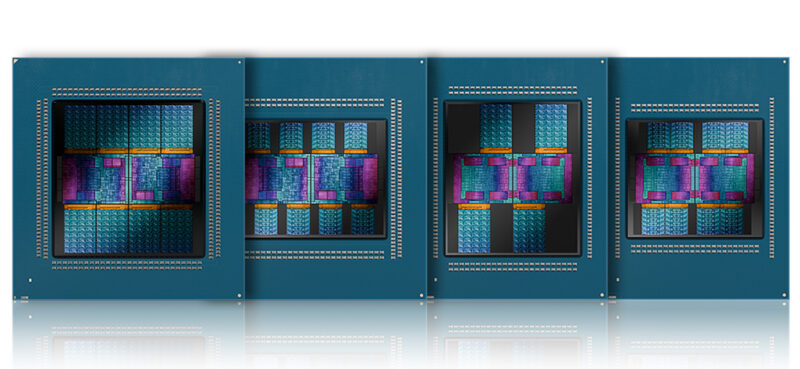
It may seem strange, but when the AMD EPYC 7001 series launched in 2017, there were only eight SKUs, which is more than many newer CPUs are launching with, at least publicly. What we have seen over the years as AMD EPYC has taken share from Intel Xeon is that each pocket of the market they address seems to have its own CPU requirements, to the point that we have a big socket, smaller socket, extra cache on some, and LPDDR5X on others with the EPYC 9006 series. Having seen Intel, and now AMD, go through a similar exercise in hitting more cores, frequency, TDP, and socket points, there is probably a reason gaining market share means more SKUs in the stack. AMD spans a huge array of features, from 8 cores to 256 cores. That 32x core-count scaling in the same generation is like selling a dual-core CPU in 2019 when Rome came out, which is hard to fathom. Once you get to the agentic AI not just running sandboxes, but also demanding data from traditional applications and data sources, perhaps the answer is that AMD needs to have such variety in its stack. Exciting times in the server CPU market for sure!
If you want to see a bit more on the categories, we went into them in the Substack here:

I love these