

Supermicro SYS-112D-40C-FN8P Power Consumption
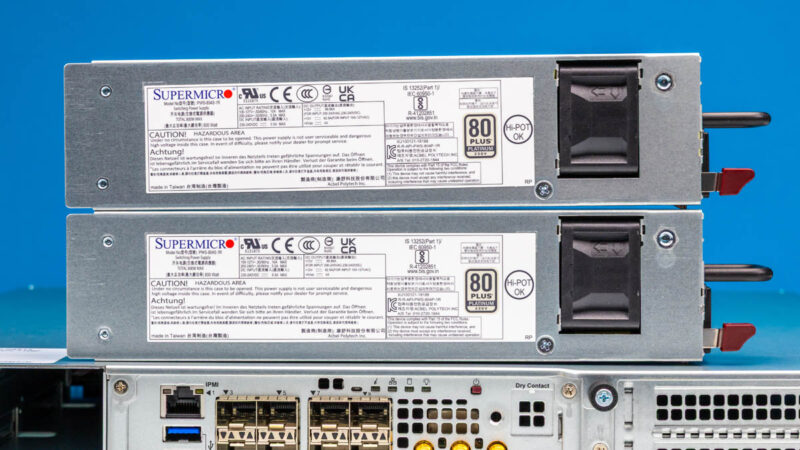
Supermicro offers a number of power supply options, but we have the 800W units designed to also power the 235W TDP SoC, but also add-in cards.
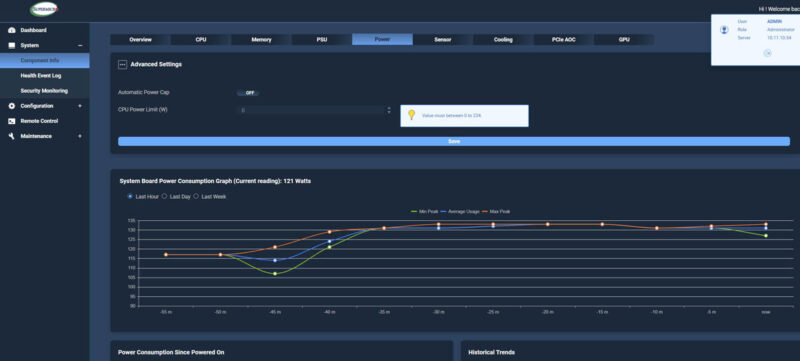
Idle power was significant. We generally saw idle in the 105-135 range, and we saw peaks close to 300W. That is nowhere near the power supply limits, but adding a dual width PCIe accelerator is possible in this power envelope.
Many folks ask about noise in our reviews. We do not publish that for servers. This is designed to be tucked in a closet and out of earshot. It is not quiet by any means (nor anywhere near the loudest server.)
STH Server Spider: Supermicro SYS-112D-40C-FN8P
In the second half of 2018, we introduced the STH Server Spider as a quick reference to where a server system’s aptitude lies. Our goal is to start giving a quick visual depiction of the types of parameters that a server is targeted at.
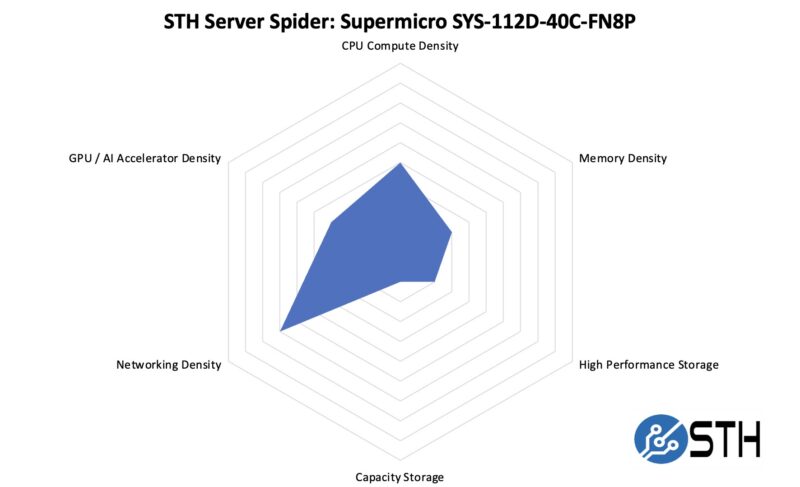
This is not the densest server by any means. At the same time, there is a lot of built-in networking, which makes it a really interesting box. A few years ago, we would have been excited by eight 1GbE or 10GbE. Now we get eight 25GbE ports, which is very exciting indeed.
Final Words
It is fun to recall that the Intel Xeon D line’s big break was Facebook using them for high-density Yosemite web hosting nodes. Around a decade later, we have a mid-range SKU with 40 cores (up from the launch Xeon D-1540 8 cores), integrated vRAN boost (that used to be an eASIC PCIe card), 8x 25GbE networking (10x the throughput of Broadwell-DE), and so much more. On the other hand, Intel has really moved Granite Rapids-D into the 5G/ telecom space with all of this, so the “midrange” 40-core model is now over $3500 alone. These are no longer-sub $1000 motherboards, let alone servers.
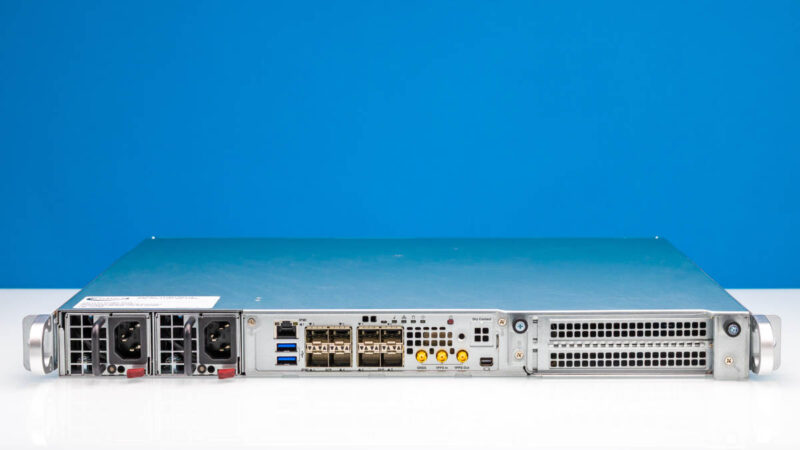
With this generation, we have Intel E800 series NIC IP that gives us 8x 25GbE networking. It also gives us a lot of memory bandwidth with four DDR5-6400 channels. That, combined with the Granite Rapids generation P-core and 160MB of L3 cache means that this is a fast computing platform. It also performed well on our new AgentSTH suite. Perhaps also fun is that we got to see an OCXO clock and a GNSS receiver used for precision timing required by telecom, financial, and other industries. Overall, Supermicro has a lot of performance and features in this server, with the ability to house additional expansion cards.
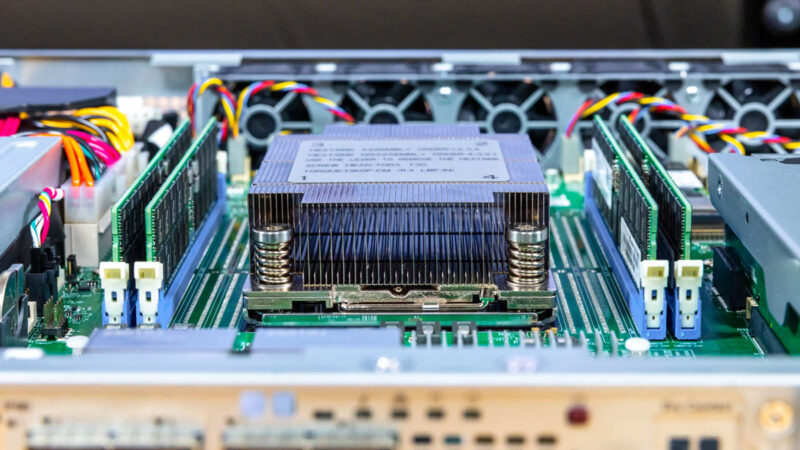
Overall, we covered a lot in this review. Not only did we look at a new server, but we also previewed our new AgentSTH methodology that will launch alongside Ubuntu 26.04 LTS next week. It is always fun to see a new Intel Xeon D series, and this is the first Granite Rapids-D (Intel Xeon 6 SoC) server we have tested. Generally, Supermicro is either the first or second vendor to market with the Xeon D parts and they have a broad portfolio of platforms with it. We have another system that we will review soon on STH.

 to provide 8x 25GbE)
This is the best server review you’ve done in the last year
What tool do you use for the core-to-core latency?
@Nikolay it’s an open-source tool called core-to-core-latency written in Rust
On the one hand the 8x25GbE (and a way to expand to 16) makes this seem like an interesting network-focused server — maybe a box doing load balancer duties and firewall for a bunccollection of servers behind it, maybe other tasks like caching/serving static stuff. You can get much better RAM/storage/compute density but you often don’t need that for those sorts of tasks. On the other hand, with 40C it feels like it ought to have more work to do than just that!
Also, the clock stuff is just neat!
@David Thanks for the info!
Is the datacenters also leaving VGA? Wow!
And 25gb/SPF28 NICs
What the world coming to?