Gigabyte AI TOP ATOM Internal Hardware Overview
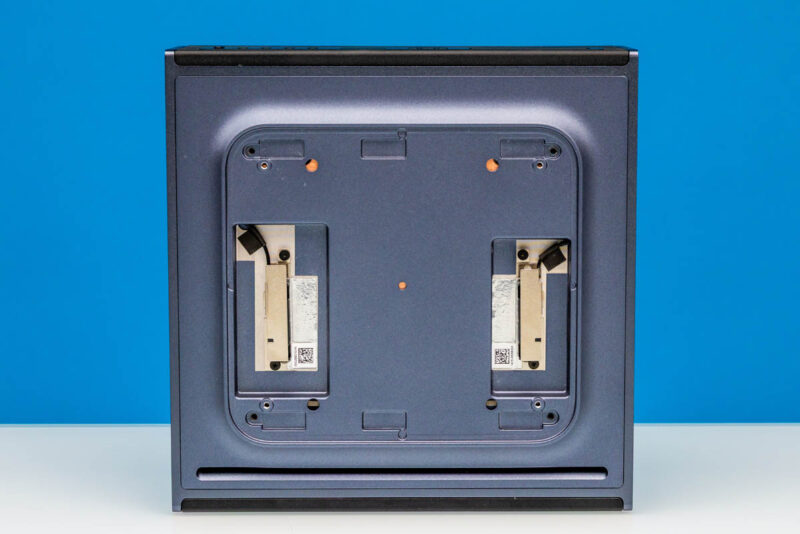
Removing the bottom plate of the AI TOP ATOM reveals additional components that must be removed to gain meaningful access to the system – including the system’s integrated speakers.
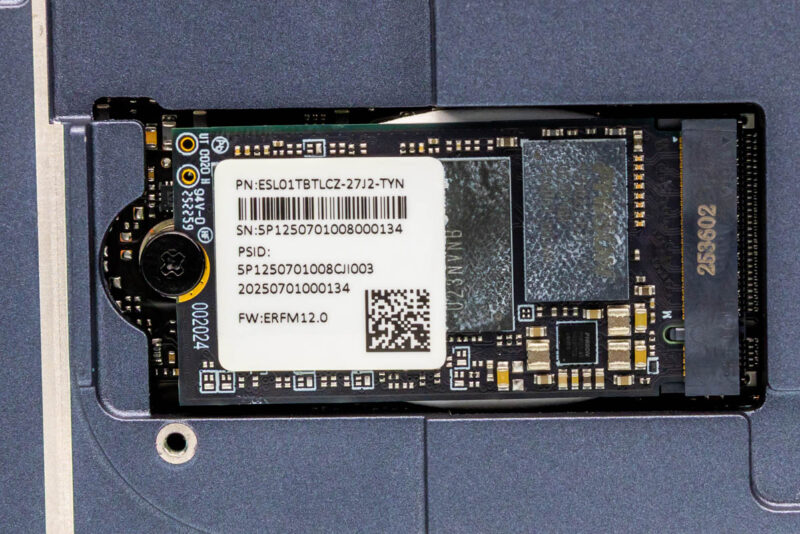
Once we remove a further metal plate, we are able to reach the sole user-upgradable component of the AI TOP ATOM, its M.2 SSD. Atypically, this is an M.2 2242 (42mm) slot, so the AI TOP ATOM is not able to take full-size (2280) SSDs. That said, the 2242 form factor still provides enough space for up to 4TB of NAND in the current generation of drives, and Gigabyte offers ATOM configurations with 1TB or two 4TB options for storage.
Internally, the M.2 slot is wired up to a PCIe 5.0 x4 root port, meaning the slot supports the latest and greatest in SSDs. However, checking out Gigabyte’s spec sheet, only their top-end 4TB configuration actually ships with a PCIe 5.0 x5 SSD. The mid-tier 4TB configuration and the 1TB configuration are paired with PCIe 4.0 x4 SSDs. So buyers needing the greatest possible SSD bandwidth (for burst workloads, at least) will want to take note.
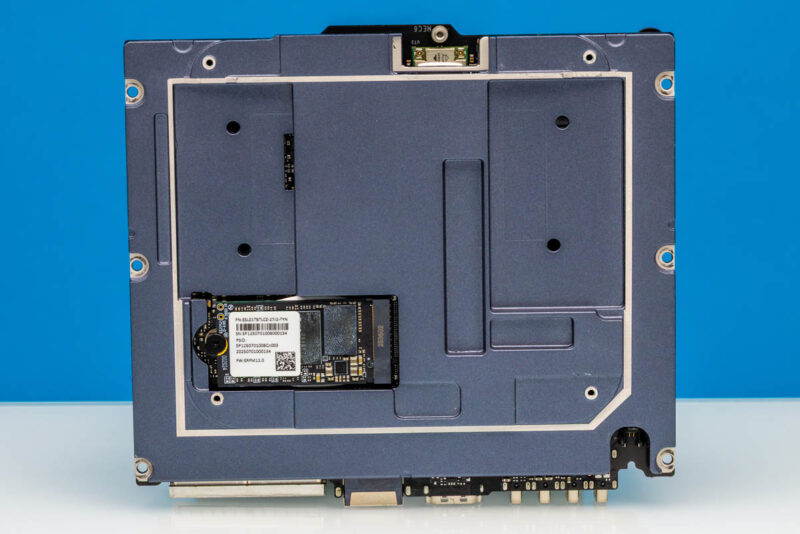
The 1TB drive included with our review sample is labeled ESL01TBTLCZ-27J2, which seems to be a 1TB SSD based on a Phison T27 controller and paired with TLC NAND.
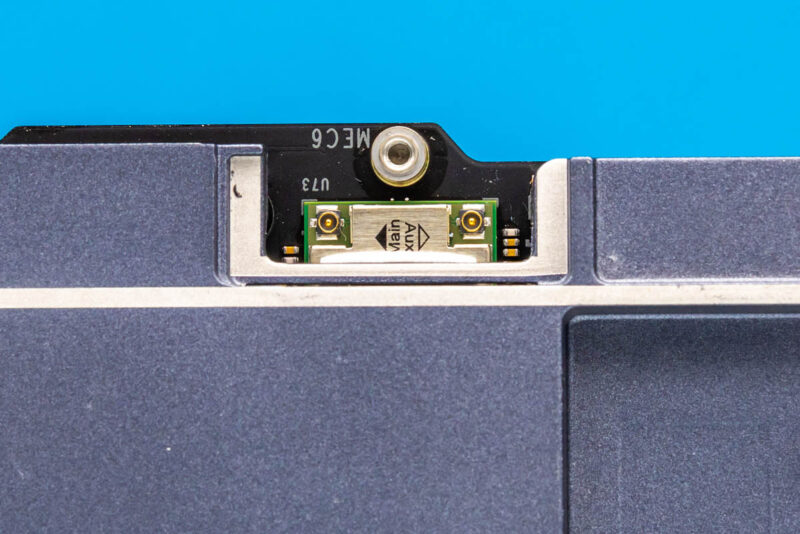
Meanwhile, near the top of the partially disassembled system, we can see the MediaTek WiFi + Bluetooth adapter peeking out. This is BGA soldered, so it is not a replaceable part. But it is semi-accessible, as the little cover pops off here to allow you to pop the antenna connectors on. That might seem like a small detail, but since we had one pop off, being able to remove the cover and re-install it made life much better.
Digging deeper still, we are able to remove the entire motherboard and heatsink-fan assembly from the case.
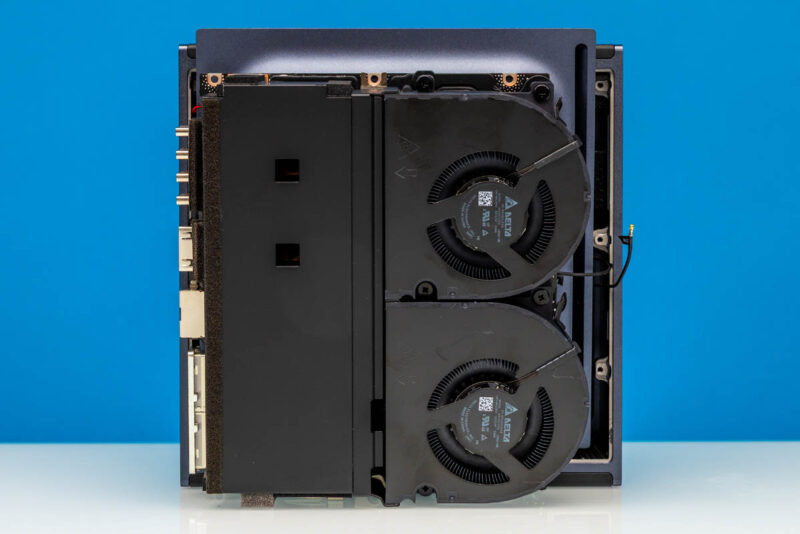
Providing cooling for the system is a sizeable heatsink, with two Delta fans pushing air through it. Each is labeled as consuming 3 Watts of power.
Moving the fans out of the way, we get a bit of access to the motherboard for the system. Though with its high cooling needs relative to its compact size, we find that pretty much every chip of note is covered by a copper base plate, with heat pipes leading back to the heatsink.
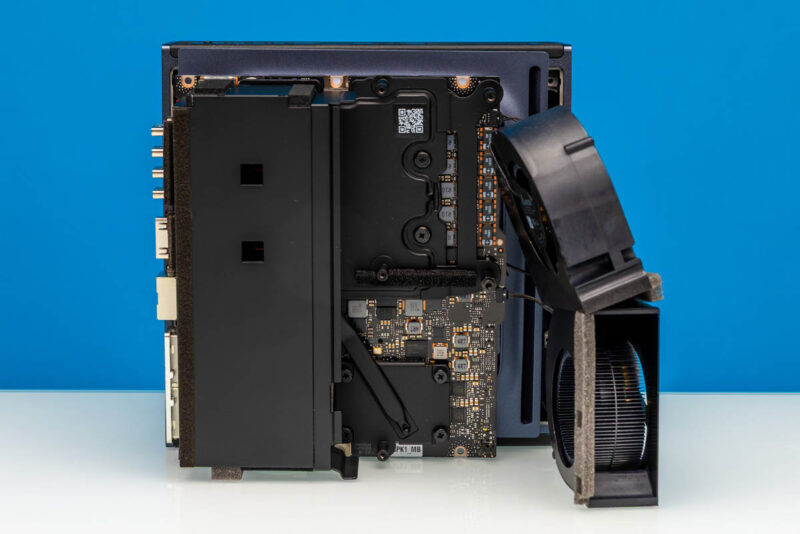
Gigabyte’s efforts are pretty comprehensive. The GB10 chip is well-covered by its heatsink and heatpipe.
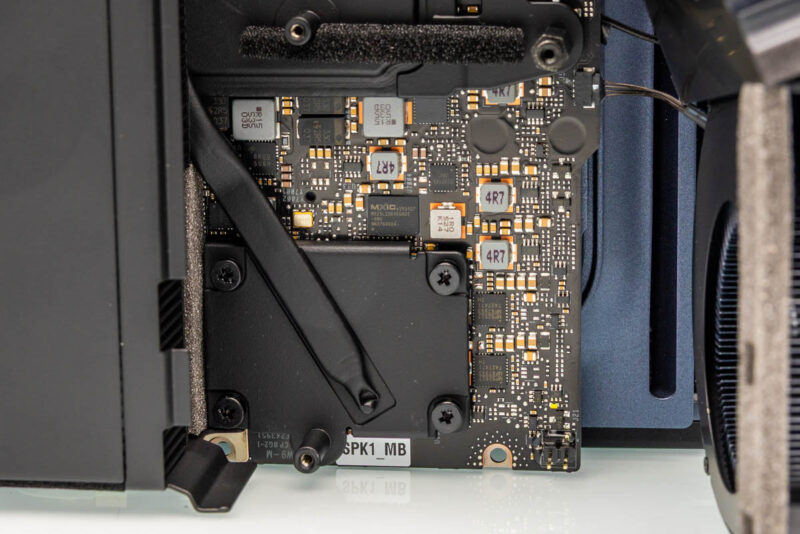
And that is essentially the nickel tour. With the heavy use of soldered-down components and the compact nature of all of these Spark-alike systems, we are essentially looking at a large cooler very firmly attached to a motherboard full of high-performance components.
With the tour complete, it is time to get the ATOM up and running.