
Dell PowerEdge R770AP Power Consumption
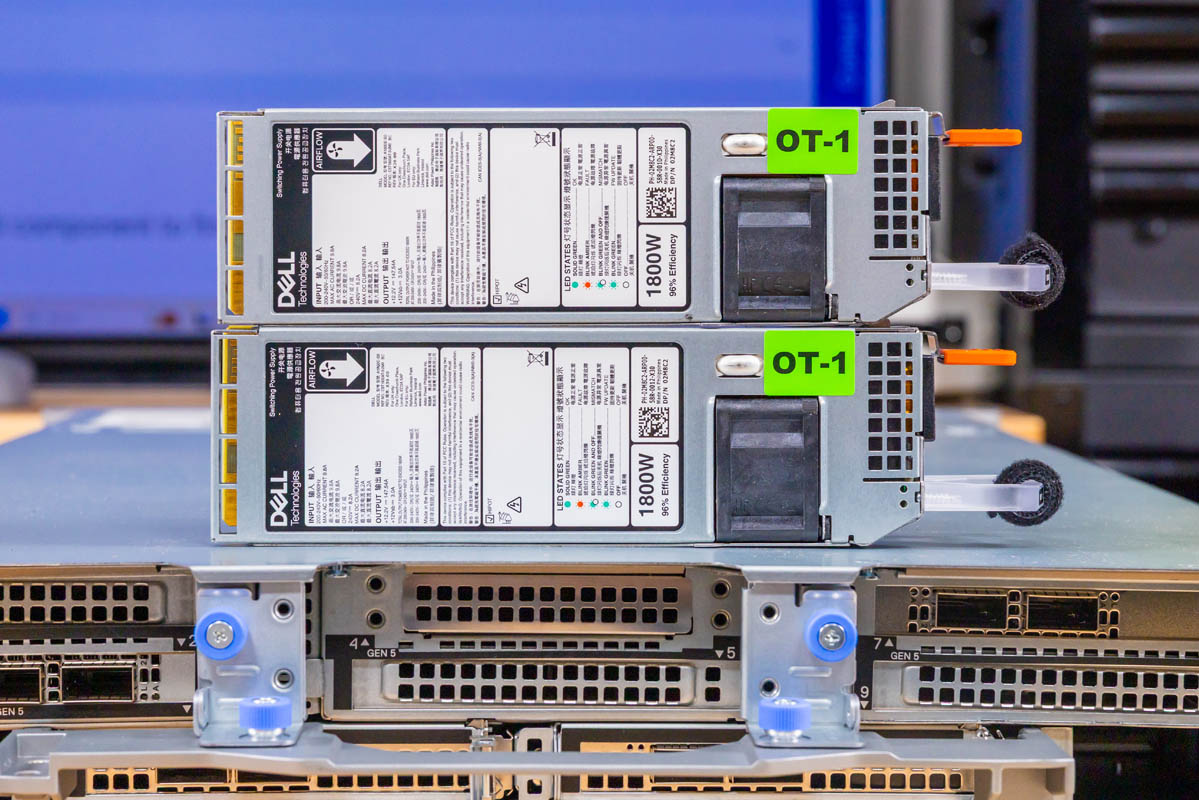
Our system uses two hot-swap 1800W Dell power supplies with 96% efficiency and a 200-240VAC input.
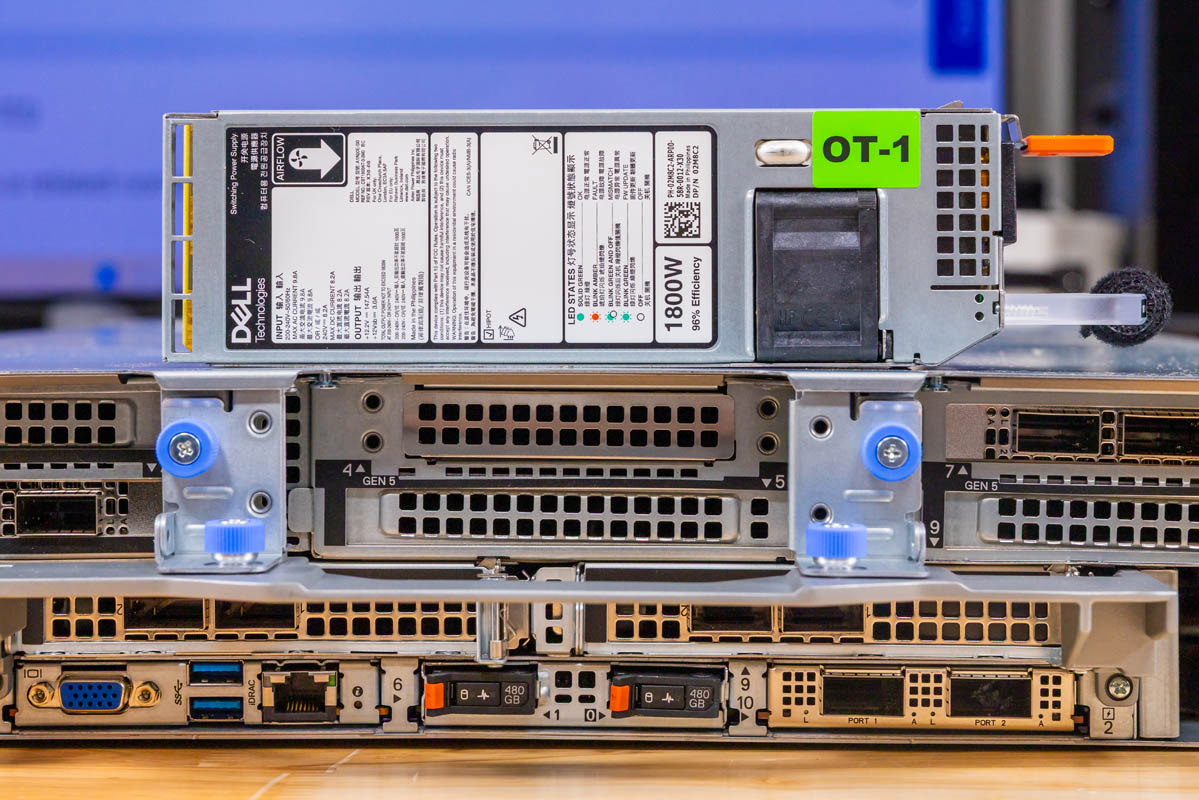
With two 500W TDP CPUs, plus all of the memory, NICs, SSDs, and cooling, we know that this system will use a good amount of power.
During our AgentSTH V7 testing phase, iDRAC Redfish was recording thousands of samples at five-second intervals. The mean power draw was about 890W, ranging from 641W to 2053W across the mixed workload phases. Of course, there are configuration changes that can make that figure go up or down by quite a bit.
For context on where that power goes, we took RAPL estimates showing package averages of roughly 243W for socket 0 and 233W for socket 1 during the same phase. The DDR5 DRAM domains associated with each package averaged about 30W and 34W, respectively, so call it roughly 263-277W per CPU and memory on average. Of course, those can hit 500W each plus the memory.
Final Words
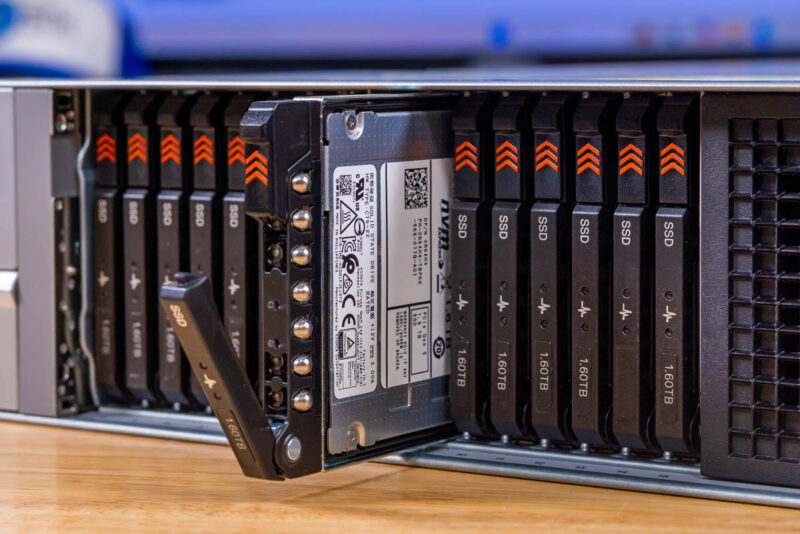
The Dell PowerEdge R770AP stands out for its air-cooled 2U design with 256 physical cores, 512 threads using the Intel Xeon 6980P CPUs. The front high-density 32-bay E3.S SSD configuration, rear modular risers, BOSS boot module, and iDRAC management round out a coherent hardware package that shows generations of improvements in each area.
I think one of the biggest competitors to the PowerEdge R770AP is actually the R770 since the smaller sockets have fewer memory channels and still plenty of cores for many enterprise workloads. As systems have gotten much larger, I think one needs to be thoughtful about whether they seek to use the larger socket systems or opt for the smaller ones. The advantage of the larger sockets is that you can consolidate more onto a single system, which helps lower the cost of other infrastructure bits like networking. Still, DRAM and NAND pricing is historically high, so it is worth knowing this option exists and then evaluating what best meets your needs. Perhaps the converse is also important. It is good that you have choices these days and can pick either the R770 or R770AP with the same Dell experience.
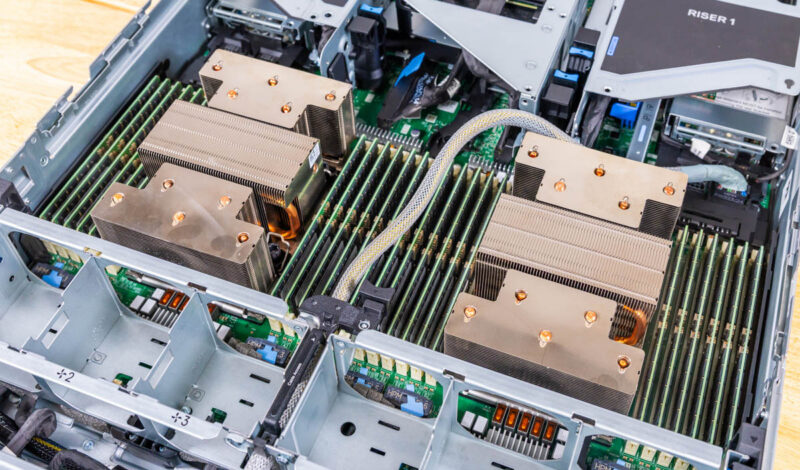
The Dell PowerEdge R770AP delivers strong CPU performance, ample memory bandwidth, a high-density E3.S storage layout, and plenty of risers for NICs. Dell’s top-notch iDRAC 10 underpins the server, making it a complete package. It is hard not to like this server if you are specifically looking to field the Intel Xeon 6900 series platform. We take apart many servers, the PowerEdge R770AP is a really nice one.