

Bosgame M5 Power Consumption
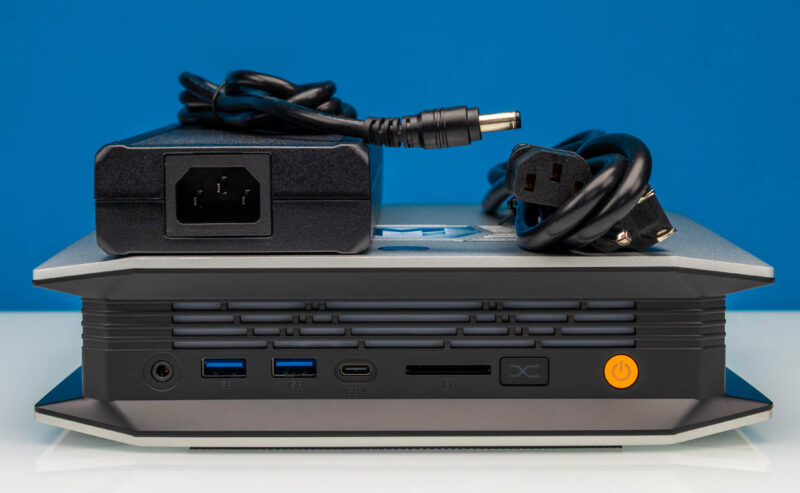
The unit ships with a 20V 240W power supply, which is absolutely huge.
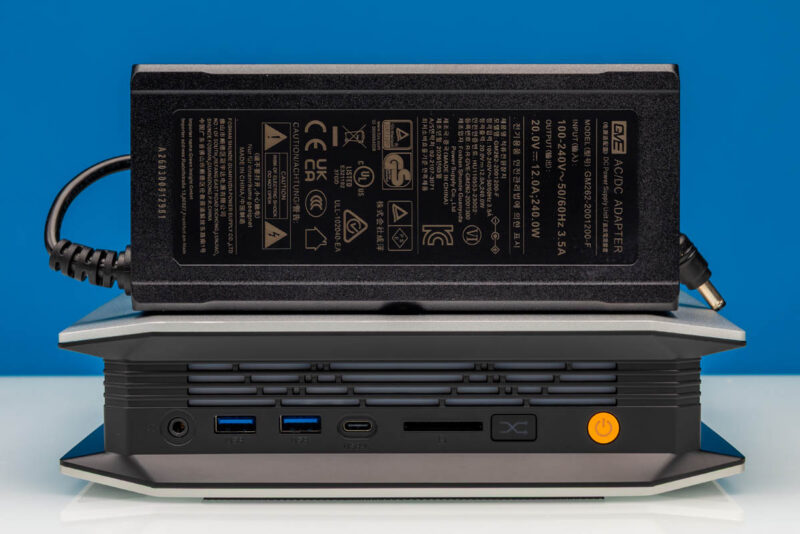
Realistically, the AMD Ryzen AI Max+ 395 SoC can hit 140W, but usually it runs at much lower power levels. That means your maximum power consumption without USB4 and other ports will be somewhere in the 160-170W range in most use cases. There is room to go up, but that is more realistic maximum in performance mode.
Just going into the different power modes via that front button, here is what we found:
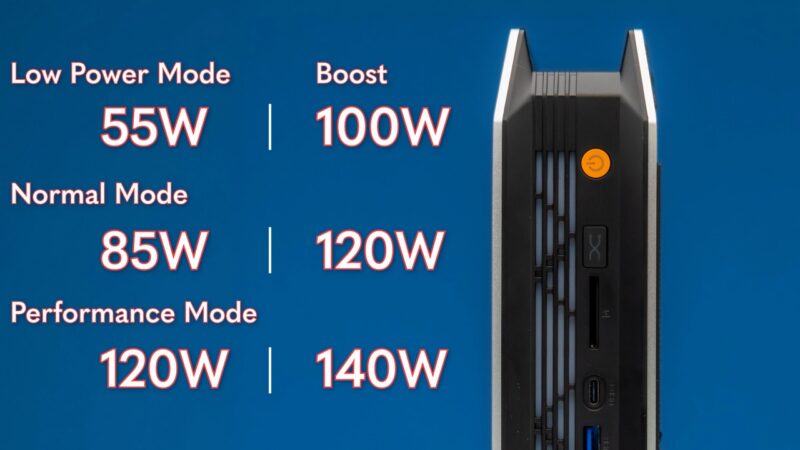
The low power mode may boost to 100W, but after it settles down, the entire system was using well under 100W. In the low power mode, the fans were audible, but just barely at 1m. In normal mode, we were generally seeing 38dba noise, with the performance mode more in the 45dba range. I think one of the reasons you would want to use that low power mode is not just to save power, but also to lower the noise of the system.
This is going to sound strange to many folks, but with many of the AI workloads being mostly memory bandwidth limited, and the single-core performance being close regardless of the mode, if this were sitting next to my desk I would probably use normal mode rather than performance mode unless there was a specific reason I needed that extra boost. Just from a performance, power, and noise perspective, that is probably the optimization point I would use most days.
Have We Seen This Before?
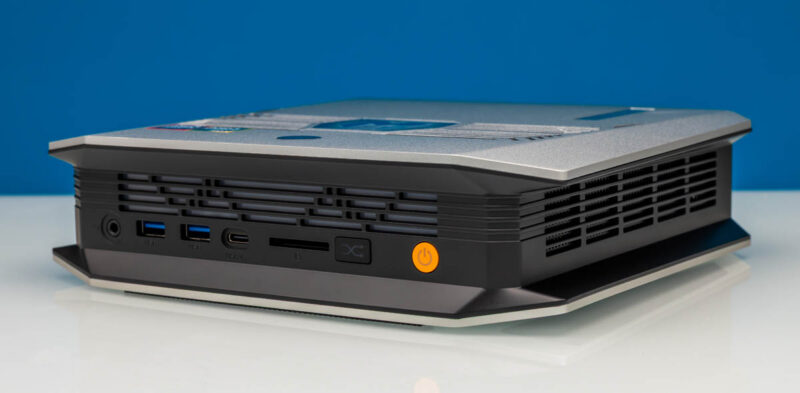
Longtime readers will probably remember that last year we did a GMKtec EVO-X2 Review. If the ports look familiar, they should. Here is the Bosgame M5 next to the GMKtec EVO-X2. The chassis looks very different, but if you look at the ports, you will see how they align.

Perhaps the rear I/O view makes it even more obvious.

These are both based on the Sixunited AXB35 motherboard. Of course, we have a newer revision since this system is a year newer than when we reviewed the GMKtec (the new EVO-X3 is very different inside). Still, the last year has seen wild DRAM and NAND price movements, so this might be one of the more interesting machines.
Final Words
There is a lot to like here. The Bosgame M5 is realistically a platform that we are fairly familiar with. Since we have been running the GMKtec EVO-X2 as a Linux system, it has become an absolute workhorse setting up networking gear. If you do not have a fast NAS or fast networking, and you only need the 2.5GbE port, then this is great. Perhaps the best feature, however, is the fact that it can save $500 and sometimes even $1000 over the AMD Ryzen AI Halo machine, which more than covers a USB 10GbE NIC. AMD is putting a lot of effort into Strix Halo as the developer platform for its AI work, which is great. I think a lot of folks will prefer something like this over the Ryzen AI Halo because the cost per GB of LPDDR5X memory is lower.
Overall, this is a neat little system. It worked well in our testing, and the price for a 128GB-class system is lower than what we are currently paying for just two 64GB DDR5-6400 RDIMMs for servers, so it is hard to beat from that perspective. Maybe that is really the selling point: just being a lower-cost way to run a 128GB-class system on the desk. It is nowhere near as fast as the NVIDIA GB300 AI Station sitting not far away, but it also uses 1/10th the power and costs 1/33th as much.
Where to Buy
If you want to pick one of these up, here is an Amazon Affiliate link, and here is another Amazon Affiliate link to a different seller. We know prices change all the time.




Bought this machine from Bosgame and they wouldn’t honor the sale when they wanted more money for it. If the emails reflect their customer service … be warned.
Did the GMKtec also have so many missing capacitors?