

Bosgame M5 Performance
At this point, we have covered the AMD Ryzen AI Max+ 395 many times. This CPU has 16 AMD Zen5 cores so it is a properly quick CPU.
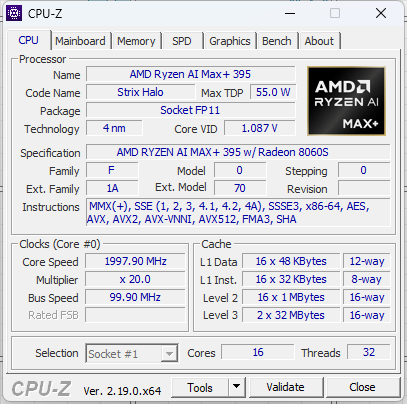
Really, the excitement comes with the GPU and memory. The onboard AMD Radeon 8060S is roughly at the NVIDIA RTX 4060 to 4070 notebook GPU performance level. Couple that with 128GB of LPDDR5X memory, and you have an interesting system that has a great CPU, a dGPU-class graphics engine, and lots of memory for AI.
Geekbench 7 Performance
As we were doing this review, Geekbench 7 came out.
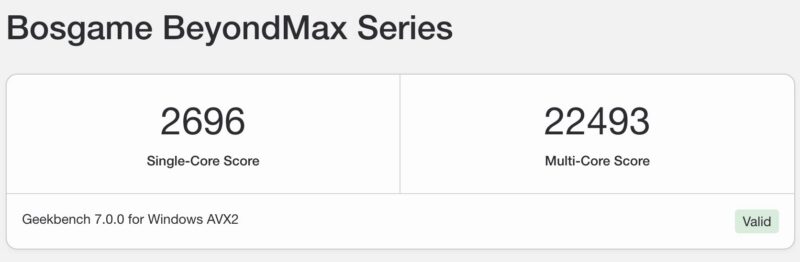
So we just wanted to run it through the CPU and GPU tests.
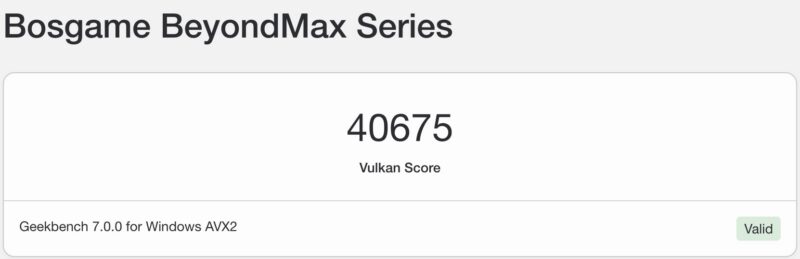
Here is the OpenCL score:
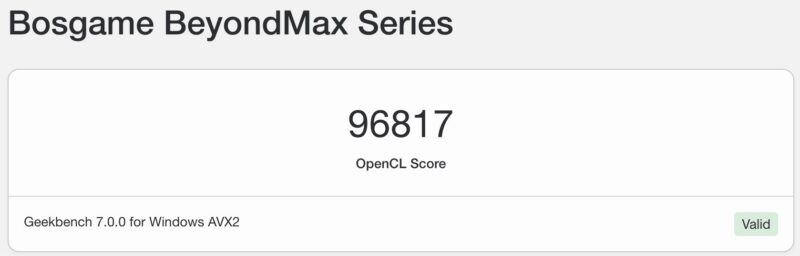
Geekbench 7 is still newer, so we just wanted to provide some initial numbers to compare.
Geekbench 6
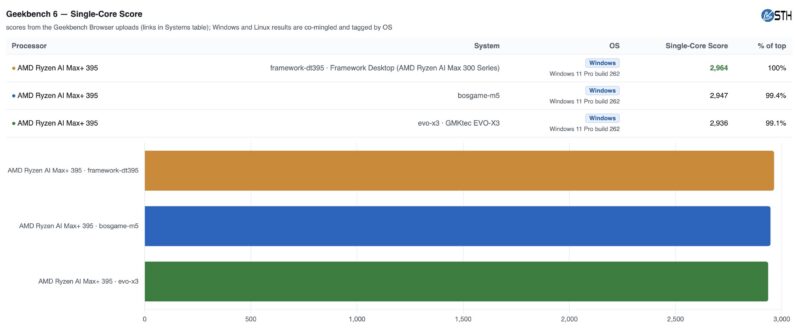
Starting things off with Geekbench 6’s CPU benchmark, we expected this test to put both Ryzen AI Max+ systems on pretty even footing as Strix Halo’s CPU cores are not normally TDP limited when running a CPU-only workload (most of that power is for the GPU). The reality of the situation was a bit more surprising, with both systems holding close with single-threaded performance, but the M1A PRO+ falling behind in multi-threaded testing.
Here is the multi-core score with two other comparison points.
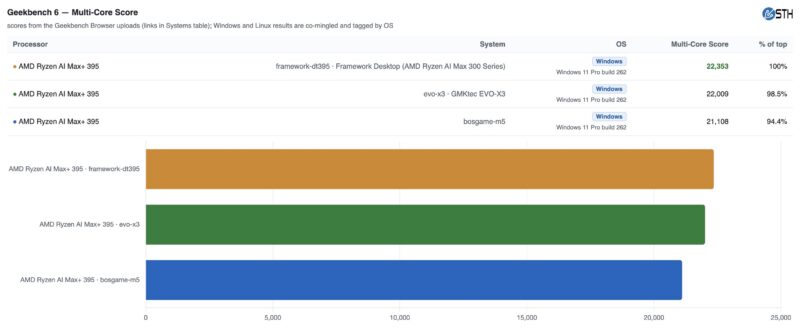
Overall, the Bosgame M5 is in the ballpark of performance that we would expect.
Geekbench 5
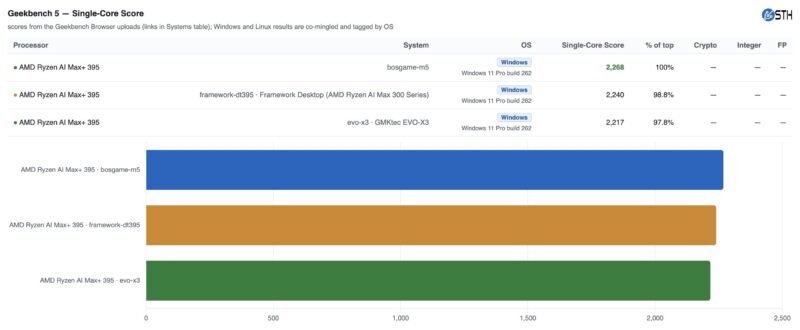
Geekbench 5 has the most useful multi-core throughput test, so we wanted to run that as well. First though, here is the single core result:
Here is the multi-core result.
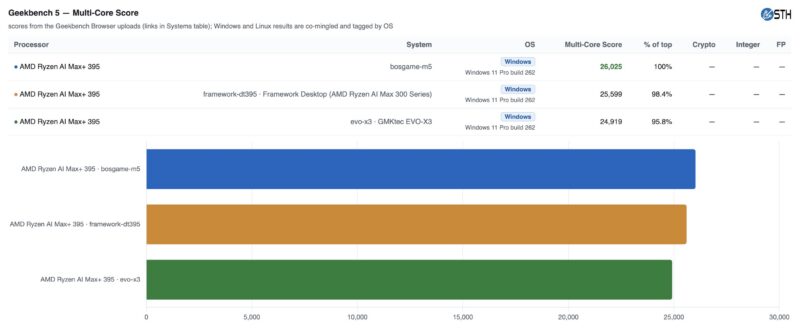
Geekbench went away from straight throughput testing for multi-core tests starting with Geekbench 6, so a win here is really good for the Bosgame. On that performance selector, here is what the impact is at high-medium-low power settings:
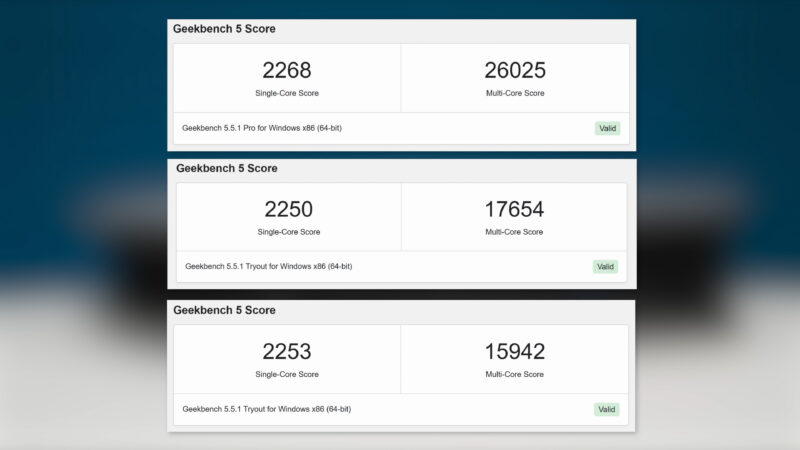
We still use medium a lot because it is a good mix of performance and noise.
MLPerf Client 1.6.1
Taking a broader look at GPU performance with MLPerf Client 1.6.1, we see that the Bosgame M5 delivers the same kind of high-performance results we have become accustomed to seeing with other Ryzen AI Max systems. The Ryzen AI Max+ SoC does remain performance-bound relative to discrete offerings due to its TDP limits, memory bandwidth, and the sheer amount of hardware applied to the problem. But as far as integrated offerings go, this is very good. Coupled with 128GB of memory, this underscores the Ryzen AI Max+’s value proposition as a system with enough DRAM to run local inference on larger models.
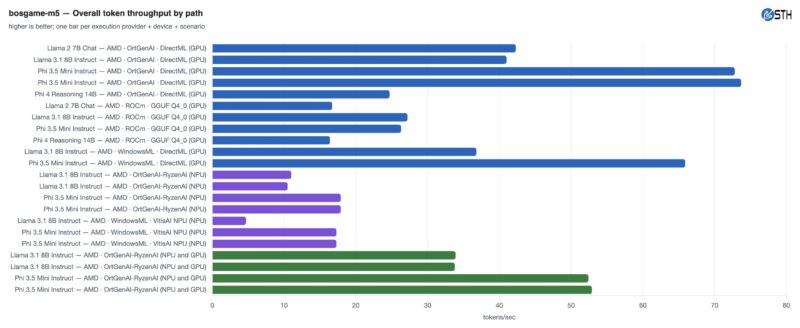
MLPerf Client is neat because it can test not just the GPU, but also the NPU. From the above, it should make sense why many are focused on GPU performance with LLMs. If you want more data and TTFT numbers, MLPerf Client v1.6.1 also spits out that data as well:
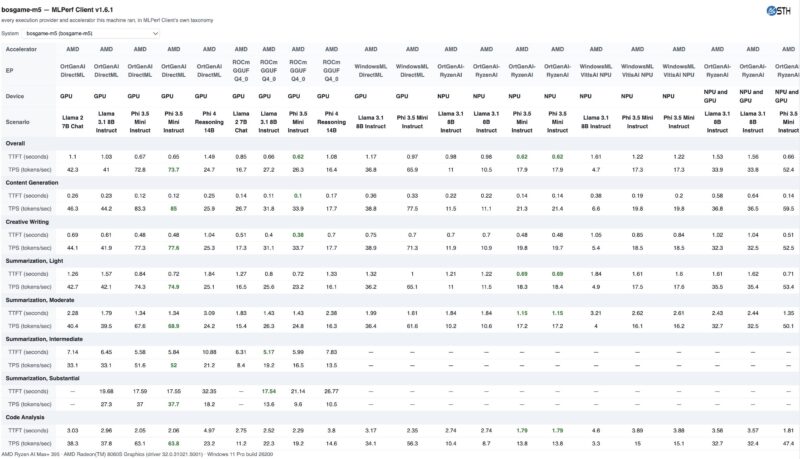
We know that is an eye chart, so we have labeled it as such.
Bossgame M5 AMD Ryzen AI Max+ 395 Qwen Performance Comparison
Just updating a few of the systems we have, we wanted to see if there are huge differences between the AMD Ryzen AI Max+ 395 systems in terms of Qwen3.6-35B and the new (and awesome) Qwen3.8-27B performance.
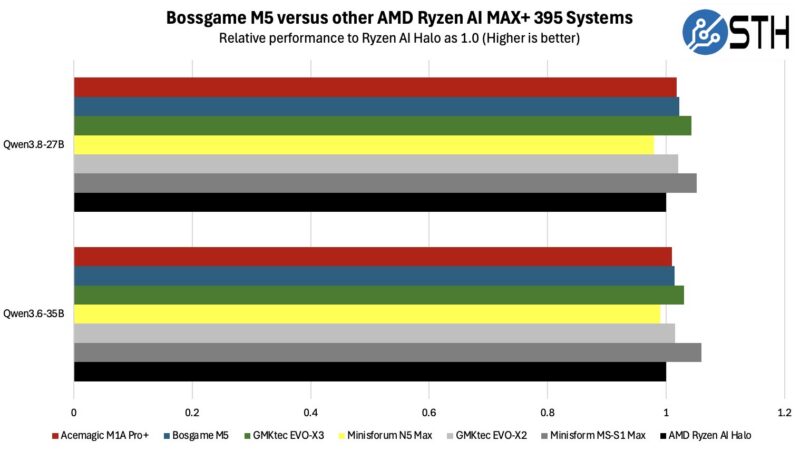
Overall, this is a solid platform, and its larger volume is allowing it to beat the AMD Ryzen AI Halo box that costs significantly more.
Next, let us get to the power consumption.




Bought this machine from Bosgame and they wouldn’t honor the sale when they wanted more money for it. If the emails reflect their customer service … be warned.
Did the GMKtec also have so many missing capacitors?