One of the most popular all-flash NASes we have reviewed over the years at ServeTheHome was Asustor’s Flashstor 12 Pro, a somewhat ridiculous but very capable trapezoidal box that ran on the idea of all-flash storage, integrating 12 M.2 slots into a rather petite NAS. So when we heard that Asustor would be unveiling the third generation of Flashstor NASes at Computex 2026, we just had to get a look at them.
Asustor Flashstor 12 Pro Gen3
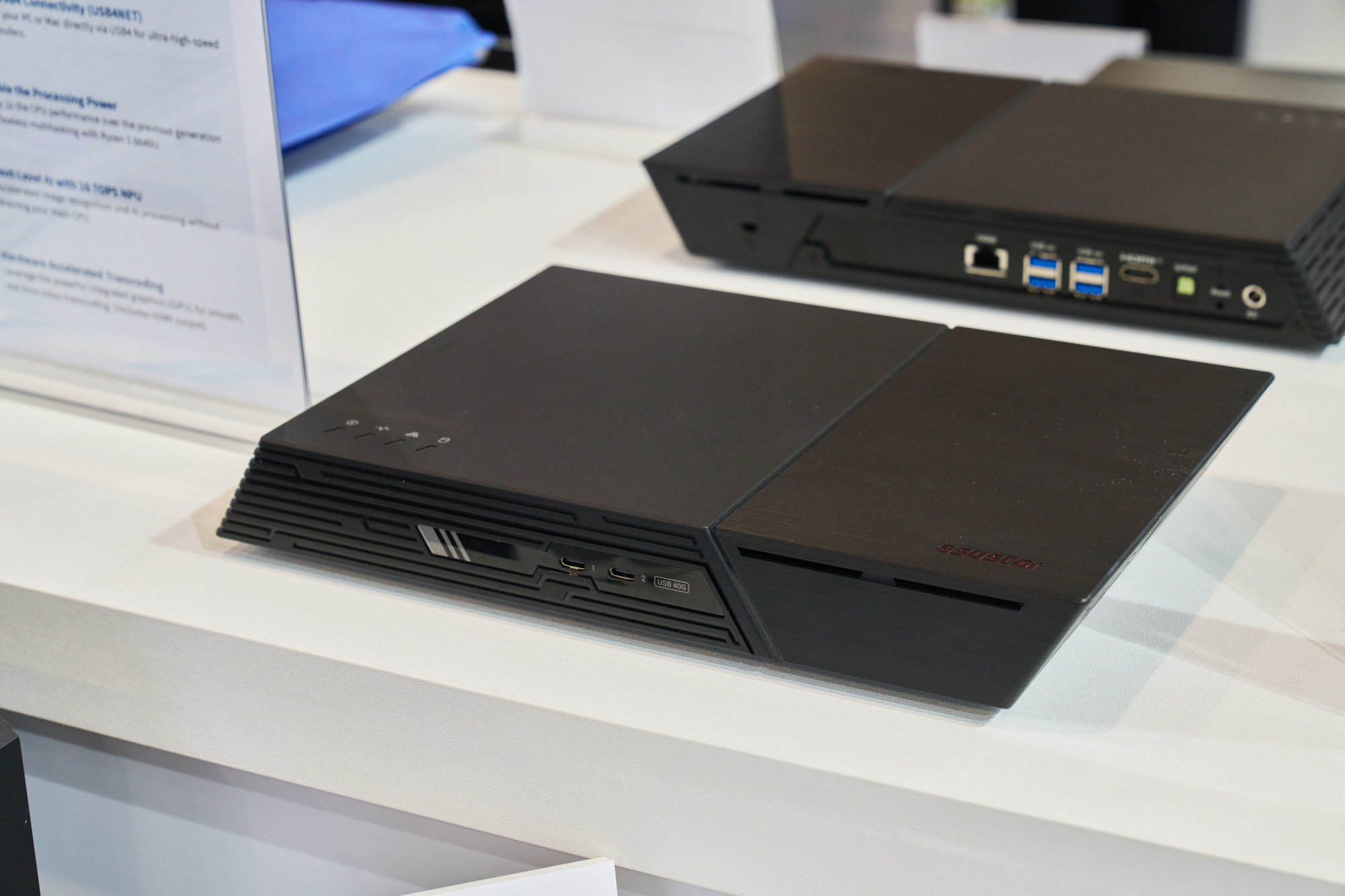
Starting with the more powerful of Asustor’s Flashstor offerings, we have the Flashstor 12 Pro Gen3. The third generation of Asustor’s high-end all-flash storage box largely embodies the idea of staying with what works while delivering more performance and more bandwidth under the hood. Most notably, the company is keeping the same trapezoidal design that they have used since the first generation of the NAS. The company did not have the Gen3 model open for a detailed inspection, but with Asustor keeping the same form factor, presumably this means that the M.2 slots are split between the top and bottom sides of the system, just as before.
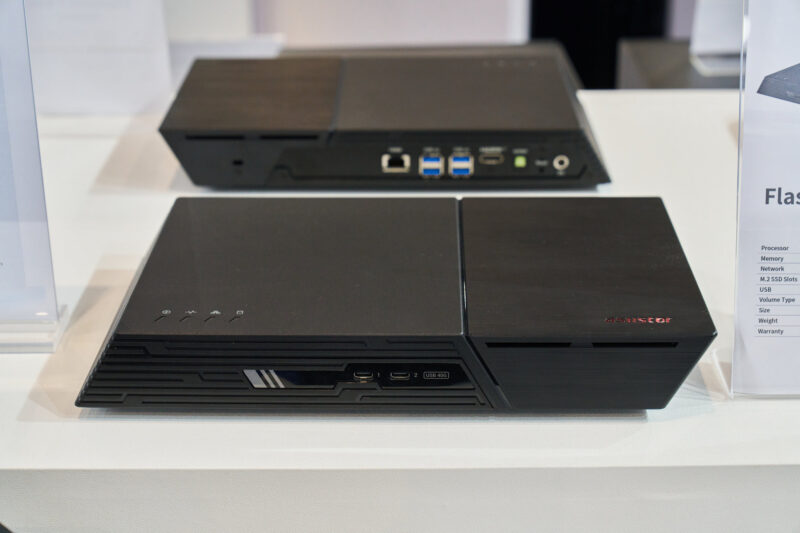
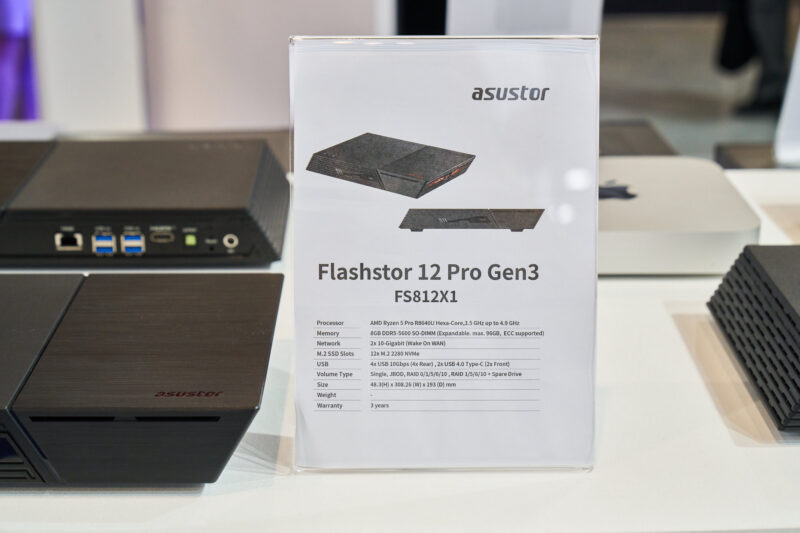
Rather than changing the fundamental aspects of the NAS, then, Asustor is opting to upgrade the internal SoC driving the system to allow for better performance. After switching from Intel to AMD for the second-generation Flashstor boxes, Asustor is sticking with AMD again for the third iteration of the product, swapping out the Ryzen Embedded V3C14 (Rembrandt/Zen 3) chip for a newer Ryzen 5 Pro 8640U (Hawk Point/Zen 4).
In terms of CPU performance, the hex-core Ryzen 5 chip should offer a significant boost thanks to more CPU cores, a much higher clock speed, and the IPC improvements of the Zen 4 architecture. By that token, the fact that Asustor is releasing a new iteration of the NAS based on an older AMD Zen 4 chip rather than the newer Zen 5 chips they have been shipping for over a year is a bit surprising.
Meanwhile, the switch in chips also means that the Flashstor Gen3 boxes are also getting their integrated graphics capabilities back, a feature that was lost when the company first switched to AMD chips. These boxes are first and foremost NASes, so while the inclusion of integrated graphics means the boxes are no longer headless, that is not the biggest reason it is being included. Instead, Asustor is after the video encoder built into AMD’s graphics, as this allows the box to transcode video on the fly for PLEX Server and other use cases.
The Hawk Point silicon also comes with AMD’s first-generation NPU, which will be available for use as well. With AI the buzzword of the year across the entire computing industry, Asustor unsurprisingly included it in their promotional materials. At the same time, the company is quick to note that its use is optional. In any case, the 15 TOPS NPU is on the low end of performance for modern NPUs (for reference, MS Copilot requires 40 TOPS), so this is not going to be a game-changer for the Flashstor family, but it should allow for some lightweight and efficient image categorization with the right software.
The latest Flashstor boxes are also getting some small but notable improvements to their USB capabilities. While the second-gen boxes already included USB4 connectivity, they notably lacked USB4 (host-to-host) networking, a feature popular enough that Asustor noted on the second-gen spec sheets that it was not supported. On the third-generation boxes, conversely, the company is advertising this as a major feature addition, giving Flashstor owners an even faster direct attach option than 10GbE and a notable addition, seeing as how even 10GbE would bottleneck a modern SSD.
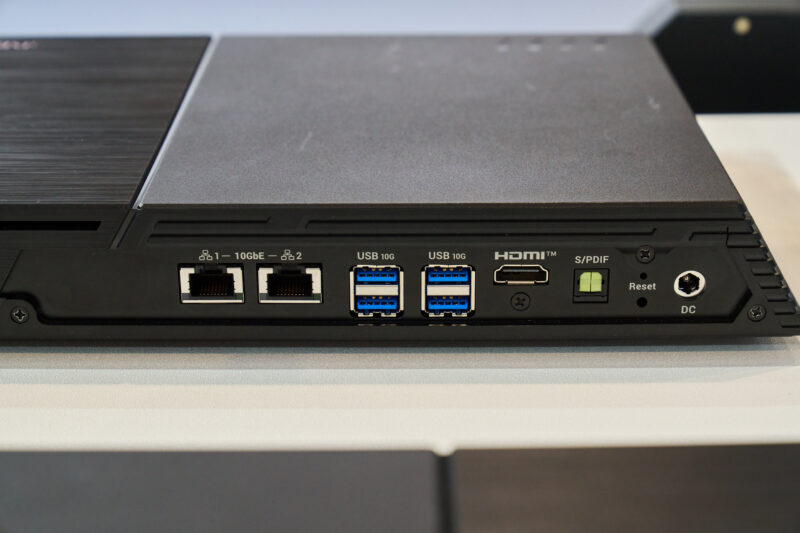
The Gen3 boxes also rearrange the USB ports a bit. The two 40Gbps USB-C ports have been moved to the front of the box, the 10Gbps USB-A port on the front has been relegated to the rear, where Asustor has also added a fourth USB-A port. Altogether, there are now four 10Gbps USB-A ports and the 40Gbps USB-C ports, which means there is a great deal of I/O bandwidth.
Speaking of bandwidth, the dual 10GbE ports are also returning on the Flashstor 12 Pro. One of the marquee features of the lineup, going back to the original model (which featured one such port). They are not a unique feature in 2026 as 10GbE costs have come down, but on the flip side, it would be odd to see a high-end flash NAS shipping with anything less than 10GbE at this point. (Now if only 25GbE would come down in price.) With the latest generation, Asustor can connect two 10GbE ports because the larger chip has more PCIe lanes.
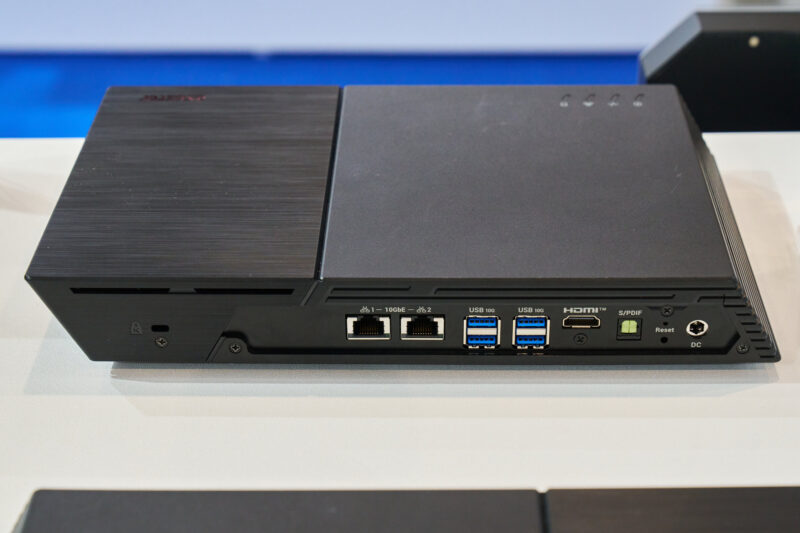
The third-generation NAS is also keeping its other peculiar port: a S/PDIF optical out. One of the target markets for the Flashstor lineup since its inception has been the audiophile/ home theatre market, and Asustor is keeping this as a way for those users to directly (and losslessly) drive their audio equipment. With the return of an HDMI port, said audiophiles can now (once again) send out audio over HDMI as well.
Internally, Asustor has not outlined how the PCIe lanes are allocated to the M.2 slots in the Flashstor 12 Pro Gen3 box. The Gen2 box had a rather eclectic mix of PCIe Gen 4 x1, x2, and x1 slots, along with some PCIe Gen3 x2 and x1 slots for good measure. Given that Hawk Point and Rembrandt have the same number of PCIe lanes (20x PCIe Gen4), we would expect to see the Gen2 configuration used on the Gen3 box, but that is yet to be confirmed.
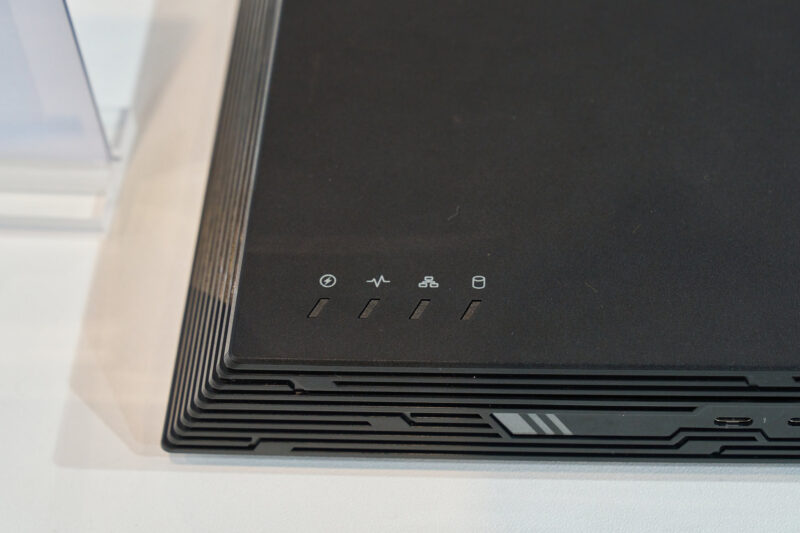
Finally, in a sign of the times, Asustor is cutting back on the amount of memory that comes with the NAS by default. Whereas the Flashstor 12 Pro Gen2 came with 16GB of DDR5, the Gen3 box ships with 8GB. This is installed as a single DDR5-5600 SO-DIMM, meaning it is also running at half its full memory bandwidth. If both SO-DIMM slots are filled, the box can be expanded to as much as 96GB. Asustor’s Linux-based OS should be able to handle the drop (the Gen1 box only featured 4GB), but it is going to put a crimp on any plans to host additional applications or services on the stock NAS.
Asustor Flashstor 6 Gen3
Alongside the flagship 12 SSD Flashstor 12 Pro, Asustor also had its smaller sibling on display at Computex. The two members of the Flashstor family have shared the same basic hardware platform throughout the first two generations of the product line, and this will once again be the case with Gen3, with boxes being built from the Ryzen 5 Pro 8640U.
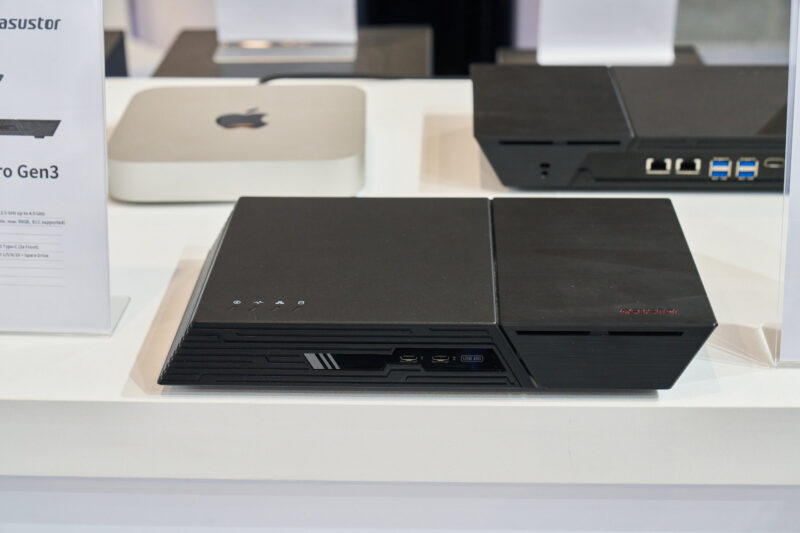
The major differences between the two Flashstor Gen3 boxes will once again come down to the number of M.2 drives supported, as well as the amount of networking bandwidth available. The Flashstor 6 features just 6 M.2 slots, and just one 10GbE jack.
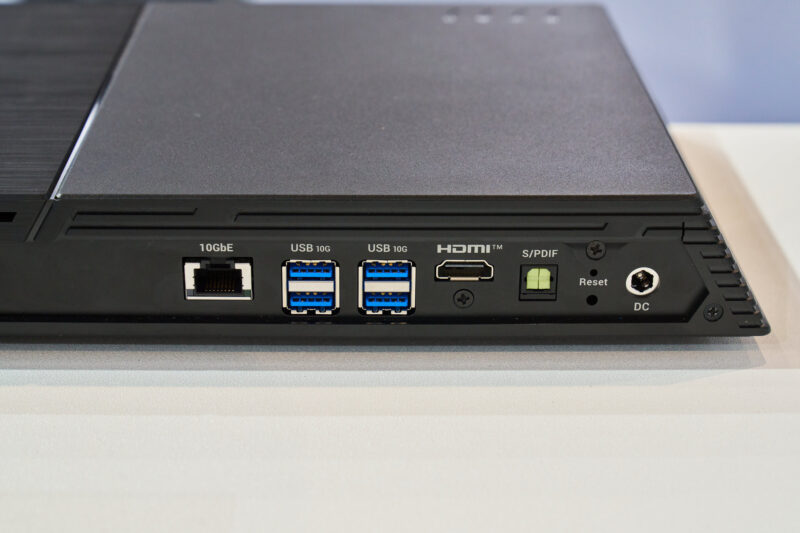
Otherwise, all of the features are identical, including the USB port configuration, USB networking support, and the reintroduction of display output capabilities.
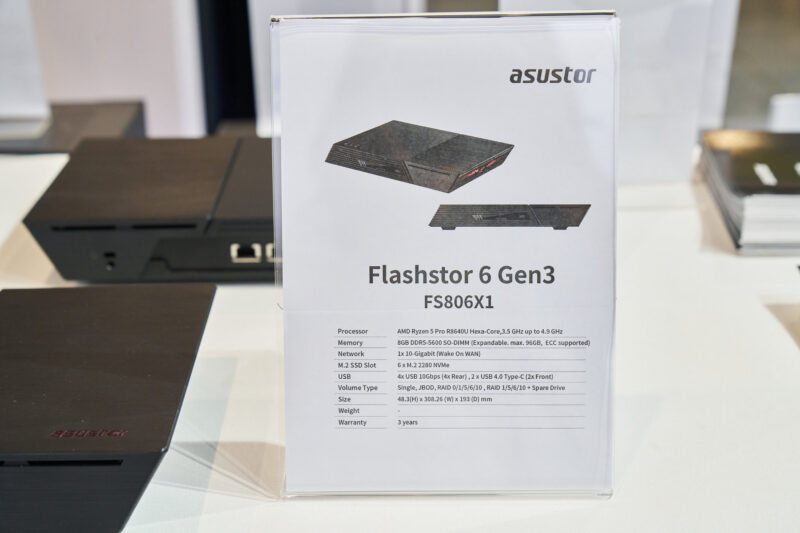
Like its Pro sibling, the Flashstor 6 Gen3 will also ship with 8GB of DDR5-5600 preinstalled.
Final Words
While the price of NAND flash memory is not going to be doing Asustor any favors in 2026, the company is certainly doing what it can to keep the base Flashstor hardware an interesting product for the few who can fill out such a high-density NAS. The 12 M.2 slot Pro unit, in particular, is in rare company and remains one of the boxes that allow users to outfit a high-capacity NAS with a small legion of M.2 drives. The Gen3 boxes, in turn, are not going to be the same kind of massive overhaul to the product lineup that the Gen2 boxes were. Between the faster CPU, the return of an iGPU, and added support for USB host-to-host network, Asustor has done a good job of addressing the weaknesses of the Flashstor Gen2 boxes. So it will be interesting to see how the Gen3 boxes fare in the market (and in reviewers’ hands) once they begin shipping.