

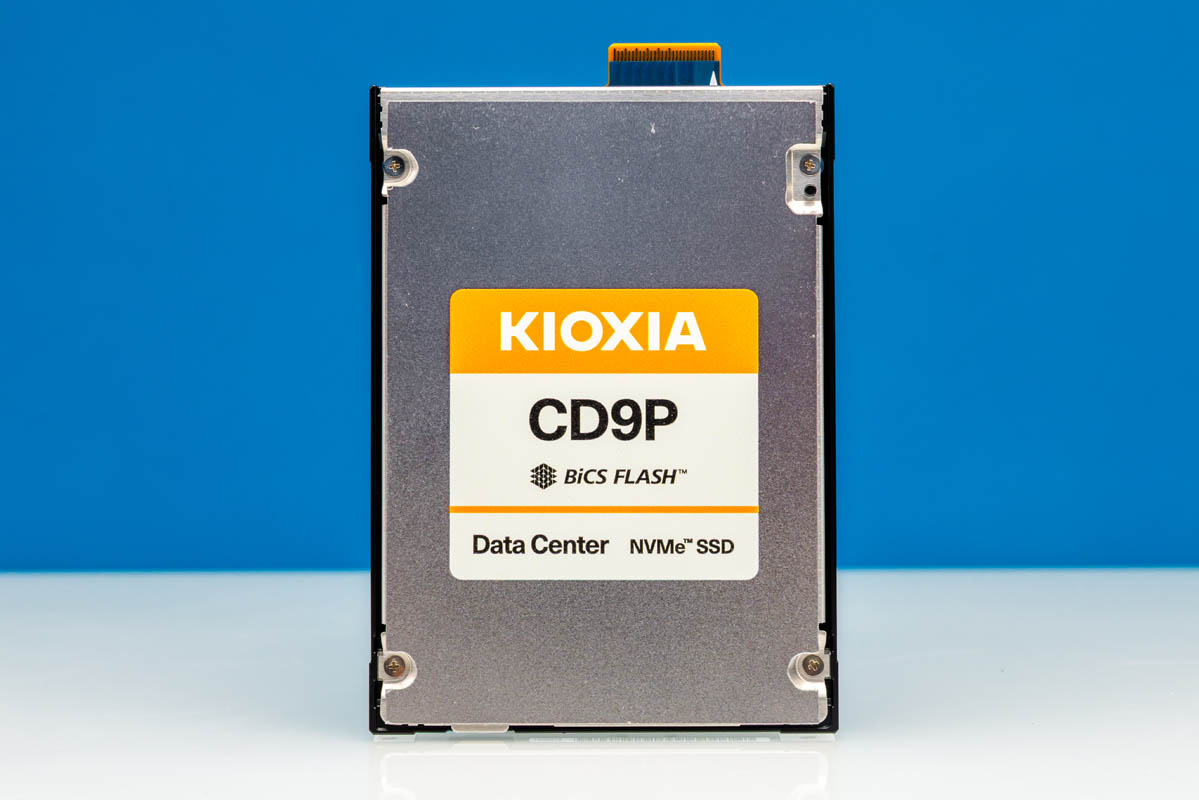
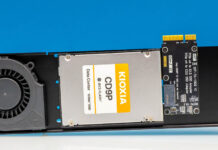
The Kioxia CD9P is the company’s latest PCIe Gen5 family of data center SSDs. Today, we are going to get into the E3.S version and, more specifically, a 7.68TB CD9P-R model. That “-R” tells us we have the read-intensive version at 1DWPD for 5 years. There is also a “-V” mixed-use variant that uses more spare capacity to absorb a 3 DWPD cycle, but lowers capacity to only 6.4TB. Still, we wanted to see what this drive can do.
Kioxia CD9P 7.68TB E3.S NVMe SSD Overview
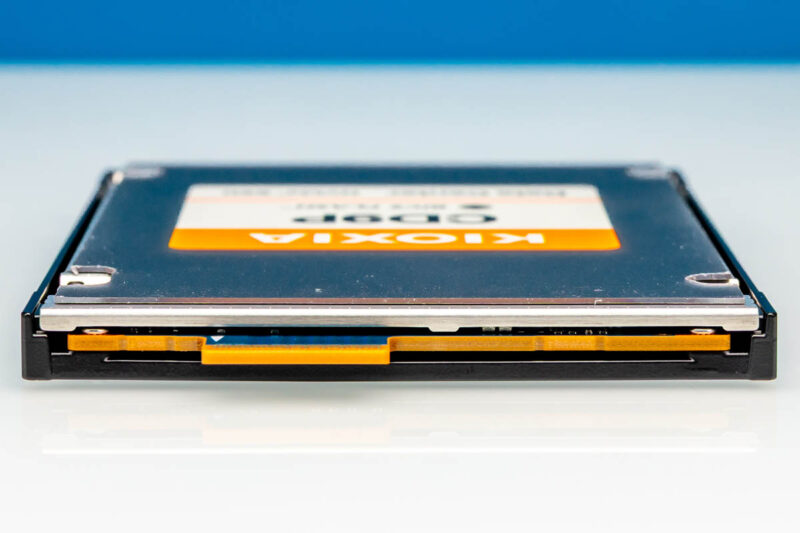
The first thing you will immediately notice is that this is not a U.2 drive. Instead, you can see that we have an E3.S form factor NVMe SSD.
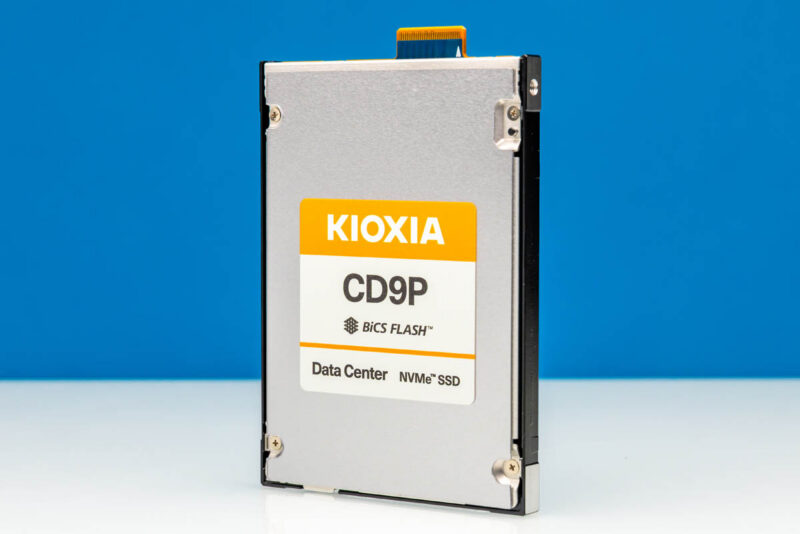
That E3.S form factor allows for higher storage density, as we saw in our Dell PowerEdge R670 1U server review.
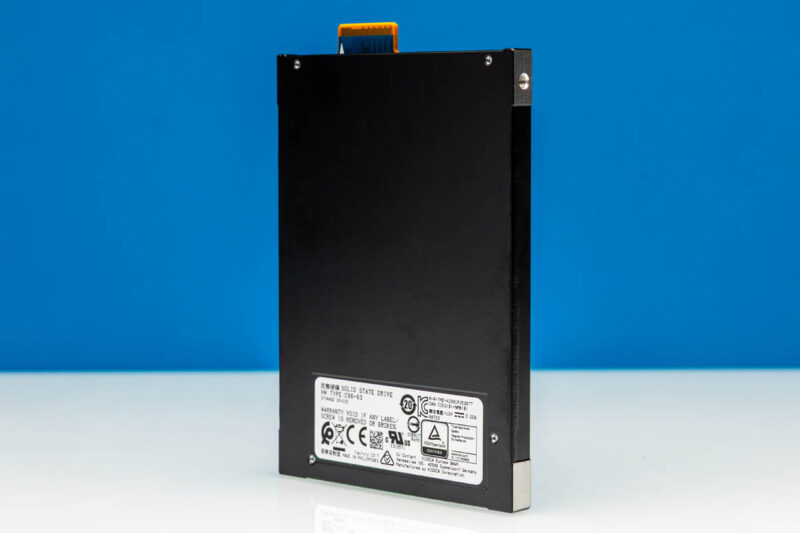
The form factor allows thin carrier trays to be attached, thereby enabling that density.
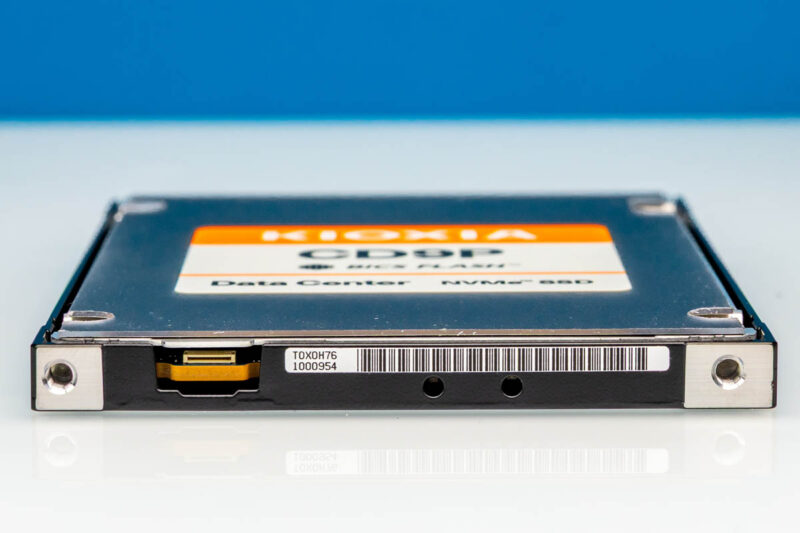
Perhaps the biggest change is the connector, which is still a PCIe Gen5 x4 connector, but it is also much smaller, helping cooling and signal integrity.
For some context here, we discussed some time ago how E1 and E3 EDSFF would become dominant interfaces in the industry. The CD9P is perhaps the last generation of drives that could be in either U.2 or EDSFF form factors because, starting with PCIe Gen6 drives, electrically it seems like we need EDSFF instead of the older U.2 connector. At some point, giving up SAS compatibility for doubling interface speeds again becomes too good to pass up.
As for specs, this drive ranges from 1.6TB to 30.72TB in E3.S and up to 61.44TB in U.2. The 15mm U.2 drive just has more internal volume for NAND package placement.
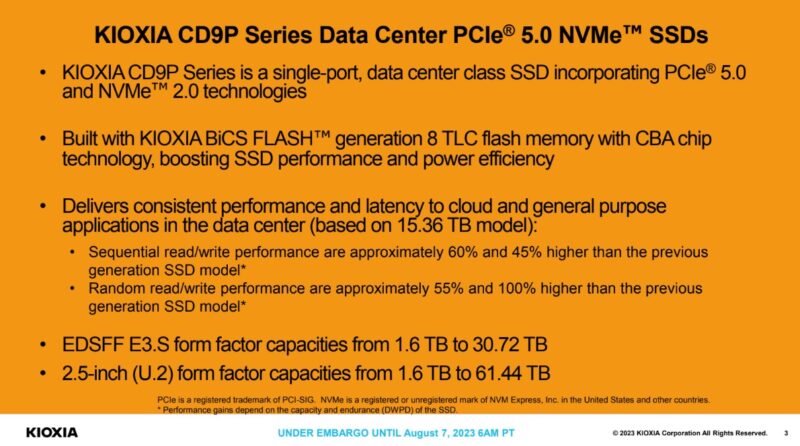
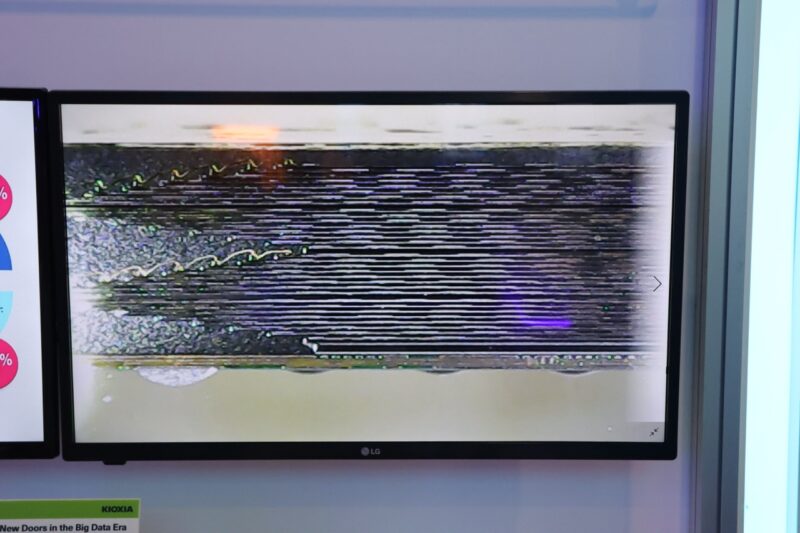
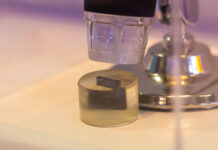
The drives also use Kioxia’s BiCS 8 NAND, which you can see in an example cutaway under a microscope here:
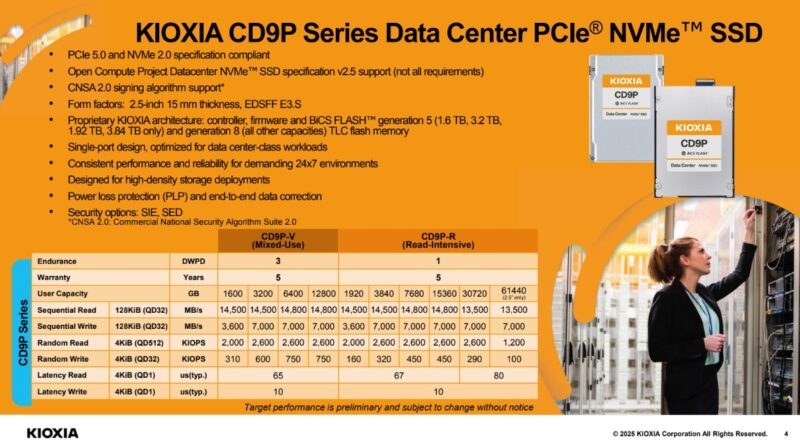
Other major specs are that we expect to see 14.8GB/s read and 7GB/s sequential write speeds, and at 4K up to 2.6M read IOPS and 450K write IOPS. We will let you read the other features from the official slide.
With that, let us get to the performance to see how close our drive got to the advertised specs.
 in its 7.68TB E3.S configuration to see how the new PCIe Gen5 NVMe SSD performs on different architectures)
STH uppin’ its game on SSD testing biggly
Storage prices have increased far too much today.