
Supermicro E103-14P-H Power Consumption and Noise
As a fanless system, we heard no noise from the box. The E103-14P-H ships with an external FSP power brick rated at 150W and 12V output.
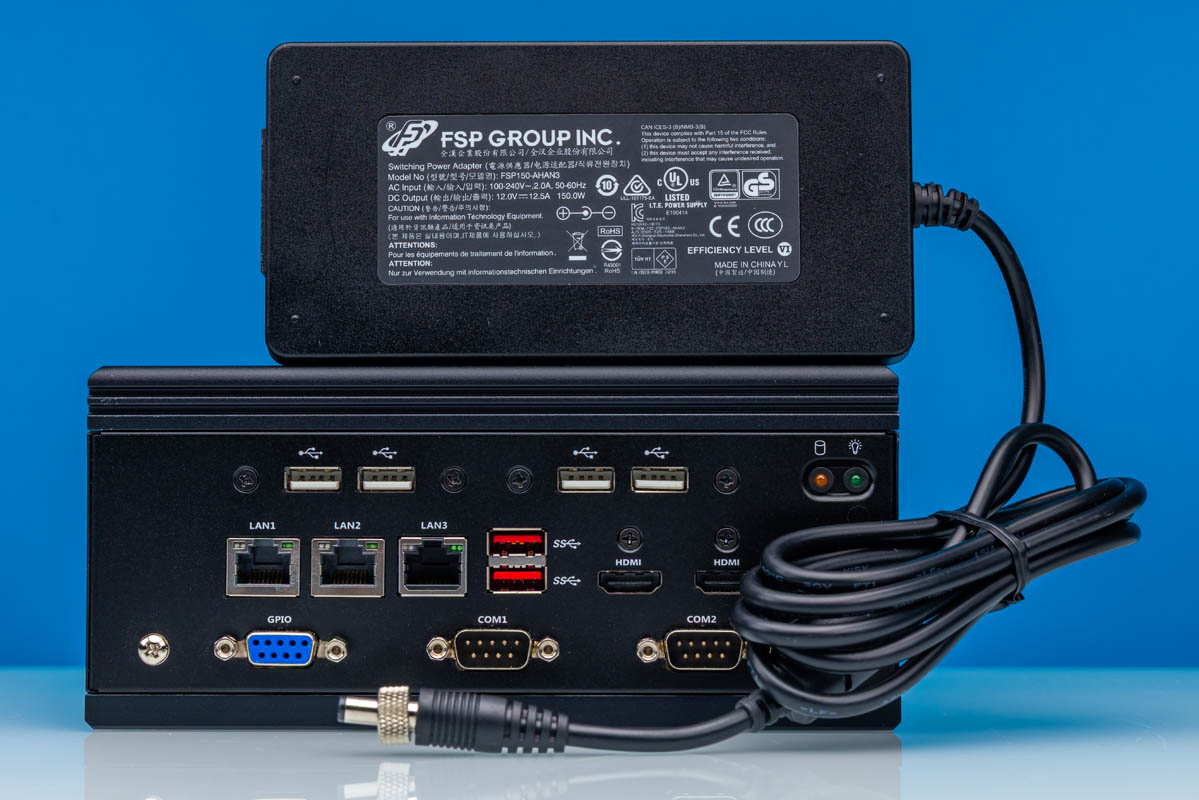
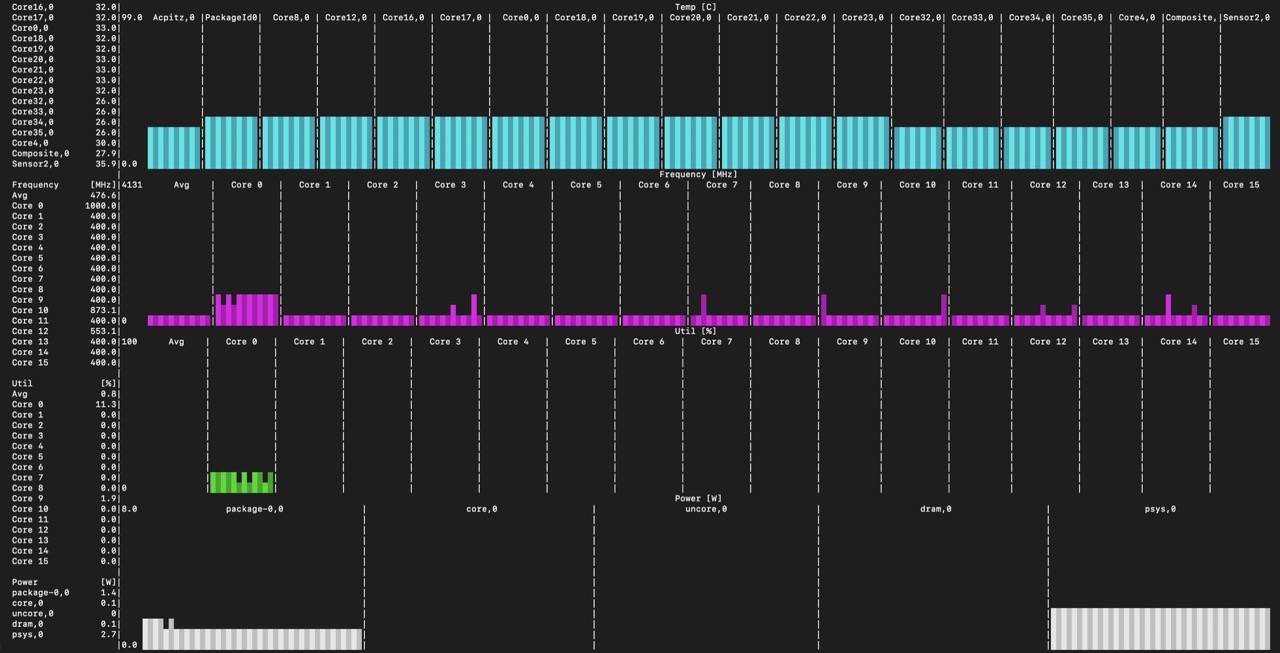
A 150W-rated adapter does not mean the appliance consumes 150W from the wall. It means the supply can deliver up to that amount if needed. Just to illustrate what is going on with the single-core versus the full-chip testing, we thought we would watch it run. At idle, we were in the 1.4-1.8W range on the Intel package.
Putting the stress-ng load on the platform, we got about 20 seconds of that package running at 53-55W.
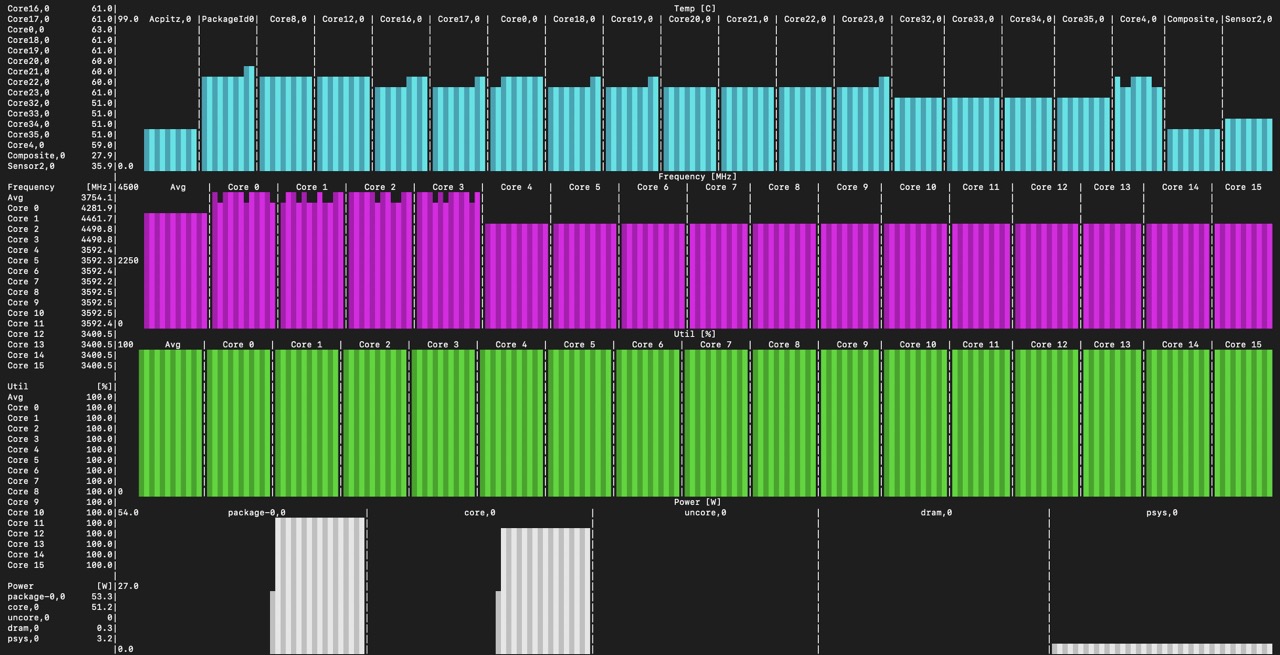
Then it fell rapidly to the 22-25W range and sat there.
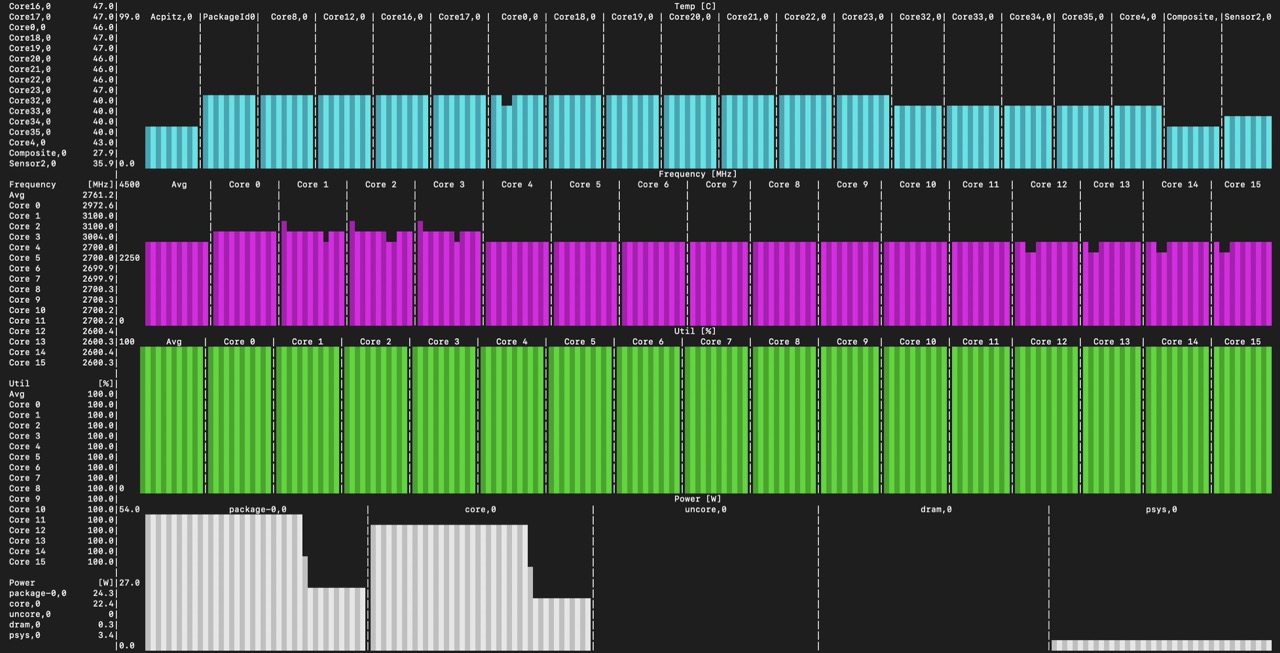
You can at the same time see the clock speeds on the cores change with each step. That is really the impact of having a fanless box. Running one core in a heavy sustained workload is generally not a problem, nor is running one heavy thread and a few lighter threads. It is when you try to activate all of the cores on a chip that you see the thermal limits kick in due to the more limited heat dissipation in a fanless design.
Final Words
If you are in the market for an industrial PC, then this is a neat option. You have a solid set of I/O onboard, along with locking DC power connectivity, and plenty of punch-outs for wireless radio antennas if needed. Inside, you also have room for SSDs, and a fairly fast processor with the Intel Core Ultra X7 368H.
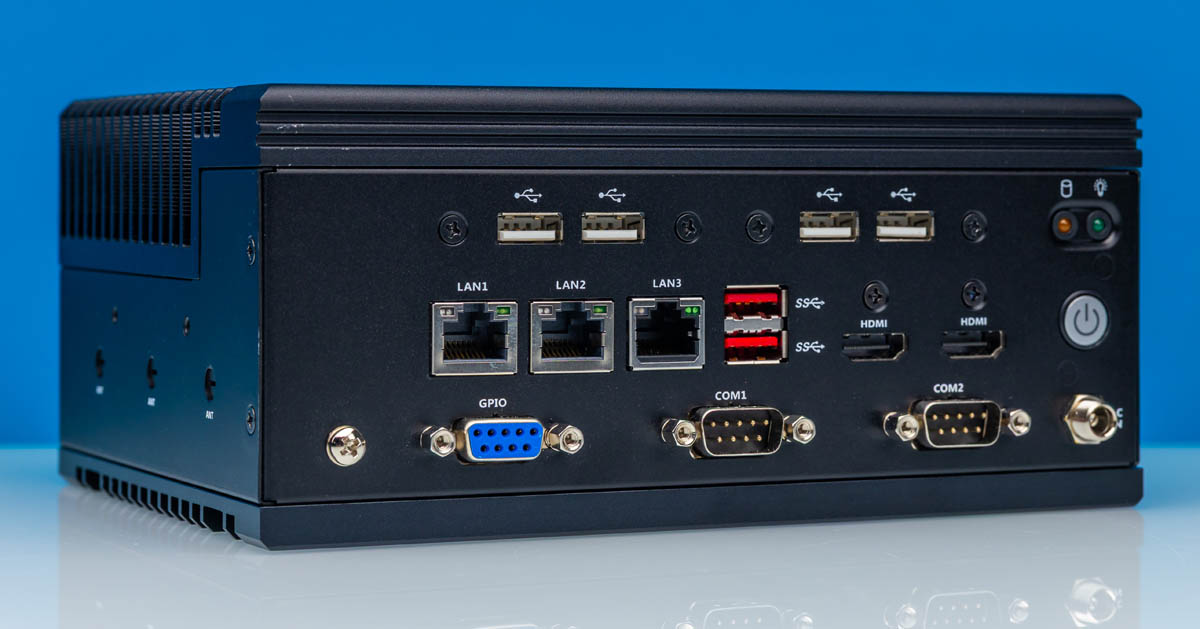
The really exciting part of this is the fact that it is a fanless system. That means it can be installed in a variety of locations, and you do not have fans as potential service items. It also makes the system quiet, so it can run displays and connect to gear in noise-sensitive environments like our studio. You give up sustained thermal dissipation, and therefore performance, but in lighter workloads this is a very fast system, especially if you previously used Atom-class E-Cores. We do not always get to review these systems, but we always enjoy seeing how much they pack into these fanless boxes.