Supermicro SYS-112D-36C-FN3P Internal Hardware Overview
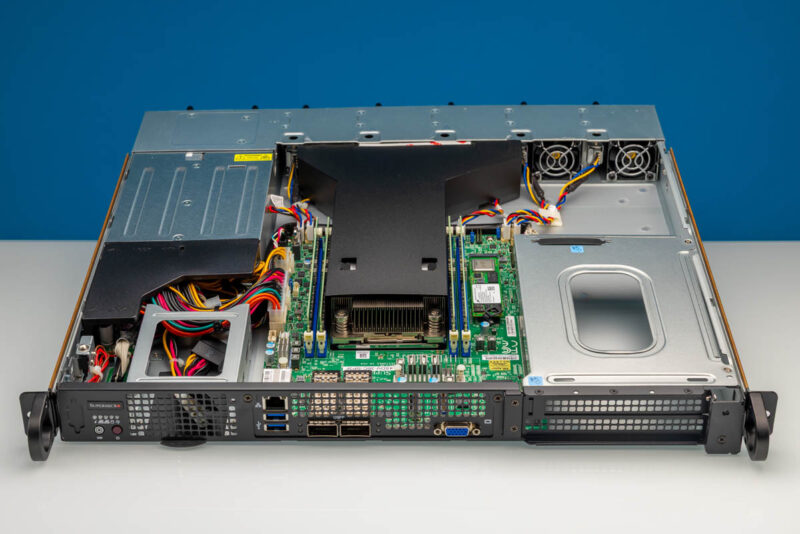
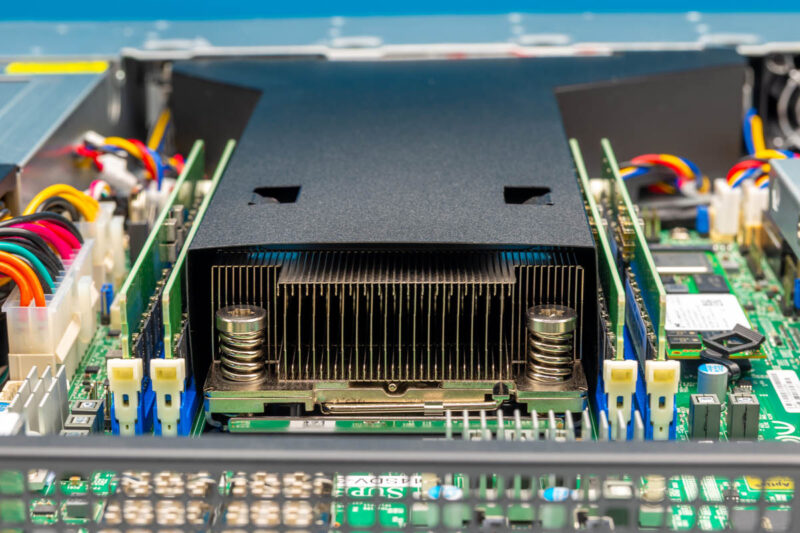
Inside the system, you can see just how short the design is and the airflow layout.
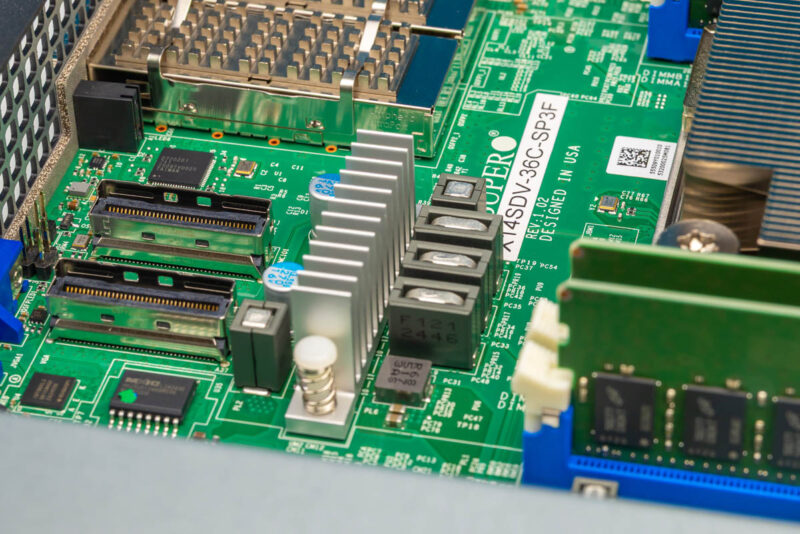
You can see the motherboard label here as the Supermicro X14SDV-36C-SP3F. That 36C references the Intel Xeon 6 SoC 6553P-B, which is a 36-core 235W part.
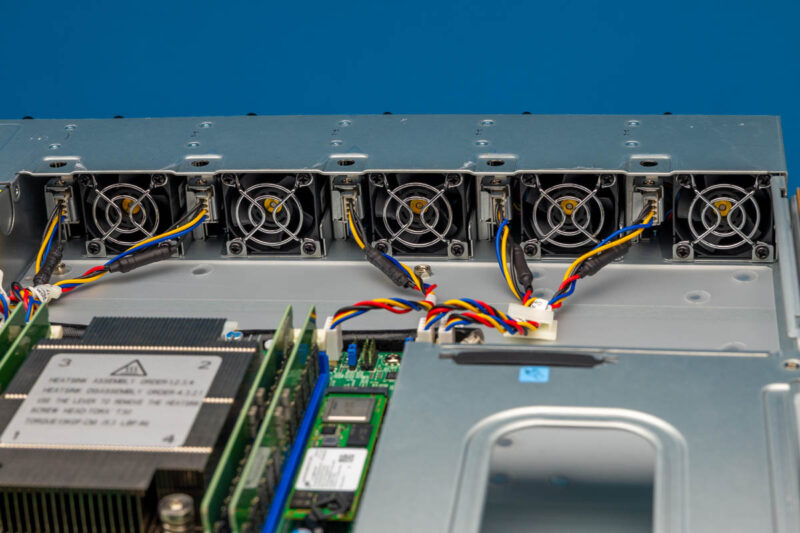
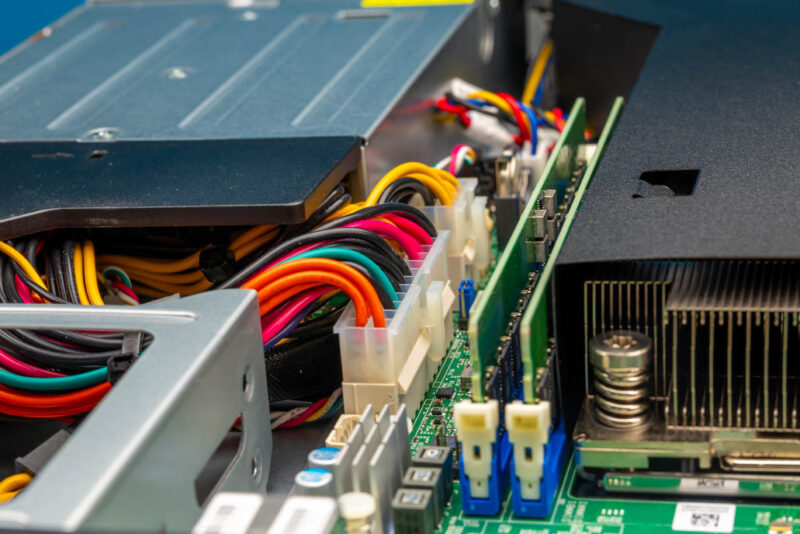
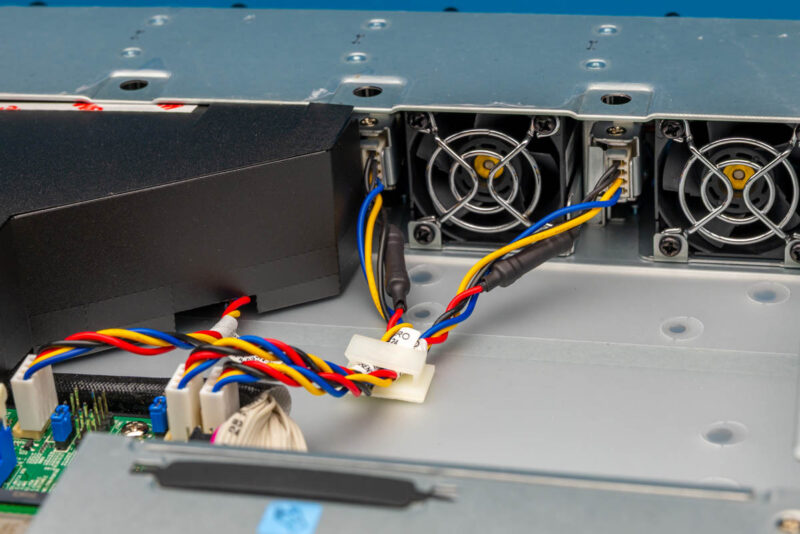
The rear fan modules are outside the motherboard area, but the internal fan backplane and wiring show how they connect into the platform.
The Xeon 6 SoC sits under a decent-sized heatsink. The airflow guides are designed to ensure multiple fans are cooling the CPU heatsink. Generally, I am a much bigger fan of hard plastic airflow guides.
With the heatsink removed, we can see the Xeon 6 SoC package. The chip integrates the CPU cores, platform I/O, and networking onto a single package. Beyond that, there are also accelerators built into the Xeon 6 platform. In older Xeon generations, not only did we have slower networking, but you often saw other chips on the motherboard or in PCIe cards handling these functions.
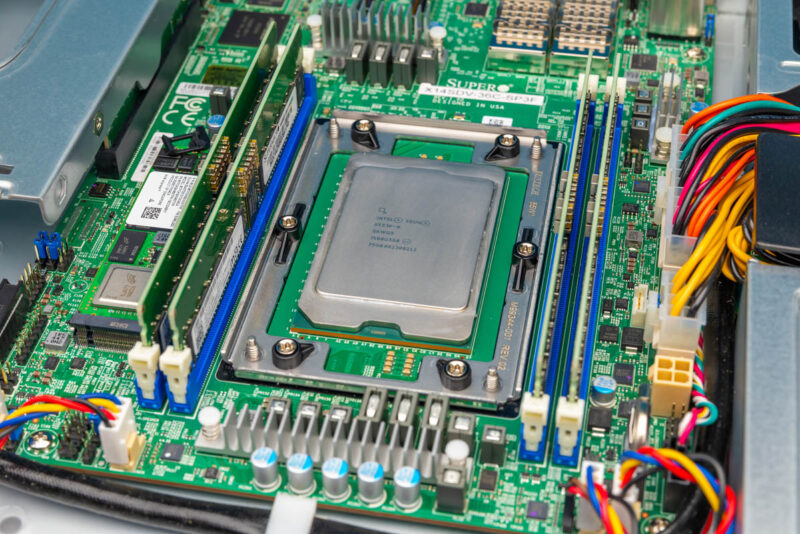
Memory is provided through four DDR5 RDIMM slots. Supermicro lists support for up to 512GB of ECC DDR5-6400 RDIMM memory, which is a good fit for a compact system focused on edge, network, and appliance-style deployments.
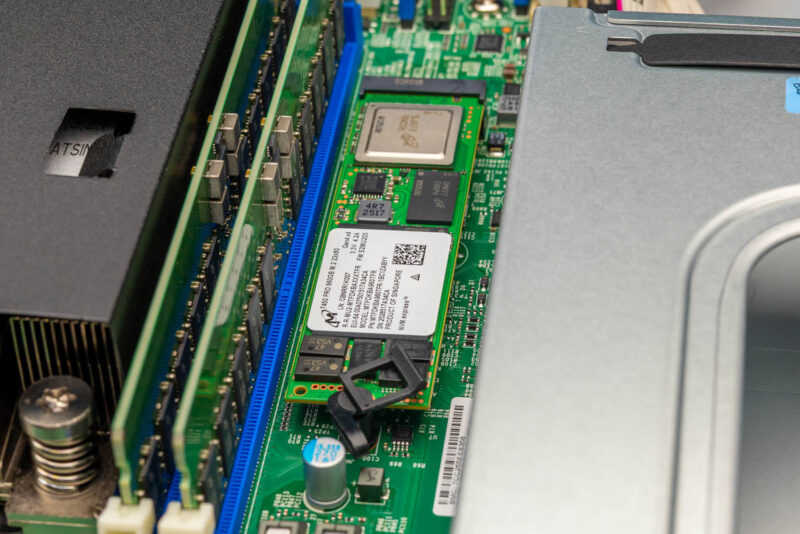
For the system OS and local storage, there is a single M.2 NVMe slot. Many systems in this class use M.2 for a boot device, leaving the larger internal bays for data or application storage.
The PCIe expansion slot is still one of the more important parts of this design. Internally, the reason it matters is that the integrated 100GbE networking leaves the PCIe Gen5 x16 slot available for an accelerator, storage controller, or another application-specific card.
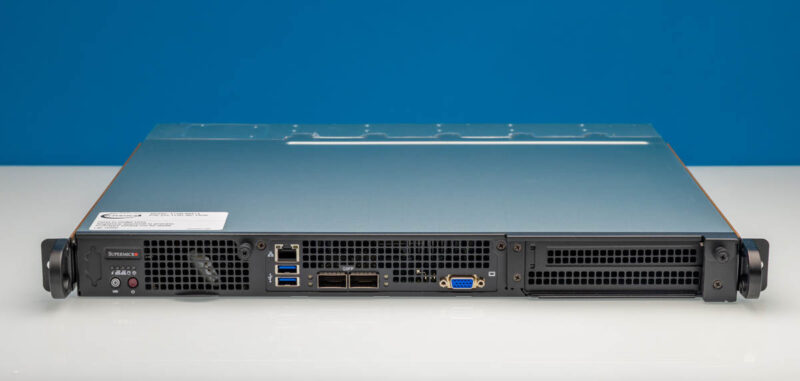
Cable management is tight, as one would expect in a short 1U server. Still, the internal layout is orderly enough that the airflow path and major board areas are easy to follow in the photos.
Next, let us get to the block diagram and topology.