

Supermicro Hyper SuperServer SYS-222HA-TN Block Diagram
Here is a quick block diagram of the server.
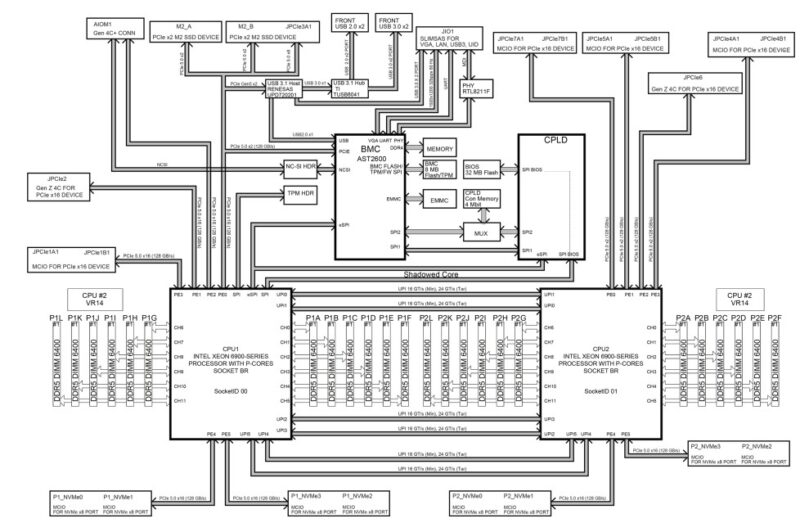
In this generation, there is a major change. Instead of requiring a PCH, the CPUs handle all of the I/O. That reduces system complexity, but also removes a costly component from the motherboard.
Supermicro Hyper SuperServer SYS-222HA-TN Management
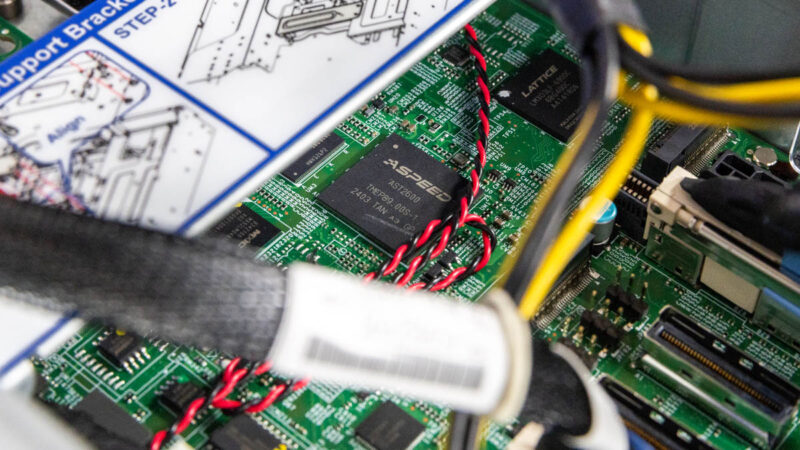
The server uses an ASPEED AST2600 BMC for its out-of-band IPMI management functions.
In the interest of brevity, the Supermicro IPMI/ Redfish web management interface is what we would expect from a Supermicro server at this point.
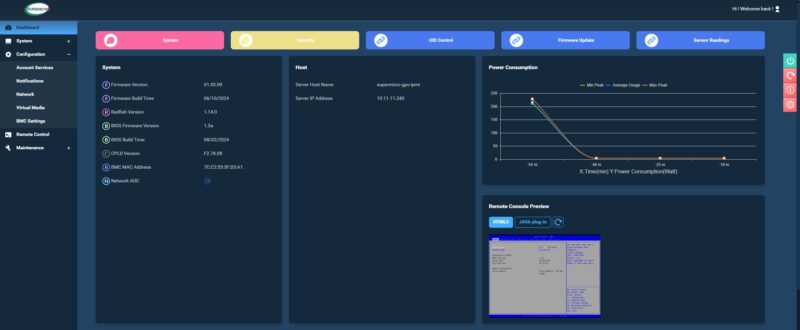
Of course, there are features like the HTML5 iKVM as we would expect, along with a randomized password. You can learn more about why this is required so the old ADMIN/ ADMIN credentials will not work in Why Your Favorite Default Passwords Are Changing.
Next, let us talk about performance.
Performance
For this, we used the hottest CPUs we could find, the Intel Xeon 6980P processors and compared the performance using DDR5-6400 memory to compare to our baseline. We wanted to use 500W TDP processors as those are the maximum supported by this server.
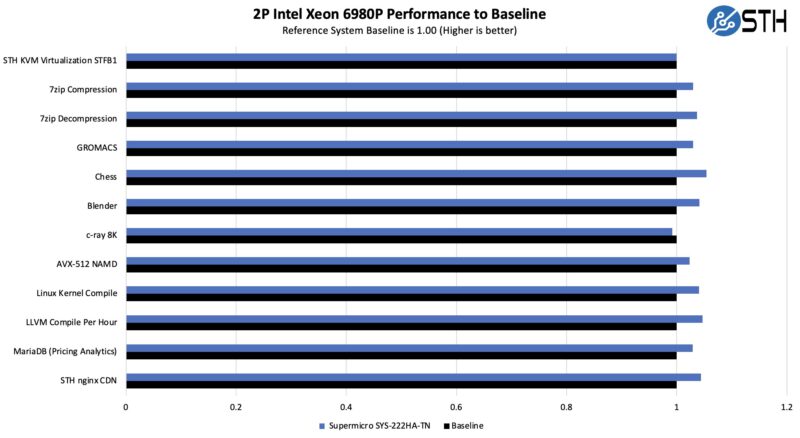
Overall, you can see that we are very close to our baseline with this server. Previewing the upcoming piece, some workloads get a nice bump in performance using the 8800MT/s MCRDIMMs/ MRDIMMs that we showed in pictures. To us, that is a nice feature of this server since you can use faster memory.
Next, let us get to the power consumption.


I dislike when companies reuse their marketing keywords and the features introduced in the prior usage no longer seem to apply.
Example: “Hyper” (as used by SuperMicro) used to mean ‘enterprise (safe server) overclocking’, now it seems to mean: better front and rear I/O, PCIe 5.0 NVMe SSDs, and AIOM.NICs.
It doesn’t seem to include what was mentioned in this STH article: “Supermicro Hyper-Speed Server BIOS”.
Not STH’s fault.