

Solidigm D7-PS1010 7.68TB Performance by CPU Architecture
Now that we are firmly in the PCIe Gen5 era, we have a number of AMD, Intel, and even AmpereOne platforms to test the drives in to see the differences in performance based on architecture. These are small, but important.
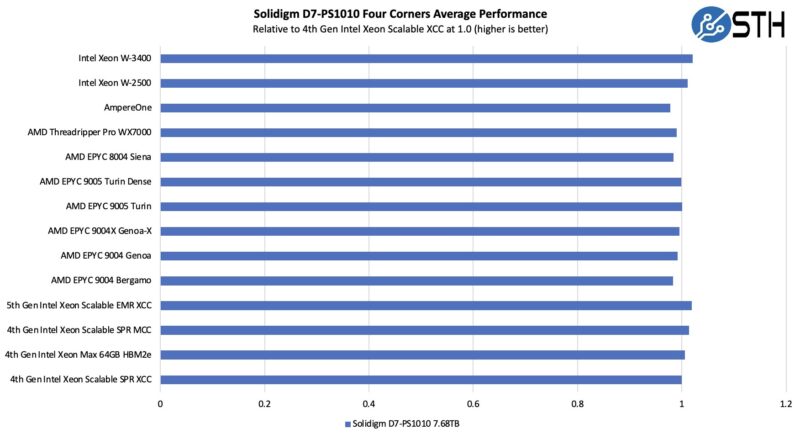
Since that is hard to read, we have a zoomed-in view below without a 0 X-axis.
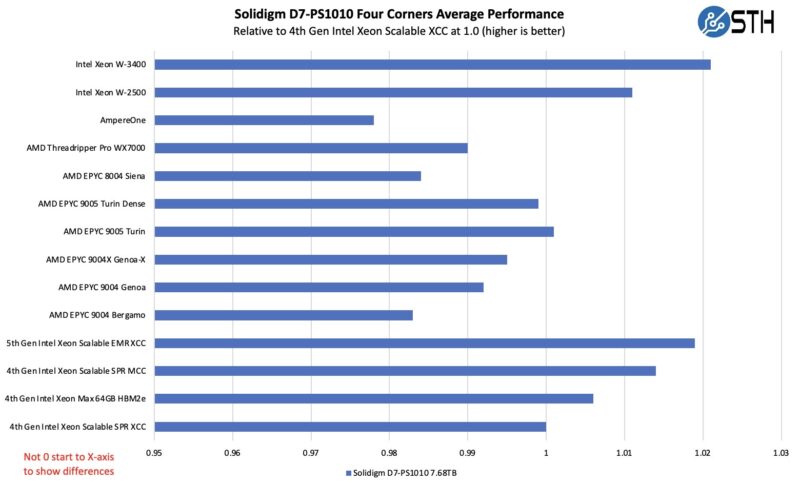
We see a similar trend to the previous PCIe Gen4 generation, but AMD has actually done a lot to close the gap in terms of PCIe performance here. This is one of the better drives with the AMD EPYC 9005 “Turin” processors. That is a good thing since those are very popular in the market these days.
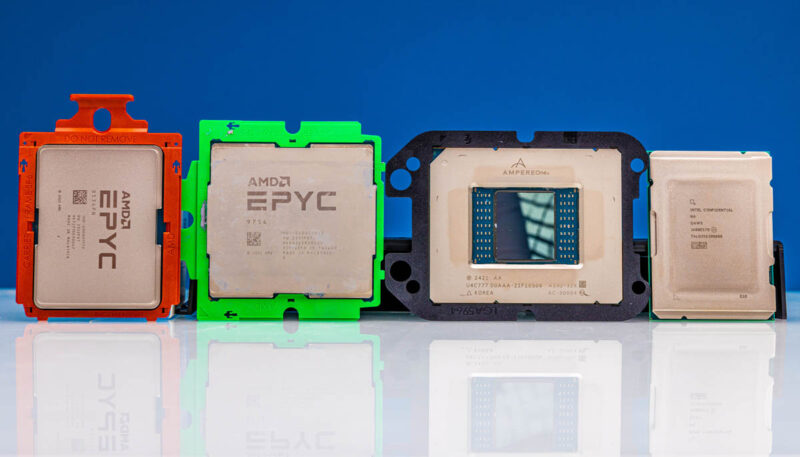
It is fun to see that not all PCIe controllers are created equally and that there are differences even based on the platform the drive is put into.
Final Words
Overall this is a neat drive. It is a fast PCIe Gen5 SSDs that offers a lot of performance at very popular capacity points. These days, there is like one set of demand for the highest capacity drives in AI clusters. There is another major demand point at the 3.84TB and increasingly the 7.68TB capacity point for the higher-end in-chassis storage and other applications. Targeting this capacity point with a fast PCIe Gen5 drive makes sense.
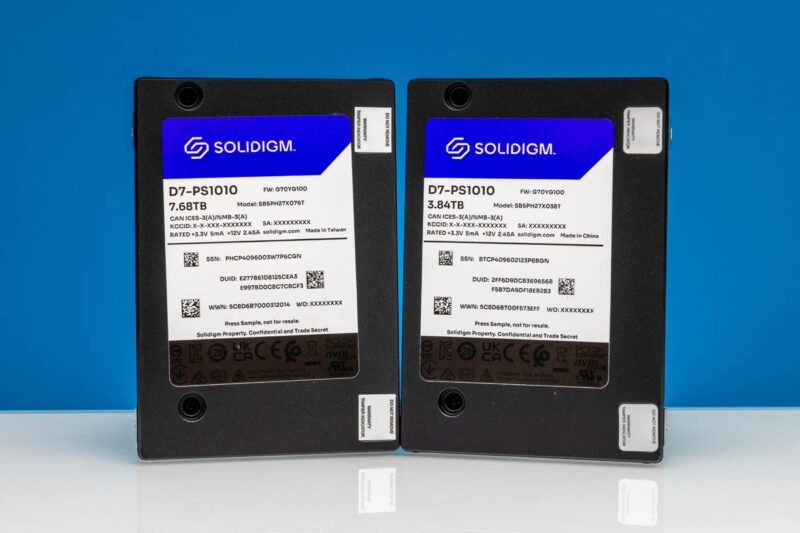
Combining solid performance at a popular capacity point makes for a compelling SSD. Hopefully we see more of these drives from Solidigm.


The article states “we do not have all working on Arm and POWER9 yet.”
I think Power 9 is out of support but still interesting in a retro-computing sort of way. On the other hand, the latest Power 11 based systems are shipping and it would be interesting to have some reports that focus on them.
If only they made these drives with different performance profiles such as low-queue depth optimized versions (or firmwares).
I purchased a T705 4tb gen 5 drive, after 4 months of use it just died, it wasn’t even a boot-drive, just my desktop folder was junction’d to it. Since then I’ve found this failure is common, many reddit posts, funny why no reviewers have mentioned this fact?!!!
Basically it was a brand new drive, but I am now trying to get a warranty claim on it, and I purchased it new-unused from a seller off ebay, so have no idea if Micron has a warranty service as good as Intel’s used to be or if they’re just going to fob me off because I never purchased it from a shop directly.
We need enterprise drives with low-queue-depth optimizations, I am willing to pay for such a drive as I believe many others will too, surely it is just a firmware tune?……
In my opinion, Power 9 is no longer supported, yet it has some retro-computing appeal. It would be fascinating to see reports that center on the newest Power 11 based systems, which are now shipping.