

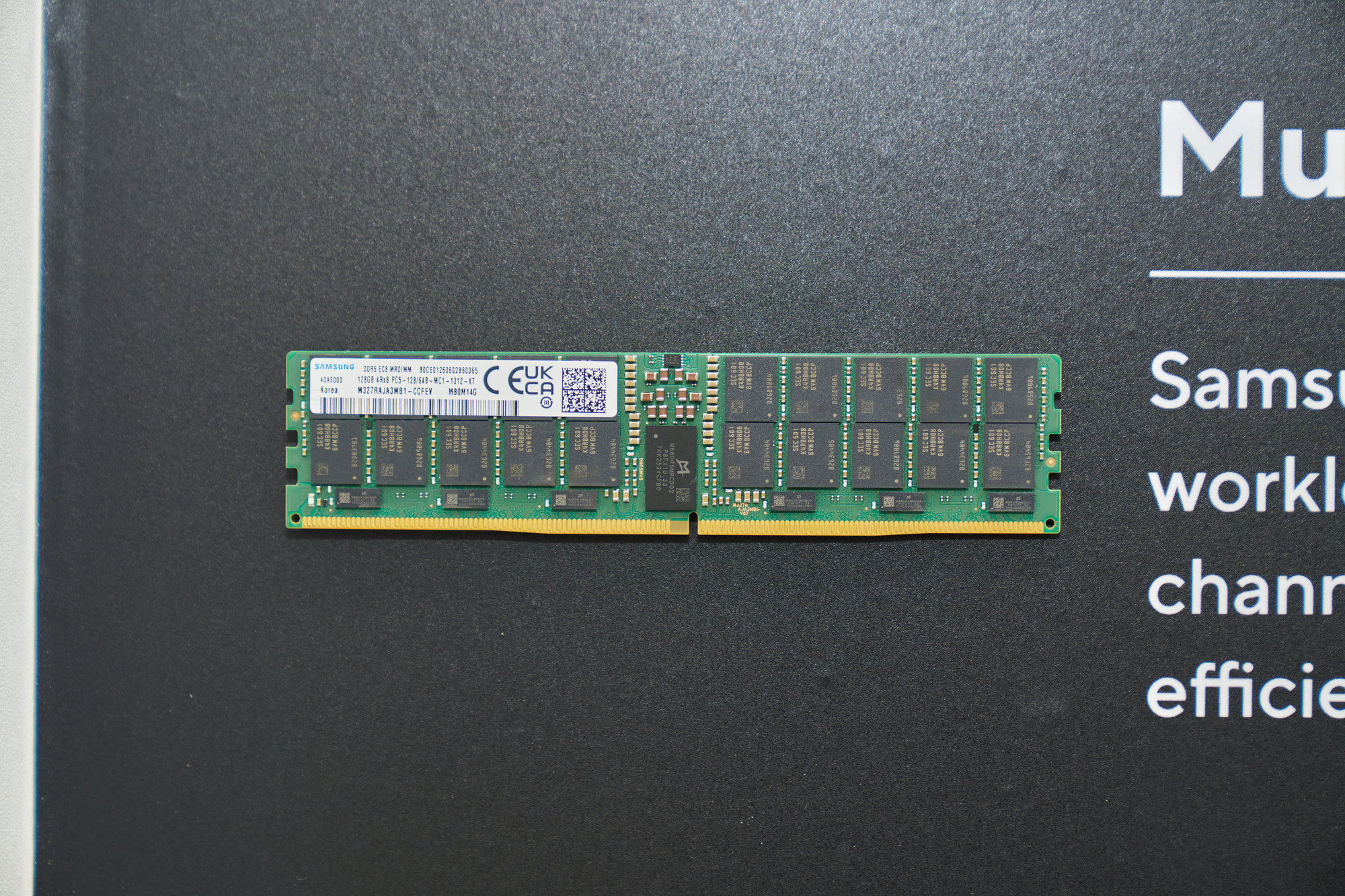
With the next generation of x86 server platforms under heavy development at both Intel and AMD, their partners are not sitting idly by. Besides the development of new motherboards and servers to support these new processors, other parts vendors, such as the memory vendors, have been working with Intel and AMD to develop newer server DRAM products to go along with their new platforms.
While roaming this year’s Computex trade show, we happened across upcoming RDIMMs from a few vendors. Server vendors and their customers are going to have quite a lot to look forward to, as the next-gen servers will bring support for both faster traditional RDIMMs, as well as an even faster standard for the still-new MRDIMMs.
DDR5 RDIMMs Get Faster With 8000 MT/s Transfer Rates
First up, Micron DDR5-8000 RDIMMs were floating around the show and could be spotted at various vendor booths as well, such as Asus’s.
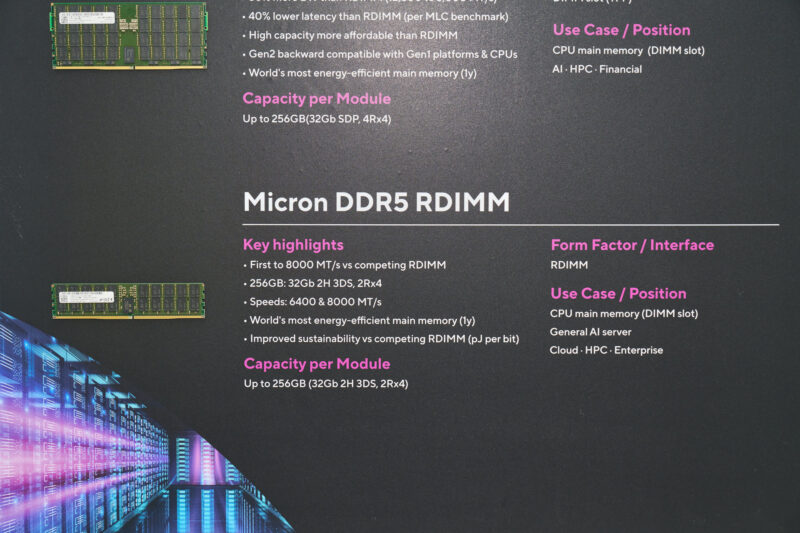
Current-generation RDIMMs and platforms are limited to DDR5-6400 speeds. But as DDR5 is with us for at least one more generation, memory and platform vendors are working to increase clock speeds to enable more memory bandwidth per channel.
In this case, Micron is set to be the first out of the gate with DDR5-8000 RDIMMs, which would be paired with future platforms. The company is developing both standard and 3D stacked (3DS) DIMMs, allowing them to offer 8000 MT/sec speeds even with high-capacity 256GB DIMMS using 32Gbit dies.
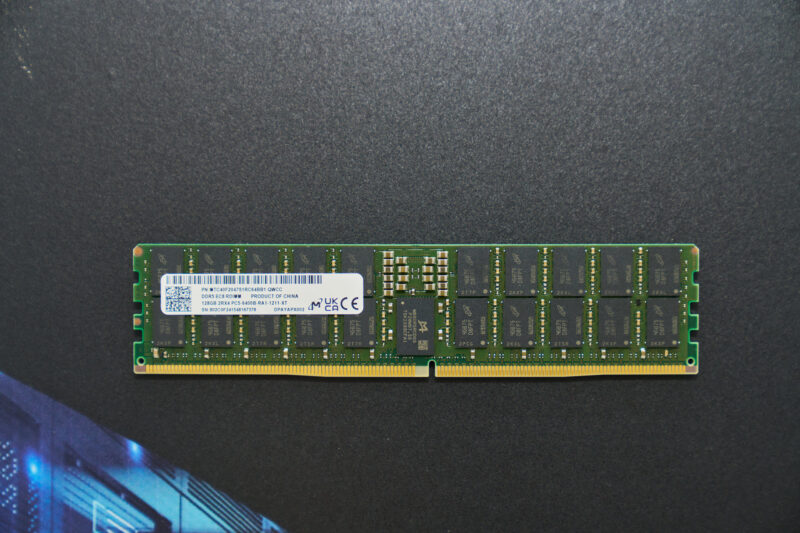
The company is also pitching the higher speed grade as a more energy-efficient option for power-conscientious system vendors. Thanks in large part to Micron’s 1y manufacturing process, the company believes they have an edge in power consumption on a picojoules-per-bit basis.
MRDIMM Gen2 to Hit 12,800 MT/s
Meanwhile, for server customers who need bandwidth above all else, the second generation of Multiplexor Rank DIMMs (MRDIMMs) is under development. The current generation of MRDIMMs top out at 8800 MT/sec on contemporary platforms, but with MRDIMM Gen2, the memory vendors want to push that to 12,800 MT/sec, which would be a 45% increase in bandwidth per DIMM.
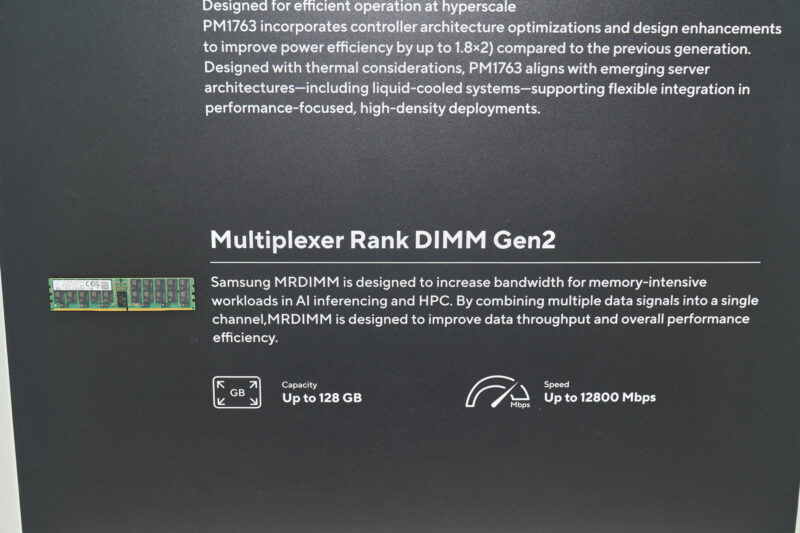
The fundamental architecture of a second-generation MRDIMM remains unchanged. The DIMMs are outfitted with multiple ranks of DRAM chips, with multiplexors switching between them in an interleaved fashion.
While the Gen1 MRDIMMs were effectively DDR5-4400 memory operating in interleaved mode, the second-generation MRDIMMs will be DDR5-6400 memory doing the same. This leaves MRDIMMs a step behind the bleeding edge for traditional DIMMs, but still vastly ahead in terms of total memory bandwidth.
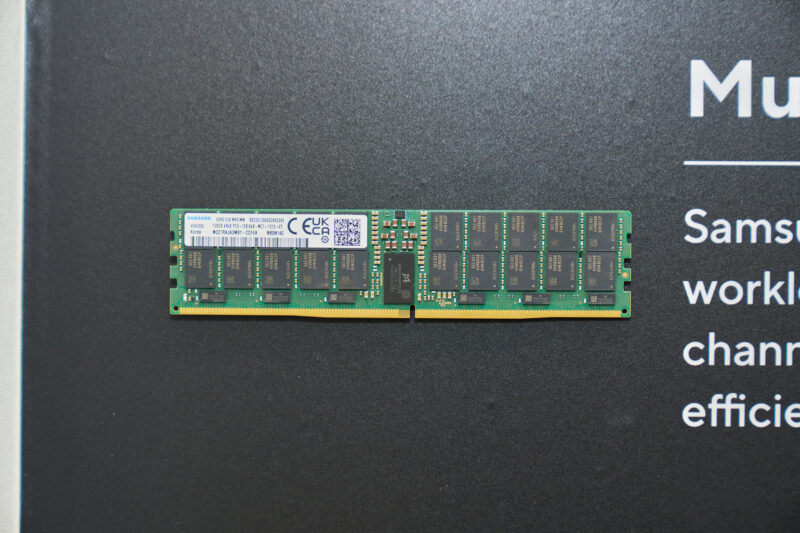
Besides cost, the trade-off continues to be capacity. Even with twice as many memory chips as a standard RDIMM, Samsung is only promoting MRDIMM Gen2 capacities up to 128GB, which is half of that of the largest 3DS RDIMMs. This means that server vendors cannot have their cake and eat it too in regard to getting both maximum speed and maximum capacity, but they can trade off around half of one to get nearly twice as much of the other.
MRDIMM Gen2 is thought to be coming first with AMD’s EPYC “Venice” platform when it launches later this year, though this has yet to be confirmed. At the speeds touted by Samsung, this would give the 16 memory channel processors a whopping 1.6TB/second of memory bandwidth when using second-generation MRDIMMs, which would be a massive jump in total bandwidth over today’s 12-channel DDR5-6400-capable (0.6TB/sec) EPYC 9005 platform.
Final Words
Memory is going fast these days, and in more ways than one. Memory bandwidth has always been a bottleneck in computing, but that is going to be the case even more with the next generation of server processors. With AMD’s Venice platform slated to launch with 16 channels later this year, and Intel’s Diamond Rapids Xeon platform set to do the same in 2027 (with the company canceling the 8 channel version in the interim), customers are demanding as much memory bandwidth as is reasonably possible. These additional memory channels will provide some of that uplift, but it will be higher clockspeed RDIMMs and MRDIMMs that provide the rest.


6400 MBytes per second means 6.4 GBytes per second not 0.6 Terra Bytes per second that’s 100 times more
still I think you made that mistake from too much stress
Hrm. Just to double-check my math here:
6.4Gbps per pin data rate * 64-bits per memory channel * 12 memory channels = 4,915Gbps
4,915Gbps / 8 bits in a byte = 614GBps
So the math checks out. Keep in mind this is the math for the bandwidth of a complete 12 channel system, not a single DIMM.
The price for the whole server wilk be really brutal. Any estimates how much more expensive mrdimms wilk be comparing to rdimms?
It’s great to have the transfer speed but what about the wait states? If the data is not ready then only saying the transfer speed is very misleading. My 12 year old RAM with 7 wait states is still faster than some modern RAM with 50 wait states. We really need industry wide factual clarification on this.