
Cisco Catalyst C1300-24XTS Performance
For performance testing, we used a Keysight IxNetwork test setup with all twenty-four ports active at 10Gbps. Twelve ports were connected through NOVUS 10/1GE 16DP cards using 10GBASE-T, and twelve more through NOVUS 100GE cards in SFP+ mode. We ran RFC2544 Throughput and Latency tests with 30-second iterations per frame size, starting the search at 10% of line rate and stepping up to 55%, 77.5%, 88.75%, 94.375%, 97.188%, 98.594%, 99.297%, and finally 100%. We tested fixed frame sizes of 64, 128, 256, 512, 1024, 1280 and 1518 bytes, plus standard IMIX, Cisco IMIX and IPSec IMIX profiles.
Let us start with the 64-byte results since those are typically the hardest on switch hardware due to maximum packet processing rates. As a fun point, the two switches we tested before this were unable to hit 100% line rate at 64B packet sizes.
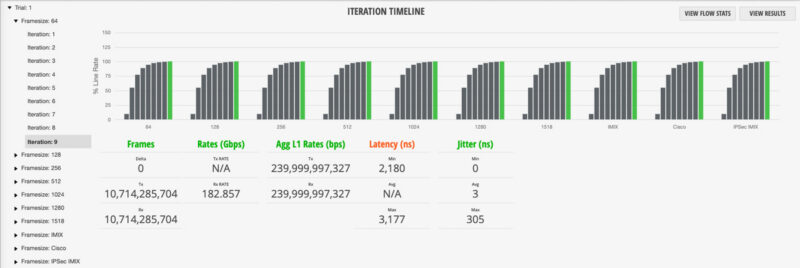
At 100% line rate with zero frame loss across all twenty-four ports, we saw just under 183Gbps of reported receive throughput at L2 for about 357 million frames per second. The aggregate Layer 1 rate was about 240Gbps. Again, we have good L1 counters here too since we are using a FPGA-based test tool so we can see the L1/L2 delta.
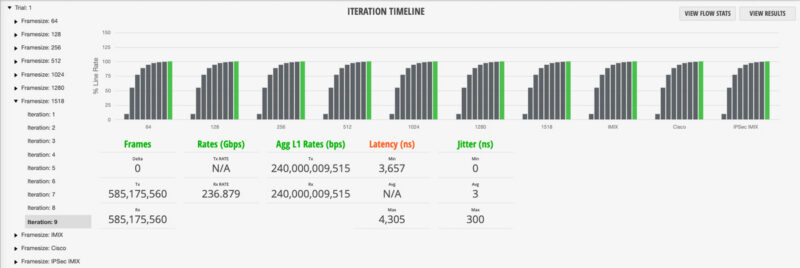
Moving to 1518-byte frames, which are easier on hardware because there are fewer packets per second to process, we see almost 237Gbps of receive throughput while still maintaining that approximately 240Gbps L1 rate with zero frame loss.
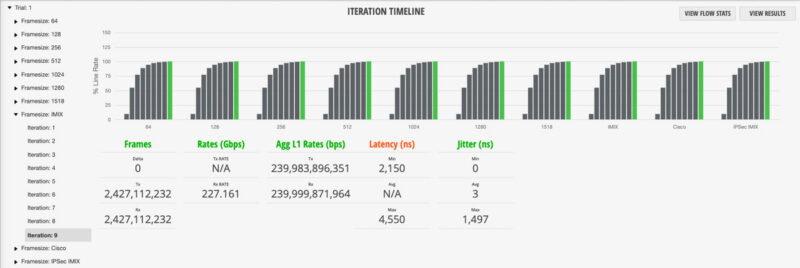
Standard IMIX delivered about 227Gbps.
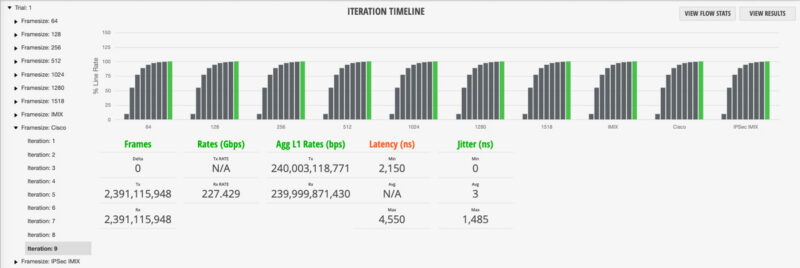
Cisco IMIX came in at over 227Gbps at full line rate with no frame loss.
We also ran the IPSec IMIX profile for another frame size mix. This result came in at approximately 229Gbps with zero frame loss.
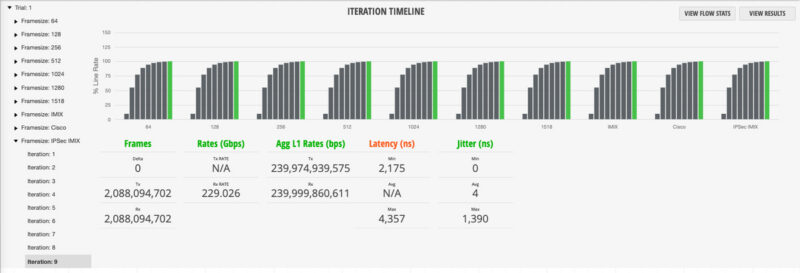
Overall, the latency and jitter were fairly spot-on with what we see from Marvell Prestera switches. Maybe the more important result here is that we hit line rate across all 24x 10Gbps ports.
Cisco Catalyst C1300-24XTS Power Consumption and Noise
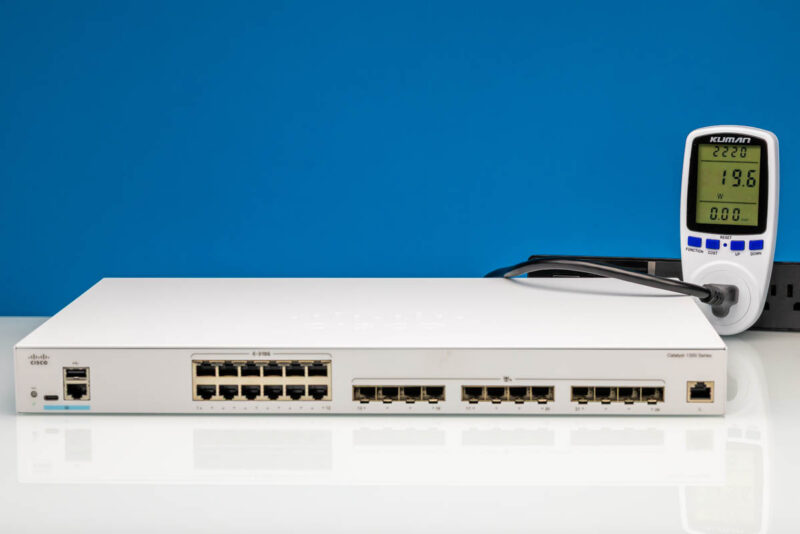
Power consumption is always on your mind when you deploy 10GBase-T which has a habit of using more power than SFP+ switches. With no data cables connected at idle, we measured 19.6W on the meter.
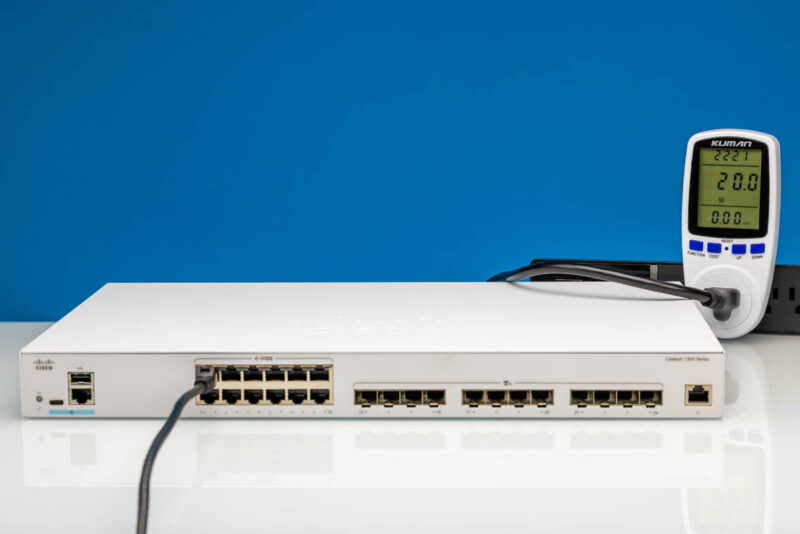
Adding a single 10GbE RJ45 cable brought that up to 20.0W.
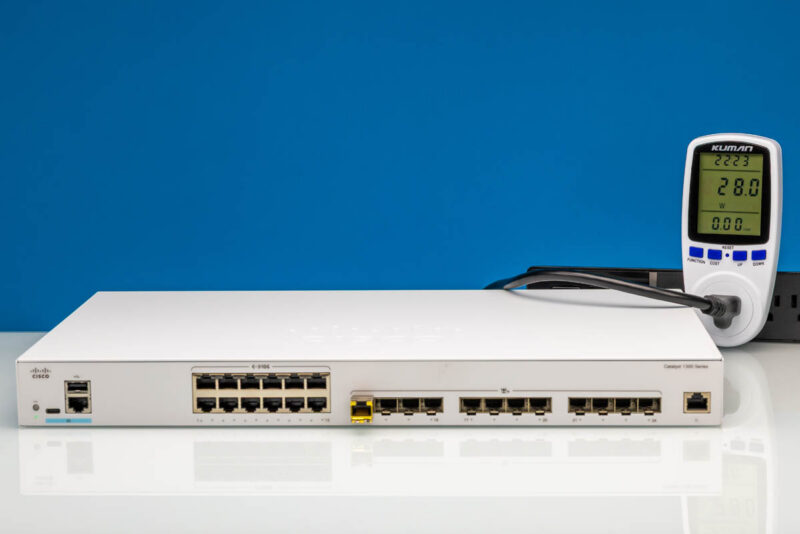
Inserting one SFP+ module instead showed 28.0W on the meter. Usually this module adds under 3W in other switches we review.
Cisco lists the C1300-24XTS idle power around 22-23 watts, with maximum power rated at 86-89W. On sound, we were at 38dba in our studio, so it was a bit louder than we would have liked, and there is probably room to get the switch to make more noise. At the same time, compared to the pair of Keysight XGS2 boxes cooling all of those big multi-FPGA cards, this was inaudible in the testing lab.
Final Words
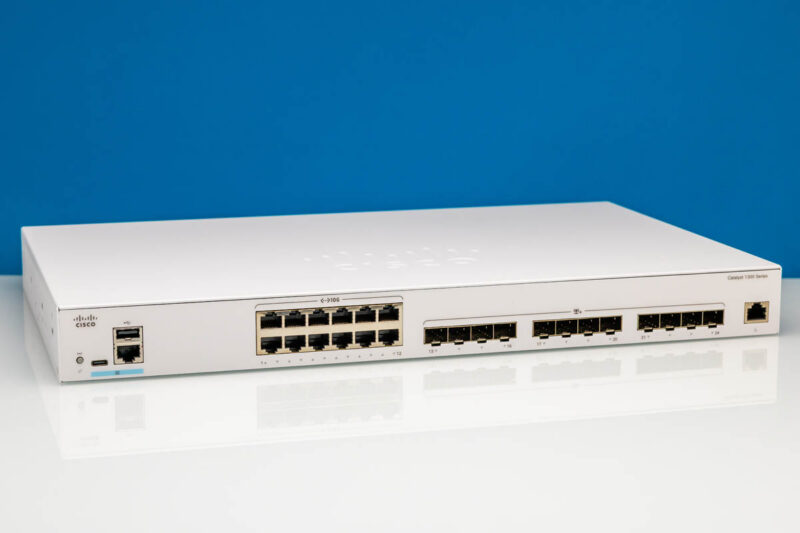
Overall, the Cisco Catalyst C1300-24XTS is really neat for SMBs or other deployments with a mix of SFP+ and 10Gbase-T gear. Our 10Gbase-T needs have greatly increased over the past few months, as more local AI machines ranging from NVIDIA GB10 to AMD Ryzen AI MAX+ systems to even the GB300 stations include 10Gbase-T ports. Having SFP+ makes it easier to connect to higher-speed switches, data center devices, and even lower-speed 2.5GbE or PoE switches.
The Cisco Catalyst C1300 series is also nice because it has a different software and support model. For example, you do not even need a Cisco login, at the time of writing this, to access the latest firmware download from Cisco. I think that first is a question of whether this is the right port configuration. Then it is like getting Cisco-quality hardware without having to deal with support contracts on lower-end access switches. We review a pretty wide range of gear, and there are certainly many that this type of model will appeal to.
Where to Buy
Here is an Amazon (affiliate) search for the Cisco C1300-24XTS.