
Cisco Catalyst C1300-24XTS Internal Hardware Overview
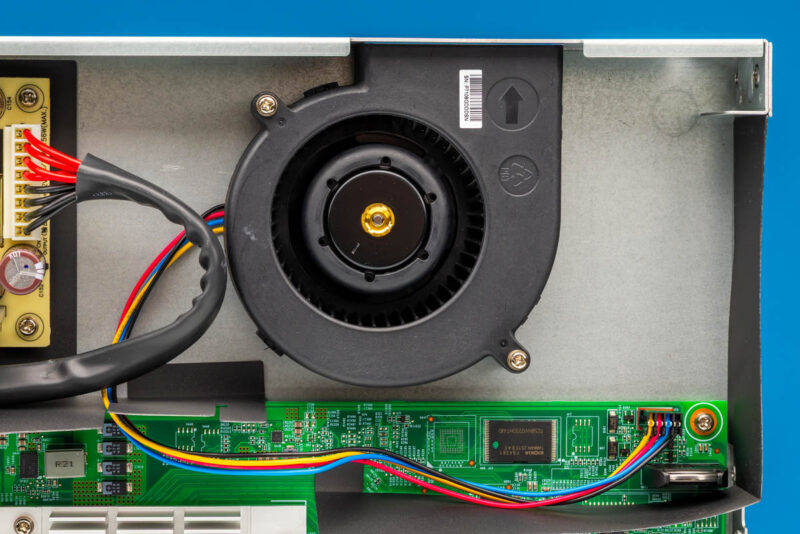
Opening up the switch reveals a fairly involved layout for a 1U fixed-configuration unit. The main green switch PCB spans the front of the chassis, with the internal AC-to-DC power supply at the rear left and a blower fan at the rear right.
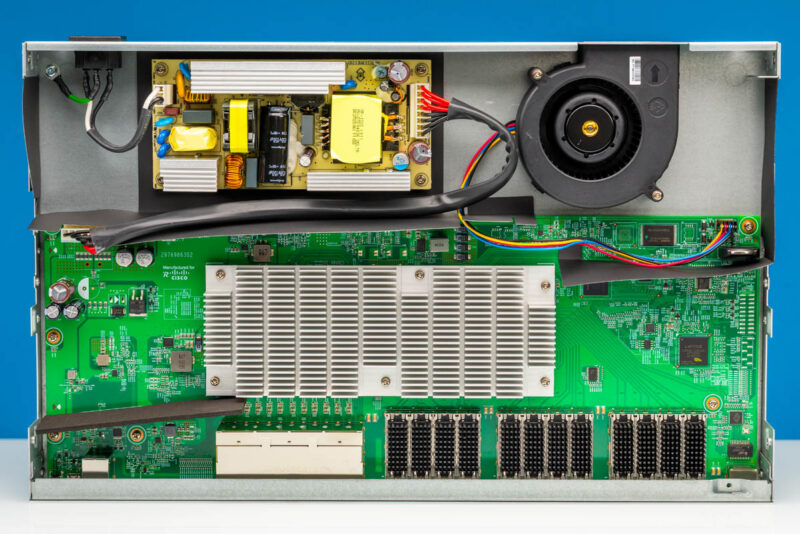
Instead of a row of small axial fans, Cisco uses a single centrifugal blower-style fan here. This is something we have seen in other C1300 series switches, but it is also an area where Cisco is doing a bit of extra engineering compared to its competitors. In this class you normally see 1U 40mm fans which are easier to design for. This one was slightly louder than the other switches that we have tested.
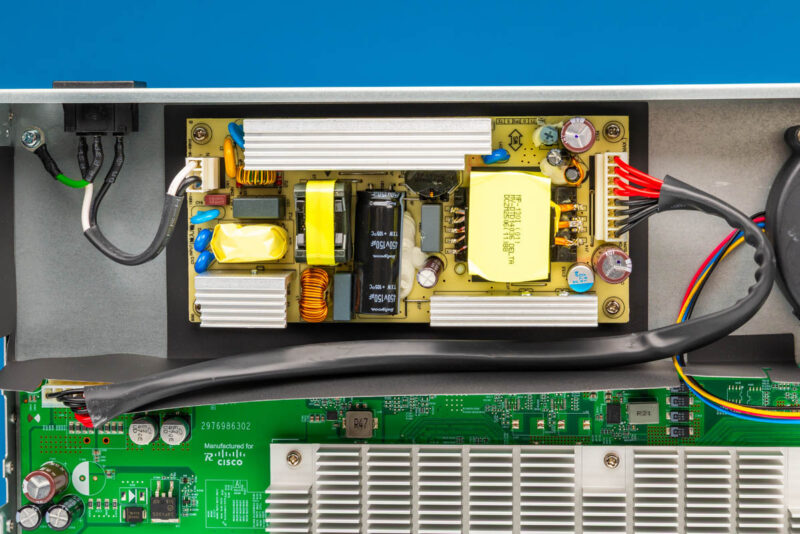
The internal AC-DC power supply sits at the rear of the chassis with transformers and capacitors visible. It is wired to the AC input and the mainboard.
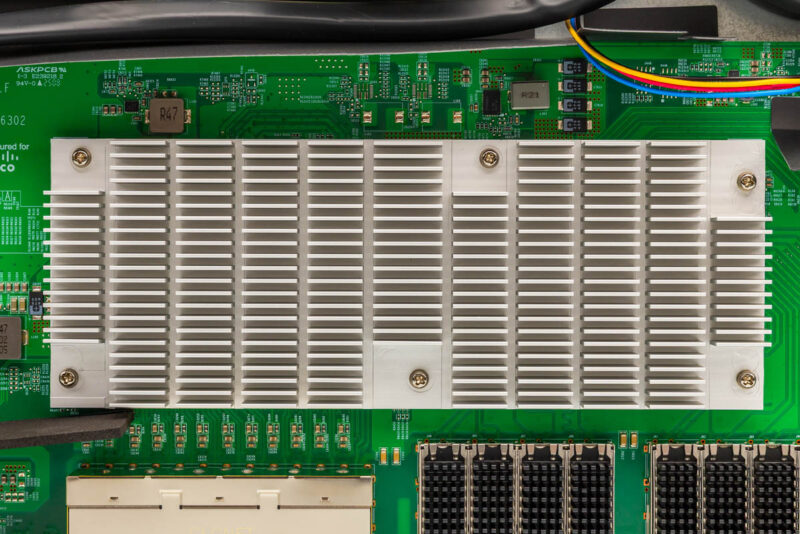
In the middle of the board, there is a big silver finned heatsink. Of course, this is STH and we found a heatsink we (Sam) could easily get off.
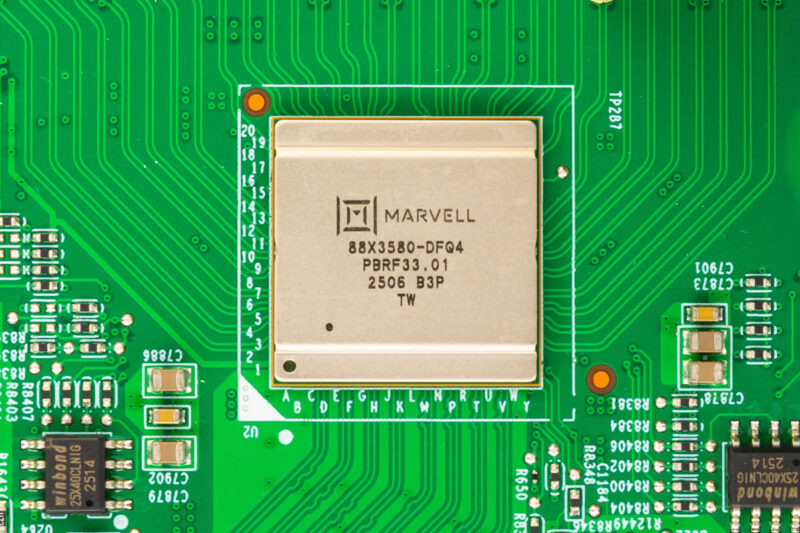
Underneath, we found a Marvell 88X3580-DGQ4 package. This is an eight-port 10Gbase-T physical-layer transceiver supporting 802.3an, 802.3bz/Nbase-T, and 802.3az Energy Efficient Ethernet. There is a 4-port Marvell unit next to this one.
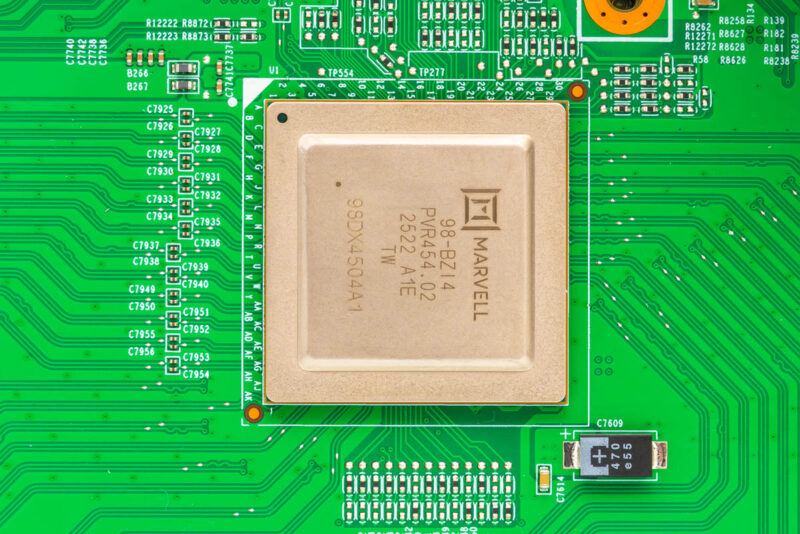
There was also a Marvell Prestera 98DX4504A1 switch chip.
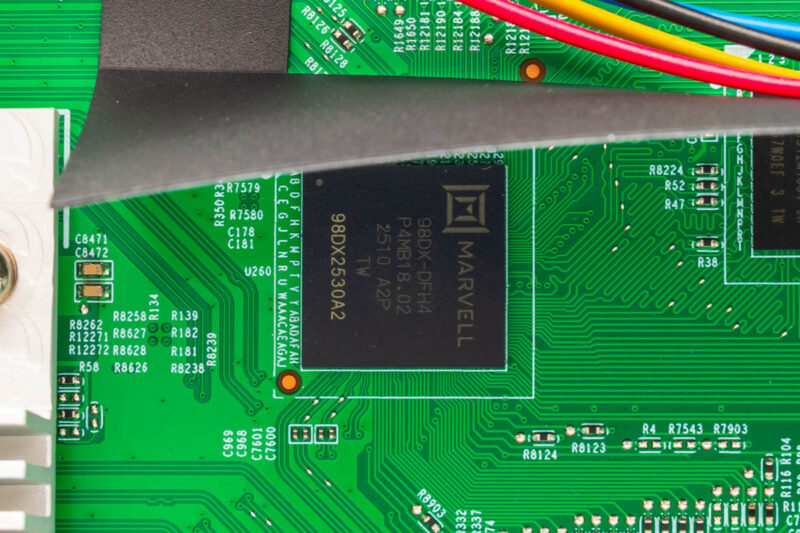
We also found a chip marked Marvell Prestera 98DX2530A2.
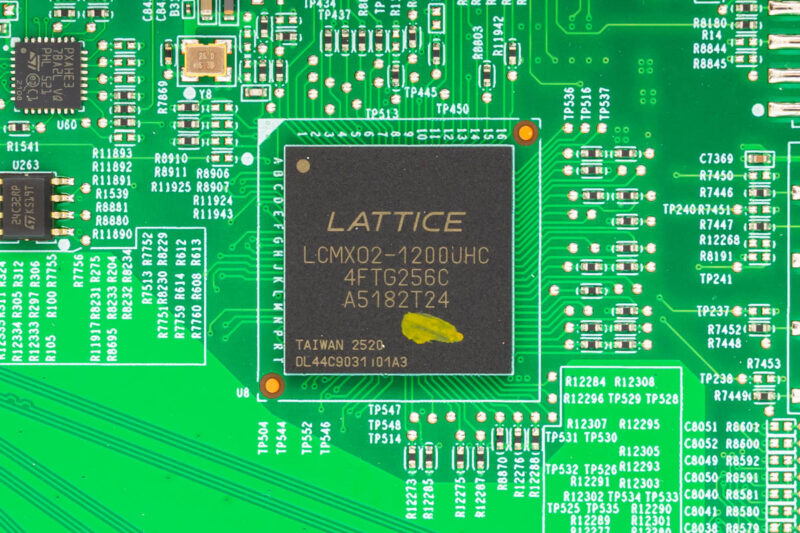
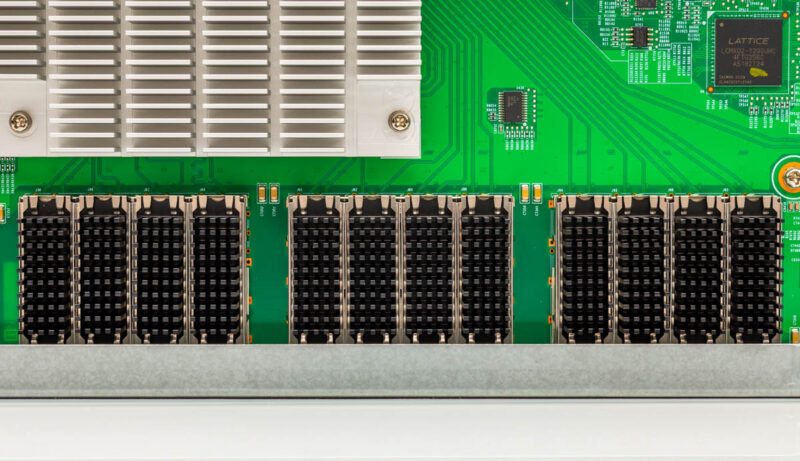
We also found a Lattice LCMXO2-1200UHC, which belongs to the MachXO2 family of programmable logic.
Here is a look at the switch with the big heatsink removed.
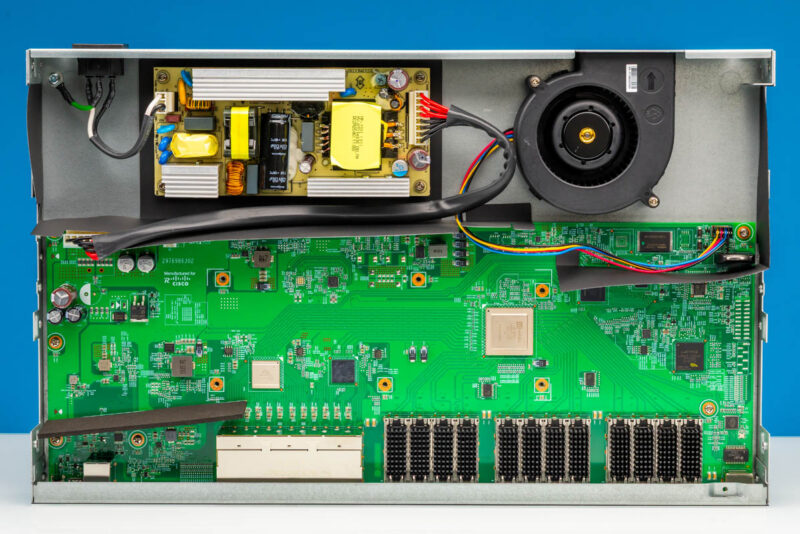
One other small, but nice, feature is that the SFP+ cages have small heatsinks. Many lower-cost switches skip this since SFP+ is relatively low power. Still, Cisco went the extra effort to include these which is a small sign of the quality.
Next, let us get to the management.