

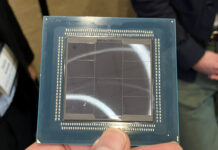
Just a fun one for today: a first look at the Ampere AmpereOne M CPU. This is the AmpereOne A192-32M, which means it is 192 cores, 192 threads, but with 12-channels of DDR5 memory, whereas the A192-32X was the same 192 cores, and 192 threads but with only 8-channels of DDR5. Both are at 3.2GHz, hence the 32. There is a physical difference between the two CPUs that is easy to spot, so we wanted to show it ahead of a more in-depth review.
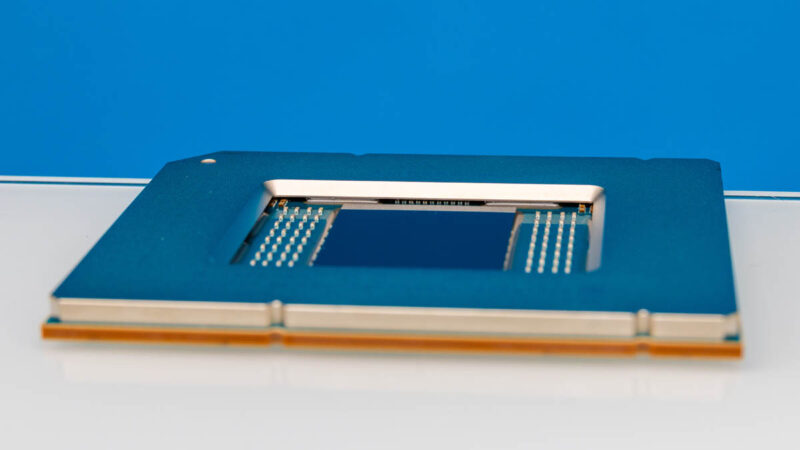
This is the Ampere AmpereOne A192-32M
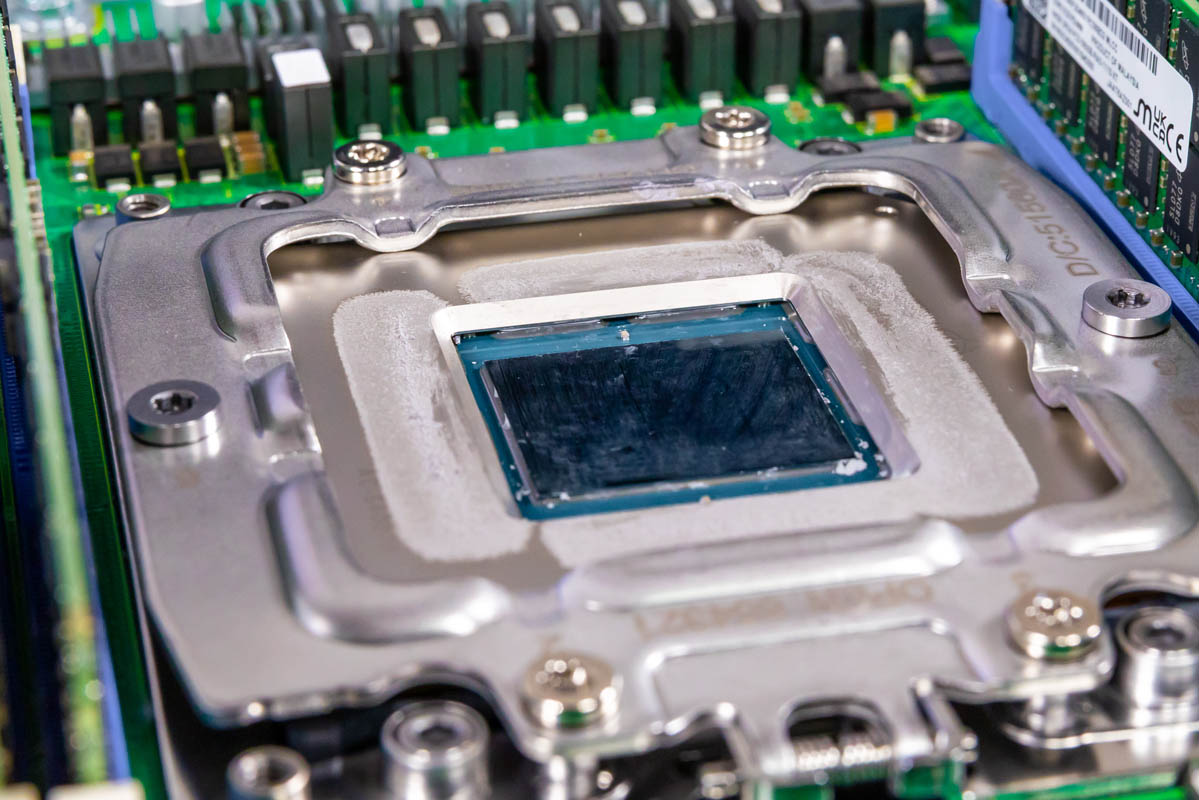
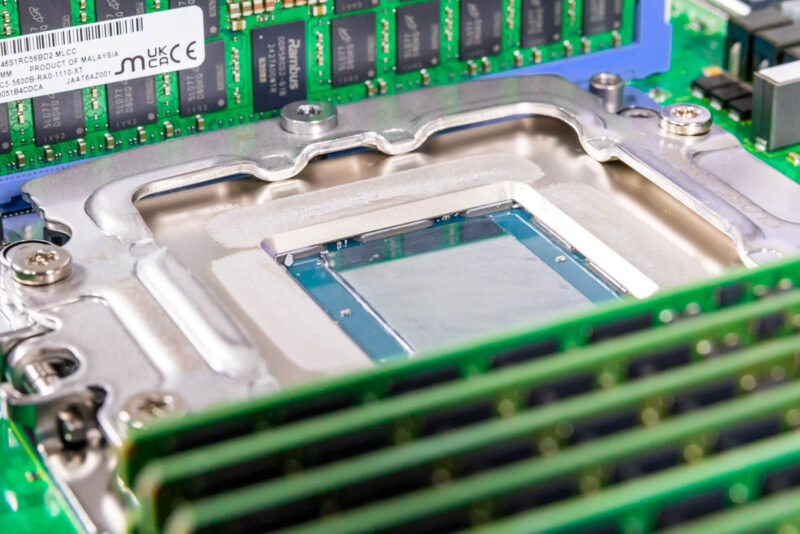
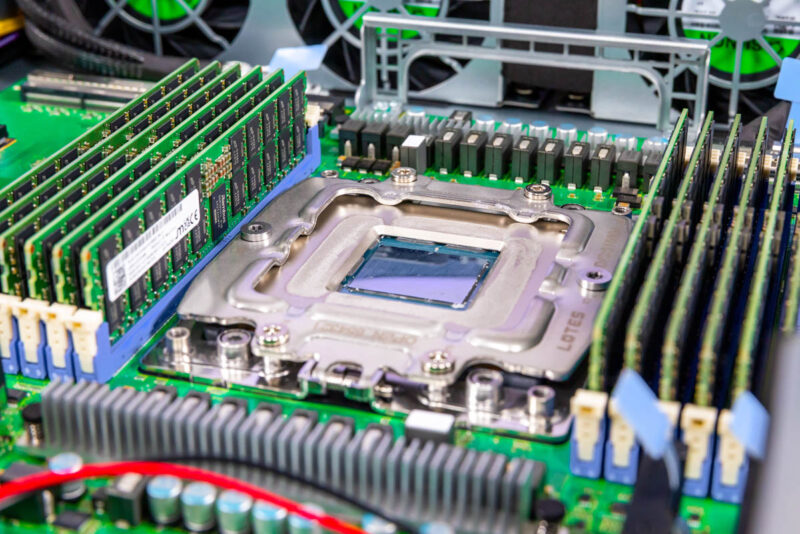
This is the AmpereOne A192-32M in a 2U single-socket Gigabyte server without its heatsink installed. At SC25, we saw the Gigabyte R1A3-T40-AAV1, a 1U version of the system we have here.
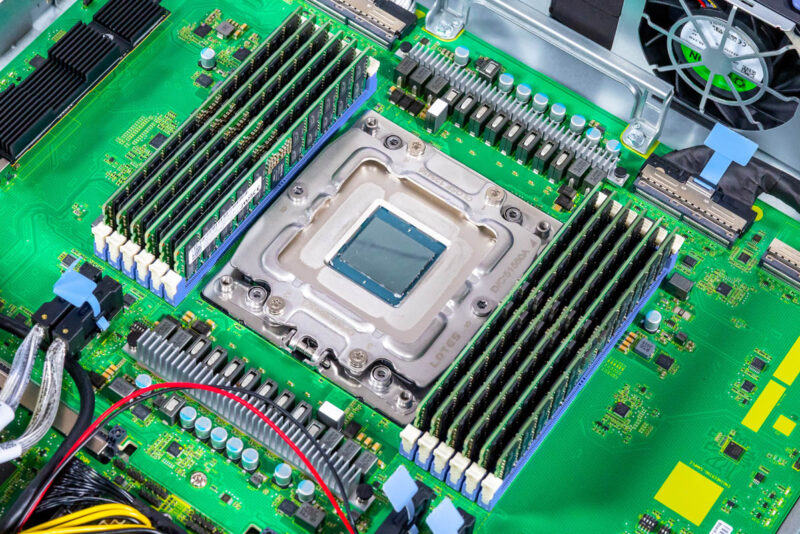
Similar to the AmpereOne A192-32X, the A192-32M has the center compute die with the PCIe and memory tiles under the heat spreader.
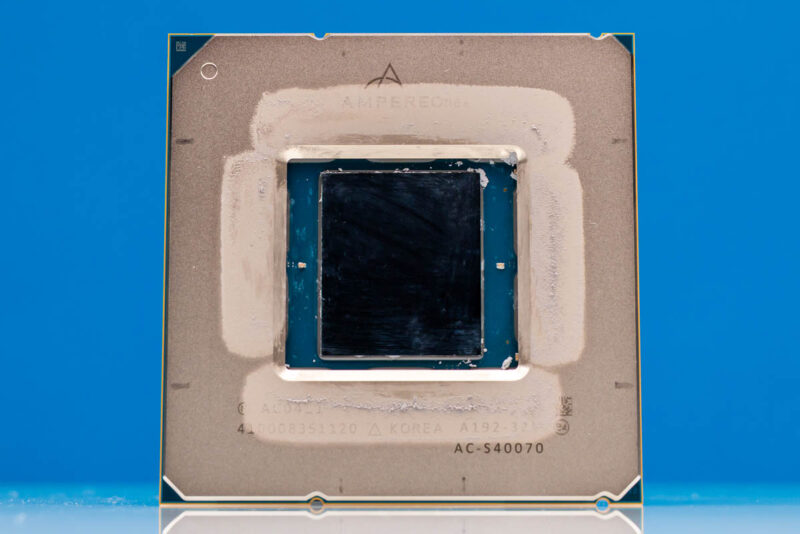
Also, the actual package is different. Here is the A192-32X (below) that you can compare to the A192-32M (above.)

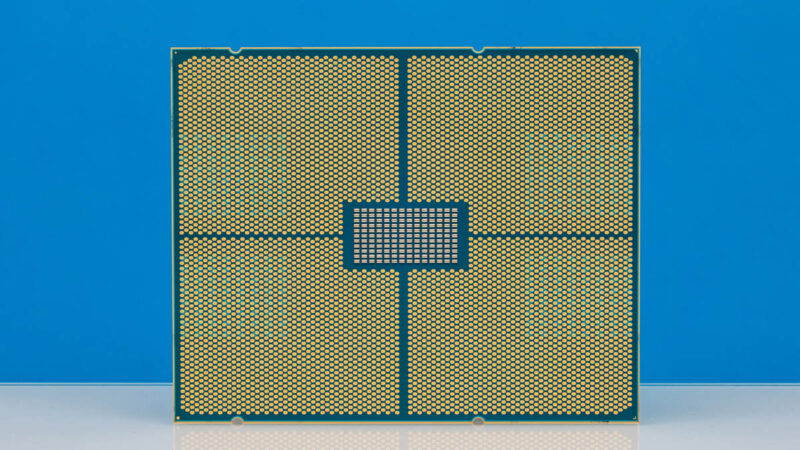
If that does not get you excited, let us flip the chips over and take a look at the pads.
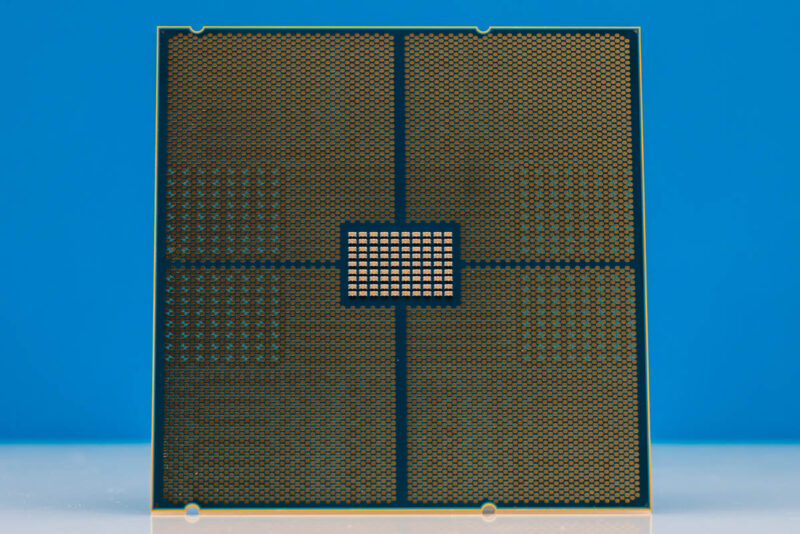
Again, we have the A192-32M on top and the A192-32X below. You can see the expansion in I/O pads to handle the additional DDR5 channels.
If you remember, the design of AmpereOne has I/O chiplets for both PCIe and DDR5 controllers. Here we can see the two that are for PCIe on one of the edges.
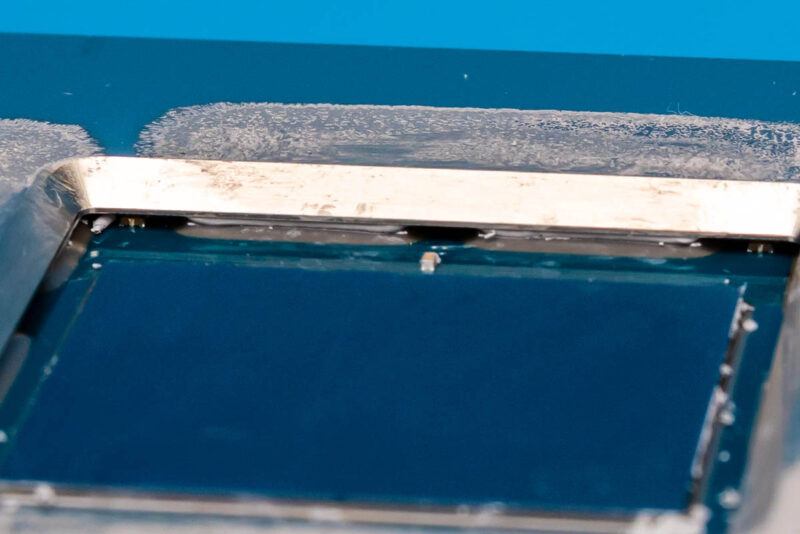
That is the same as the A192-32X. If you look at the other side under the heat spreader, there are two chiplets for the DDR5 controllers. Two on each side, each controlling two DDR5 channels gives us eight channels of memory.
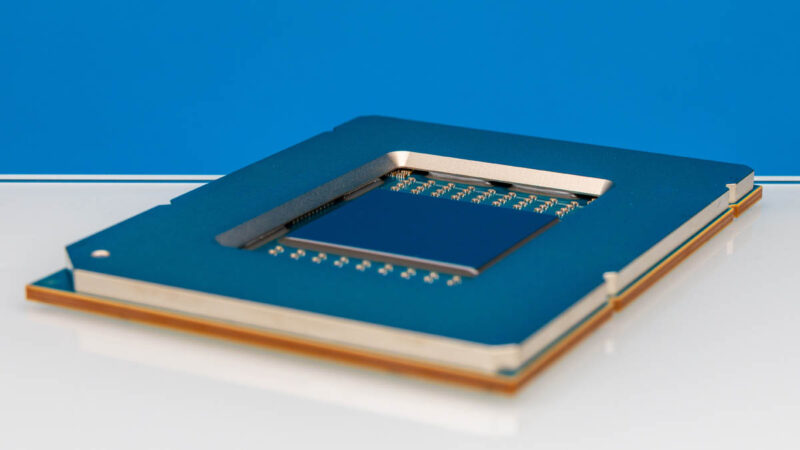
When we look at the AmpereOne M, you can see there are three of these controllers. Three controllers on two sides, each controlling two DDR5 channels gives us six chiplets and 12 channels of DDR5.
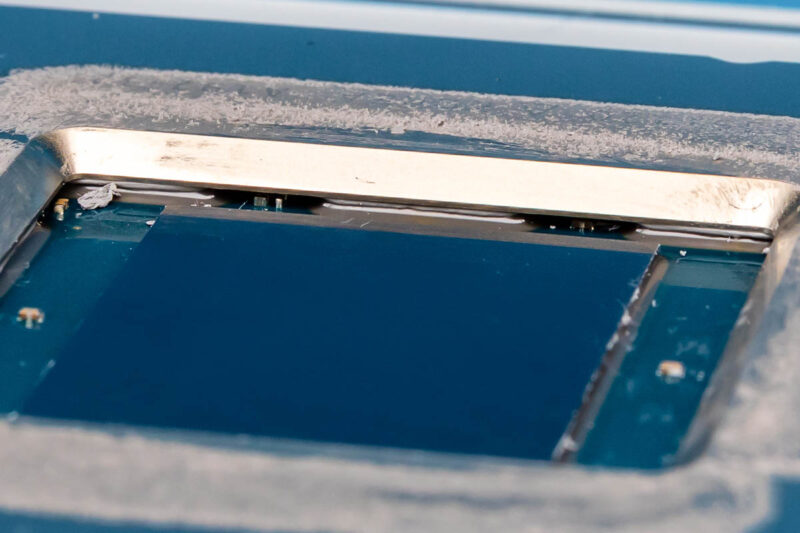
Below is another look at the 8-channel A192-32X where you can see there are only two of those chiplets.
When the chips are installed into their sockets, you can see that the memory controllers on the side of the DDR5.
That leaves the PCIe chiplets facing towards the front and the rear.
The benefits of having the 12-channel DDR5 memory support are not just 50% more memory channels, but they also run at DDR5-5600 speeds versus DDR5-5200 in the original AmpereOne. What you do lose is some PCIe lanes, going down from 128 to 96 lanes in the AmpereOne M.
Final Words
We will have more on the AmpereOne M soon, but it was neat to get some time on the 12-channel DDR5 Arm processor. These are really interesting chips we do not get to see all the time, so we wanted to take a moment to let folks see this one.
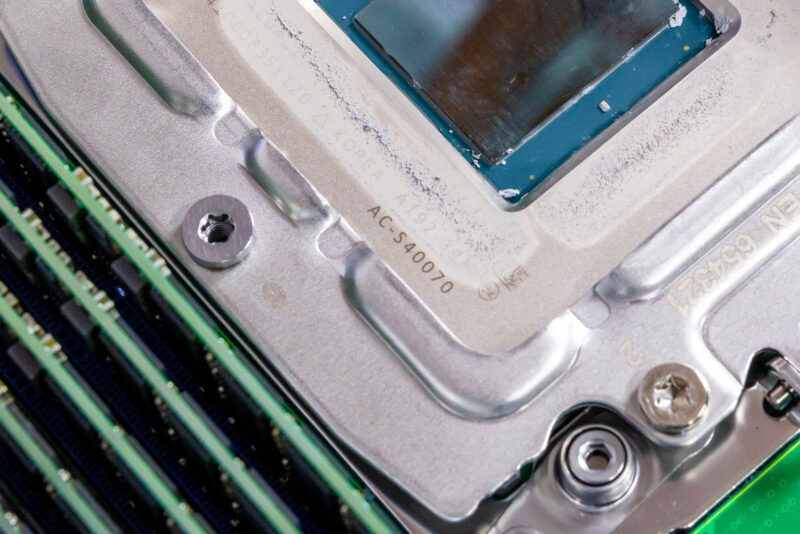
Of course, we are going to have more on the AmpereOne M in the not-too-distant future. We just had these photos and thought we would show off the chip in its native environment.


32 Threads? Isn’t it single threaded per core at 3.2Ghz.
Hey, it exists!! People were beginning to wonder…….
@R Sprinkle:
“192 threads, but with 12-channels of DDR5 memory, whereas the A192-32X was the same 192 cores, and 192 threads but with only 8-channels of DDR5. Both are at 3.2GHz, hence the 32”
I didn’t realize until now that there were additional chiplets under the metal frame around the main compute die. I thought it was only there to stabilize the cooler, but it seems it also has some additional functions.
It is way too late. And it is now up against coming Zen6c.
@ksec: Ampere has been having the same ‘schedule to fab’ issues that AMD had when Apple booked out the TSMC new node 18 months ago. It put a lot of chip designers behind schedule. That same booking constraint also impacted AMD’s release of the Epyc Dense on Z4 and was finally cancelled to defer to Z5.
All of these designers are all looking for the same wafer density and there are only a few fabbers with good yields. Apple has the money, so they are booking up all the fab slots in advance.
Sometimes I wonder is Apple really advancing technologically, or are they simply buying up all the fab capacity which essentially slows the others to market and makes them look better.