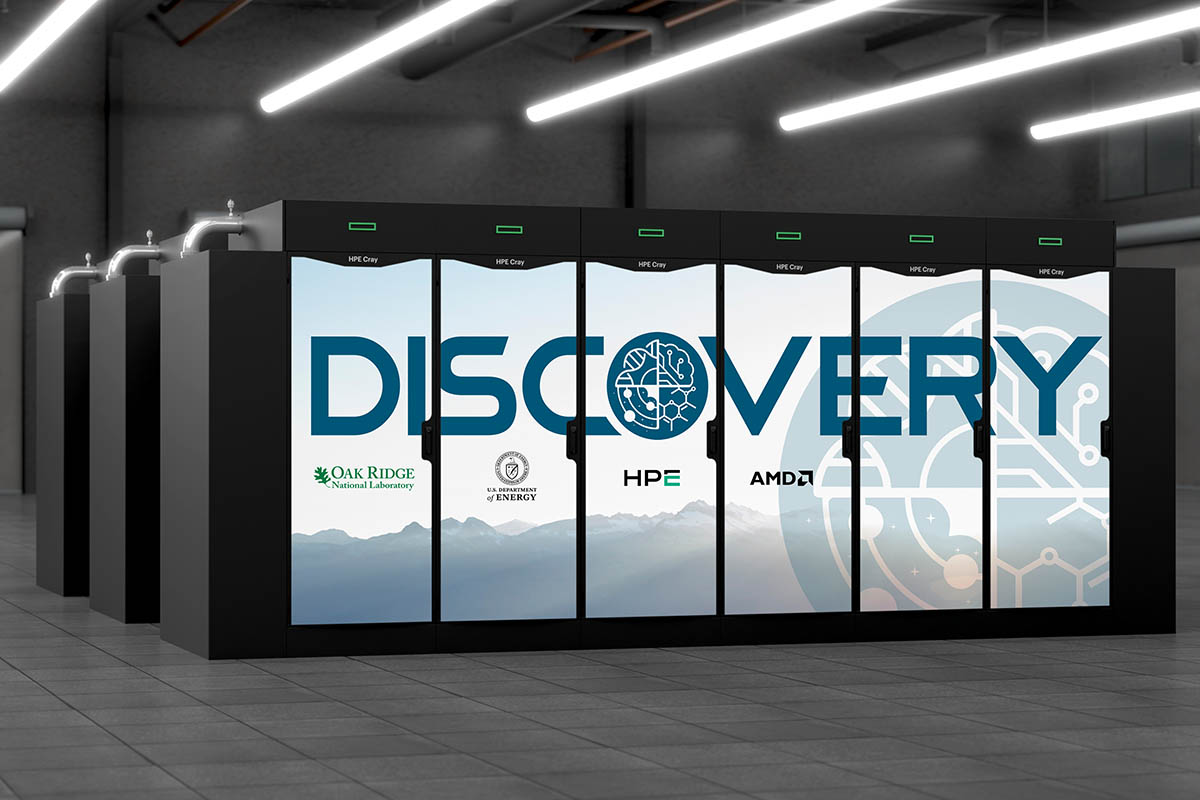
HPE has next-generation wins for its Cray Supercomputing portfolio, along with new systems. First, the US Department of Energy plans Discovery as the successor to Frontier at Oak Ridge National Labs. The second big announcement is the AI system called Lux. Third, HPE is talking about its next-gen system design that will power next-generation supercomputers and what makes them different.
ORNL Discovery and Lux Powered by HPE and AMD Announced
At ORNL Discovery will feature AMD EPYC “Venice” processors with the company’s upcoming AMD Instinct MI430X GPUs. We expect Venice in the second half of 2026, and the chips have also been part of AMD’s Helios designs, but this is perhaps the first time we have heard about a MI430X.
The Lux AI cluster will be based on AMD Instinct MI355X GPUs. HPE says it will utilize the ProLiant Compute XD685 nodes with Pensando networking and AMD EPYC CPUs. Our guess is this will be a Turin-based deployment given that it seems focused on PCIe Gen5.
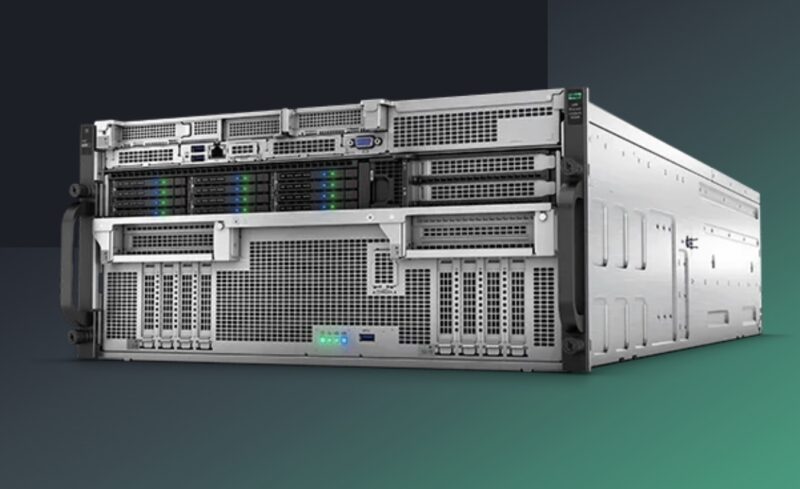
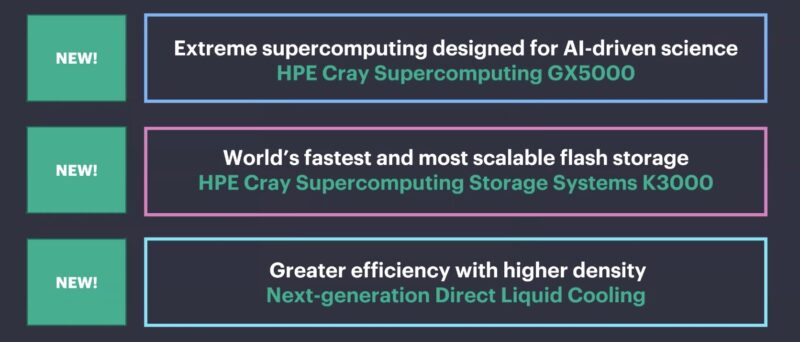
In terms of HPE’s portfolio updates to support these, we have the Cray EX successor the HPE Cray Supercomputing GX5000 and a DAOS storage cluster the HPE Cray Supercomputing Storage Systems K3000.
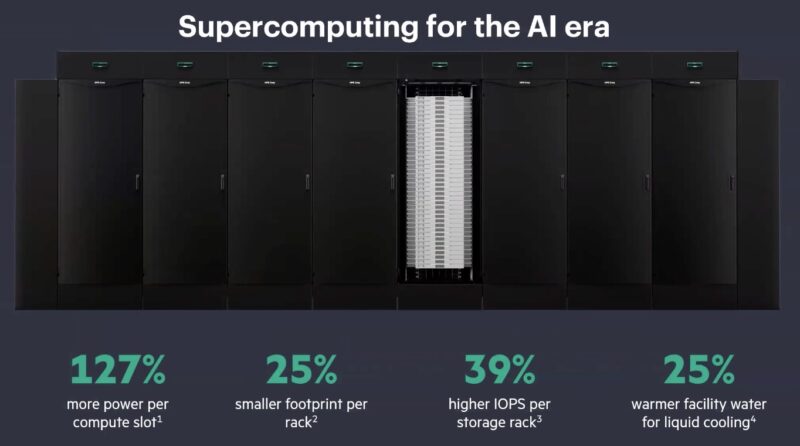
The HPE Cray Supercomputing GX5000 offers more compute power per compute slot. HPE also told us they will be able to better offer heterogeneous compute with the new liquid cooling. In addition, the inlet temperature of the facility water can be warmer, important for places like Europe where power is very costly.
On the liquid cooling front, the pumps are in a sidecar to the rack and are designed to be fully redundant.
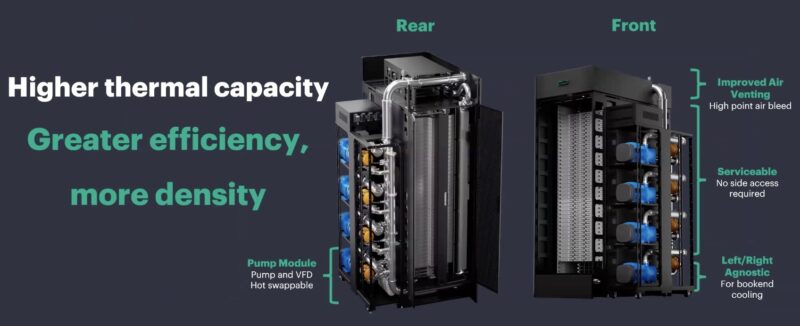
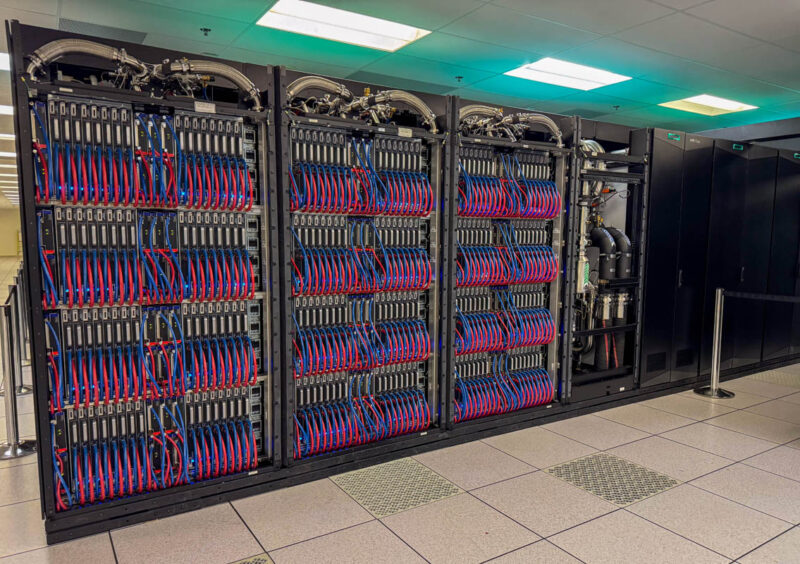
Just taking a moment to look at El Capitan for a moment, we can see the Cray EX racks with a pump rack in a bit more detail. It looks like there are some big changes for the next-generation.
HPE brought on the Intel DAOS team for storage, and is productizing this in the HPE Cray Supercomputing Storage Systems K3000.
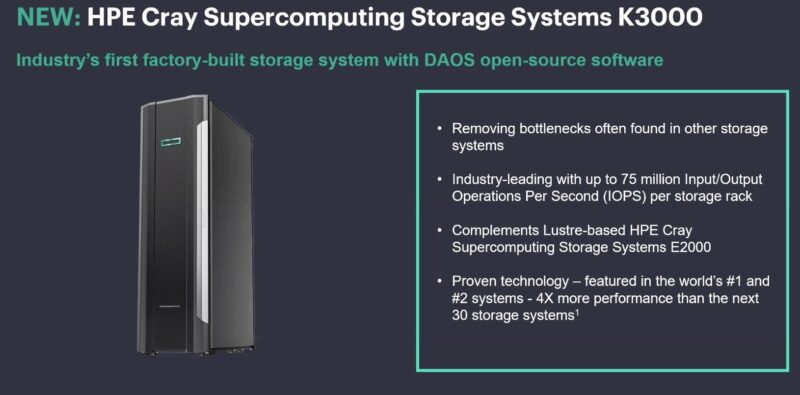
HPE says that it has experience operating DAOS from its current generation deployments and with that Intel team and that this is a solution it is putting a big bet on going forward.
Final Words
This is a big new system. HPC installations like these tend not to be the huge dollar deployments we see on the AI side, but they do important simulation work. Hopefully when these systems get built we will get to tour them.