

Shipping and Receiving Inventory Management
In the back of almost every retail establishment, you will see a shipping and receiving loading dock area with inventory storage. One of the key things you have to do is order new products to stock on your shelves. You need to be able to receive them into inventory, put them somewhere you can find them later, and then track when they need to get pulled and put onto the shelf.
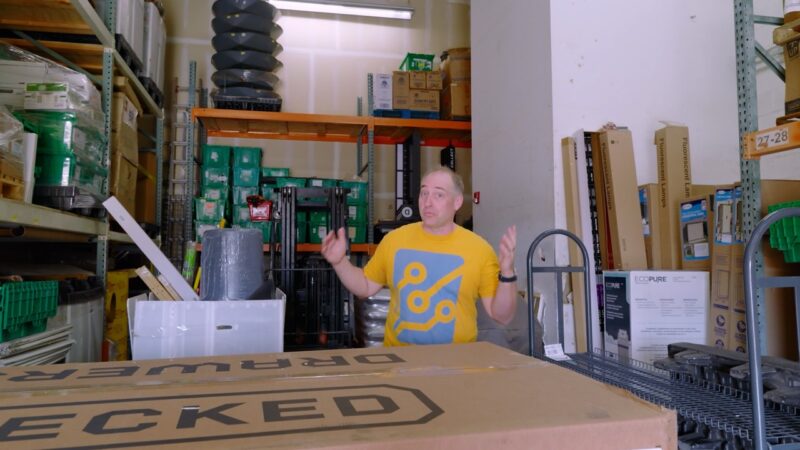
This is a vital part of all retail operations and something becoming more computerized every day. The infrastructure here includes barcode scanning systems, warehouse management software, integration with supplier ordering systems, and often cameras and/ or RFID tracking for high-value merchandise. This backend inventory management is where a lot of the heavy database work happens in retail IT. It is also critical to operators since it is a main integration point with suppliers.
Checkout and Payment Processing Systems
Of course, something every retailer has to do is check customers out. When folks come in buying their cups, coffee to go in the cups, chainsaws, and some licorice, you need to be able to accurately scan things, take them out of inventory, and charge for them.
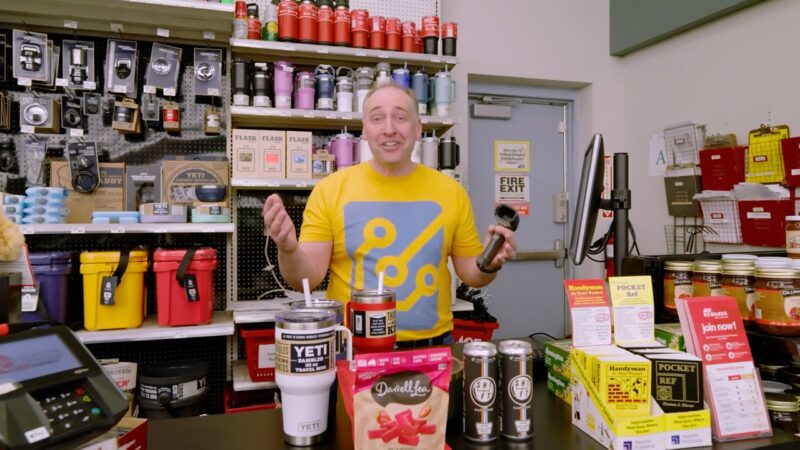
Different places have compute happening at checkout. Some components may happen locally, especially on the inventory side. But when you start talking about payment processors, payment processing is its own thing in retail, with its own compute platforms highly tied to all the payment processing systems. These are hardened systems running certified software that cannot be modified casually due to PCI compliance requirements.
These days, there is another really good use case we are not showing here directly. If you have a self-checkout feature, make sure folks are scanning all their items and doing so properly. That is a really good use case for retail AI. Some start by figuring out what folks may have taken off the shelf, maybe even building the receipt before they reach the register, and ensuring that, as they go through checkout, all items are accounted for.
You need to ensure folks are not just putting five items in their basket, scanning one, and walking out. Self-checkout verification systems use computer vision to verify items being scanned match what is actually placed in the bagging area, weight sensors to detect discrepancies, and integration with loss prevention workflows when anomalies are detected.
Employee Effectiveness Monitoring
Another major application for retail AI is employee effectiveness. Let us set up the use case for you. Say you are about to check out with your licorice, but the clerk is on their phone watching the latest STH video. They now have another 15 minutes or so before they will be looking at you as the customer. As a retailer, you really do not want that.
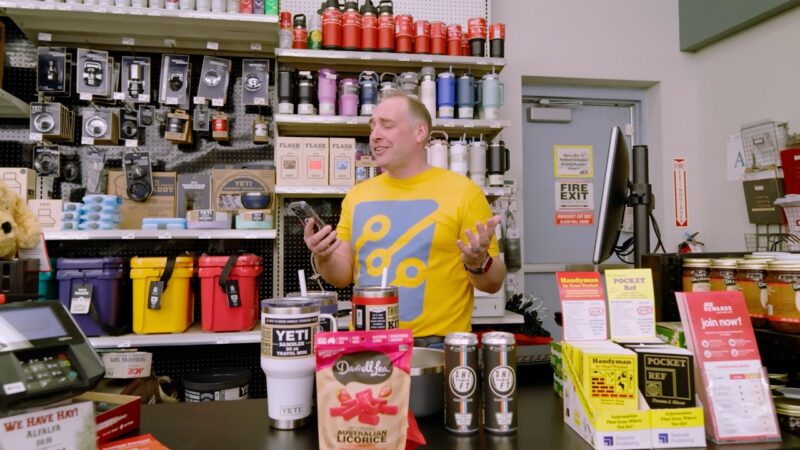
The idea behind these vision apps in retail is that retailers can improve employee effectiveness to ensure customers have better experiences. These systems monitor whether associates are engaging with customers, staying at their stations during busy periods, and following operational procedures. There are, of course, privacy challenges, but these applications are being deployed because employees spending personal phone time versus work time is a real challenge in the industry these days.
Infrastructure Implications for Retail IT
What we found walking through this Ace Hardware store is that modern retail runs on substantial compute infrastructure spanning multiple domains. You have edge compute nodes processing video analytics locally. You have backend databases managing inventory, pricing, and employee records. You have specialized embedded systems controlling everything from key cutters to paint mixers. You have a payment processing infrastructure with strict compliance requirements. You have IoT sensor networks monitoring temperature and environmental conditions.
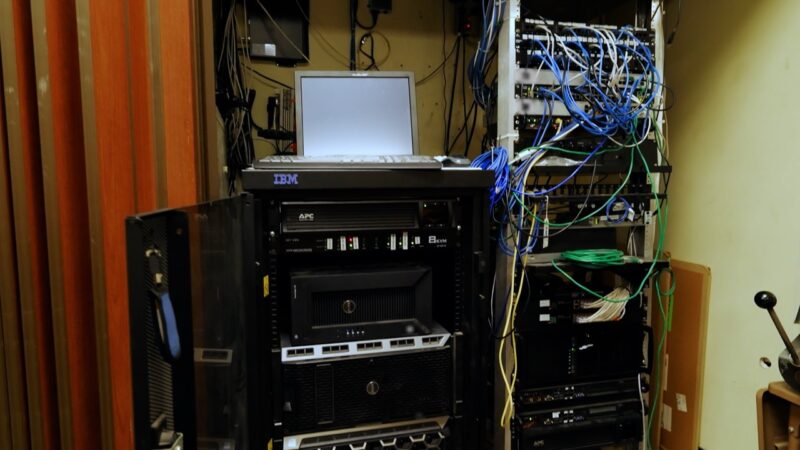
The networking requirements alone are significant. You need segmentation between customer WiFi, point of sale systems, video analytics infrastructure, employee devices, and building management systems. Each of these has different security and performance requirements. Also, the investments in the equipment are often expected to last many years. CPUs are the primary computing platform for AI in retail because oftentimes that is what is available.
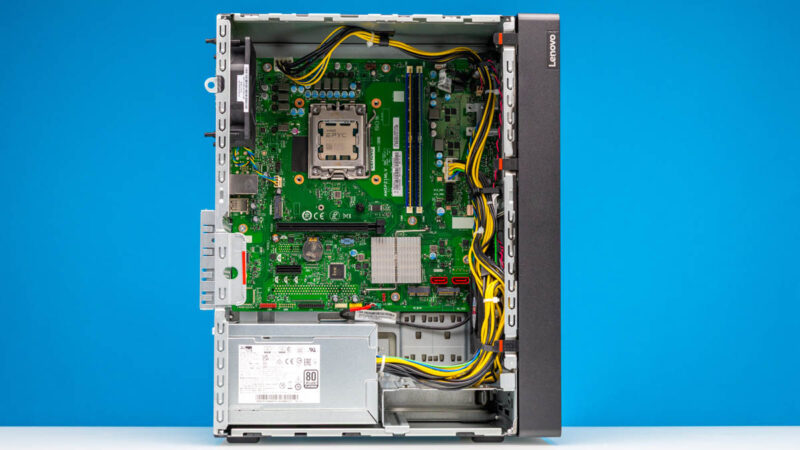
Also, something I learned a few years ago is that these applications do not need to be run at 60fps. Instead, many can run at 1fps or lower (most we have seen aim much higher than that), like observing how often parking spaces are used.
Final Words
Something I noticed while touring Ace Hardware is that legacy infrastructure is also being incrementally modernized while keeping stores running every single day. That may seem like a small point, but when you have a server closet with limited space, cooling, and power, the idea of upgrading to a new server and getting massive consolidation benefits starts to make a lot of sense. Also, there are a ton of applications that are doing tasks like computer vision, designed to run on CPUs because that is often what is deployed. I have seen many demos where folks have talked about this phenomenon, but seeing it first-hand was enlightening.
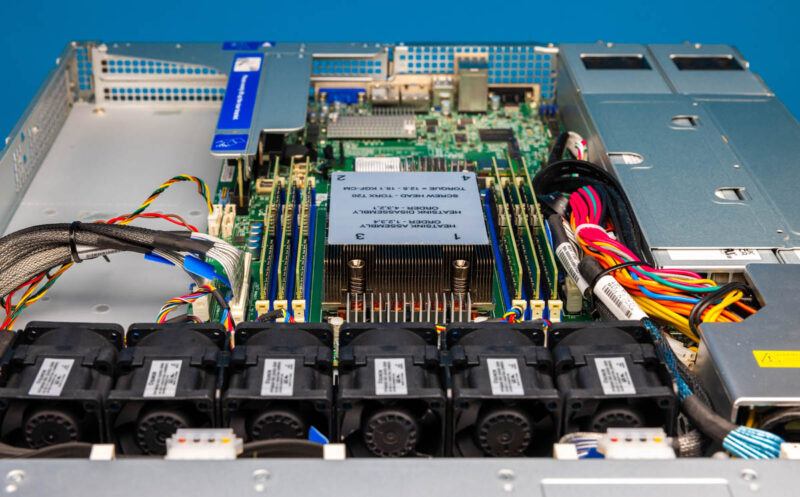
I again wanted to thank Josh and his family for letting us film in one of their stores and also for taking the time to show us around. You might notice that this article was much closer to the video than some of our more recent pieces, but this is a case where you really need to see it to understand just how much AI and compute run the stores we walk through, yet we never notice the computing platforms. Hopefully, we have other readers who see this and also see an opportunity with the advancements in AI to build something cool in this space.
The retail sector represents one of the largest edge compute deployments globally when you count every store location running some combination of these systems. It is easy to overlook because it happens behind the scenes in stores we visit regularly. Once you start looking for it, you will find the compute infrastructure everywhere in modern retail. That is something worth remembering next time you walk into a hardware store to buy drill bits or licorice.

Every day I ask myself: when will Patrick finally lose it and post grilled rodents on STH? Today is that day!