

Shelf Inventory Monitoring With Robots and Video Analytics
There are even robots now doing inventory monitoring in retail establishments. Say you went down to buy a shop vacuum, but there were none on the shelf. The store might lose a sale. Doing regular shelf and inventory checks helps prevent that. These days, there are even robots and video analytics platforms that can look at whether a shelf has an empty space where something was sold but not replenished and flag items that may have been subject to shrinkage. The system then alerts staff to restock that item, so it is available for purchase, and it can also combine an automated count with the inventory management system.
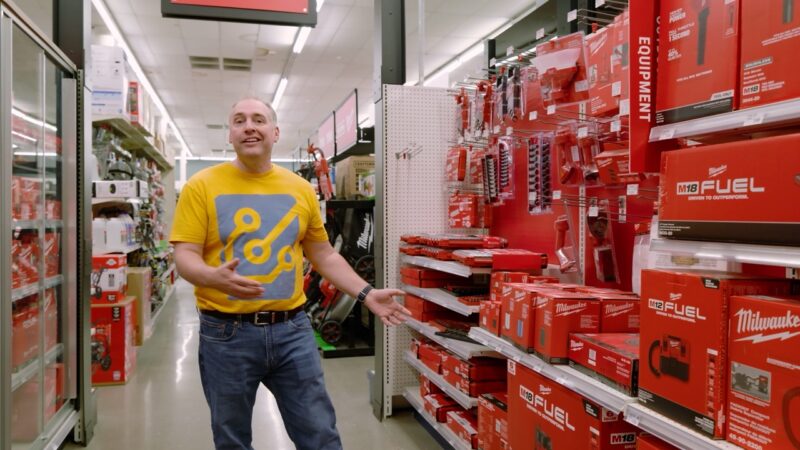
This requires integration between inventory management systems, point-of-sale data, and either robotic platforms or fixed-camera networks continuously monitoring shelf conditions. The compute infrastructure spans from edge devices doing real-time image analysis to backend systems managing inventory databases and replenishment workflows.
Employee Systems: Radios, Timesheets, Training, and Scheduling
Most of us experience retail as consumers, for employees, there is an additional suite of compute happening. You can see associates wearing radios, which is common in many different types of retail establishments. Beyond that, there are timesheet systems that need to keep running, whether they are locally hosted or cloud-based. Another application getting modernized is shift scheduling. Back in the old days, it was a piece of paper or maybe a whiteboard. Nowadays, there are apps that handle timesheets and shift scheduling online instead of physical boards.
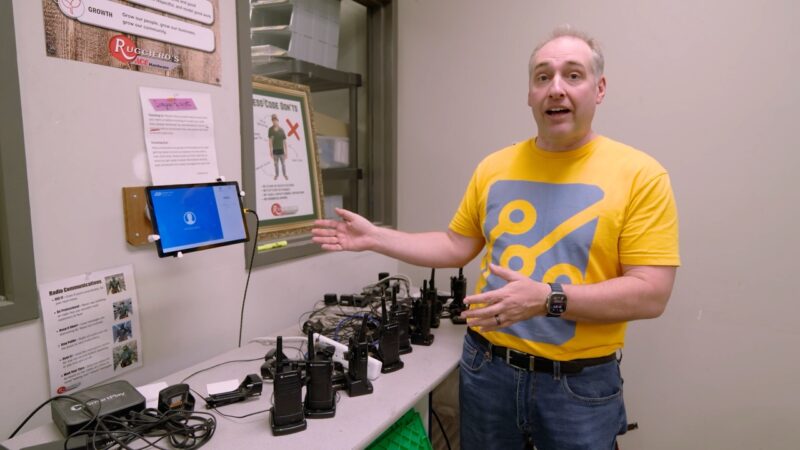
Depending on the size of your retail operation, you may have a centralized training center where new employees receive training. Or you may have training that everyone takes locally in a break room on an iPad or another device.
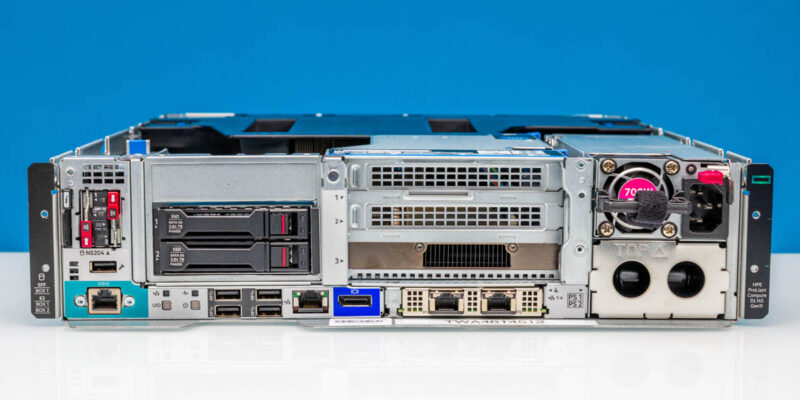
All of these systems require infrastructure: network connectivity throughout the store, authentication systems, security, mobile device management for employee tablets and phones, and integration between scheduling software and payroll systems. This is enterprise IT happening in what looks like a simple hardware store from the outside.
Price Scanners and Inventory
Another really good example of computing in retail is the price scanner. These let you view information such as product pricing and inventory counts. Say you want to buy a barrel and need to know how much it costs. You scan the barcode and see key facts like the pricing and the inventory.
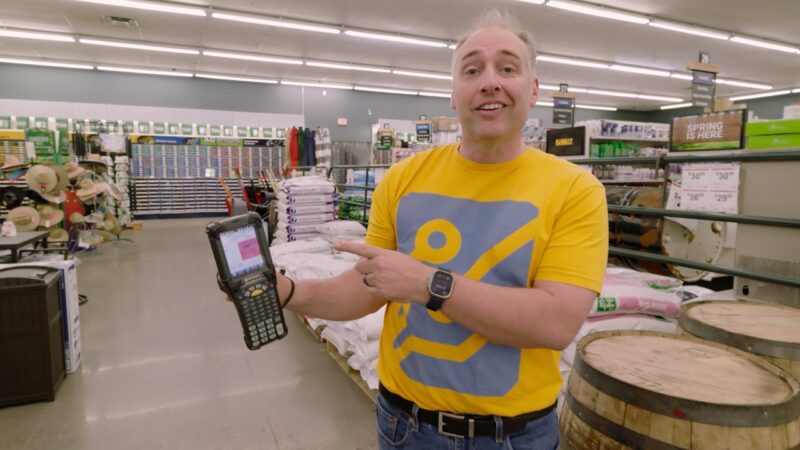
This is a really good example of a compute platform that needs to tie together data, such as inventory unit counts and pricing information, with physical hardware on the sales floor. This has to run somewhere. It has to be able to do those lookups against backend databases. Again, all of this requires compute.
There are even things that you may think of as very analog processes that are now adding compute in hardware stores, let us get to a few examples next.

Every day I ask myself: when will Patrick finally lose it and post grilled rodents on STH? Today is that day!