

Digital Price Tags Versus Manual Label Maintenance
Walking into the store, we immediately noticed the aisles filled with products like drill bits. Around us were countless small price tags. Think about what happens whenever there is a promotion. Someone has to go out and change every single price tag to reflect the sale pricing or price adjustments. All of these different prices have to be maintained manually.
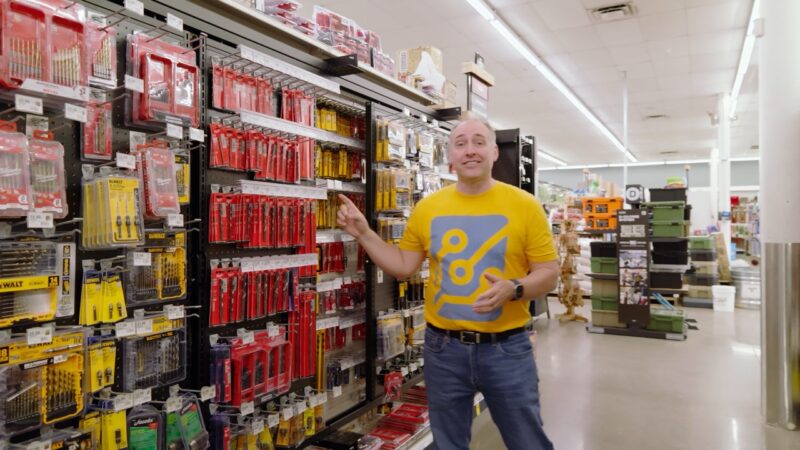
Something happening in retail these days is the shift toward digital tags. The idea is that if there is a promotion, you can immediately update the price without having someone accurately match the product to the price and physically replace the label. Of course, promotions usually have expiration dates, which means you would need to change the label again when pricing returns to normal. If you are selling a simple food product, you may have one to ten SKUs. If you are at a big-box warehouse store with a few SKUs and pallet-wide product slots, you might have to manage pricing for 4,000 or so SKUs. At a hardware store, as we toured, we saw aisles filled with drill bits, where a hundred SKUs could fit across the width of a pallet. That might mean 25,000 SKUs in a store. In other well-known large retail establishments, there can be 125,000 or more SKUs. Managing pricing on a handful of items is easy. Managing changing price tags on over a hundred thousand items takes a lot of time.
Let us give you an example of why this matters. If you have ever been to a grocery store and thought you were getting a great deal, only to miss the fine print saying the promotion expired yesterday, then you got to the register, and it cost more than expected, that is exactly what digital labels are designed to prevent. The infrastructure behind these digital tags includes wireless connectivity, centralized pricing databases, battery management systems, and, often, AI for pricing and inventory-turn analytics.
Shoplifting Detection and Case Building
One of the other things retail establishments have to worry about is shoplifting. You will see in many stores that smaller items are now locked behind cases. Especially if you live in a big city, you have definitely noticed increased security around high-value merchandise.
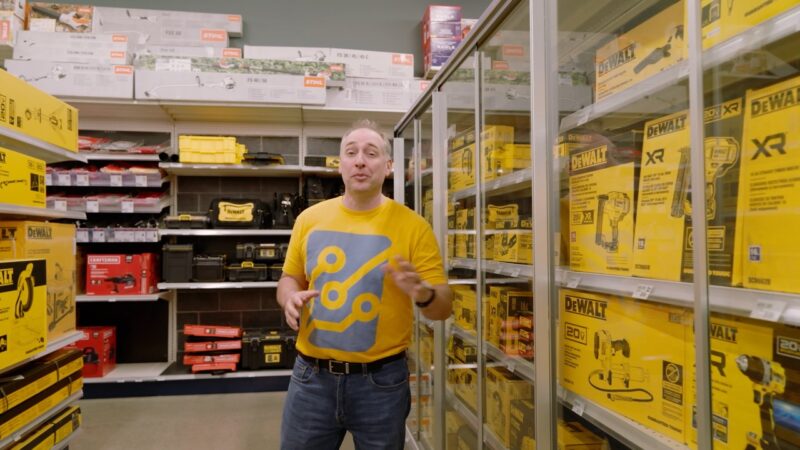
Something like a chainsaw would not be easy to conceal under a trench coat, particularly in Phoenix when it is 115F outside. If someone did try that, retailers want to detect it as fast as possible. Ideally, detection occurs before someone leaves the store, ensuring they actually paid for items that are taken from shelves before exiting.
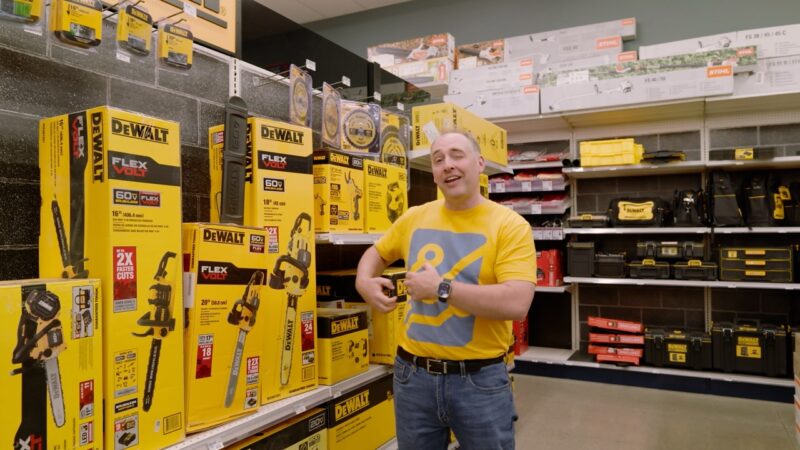
On the other hand, retailers might need to build a case later. For example, if you need to build a case around a shoplifting incident, you need to go back through footage and find the exact moment when someone took merchandise and concealed it. That is another instance where AI can really help retailers because you do not want to spend hours trying to find those little moments in video footage. Modern systems use computer vision to automatically flag suspicious behavior, significantly reducing the manual review burden. Again, this is a computer vision application that is usually run on CPUs today.
Heatmaps and Customer Behavior Analytics
Something retailers have been doing for years is generating heat maps of store traffic. Cameras track where people congregate, where they stop for extended periods, and how they move through the space. Let us give you an example of why that might be useful.
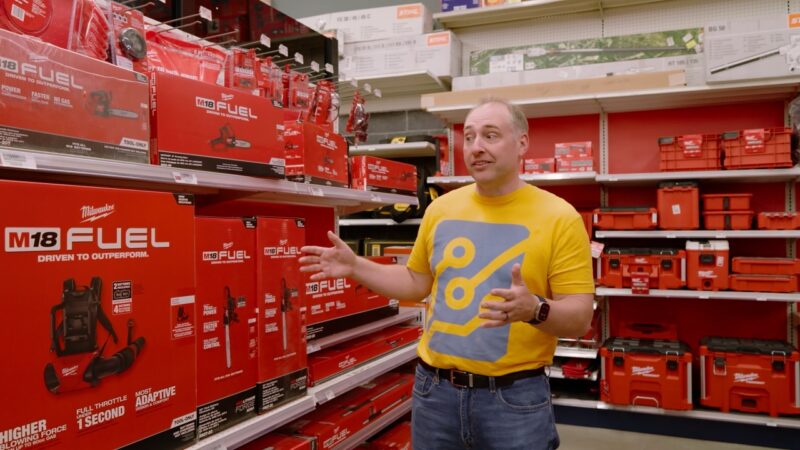
Say you were standing in front of chainsaws, looking at different models for ten minutes, trying to make a purchase decision. At that point, it would be good to dispatch an associate to ask if they can help you. Someone lingering that long is obviously trying to make a purchase decision and could benefit from assistance. The infrastructure required here includes camera networks with sufficient coverage, edge compute nodes processing video streams in real time, and integration with staff communication systems to dispatch associates when needed.
Heatmaps have been discussed as part of retail AI for years, and one of the major early applications was simply determining the most valuable shelf space and best store configurations. Manually observing foot traffic patterns in a store can be nearly impossible. On the other hand, this was a great application of AI in stores since it was able to do a task that was too time-consuming for humans to analyze.
Keeping inventory stocked is another major area where retail is adopting AI compute. Let us get to that next.

Every day I ask myself: when will Patrick finally lose it and post grilled rodents on STH? Today is that day!