

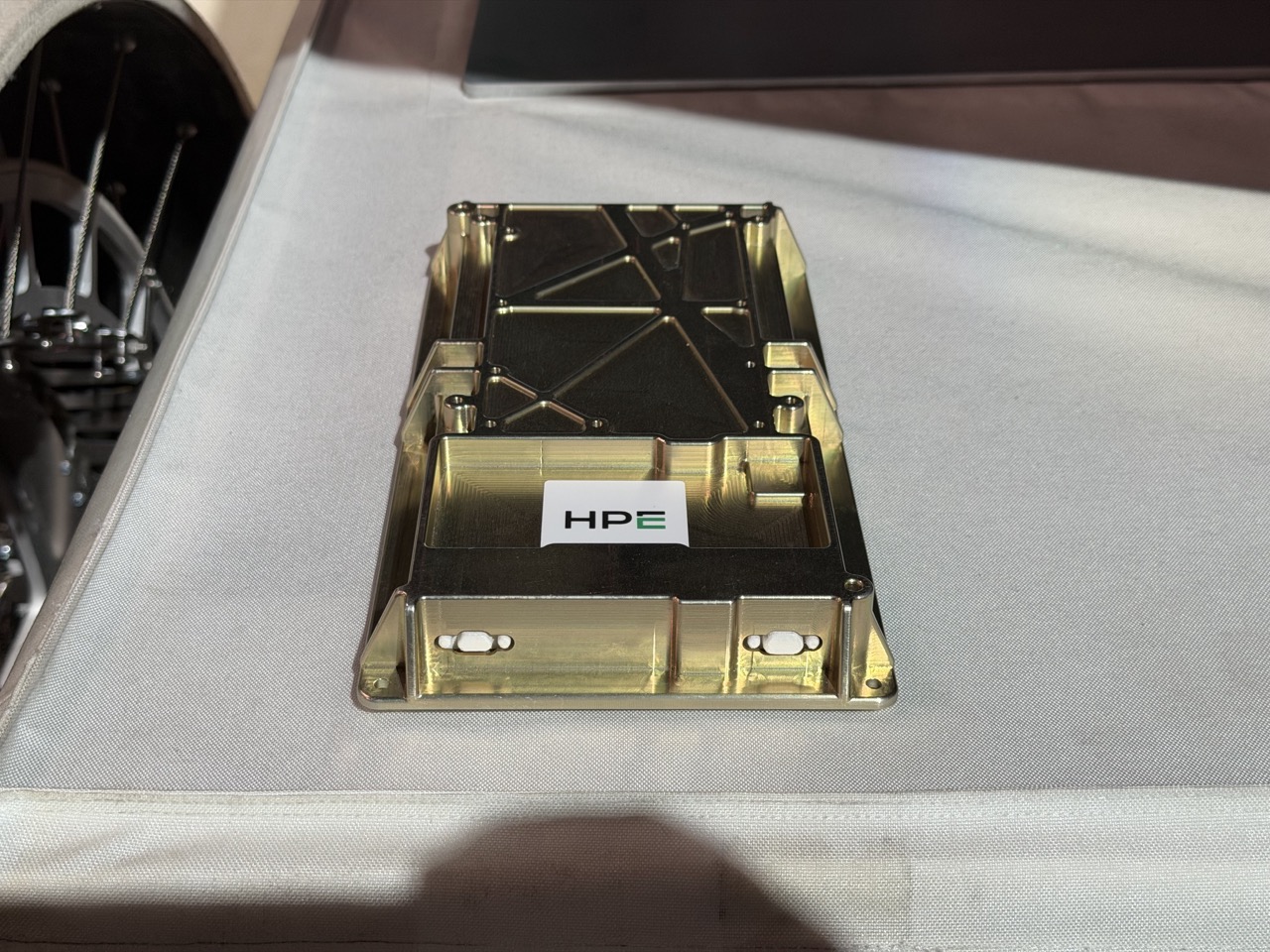
At HPE Discover 2026, we found out what a future moon mission will use in terms of storage for its local compute. The Spaceborne Computer 4 is a very different form factor than we have seen previously, but its mission is not just going to the ISS. Instead, this is destined for a moon lander that will run LLMs on the moon. Let us get into it.
This is the Storage of Spaceborne Computer 4 Heading to The Moon
The Spaceborne Computer project joined HPE as part of the SGI acquisition. We have been covering this since HPE Spaceborne Computer-1. Since it takes time to get parts certified for space, the first iteration was SGI servers from Supermicro, something I saw immediately when looking inside.
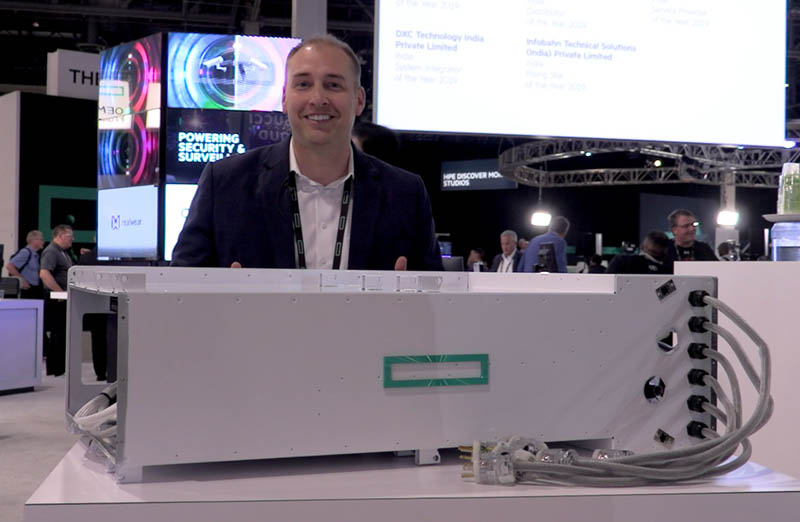
While Spaceborne 1 to Spaceborne 3 were focused on bringing compute to the ISS, and for Kioxia proving out the concept that its standard NAND SSDs would work in space, Spaceborne 4 is smaller and will go further.
The next version will be launched (assuming aboard SpaceX) and head to the lunar surface as part of the Astrolab FLEX Lunar Innovation Platform (FLIP).
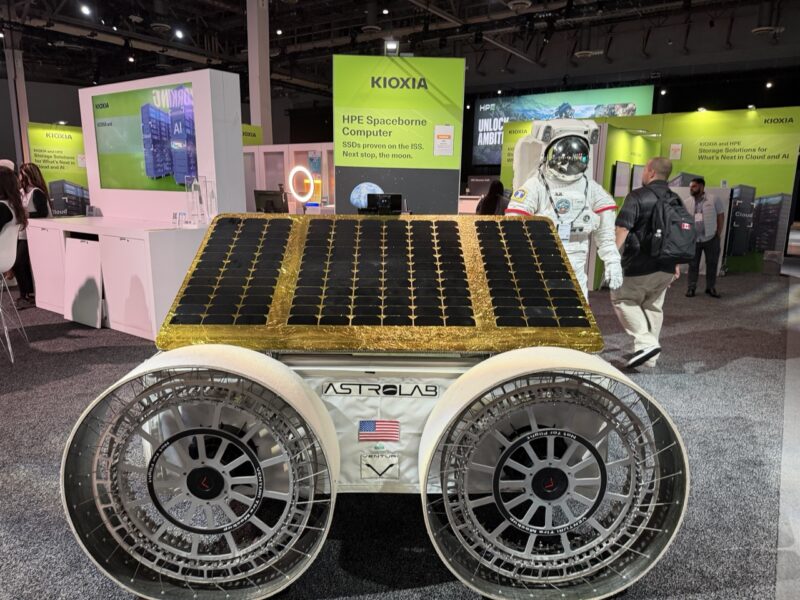
When sending payloads to the moon, weight is a big deal, so the fourth iteration of Spaceborne is much smaller. A quick wrench, an iPhone flashlight, and we were able to get the system onto a table. (Kidding, of course. It was sitting on the back of the rover.)
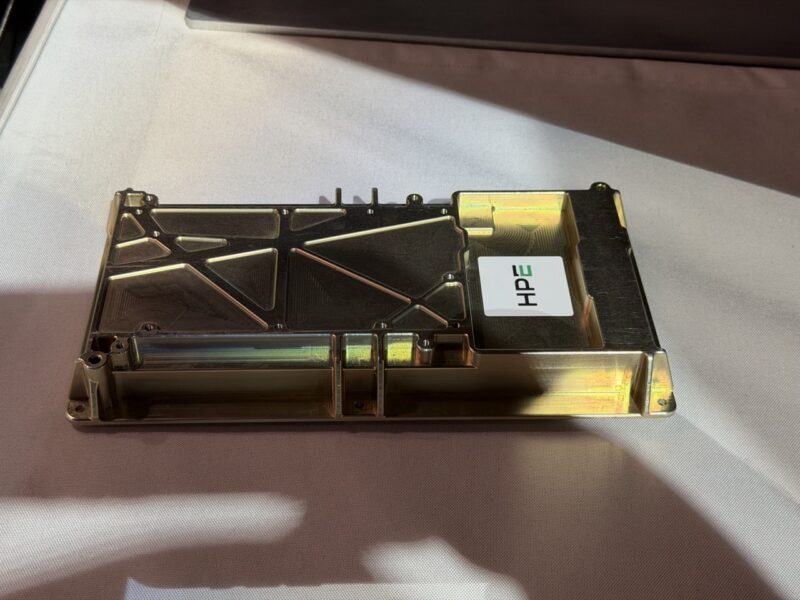
This is the compute module designed to bring a low-power CPU and GPU to the moon. The idea is that for distant missions, decisions will need to be made on the device because communication latency is too high. A local CPU and GPU fix the rover to compute the latency distance challenge.
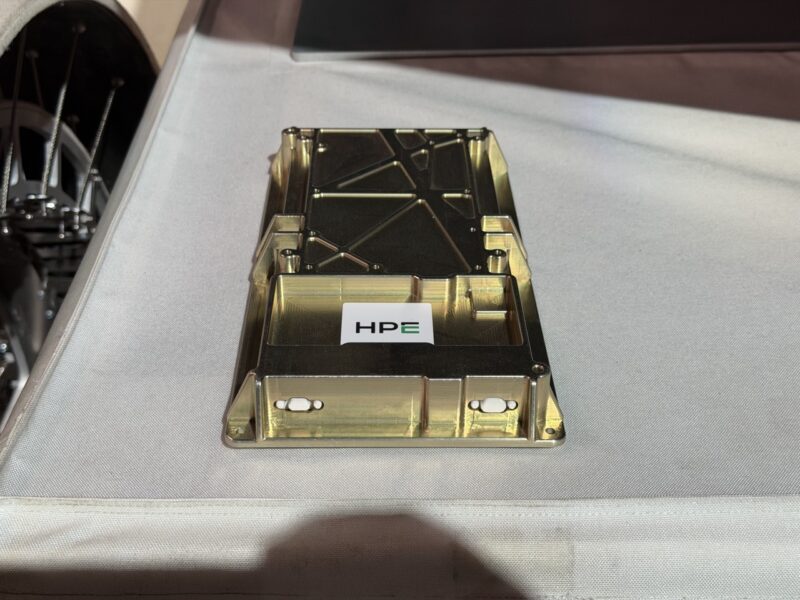
Here is another shot of the housing.
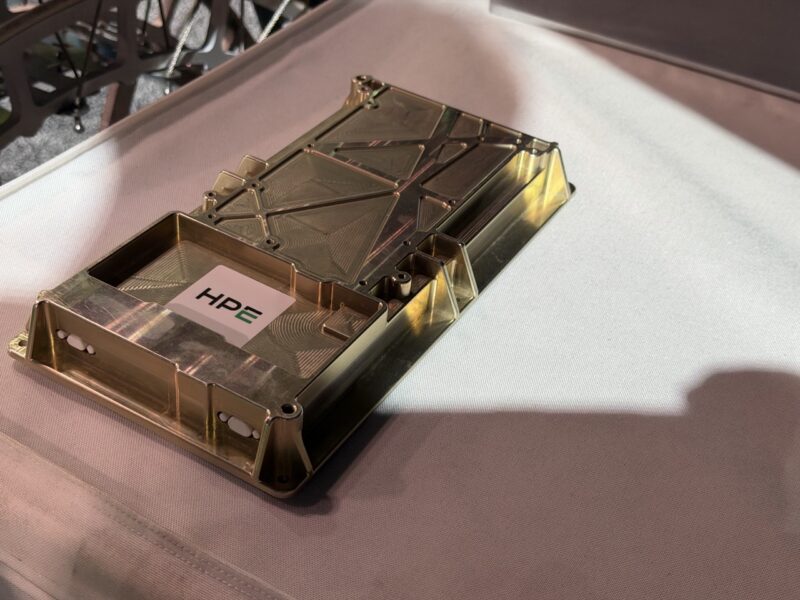
It is probably a little bit lighter than I expected.
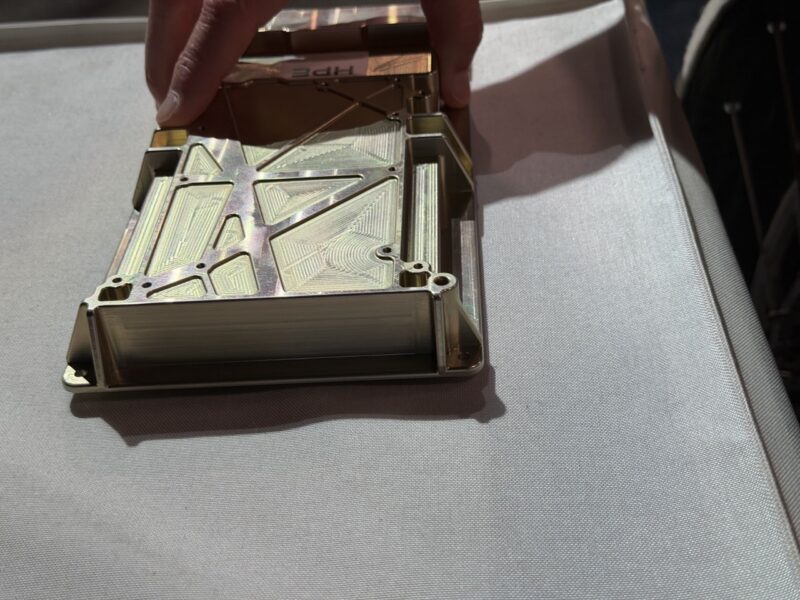
Here is the bottom:
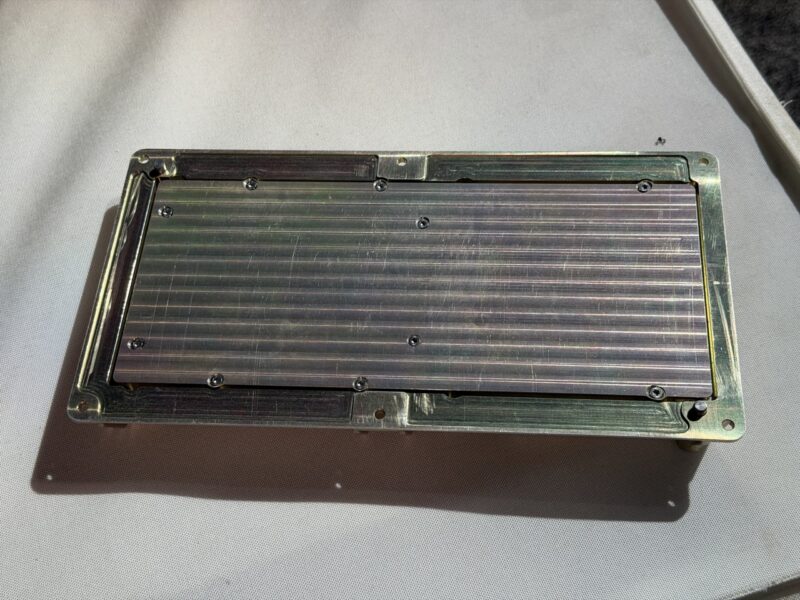
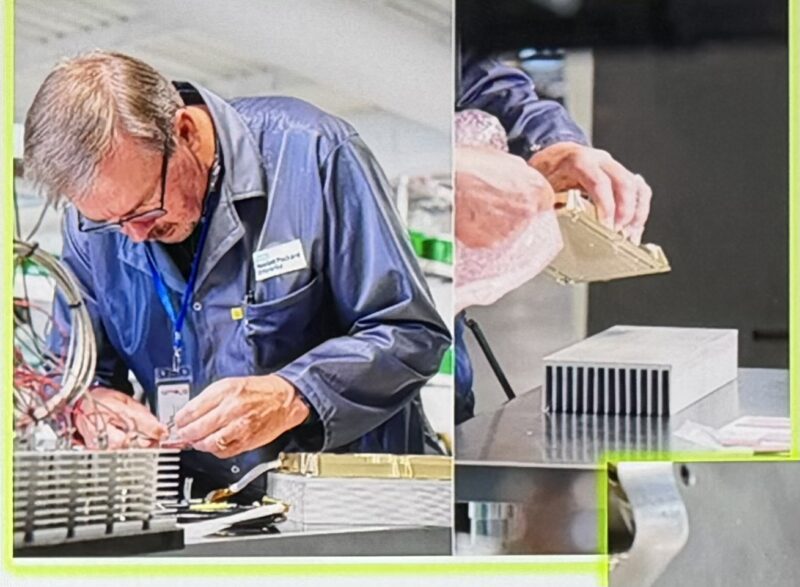
While your PC may use fans to push air through a heatsink to cool itself, that works less well on the moon. Instead, this has a space radiator, which was not installed at Discover 2026. You can actually see the cooling installed in the top photo on the slide we found in Kioxia’s booth.
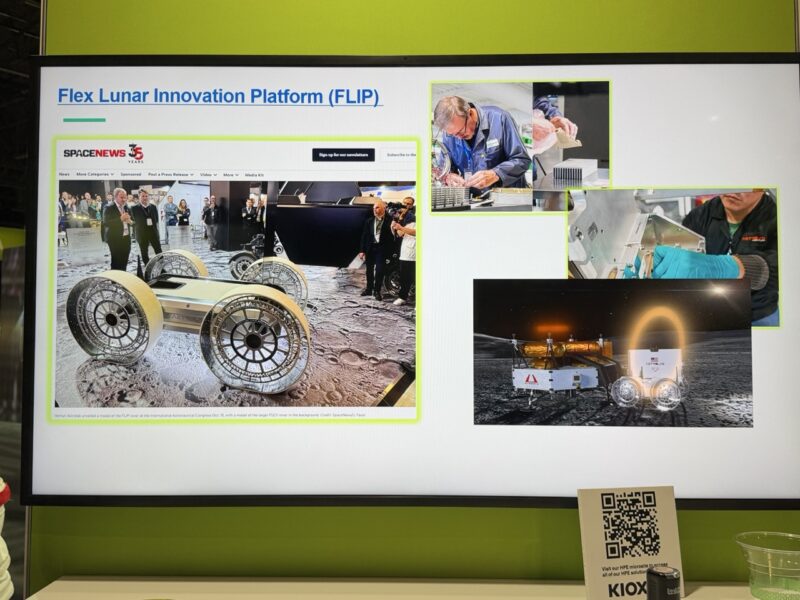
We did not see this earlier, but you can see the cooler in this photo collage.
At this point, you are probably wondering, “What kind of storage do they need?” Since there are challenges in space, such as radiation and more, you might think it has to be some kind of giant custom SSD. Instead, it is actually a Kioxia BG-series M.2 SSD like you might find in a low-cost Project TinyMiniMicro PC.
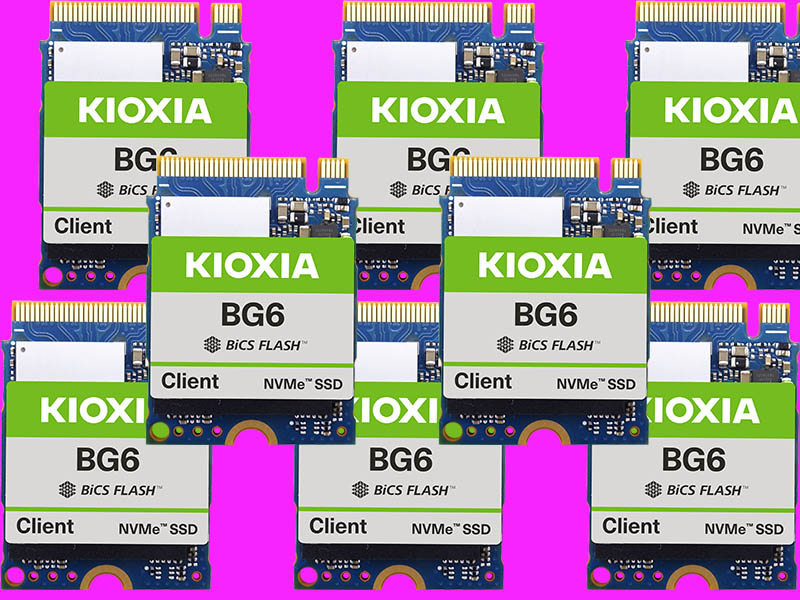
Kioxia has been running its SSDs in space for years. The big question years ago was whether commercial NAND would survive space well enough to provide useful storage. Now that HPE and Kioxia have that data, there is another constraint for this mission. The storage had to be as light as possible. That makes a tiny DRAM-less SSD a preferred choice.
Final Words
AI constellations in space have become a hot topic. We already covered how the Xsight Labs X2 switch will power SpaceX Starlink V3. Another step is building useful infrastructure on the moon. Kioxia said they sent a bunch of drives to the folks doing testing and integration, and the BG series drives passed testing. When the mission takes off, hopefully, later this year, a tiny consumer SSD will provide the storage for GPU-based LLM inference on the moon.




About the SSDs, that’s really quite surprising. As bad as it is on the ISS, the radiation environment on the moon is WAY worse. Lack of Earth’s magnetosphere means you take a baseline of something like 4x the radiation. And on top of that there’s awful slow (well, less fast!) neutron backscatter from GCR spallation. The notion that standard commercial SSDs can be used is astonishing. And honestly it seems quite improbable.
Perhaps they’re being used in triplicate (or more)? Even so it would still seem surprising that they’re not at least using extreme environment versions.
Yet another reason SSD prices are astronomical. But then it’s for AI so if an error occurs, it can hallucinate the “correct” answer.