For the holiday weekend, we thought we would quickly cover a card that is not new but does check a couple of boxes. Mainly, it was a low-profile, single-slot, low-power GPU we could add to a server. Here is the deal: this is not the GPU that folks are going to be excited about for high-end AI or gaming with 4GB of memory, but sometimes, you just need a GPU.
We purchased ours, and here is an Amazon affiliate link to what we purchased.
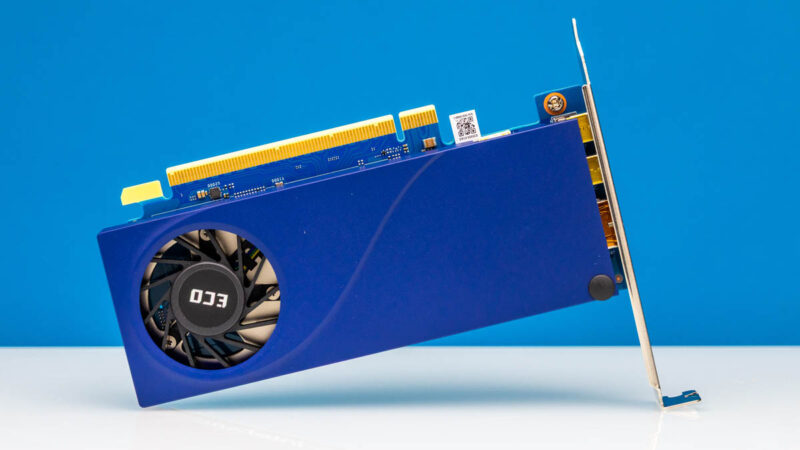
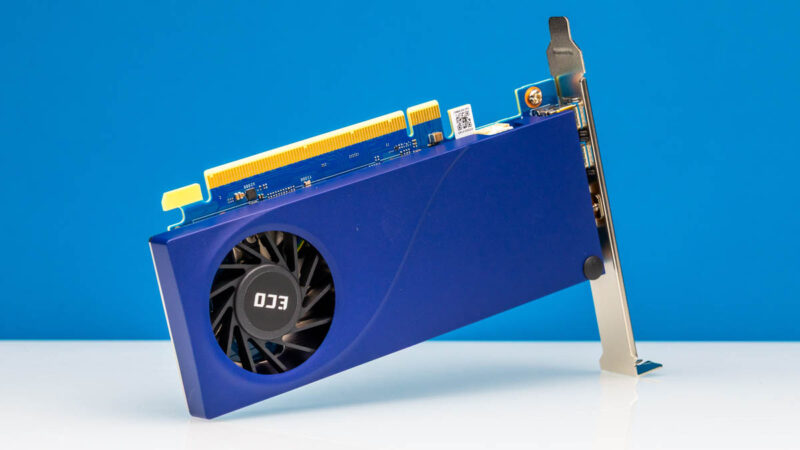
SPARKLE Intel Arc A310 Eco 4GB Hardware Overview
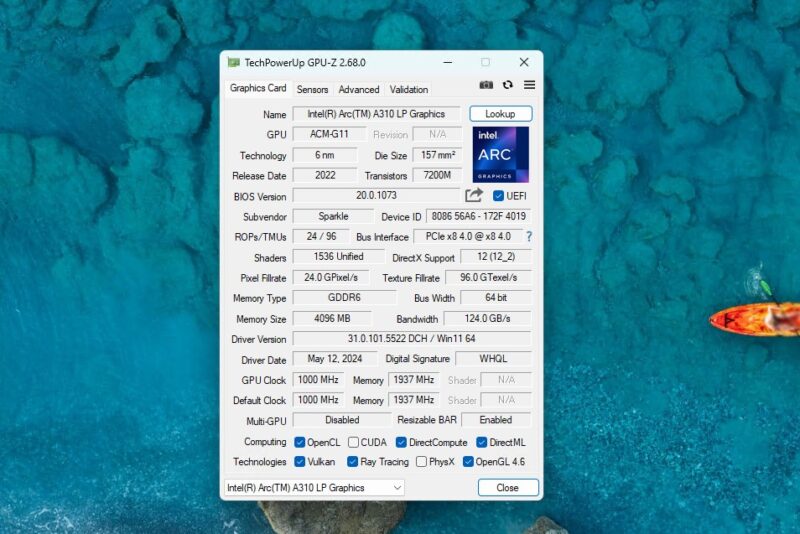
If this was not obvious from the name, the GPU onboard is an Intel Arc A310 based on the Alchemist generation with 6 Xe Cores, 96 XMX Engines, and 4GB of GDDR6.
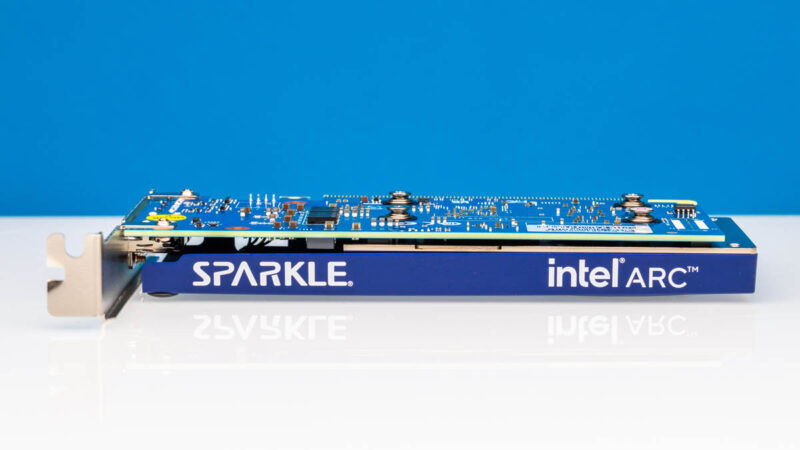
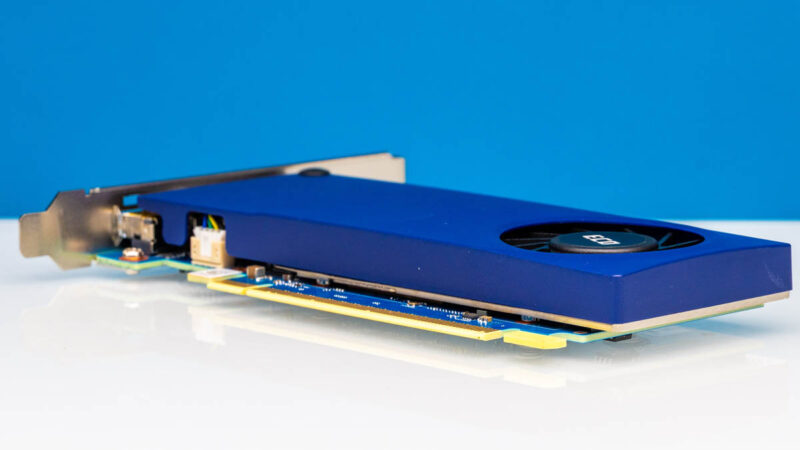
The card is not fanless, and for many applications, that is exactly what folks want. Most modern 1U and 2U servers can cool a 50W low-profile card without issue. On the other hand, some small-form-factor PCs have limited airflow.
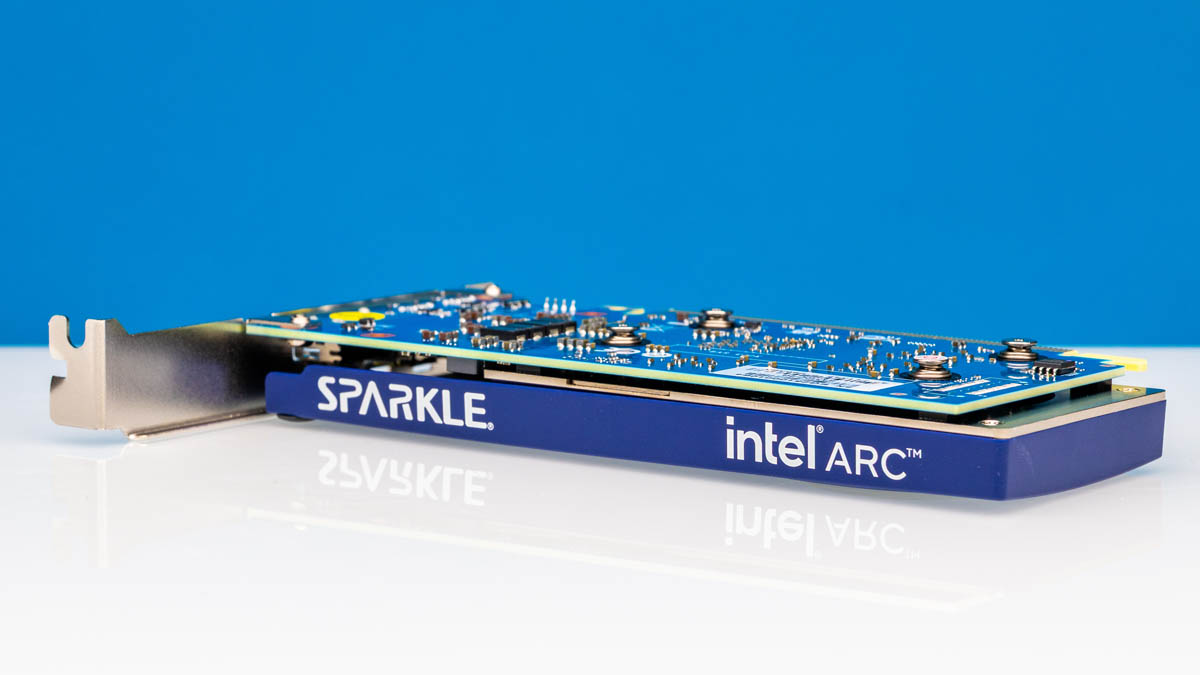
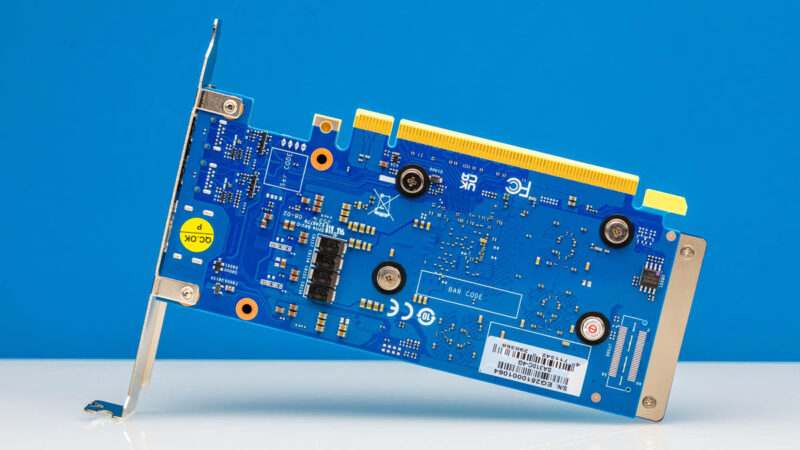
Here is the back of the card. You can see the bracket mounting points that can be used to swap out the full-height and low-profile brackets.
Here is the cooler and airflow from the edge of the card.
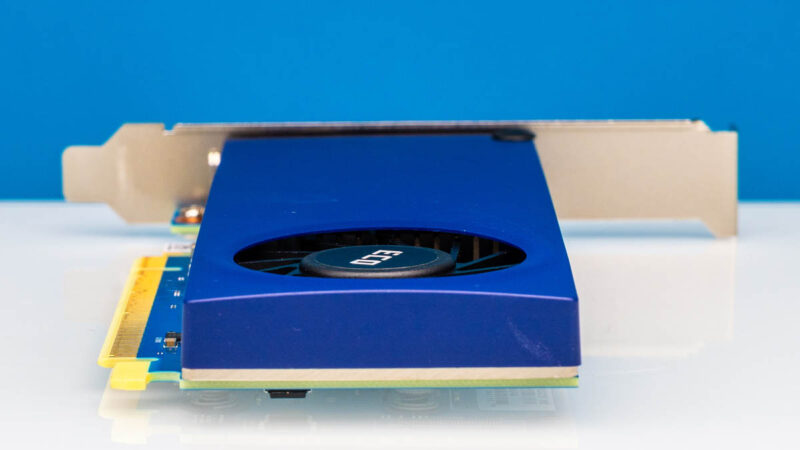
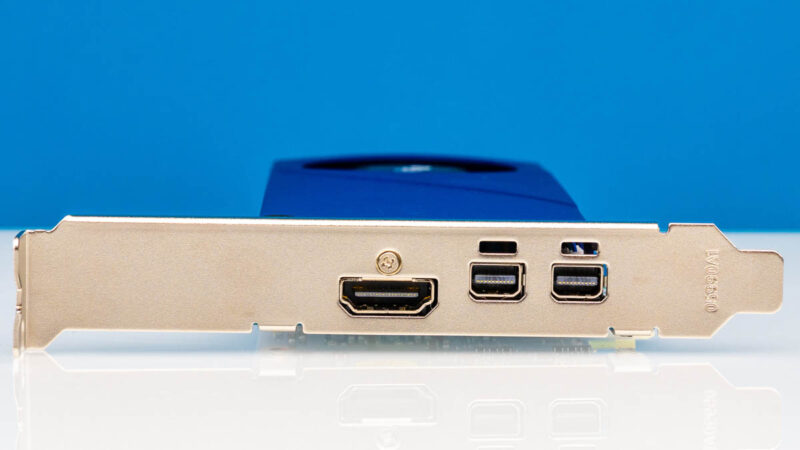
Many cards have large vents at the rear and carefully duct airflow. This is not that kind of design. Instead, on the rear I/O panel, we get an HDMI port and two mini DisplayPort outputs.
From a PCIe standpoint, this is a PCIe Gen4 x8 card, albeit in an x16 connector.
Plugging the GPU in, we immediately fired up GPU-Z. We can see that we have an Intel Arc A310 LP GPU.
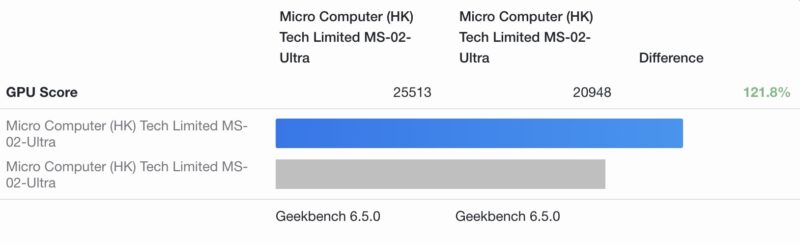
We installed this into the Minisforum MS-02 Ultra as an alternative to the higher-power dual slot GPUs so that we could still use the second expansion slot for an additional card.
When we fired up a quick Geekbench, the results showed a difference, but it was far from a game changer under Vulkan.
OpenCL showed a similar delta.
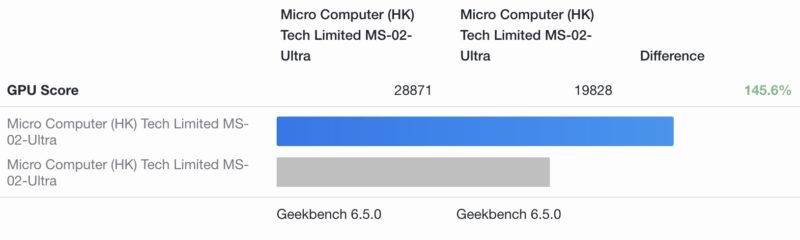
Overall, it makes sense that we are not seeing a significant difference. At the same time, we wish it were a bigger delta over modern integrated graphics.
Final Words
We actually buy a fair number of low-power GPUs for the lab, even if they are not the fastest. Sometimes, just having an extra GPU is useful for a system. A great use case for this might just be adding video transcoding capabilities to a system. This supports h264, h265, and AV1 encode/ decode, which can be useful if you are building a server with server-class Xeon or EPYC CPUs, and yet you need video codec offloading. At the same time, while the NVIDIA RTX 5060 low-profile cards put the GPU performance and capabilities (e.g. CUDA support) into a new level in the Minisforum MS-02 Ultra, the Arc A310 LP is going to be too close to integrated graphics for many. It is also an aging architecture.
These cards were never designed to be the fastest on the market. Instead, these are designed to offer capabilities like extra display outputs, video encode/ decode offload, and moderate GPU performance into a compact, low-power design. While they may not be as exciting as high-end GPUs, sometimes, these GPUs are just what you need.