

Liquid-Cooling a TE Connectivity 800VDC Busbar and More from the Wiwynn Booth
One of the racks shown at Wiwynn’s Computex 2026 booth had this fairly unassuming rack. You can see a number of nodes and a vertical busbar.
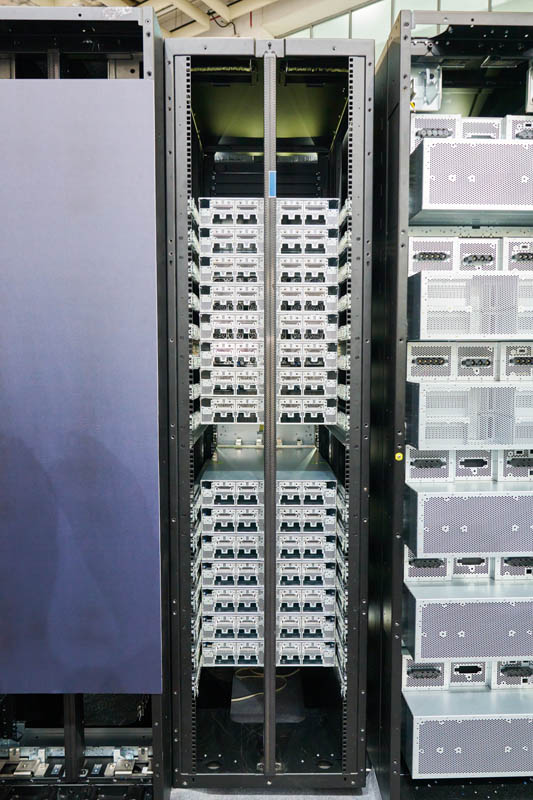
This was no ordinary busbar, though. Instead, it had a TE Connectivity sticker on it.
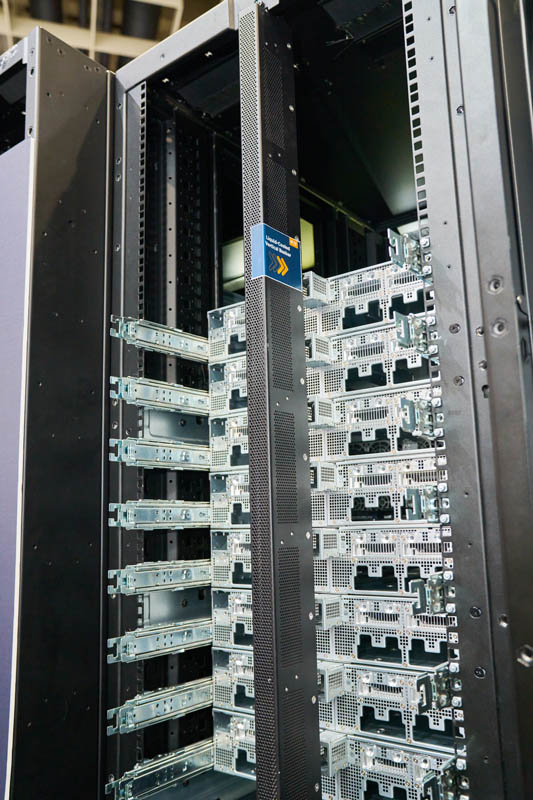
This is a “Liquid-Cooled Vertical Busbar”. Just to level set here, when we say busbar, that is the physical power delivery to all of the server nodes. Instead of each server having a pair (or more) of power supplies like typical servers, power supplies feed power into a dedicated busbar that is fixed in a rack and each node can connect to.
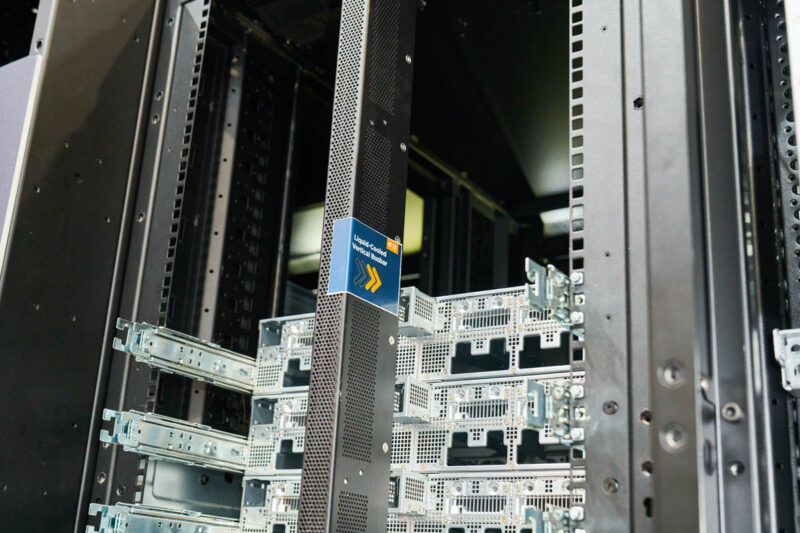
Busbars have some efficiency gains, and also free up the rear of the chassis for networking. If you have seen any of our AI rack manufacturing videos over the last year or so, another advantage is that they allow for blind mating of the power in a rack. With traditional power supplies, you need to get behind the server and physically plug each power supply in with a power cable. With a busbar, you slide the node in, and once it is in place, it connects to the power without anyone needing to visit the rear of the rack.
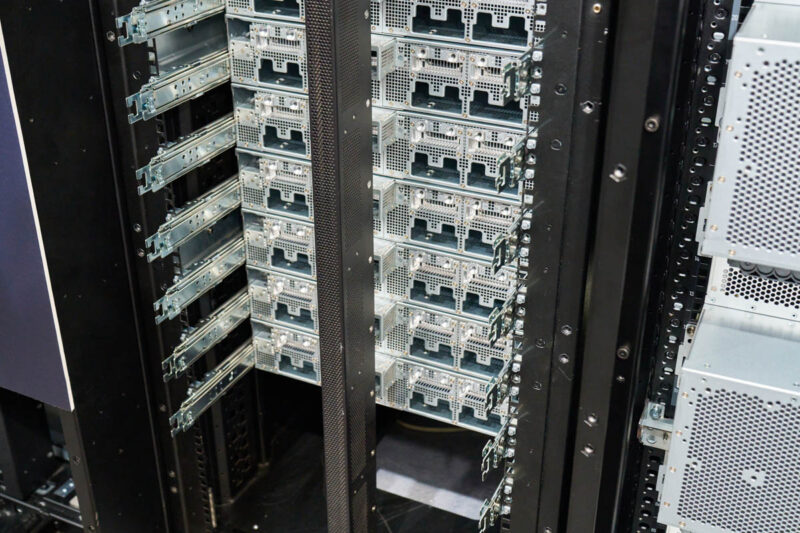
This particular one is liquid-cooled. You might think “so what?” or “why?” by looking at this Computex 2026 display, and that is probably fair. I found a blurb from the TE Connectivity folks on the why. The short answer is that while their air-cooled busbar tops out at 140kW, the liquid-cooled busbars, where there are already part numbers for them, can get to 750kW. You may think that is far off, but we are on the cusp of seeing AI racks use hundreds of kW each within the next few months.
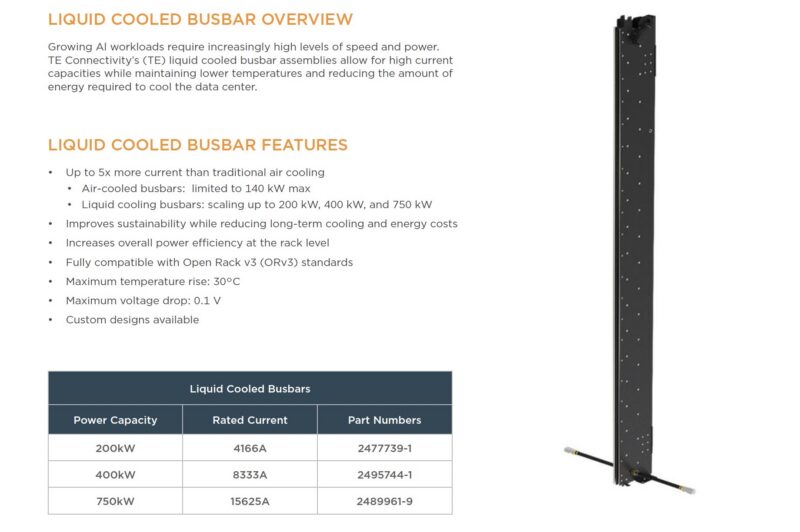
At some level, however, it also represents how fast innovation is happening in this space. Five years ago, installing liquid-cooling blocks on server CPUs was exotic. Now, there are off-the-shelf solutions with standard part numbers to liquid-cool even the power delivery, for 750kW racks. This is just a small physical touch to what is driving the industry.
Next, let us discuss the actual 800V DC power rack.

topic to look for in the future are hvdc PSUs. AI ready DC might mean growing popularity of using hvdc PSUs in traditional servers.
This article offers a fascinating look at where AI infrastructure is heading. I found the discussion around liquid-cooled 800V DC busbars particularly interesting, as it shows how data center power delivery is evolving alongside increasingly power-hungry AI accelerators. The real-world examples from the Wiwynn booth make complex engineering concepts easy to understand and provide valuable insight into the future of high-density, liquid-cooled data centers.
Going all the way back to mainframe design for AI servers
like when mainframes had several racks that each did their own thing