Gigabyte W775-V10-L01 NVIDIA GB300 AI Station
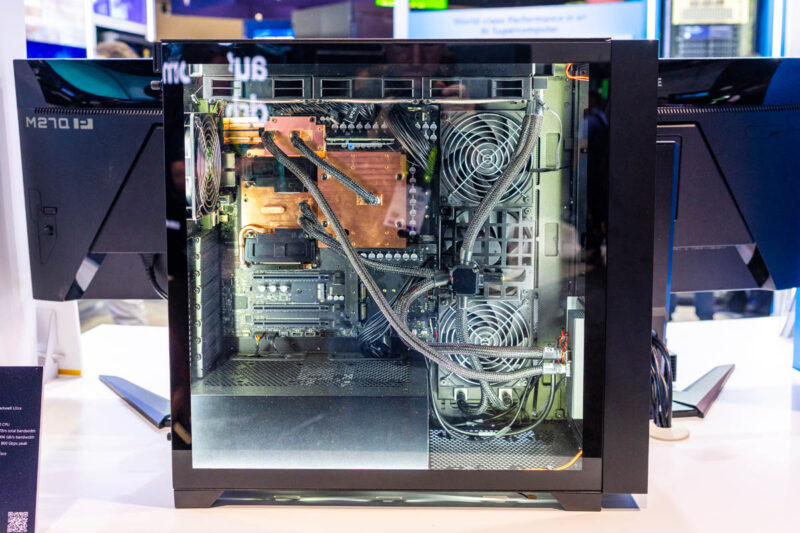
One of the coolest systems we saw was the Gigabyte W775-V10-L1. This was on the other side of a table from the Gigabyte AI TOP ATOM NVIDIA GB10 system we reviewed. The system brings a Grace CPU, a Blackwell Ultra generation GPU, and a ConnectX-8 NIC to a platform that is designed to run next to your desk.
Looking at the setup, you can see the liquid-cooled ConnectX-8 NIC and optics cages at the top, then going clockwise, the Blackwell Ultra GPU, and the Grace CPU.
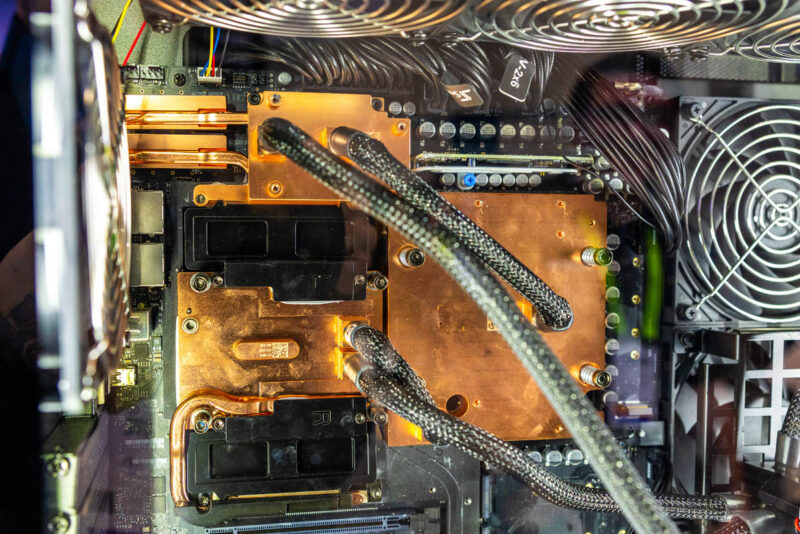
Here is a look from the B300 cold plate.
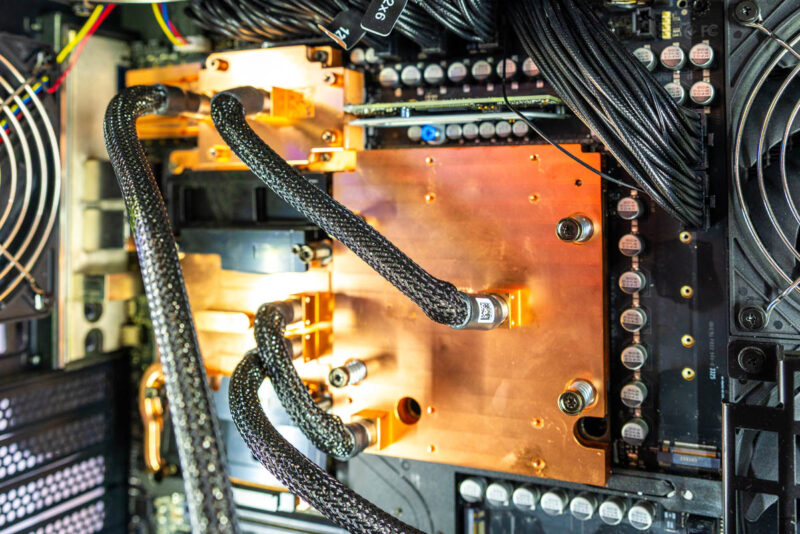
The system is neat because there are a number of components and concepts taken from NVIDIA’s larger server designs, and brought to this platform.
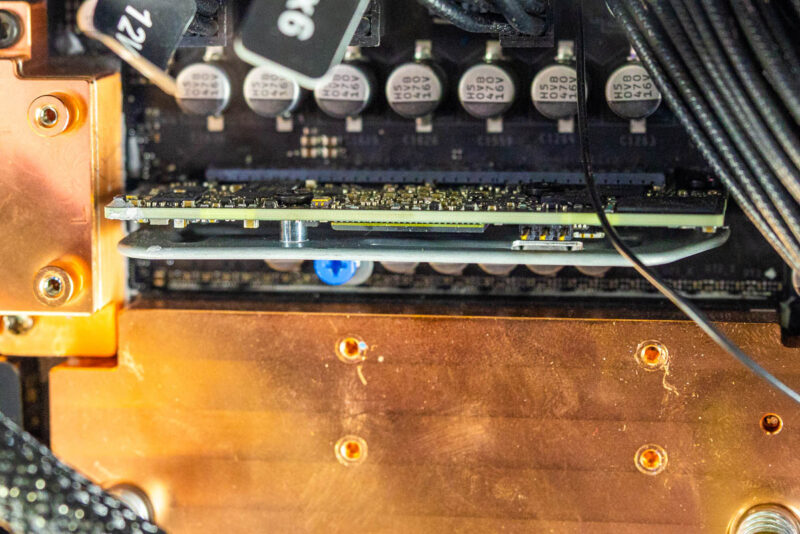
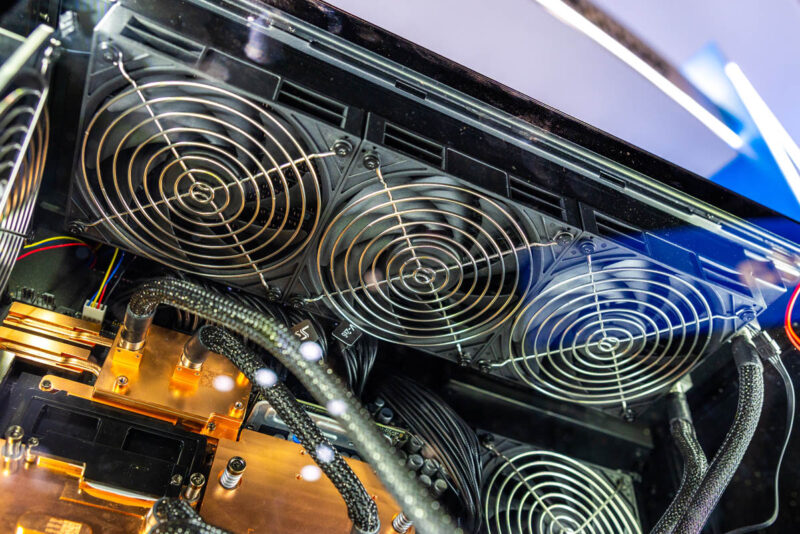
As you can see, it is liquid-cooled, and a huge portion of this system is dedicated to cooling.
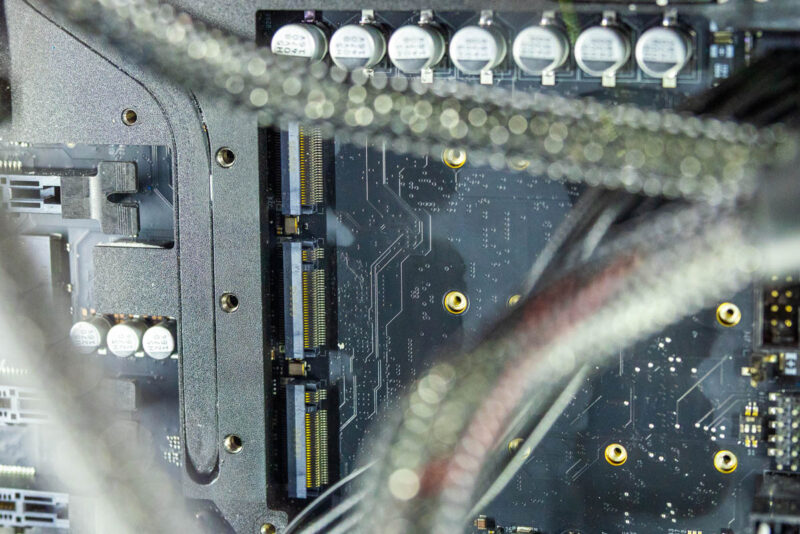
Inside there are M.2 slots for storage.
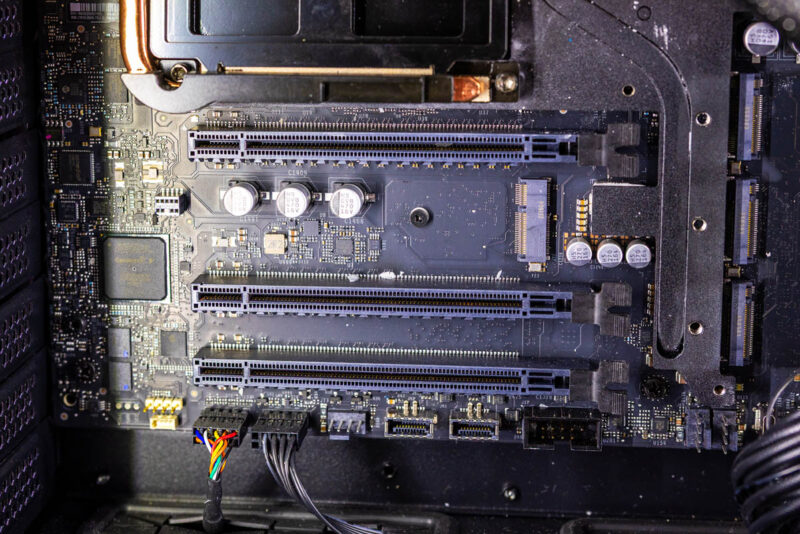
There are also PCIe slots to add additional cards. You can actually add an NVIDIA RTX Pro 6000 Blackwell Edition GPU to the system. Originally, the GPU options were lower power just to get more display outputs, but adding a big GPU is now a supported configuration.
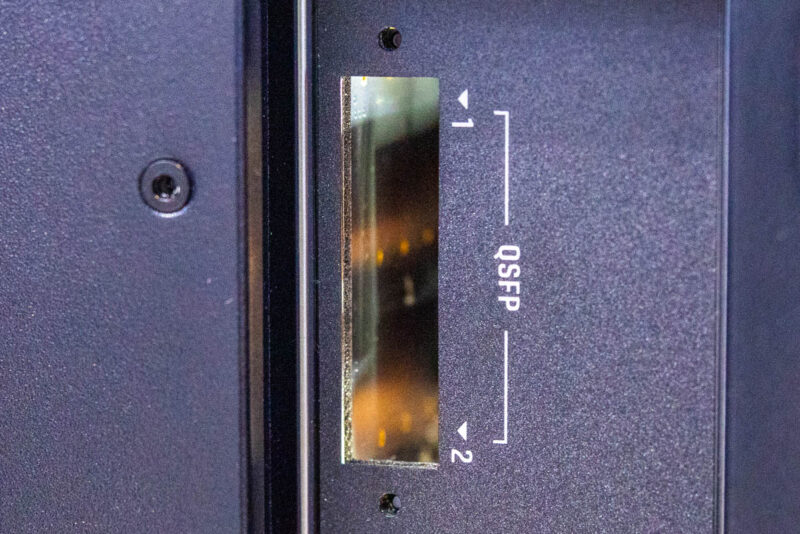
Here are where the QSFP connectors go. Those were not populated on this system, but there is high-end networking.
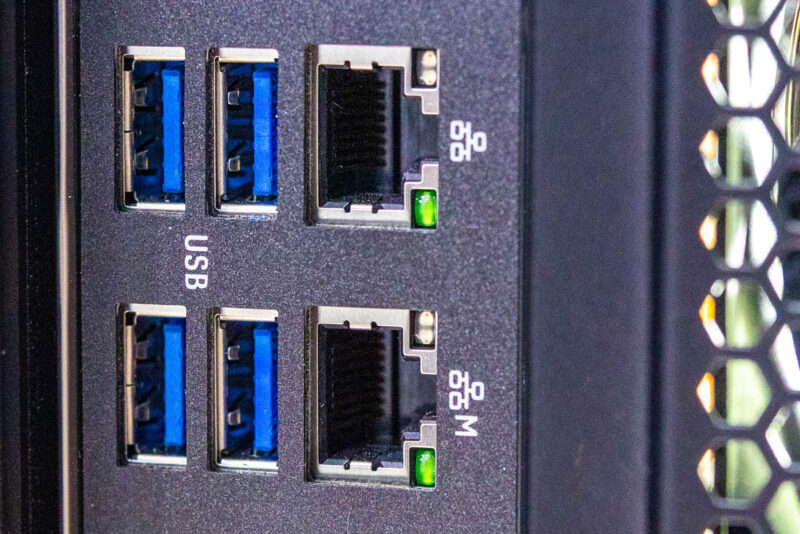
Here are the onboard low-speed NICs and USB.
There is audio output.
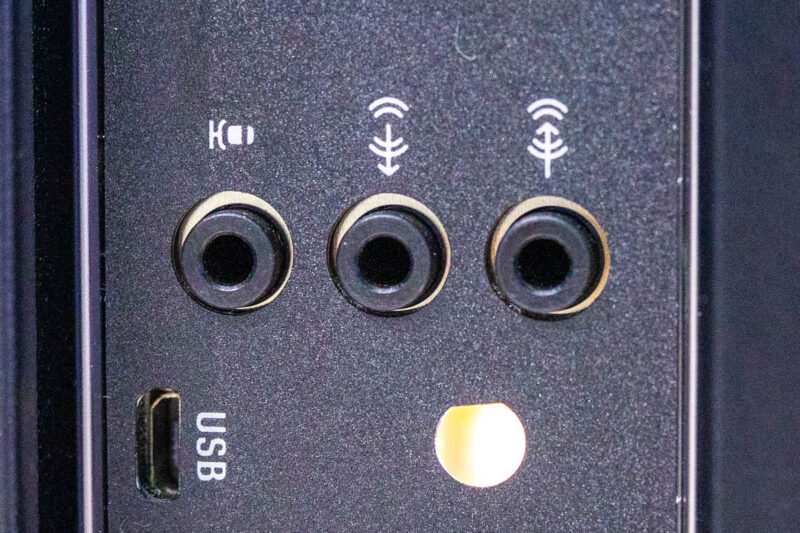
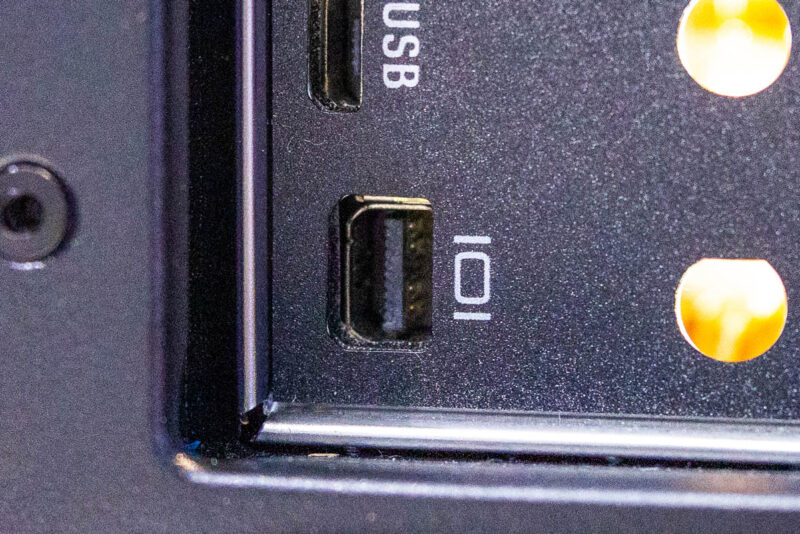
In addition, there is a BMC USB port and display output. Still, this display output is not really designed for high-end graphics, hence why there is a PCIe GPU option.
We asked, and if you add a PCIe GPU, the power is dynamically allocated to that GPU from other parts of the system, since it is effectively wall-outlet-limited to around 1.6kW.
Final Words
We saw a LOT in the Gigabyte booth at NVIDIA GTC 2026. We saw Vera Rubin NVL72 racks, co-packaged optics switches, BlueField-4 DPUs, ConnectX-9 SuperNICs, Vera CPUs, Rubin NVL8 liquid cooled racks, new PCIe GPU racks, and even the new desk-side GB300 computing platform.
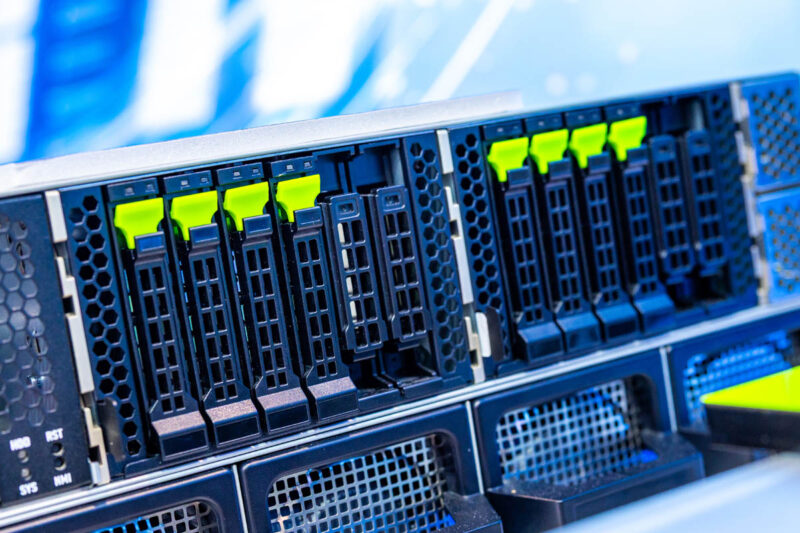
This was a ton to go over, but hopefully, it gives you some idea of many of the new platforms we are going to see more of later in 2026 as the pace of the AI build out accelerates.