

Cisco Catalyst C1300-12XS Management
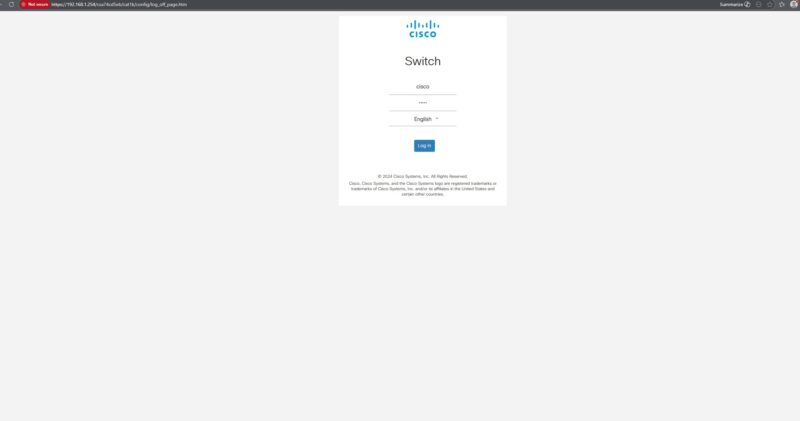
The Cisco CLI is well-known, so we are going to focus on the web management here just to give folks who do not want to go to the CLI, a view of what the management looks like. Cisco’s documentation on where to find the management interface often has the cisco / cisco default password, but we did not see the 192.168.1.254 default IP in some of the quick start materials.
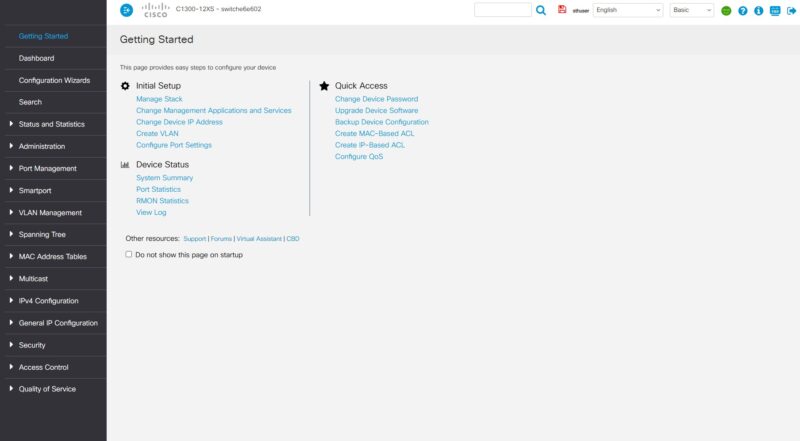
After setting a new login, Cisco does something different. In the industry, you typically log in and are taken to the dashboard. Cisco has a “Getting Started” page to get you up and running quickly (you can also choose not to go here in the future through a checkbox.)
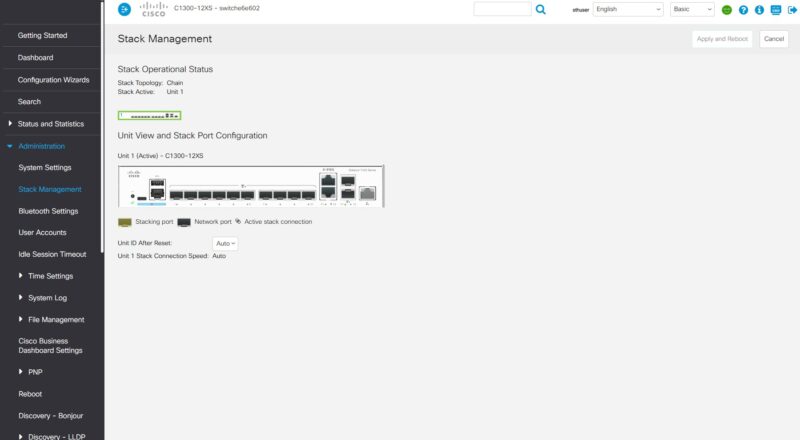
Cisco lets you stack switches using front-panel stacking. This is not common in lower-end switches.
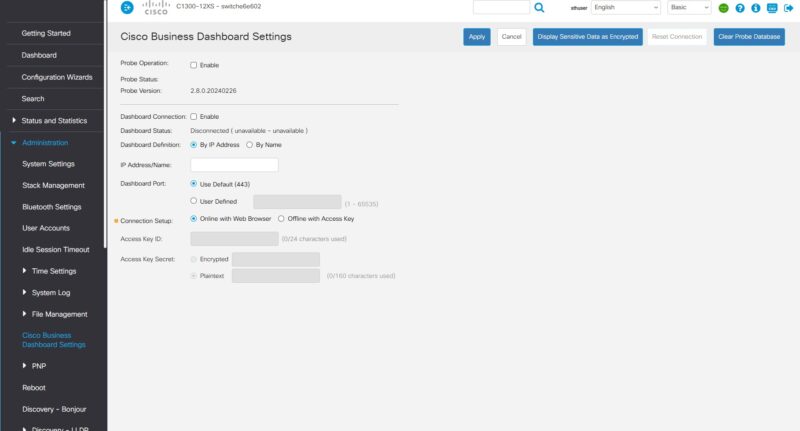
Cisco has the Business Dashboard. Hopefully, one day we get to show you this.
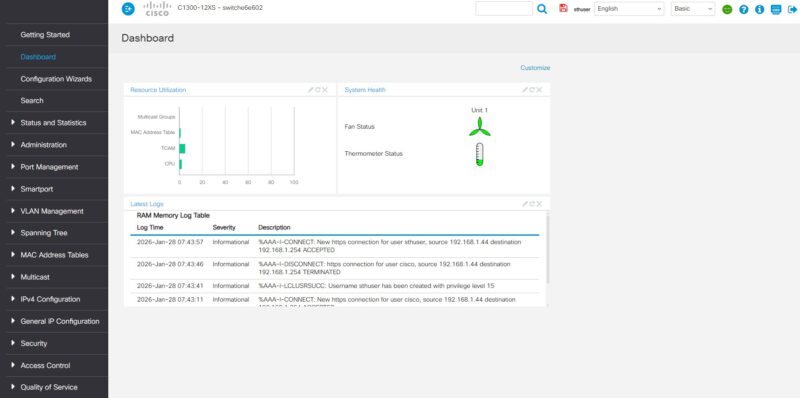
Here is the dashboard, which, admittedly, looks different from some of the other vendors as it focuses on logs and system status rather than ports.
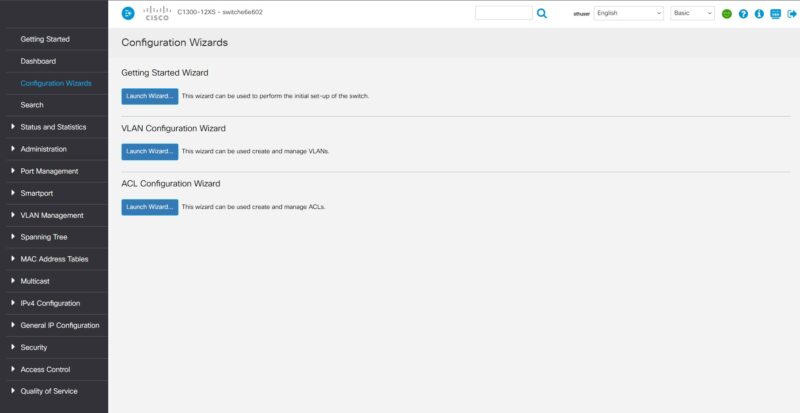
Another really neat feature that Cisco has is its configuration wizards. There is one for getting started, one for VLANs, and one for ACLs. This is just a great way to help those who are not Cisco-certified to get up and running on the switch.
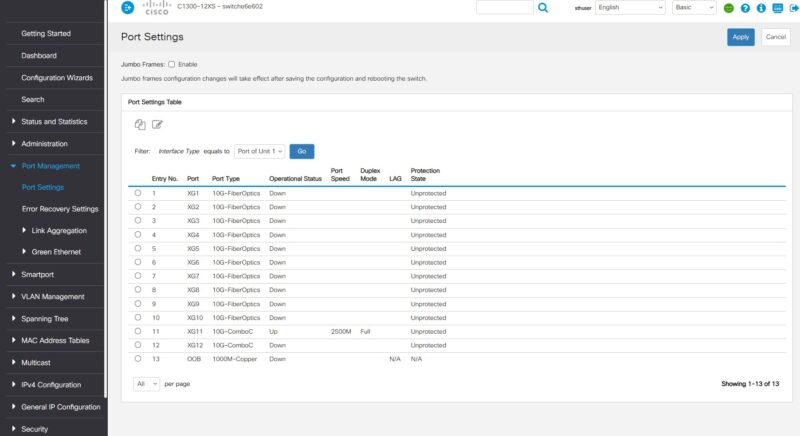
Of course, there are still port settings.
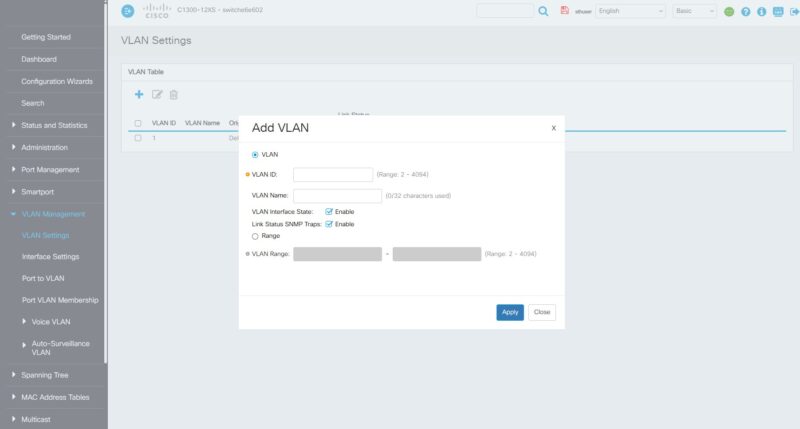
The ability to add and set VLAN configurations.
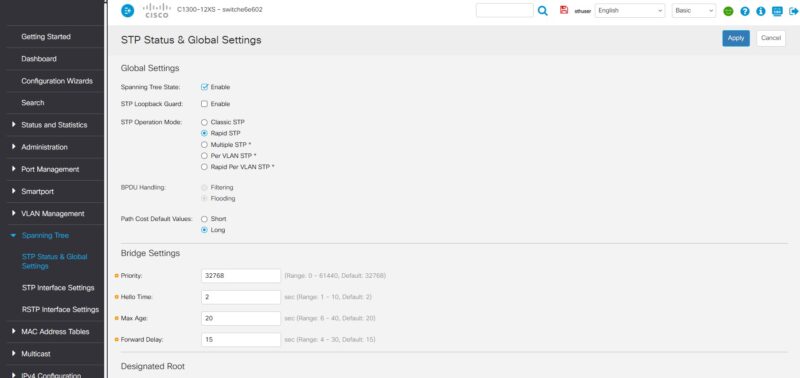
Cisco also has a fairly robust spanning tree setup compared to lower-end switches.
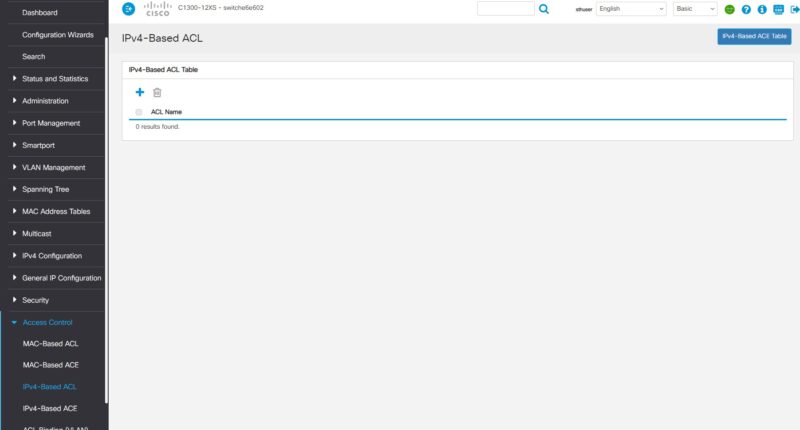
There are ACL settings that are also fairly robust.
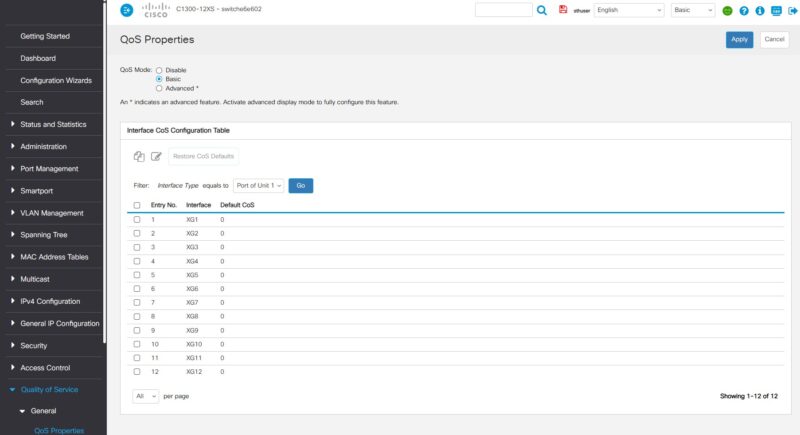
Cisco has Quality of Service settings.
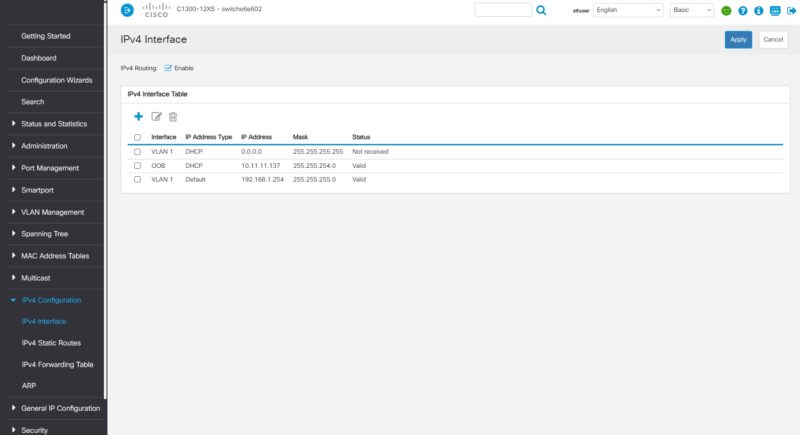
You can also set the IP settings to access the switch.
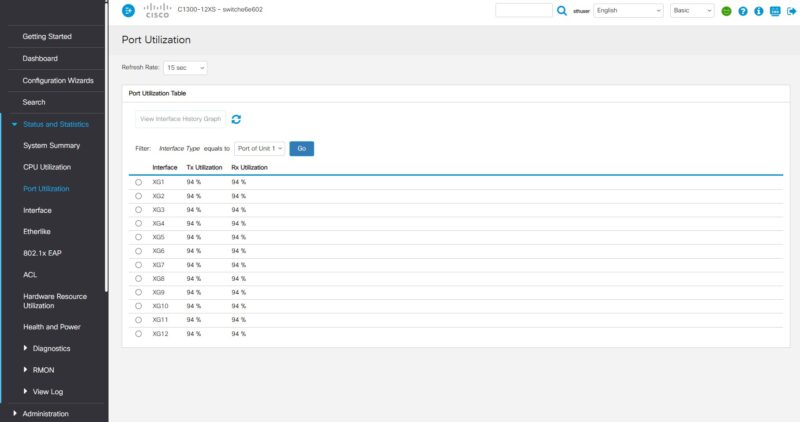
Cisco has a neat port utilization tab. Here you can see that all twelve ports are at 94%.
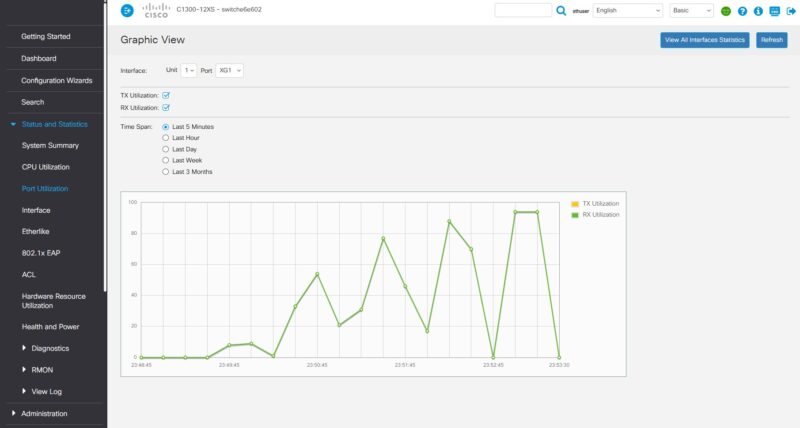
Here is another view of what it looks like putting test traffic through this switch on a chart.
On that note, let us hook this up to our high-end network testing setup to see how the switch performs.



In future network switch reviews, can you include a shot of the power draw when the switch is under full load testing?
I know you do the idle + a single port additional and (math exercise left to the reader). But it might be visually interesting enough to show the switch when it’s wired up for testing, and the power draw during that time.
Interesting Cisco use Marvell parts. I always assumed they designed their own silicon, so interesting to see they use the same parts as MikroTik and others. I had always assumed Marvell was a bit of a budget option since so many lower cost vendors use them but evidently the secret sauce is in the FPGA and firmware rather than the physical port controllers.
Hopefully we’ll start to see more 25G reviews coming, as 10G is getting a bit long in the tooth now.
On the label on the back it says that this switch is stackable. Stacking does have some drawbacks in an enterprise environment (firmware upgrades will typically require the whole stack to reboot at the same time, yielding a network outage), but this is another feature of this switch that most other ‘cheap’ 10Gbit switches don’t offer.
For people who are mislead by Cisco marketing:
This is Cisco SG300/SG350/SG550/CBS250/CBS350 Small Business Switch Series. These do NOT have IOS on them, but a custom linux. The feature set from the Web UI very similar since SG300 times with some more modern design. Works well for some setups, 40+ switch topologies work just fine. Often main drawback: not hardware PTP support in the whole series.
Advantage: no licenses or recurring license fees.
C1200 (ex-CBS250) and C1300 (ex-CBS350) is called Catalyst but is a complete serparate series with different target group than C(atalyst)9200, C(atalyst)9300 and the like..
My entreprise network as mostly D-Link except one FS S3900-48T6S-R, a switch Cisco like this one can handle VLAN in conjunction with D-Link and FS switches ? I know there are issues between D-Link and TP-Link on same network
This one (C1300-12XS) does not have rack ears and there are not mounting points for it.
The bigger C1300-24XS does have rack ears.
I must correct myself.
You can order rack ears for the smaller units such as the C1300-12XS & the C1300-8T-2G.
The part nr is: RCKMNT-CMPCT-1K=
I ordered a few and mounted both types with it in a 19″ rack.