A Disaggregated Future
Finally, in addition to providing a much newer platform for their wafer-scale engines, the Nexus platform is also intended to be the basis for Cerebras’s efforts to embrace disaggregated computing setups, where their WSEs are not the only computing elements in a cluster.
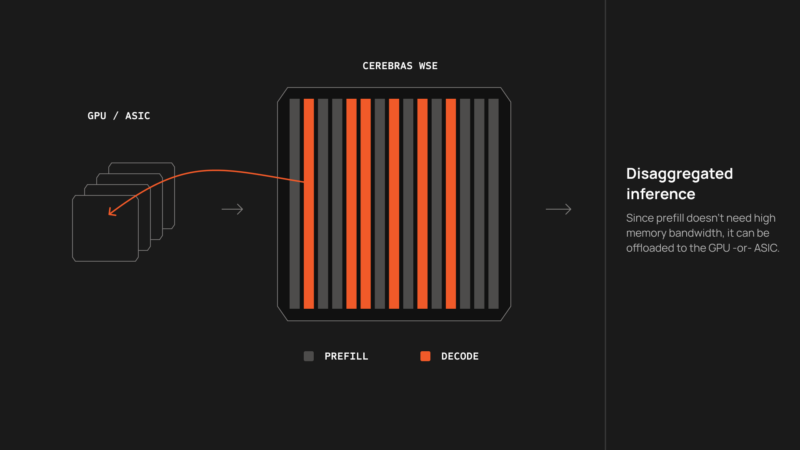
We have already seen some movement on this front, with announcements such as Cerebras’s recent deal with AMD, which will pair Helios MI455X racks with Cerebras’s hardware to offer a more performant disaggregated inference solution. Now, with the announcement of the CS-4 racks, we finally have a clearer idea of how AMD and Cerebras will accomplish that.
With the CS-4, Cerebras is making its servers more amenable to disaggregated computing by providing a similarly sized rack-scale system, as well as the greater networking capabilities this would require. This is also where the modular I/O system is being set up to play a big role, giving Cerebras the ability to reprogram or swap out networking modules for something more compatible with a partner system if needed, or simply to incorporate support for newer networking protocol extensions.
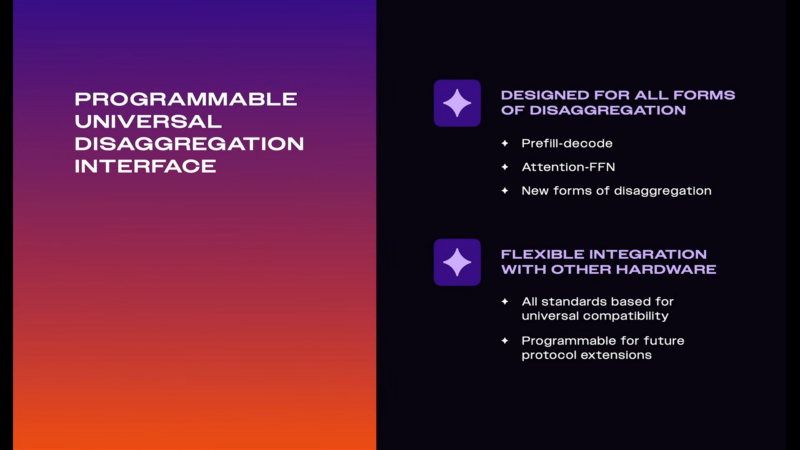
More broadly, the focus on disaggregated inference shows that Cerebras is hedging its bets by preparing for a future in which the wafer-scale engine is one part of an inference cluster rather than the sole element. Since the very first WSE, Cerebras has been trying to position the WSE as an alternative to GPU inference, one with numerous trade-offs both positive and negative. As a complementary product, it could fare better as a dedicated decode block rather than competing with the blazing-fast prefill performance of traditional GPUs.
Final Words
Like the rest of the AI hardware industry, Cerebras has been a significant beneficiary of the ongoing boom in demand for AI hardware. Though still a small player relative to the industry juggernauts, Cerebras has advanced its wafer-scale engine hardware to a competitive level, all the while turning a profit despite the immense costs of developing a wafer-sized processor. Now the company is looking to press forward on that momentum with its WSE-3 Turbo processor and associated CS-4 rack-scale systems.
If all goes according to plan, the CS-4 will be a major inflection point for the company. By moving beyond single WSE systems and towards a triple-WSE rack-scale system, Cerebras is aiming to improve on every aspect of its hardware ecosystem, improving performance, compute density, scalability, networking, and even system installation all in one fell swoop. It is a lot to change all at once, but by doing so while sticking with a faster version of the current WSE-3 processor, the company can decouple and develop its rack-scale system architecture separately from the wafer-scale processor architecture. This gives them the opportunity to change some of the most critical aspects of their system architecture without having to change everything at once.
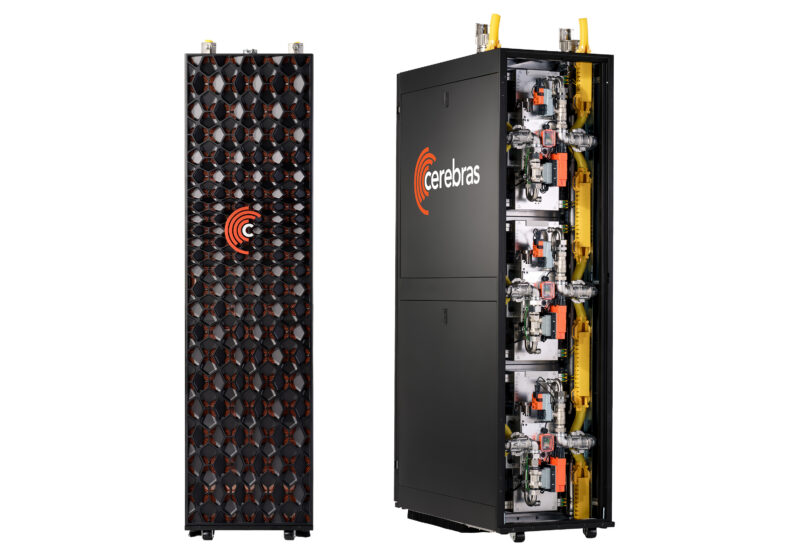
While Cerebras’s system development process may be staggered, their deployment process is not. The WSE-3 Turbo processor and CS-4 racks are now in early access, and the hardware will be generally available later this quarter. This means that industry watchers and potential Cerebras customers will have a chance to see just what the CS-4 rack-scale systems can do very, very soon. Now we are waiting until 2027 and the CS-5.