

BrosTrend S2 5-port 2.5GbE Switch Management
This is an unmanaged switch, so we do not get a management interface.
BrosTrend S2 5-port 2.5GbE Switch Performance
These units were purchased and tested just as we were getting our new test suite online, but we were using the older iperf3 test suite that aligns with dozens of cheap fanless switch reviews we have done previously.
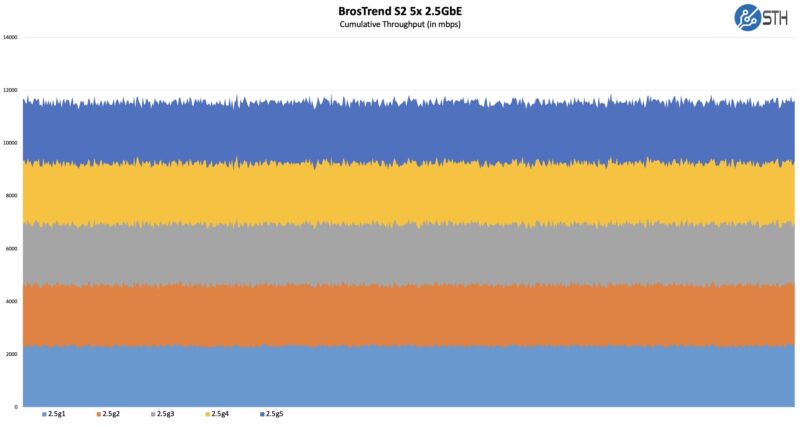
Performance was actually excellent. It is hard to tell, but call it ~0.5-1% better than the Realtek solutions. I am not sure if this is noticeably better, but it is at least not significantly worse.
BrosTrend S2 5-port 2.5GbE Switch Power Consumption and Noise
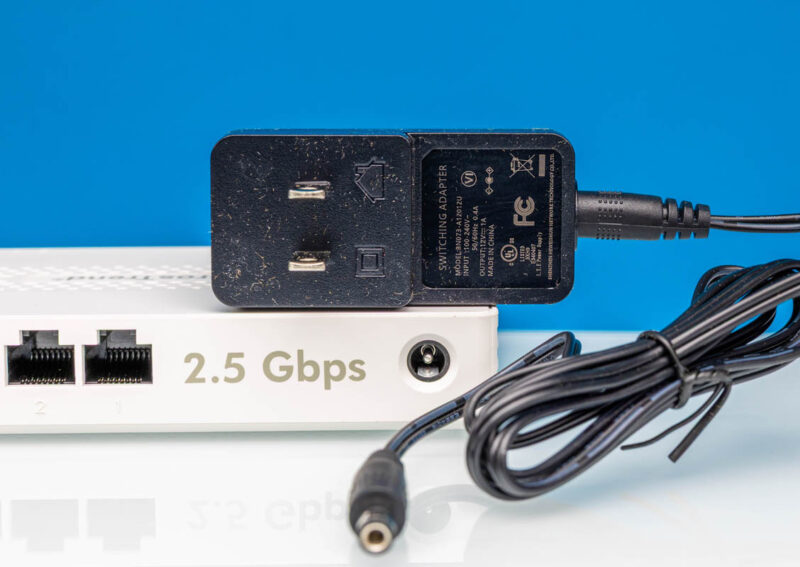
The switch itself was silent as we would expect with a fanless switch. On the power side, we get a 12V 1A power adapter.
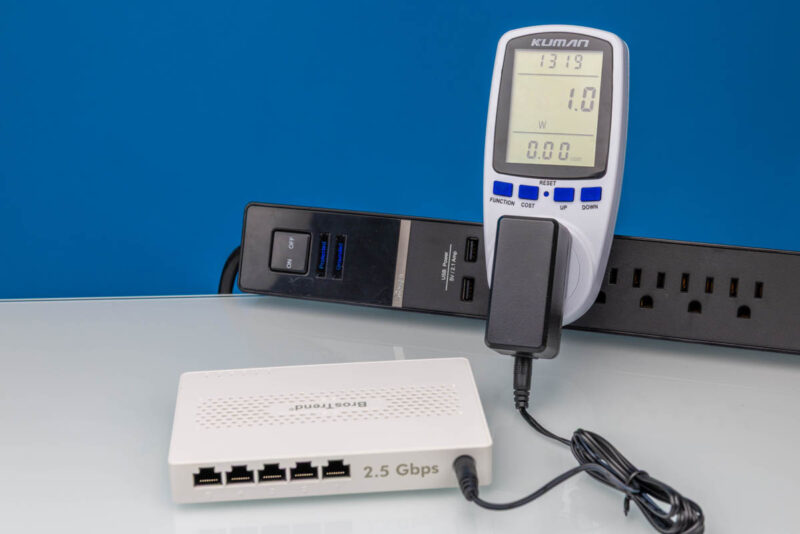
The switch used 1W at idle.
We hooked up a 2.5GbE port and got 1.3W for 0.3W incremental power.
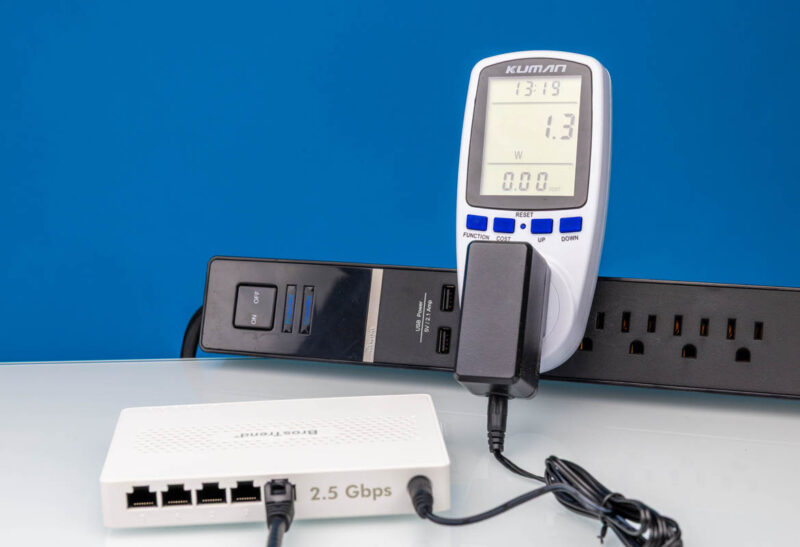
Given that this is a fanless plastic switch like the Ubiquiti Flex Mini 2.5G we reviewed, albeit an unmanaged one, we expected similar power consumption. Here, we actually got 0.3W lower on the same meter setup and 0.4W less for the incremental 2.5GbE port being connected. You can go check the The Ultimate Cheap Fanless 2.5GbE Switch Buyers Guide, and the closest power consumption was the TP-Link TL-SE1005M.
Final Words
BrosTrend was not a brand we had heard of before. When we saw the listing for this one, and the plastic case, we thought this would be a pretty rough switch. Instead, we were wrong about this one, as it worked better than we thought it would before plugging it in. Make no mistake that you never feel like you are getting a premium product here, but that may be the point on a sub-$40 switch (with discounts.)
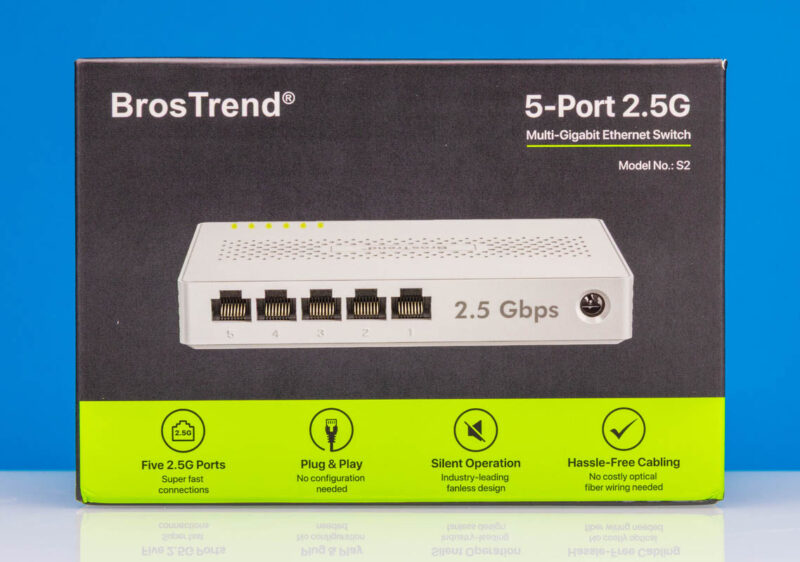
As crazy as this sounds, this BrosTrend switch actually exceeded our admittedly low expectations. We plugged it in. It worked and sipped power while doing so. That simplicity may be why this has become such a popular 5-port 2.5GbE option.
Where to Buy
If you want to check current pricing or pick up this switch, here is an Amazon Affiliate Link.

It would be great if you could check if switches like this supports IEEE 1905.1.
Some mesh systems, such as Tp-link deco require it for EB:
https://www.tp-link.com/en/support/faq/1794/
At least some 2.5G switches such as HiSource K0802WS, don’t support it:
https://www.reddit.com/r/TpLink/comments/14o0osg/deco_ethernet_backhaul_megathread/
So .. could some soldering and creative cutting create an 8 port version?
@F Naam looking at the PCB photo there are two sets of what look like some sort of serial interface (J1 and J2, with GND, SRX, STX and HTX, HRX, GND, respectively); and the 8-pin SOIC on the back, while I can’t make out the model number, looks a lot like the basic low capacity SPI flash chips that show up everywhere; so I wouldn’t be entirely surprised if there’s more to it than just populating the headers, you don’t cost-reduce this hard and leave components that suggest a configuration if you could omit them.
I would be a lot more surprised if anyone has gone to any real effort in DRM/tamper resistance; though finding some obscure and totally undocumented output of a Maxlinear partners-only config tool would be likely; doesn’t seem like the sort of product where you’d blow the cash on hardware roots of trust and efuse-backed SKU differentiation.
It would be interesting to see what happens on those headers if you gave them a poke/listened to them at the appropriate logic level; though, for the modest premium a vendor like this is going to charge for the 8 port variant, you’d have to actively enjoy the time spent working on the project for it to make any sense economically.
I was torn between this and the ubiquiti 2.5gbe flex mini, other than USB-C, i think id ratehr save my money and go for this, , huzzah saving money and not losing outrageous amounts of performance