Key Lessons Learned
I am a bit surprised that ASRock Rack has a new motherboard for the new generation of CPUs. This is one where the motherboard looks strikingly similar to the previous generation. The new board being 0.4″ wider is certainly something you notice when you get them next to one another, but it is not something that feels like it should have that great of an impact.
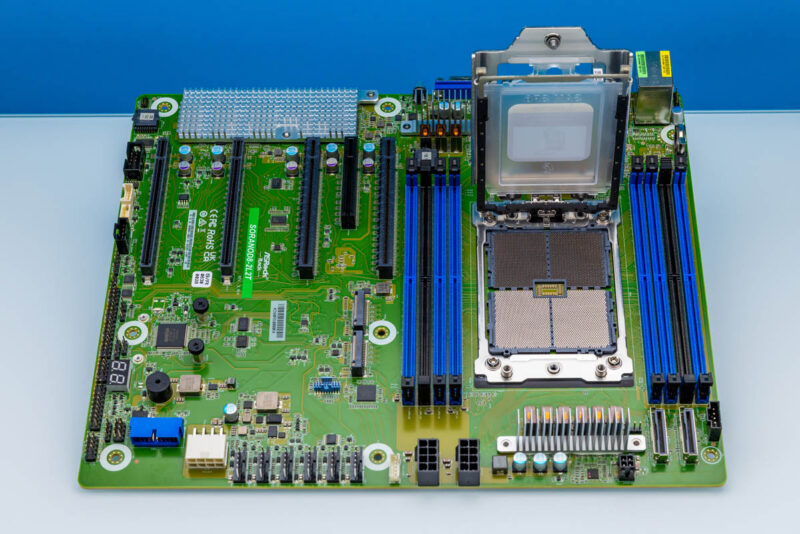
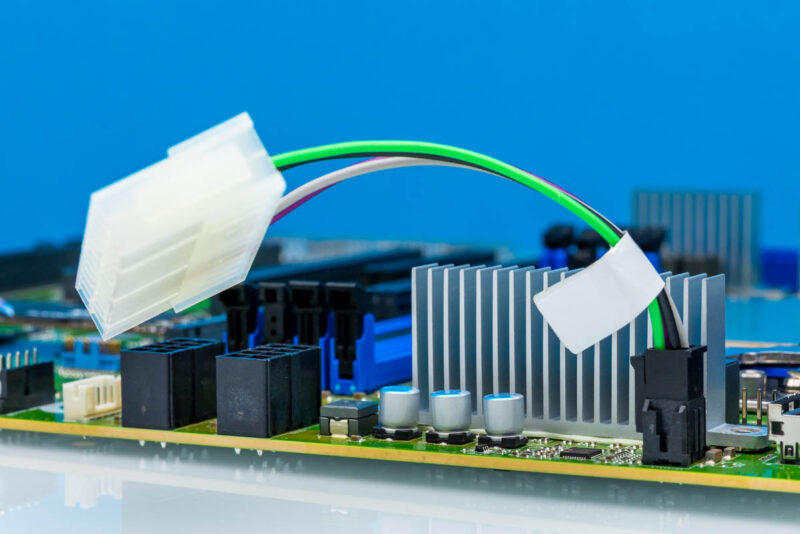
Generally, I understand why ASRock Rack has been differentiating its boards by removing the ATX 24-pin power input. It is also a bit painful since it puts the onus on a user to find a compatible power supply with the right 8-pin power connectors, plus we always end up using the little adapter cables anyway. On smaller motherboards, this arrangement makes a lot of sense since sometimes ASRock Rack packs components so tightly that a 24-pin power connector on the motherboard is not practical. At 12″ x 10″, growing a bit from the previous version, it seems like there is more room for adding the larger power connection. Of course, with all of that said, I think the traditional ATX power supplies in the context of server motherboards are rapidly losing market share, so maybe ASRock Rack is actually extremely forward-thinking here.
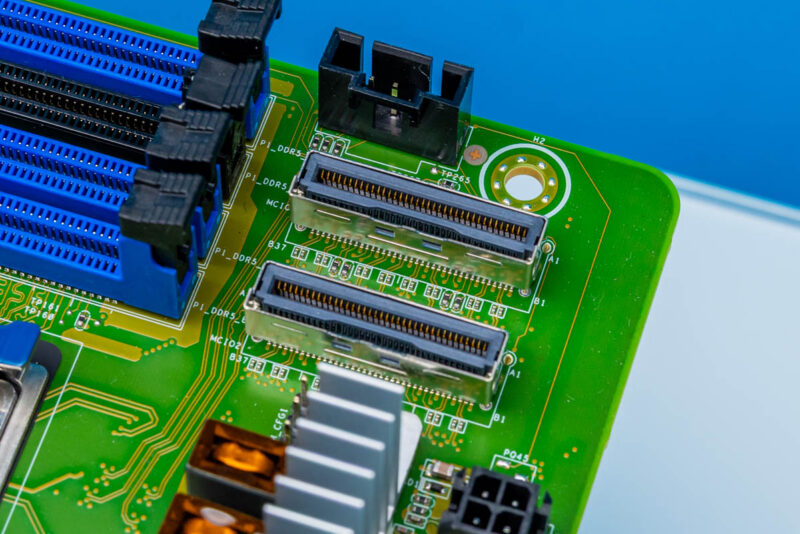
Another feature that may go unnoticed is that this platform can be exceptionally useful for storage servers that use hard disks. Not only do you get fast PCIe connectivity, but you can also repurpose some lanes for SATA directly, without adding an extra HBA. As NAND prices have risen, hard drives have become more fashionable again. The EPYC 8005 series provides a lower-power platform do handle storage server duties, and that is where the 8-16 core parts may shine.
In this era of very standardized NVIDIA NVL72 rack servers, having a platform like this that is flexible and lets you build a server out of an existing ecosystem of parts is welcome.
Final Words
The AMD EPYC 8004 series is one of my favorites just because it provides a good amount of compute at a reasonable power level. With the AMD EPYC 8005 “Sorano” series, AMD just made it much better. ASRock Rack updated its platform for the new series with a slightly larger form factor, but a lot of what kept the original Siena version of the -2L2T platform great. The extra DIMM slot, plus plenty of PCIe Gen5 slots and M.2 and MCIO connectors, is very useful. Likewise, many use cases like storage servers and other appliances may not need a PCIe NIC with the combination of 1GbE and 10Gbase-T ports onboard.
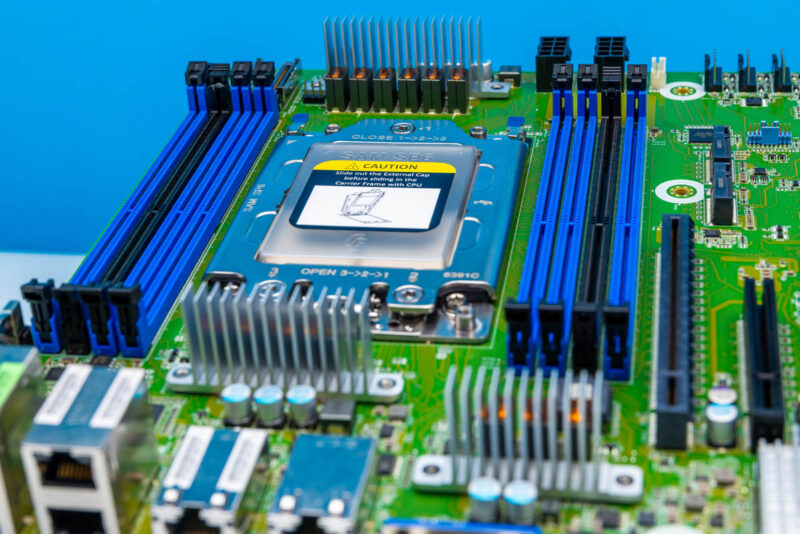
Many people will be happy with a platform like this ASRock Rack SORANOD8-2L2T, especially given the fact that the socket is smaller, the TDPs are lower, but the connectivity is still high. The AMD EPYC 8005 Sorano series greatly expanded the range of applications that a platform like this can address.