

ASRock Rack AMPONED8-2T/BCM Block Diagram
Here is the motherboard’s block diagram:
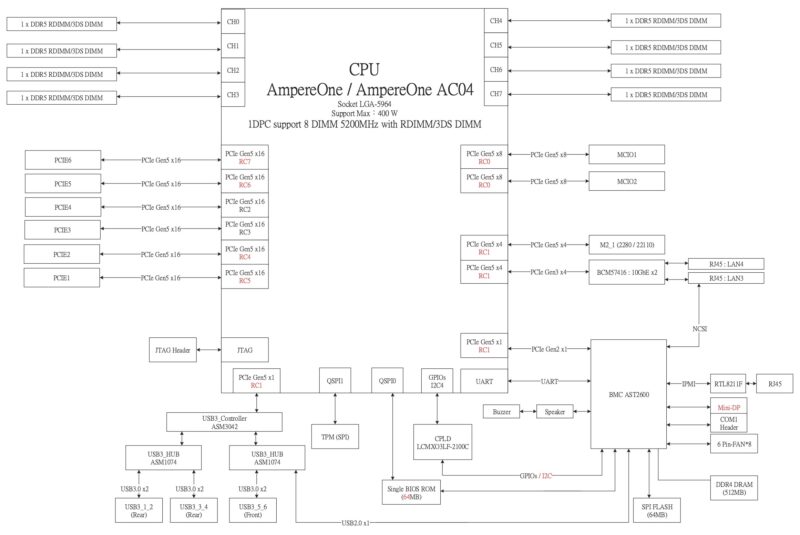
ASRock Rack’s detailed block diagram for the AMPONED8-2T/BCM provides a great look at how the rest of the PCIe lanes are allocated, as well as some of the smaller chips that provide additional functionality on the board. There are no real surprises here, but we can see how a PCIe lane is allocated to the ASM3042 controller that provides for the USB 3 ports on the system. Meanwhile, another PCIe lane is allocated to the BMC. These two chips, along with the 10GbE controller and M.2 slot, all share the same root port, leaving the rest of the root ports for the MICO connectors and PCIe slots.

Here is the topology for a base system with a 2TB SSD and the 192-core AmpereOne.
ASRock Rack AMPONED8-2T/BCM Management
As noted earlier, ASRock Rack’s AMPONED8-2T/BCM motherboard includes an ASPEED AST2600 BMC. The latest and greatest BMC from ASPEED (for at least a bit longer), the AST2600 is a well-known and widely used BMC.
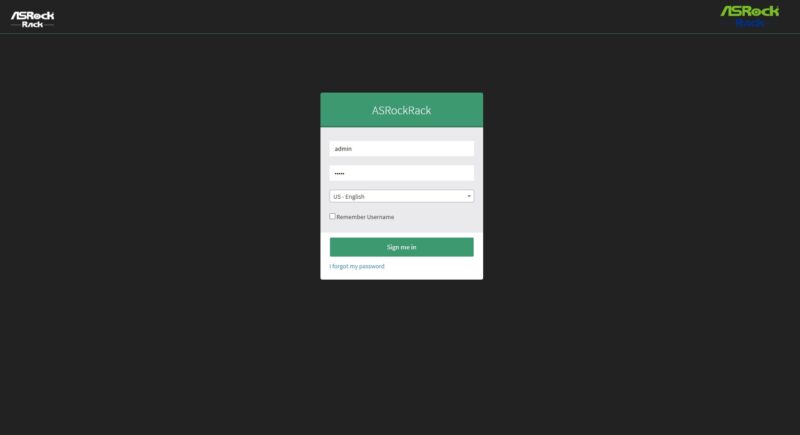
As a result, the AMPONED8-2T/BCM does not pack any surprises here, behaving as you would expect for an AST2600-equipped board.
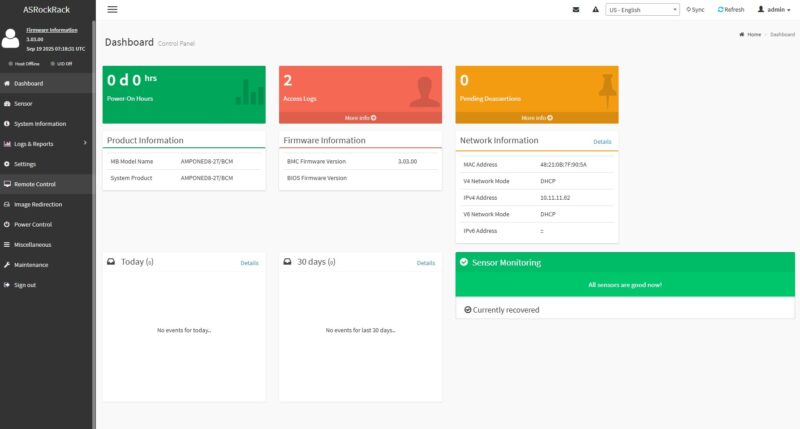
After logging in, we can see a MegaRAC-based management interface.
Along with all of the standard features, we also get the ability to use a HTML5 iKVM and mount ISOs over it, including a Boost feature that made installation of Ubuntu a breeze.
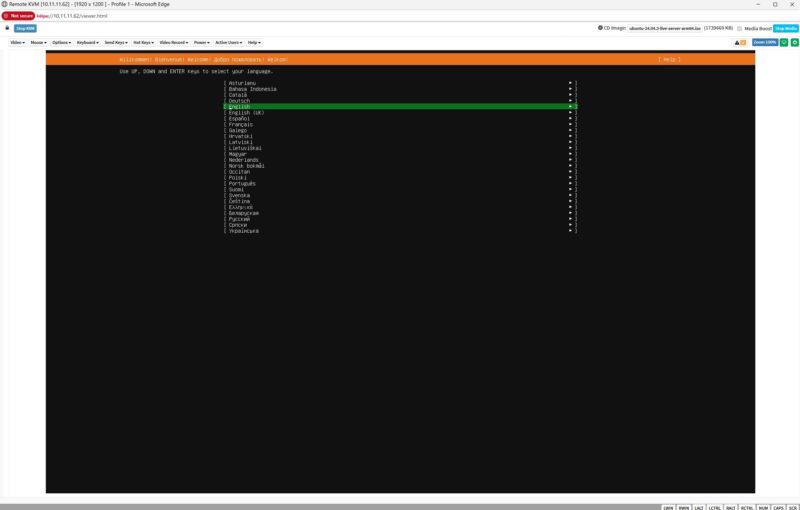
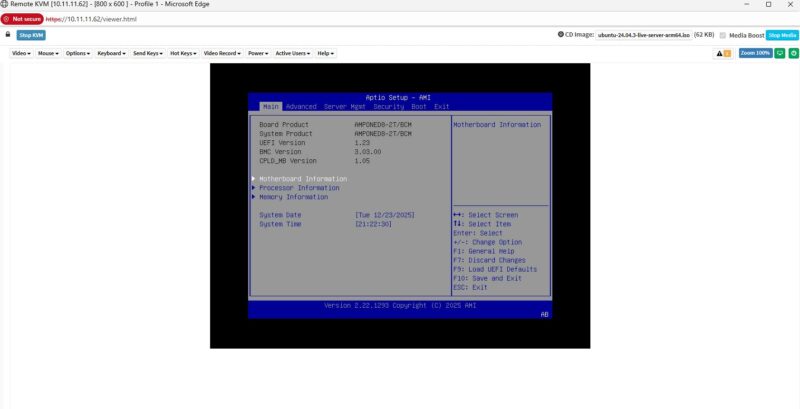
If you need to power cycle the machine, change BIOS settings, or otherwise work on the system remotely, this is a nice interface.
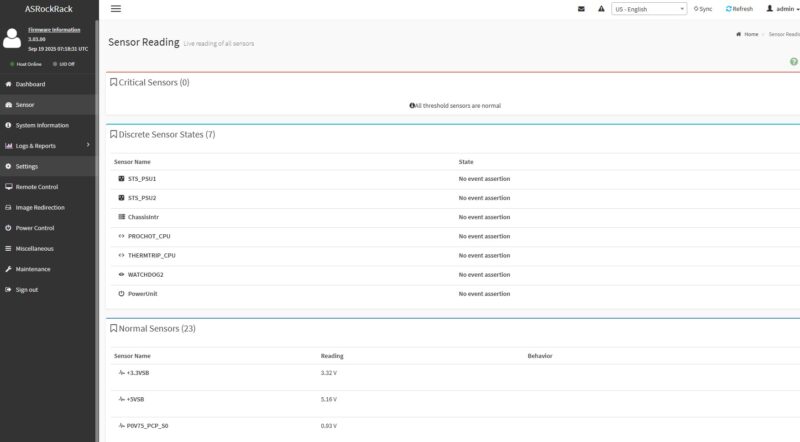
ASRock Rack also has the standard BMC monitoring features like sensor data.
Overall, remote management has become standard on servers, and ASRock Rack is using an industry-standard solution.
ASRock Rack AMPONED8-2T/BCM Performance
Being that we have reviewed a couple of AmpereOne systems so far, the performance of these A192-32X systems is well established.
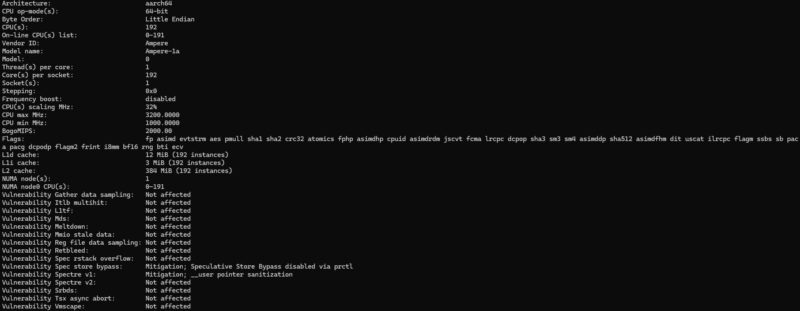
Seeing 192 cores running at 100% is always fun.
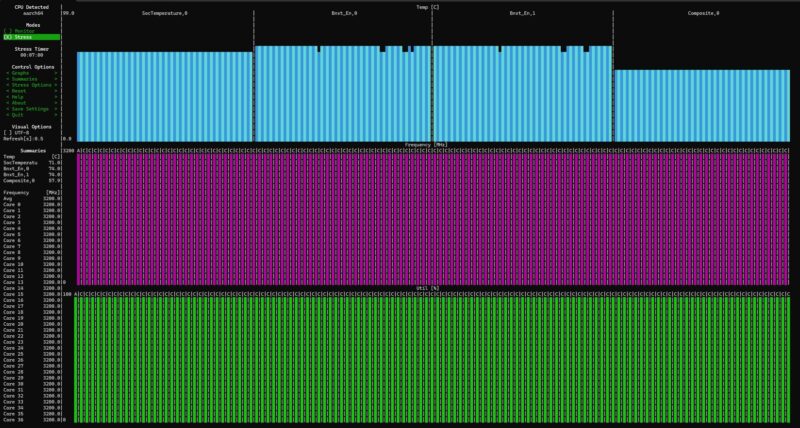
As far as performance is concerned, the ASRock Rack AMPONED8-2T/BCM is no better or no worse in that regard, turning in performance figures in line with other AmpereOne systems.
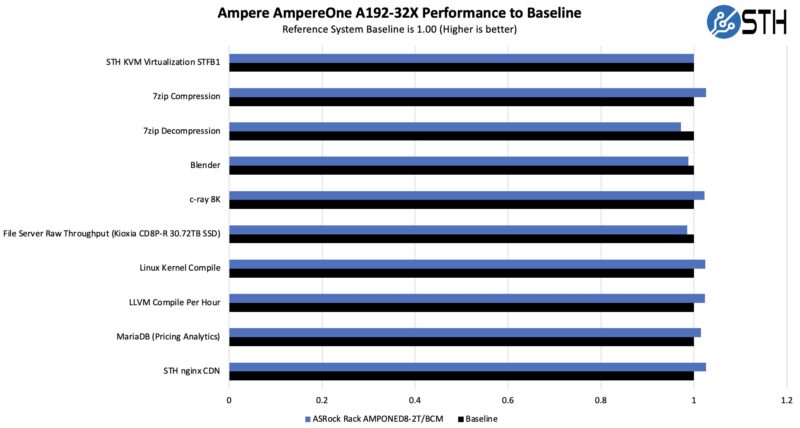
We already reviewed the Ampere AmpereOne A192-32X, so here we just wanted to see if we could match the results we got with the Supermicro MegaDC ARS-211M-NR pre-built system. It seems like it did within a testing margin of error. That is all that we could have hoped for, especially since we had a bit of DIY power and cooling.
Next, let us discuss cooling on this platform.
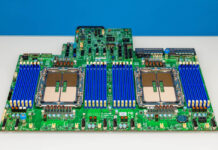
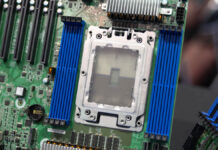

Patrick, I think you need to test again: your CPU jumper (number 15 on the motherboard layout diagram) is set to the wrong VREF voltage, which (according to ASRock) can have an impact on performance.
Thanks Jeff. We have different folks taking photos, testing, writing, and so forth. Usually, when Sam is taking photos/ B-roll, it is before we get things formally set up for testing, because if we take photos after, we end up getting too many fingerprints/ scuffs on gear.
This board is around $4700.
My experience is that asrock rack hardware is cool, but they are really horrible about long term software support (bios updates, etc) which makes them a bit of a crapshoot. Would be cool if sth made a habit of going back after a year or two and report how things are going in that respect.