

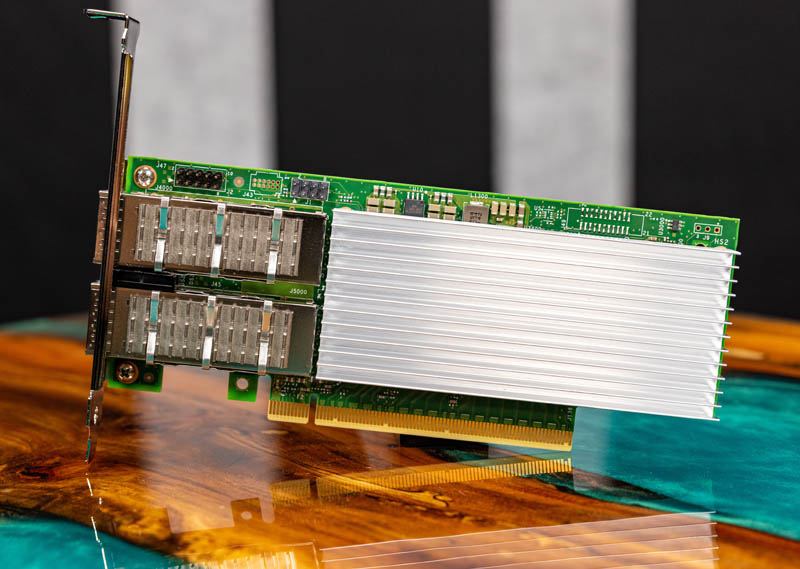
This is a neat story. According to Dylan Martin of CRN, Intel plans to spin-off its Networking and Edge business (currently the NEX business unit) as was outlined in an internal company memo. This seems like a confirmation of what Max and the Reuters folks reported was being explored back in May. This is an interesting one to say the least. I thought it wasd worth discussing.
Intel Looking to Spin and Sell its Networking and Edge Business, Per CRN
Intel has been moving some of its key products out of its NEX business unit, such as its edge processors and some of its interconnect technologies. Also, Intel’s Altera business that also sells into the networking and edge space has already been put on the chopping block with Silver Lake Buying a Majority Stake in Altera from Intel. That deal is expected to close later this year.
If you have been following our Substack, we have been covering some of the challenges in the NEX business for some time. For example, major acquisitions such as Barefoot Networks, the InfiniBand assets from QLogic, and more in the network space have fallen flat for over a decade.
Then AI happened. For folks that are not aware, AI is absolutely changing the adoption of high-end network switch and NIC solutions. Web servers, database servers, and more are not driving the adoption of networking as fast as vendors like NVIDIA and Broadcom can make parts. Instead, it is the AI systems and networks that are voraciously deploying leading edge networking. Intel almost joined in that when Intel Bid for Mellanox. Ultimately, Jensen outplayed Bob and NVIDIA has created a networking business that would likely be valued at well over Arista’s valuation if it were standalone.
The Intel networking business has fallen quite a bit behind. The Intel i225-V 2.5GbE NIC went through many revisions and ultimately an Intel i226-V was released. We just saw New Intel E610 NICs for Low Power 10Gbase-T and 2.5GbE and Intel E830 200Gbps NICs this year and have not even gotten them in the lab yet.
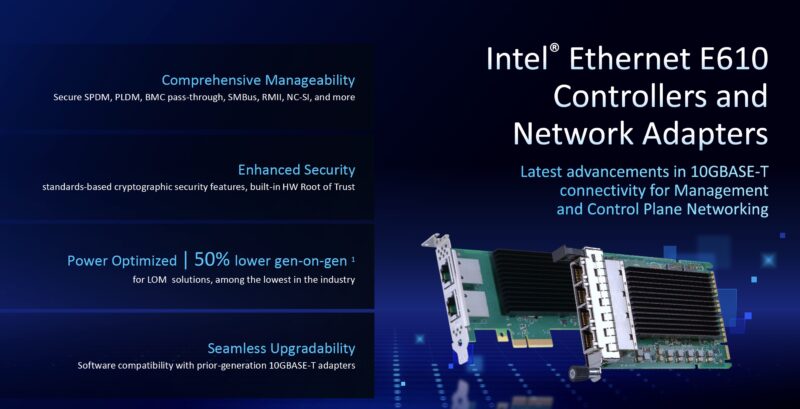
While Intel is just releasing its 200GbE generation, NVIDIA and Broadcom have had 400GbE NICs in the market for some time. You can already buy PCIe Gen6 NVIDIA ConnectX-8 NICs for 800GbE connectivity. 200GbE is simply way behind for 2025. Intel sees this more as trying to capture the volume market, but in the 2010’s, Intel was keeping pace with 10GbE and 40GbE transitions and was not two full generations behind. Later this year 400GbE is coming to even to lower-cost networks (just wait we have photos that we cannot share yet.)
Intel is getting way behind at the high-end, but we need to take some context. When you buy a server, usually there is lower-speed networking. For example, one may use lower-speed networking for the management and orchestration dashboards, sending remote logfiles, and so forth on a higher-end server. Those NICs are included either onboard or in add-in cards in many servers. As a result, they move a lot of units. If you are buying a server today, the two dominant players are Broadcom and Intel. Those two companies do battle over each system because if you sell a base NIC into a system, it moves volume. We covered a fun case with the HPE ProLiant DL325 Gen10.
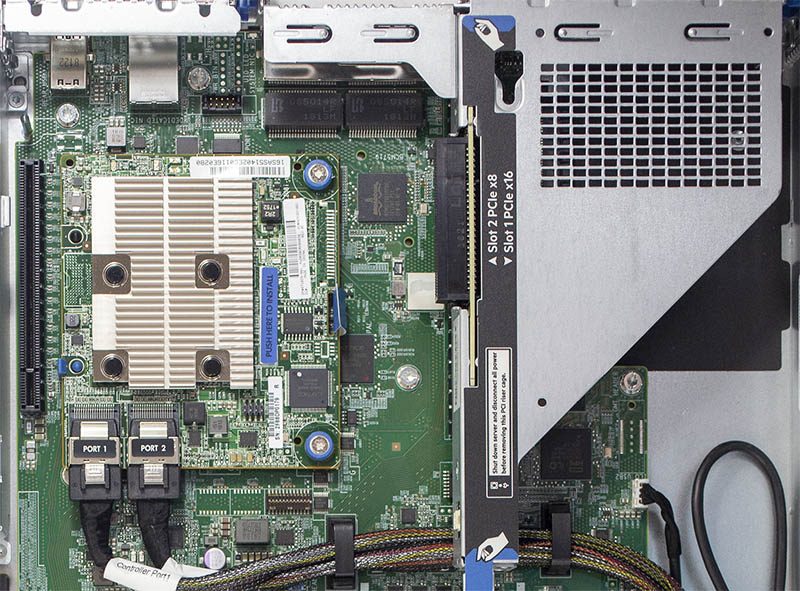
As you can see in the shot above, there is a Broadcom quad 1GbE NIC installed in the DL325 Gen10. Later when we purchased the system, that Broadcom NIC was removed and an Intel i350 put in its place.
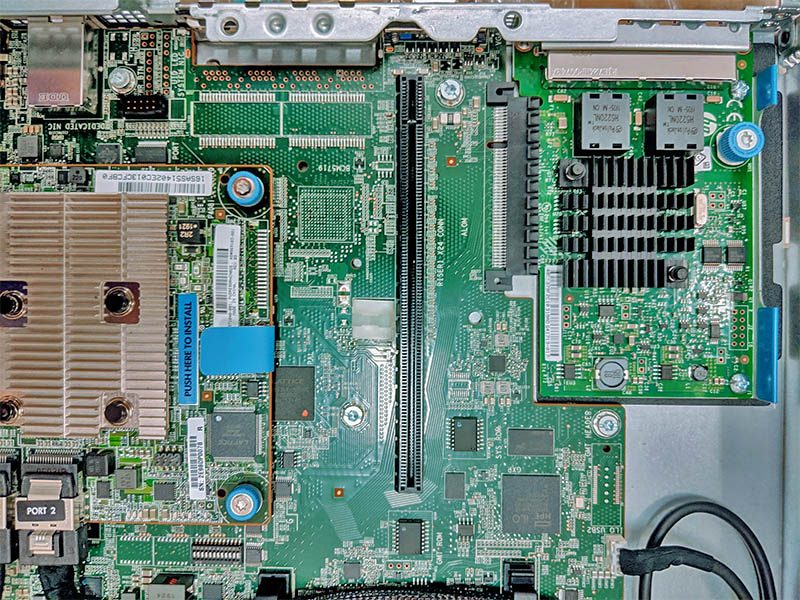
The rumor is that Broadcom got designed into the system, then raised prices. To counter this HPE decided to install a FlexLOM with Intel instead. Both Intel and Broadcom do not like to admit to this, but OEMs tell us that there is bundling. If you have an Intel Xeon server, you often see Intel NICs. If an OEM uses PCIe switches, or SAS controllers, then that is a good entry point for Broadcom’s bundling. NVIDIA is pushing its NICs into systems to remove Broadcom and others from the mix. To avoid getting trapped by this bundling, formats like the OCP DC-MHS end up easing some of the pressure.

That is just looking at the server business, but there is a lot more to it. Intel sells into other segments including wireless, service providers, telecoms, and other embedded markets.
Final Words
Intel NEX plays in a wide array of markets where bundling is common, but also there is limited competition. In many markets, getting designed-in also means selling a lot of units over time. It feels like it is also a business that might find a buyer or investor like Altera as a financial investor rather than a strategic deal. It will be interesting to see who eventually invests in NEX. Hopefully, we get an answer soon but it sounds like Intel will retain a stake in the company. Also, we hope that through the transition the pace of innovation picks up.


Maybe Cornelius Networks could buy the NEX division. Then they’d have a complete collection.
I just got the e610-XT2. I’m sad to see the possibility of ending intel nics, but hope things will continue under another name :)
Maybe the Windows driver will then become significantly better.
It was sad to see, when buying/implementing an X710-DA2 (2x SFP+ card), that with Linux it saturated 10 Gbit out of the box (iperf3) and that I got between the same machines with Windows 10 Pro only around half of the throughput.
Then I thought Intel could help quickly on their support forum.
It took several weeks before a reaction came, but at the end it didn’t solve the issue.
That was disappointing.
Intel got lazy over the years milking their portfolio without continuing to push R&D. Buggy and unstable chipsets didn’t help things nor a push to innovate let others catch up. 1GB networking while still around isn’t really what’s wanted on servers (outside of LOM) anymore. 2.5G nics should have been the standard and the growing resentment with Broadcom leaves opportunities that have been squandered. At least NVidia for the time being hasn’t been messing with the ConnectX cards that have been a staple in many datacenters for the last decade or two.
This seems like a fairly major retreat just because of how often having a pet NIC seems to have been tied to some other project. It’s not like Nvidia forces you to swear that you’ll only use ConnectX stuff or the purpose; but having gpudirect RDMA support is a fairly enormous deal if you want to do anything bigger than one chassis; it’s like a glimpse into the alternate universe where trying to shove omni-path into Xeons had actually attracted any interest whatsoever. Same goes for anyone looking to NPU/DPU how you treat a conventional server(though, in practice, it has mostly been hyperscalers with in-house pet projects that have actually adopted that in quantity).
It’s basically a concession of having an opinion, beyond the perpetually lagging industry consortium trying to commodify whatever proprietary capability is currently hottest, on anything that requires something nontrivial outside a single chassis.
Honestly, I think Intel instead of bailing on the networking market should have pushed aggressively into shipping stable,low power 802.3bz 10GbE products and retaking their position as the stable consumer networking solution that is found in every single system that didn’t get sucked into Marvell/Broadcom trash.
Bring the entire market up to 10GbE at the consumer level.
Instead we are left with unstable offerings all around at the 2.5GbE level, and nothing in the near future for 5 or 10GbE that doesn’t include trash drivers.
That being said, this just continues Lip Bu Tan’s parting out of Intel to make a quick short-term buck rather than having any long term strategy of making the company survive/thrive.
He is 100% chasing the next few quarterly reports rather than having a long term vision. Well, maybe his long term vision is retiring on an island.
I think Intel were a bit of a victim of their own success in this too – the intel x520 and its offshoots were super stable, so much so that even more than 15 years later, people are still using it
it was released in 2010 and the x520, x550 and x710 are still recommended cards used in builds today
intel pushing for low power and innovation would have been really good to see, consumer 10gb @ 3-4 watts + some low latency would have been really nice but intel never really picked a lane to focus on and tried to be everything which resulted in them beating beat by others
realtek 2.5gb is the goto for almost all vendors on the integrated consumer side because of price point
connectx cards being the default server lineup for super high bandwidth – intel don’t really seem to have a place, which is strange considering how many great minds exist at intel, i’d say their engineers are best in class… this seems mostly like business side inadequence than anything else
Comments are closed.