

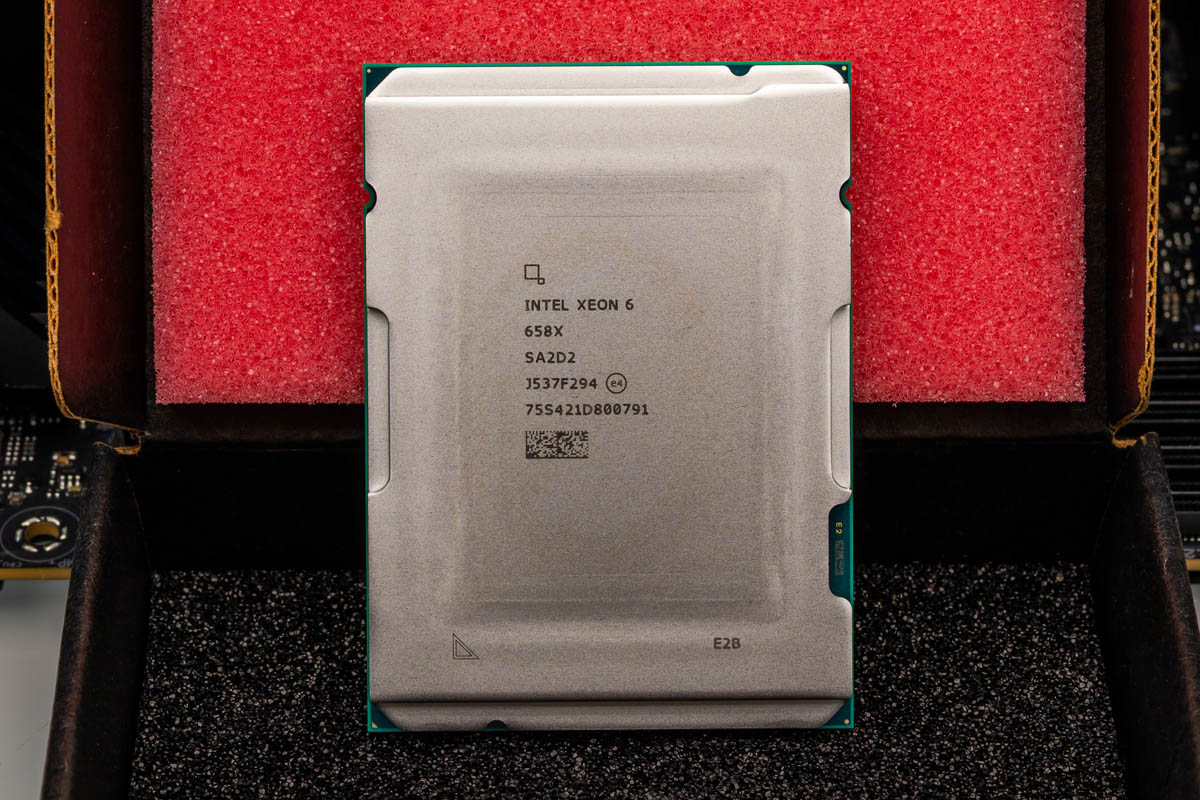
Somewhere between the shift in demand from desktops to laptops in the consumer world and the AI-based explosion in demand for high-end processors in the server world, Intel’s Xeon workstation parts have ended up in an unusual lull between the two extremes. Though a long-standing pillar of Intel’s CPU lineup for generations, the Xeon workstation lineup has not attracted the same degree of public attention it once did. Which is not to say it is not still important – as evidenced by the significant number of high-end workstations still sold for the traditional engineering and art markets as well as the burgeoning AI market – but Xeon workstation chips have certainly been treated as a more niche product in recent years.
Perhaps this is why Intel has been retooling the Xeon workstation brand. For its latest generation of workstation processors, the company has ditched its longstanding Xeon W-2xxx/W-3xxx processor branding, which, for several generations, was the naming scheme used for Intel’s server-based workstation chips. Fittingly, perhaps, it has been replaced by a variant of the branding Intel uses for its server chips, the Xeon 6 brand, giving rise to the Xeon 600 branding for their newest workstation chips.
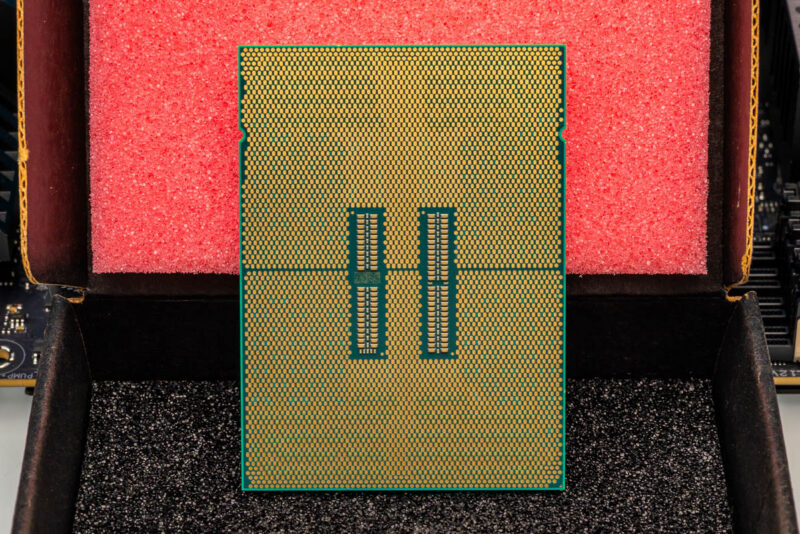
But whatever the reason, Intel has finally brought their Granite Rapids silicon to the workstation market. The first new silicon for workstation processors in over three years, the Xeon 600 family is intended to deliver a modest boost to single-threaded performance and a major boost to multi-threaded performance, while modernizing the rest of the platform built around them. With chips offering up to 86 CPU cores, 43% more than the previous generation, the Xeon 600 family is a much-needed update to Intel’s workstation platform.
To that end, following their announcement earlier this year, today we are finally taking a hands-on look at Intel’s latest workstation processors. With Granite Rapids cascading down from servers to workstations, we have already seen what Intel’s most recent high-end silicon can do in servers, but now it is time to see what it can do in a workstation. We are also looking to see how well it holds up against the stiff competition from Intel’s loyal opposition, AMD, and its rival Threadripper processors.
Granite Rapids In Brief
The release of the Granite Rapids Xeon 600 processors comes after an extended break in Intel’s Xeon workstation processor releases. After bringing Sapphire Rapids to the workstation market in early 2023 as the Xeon W-34xx/W-24xx series processors, Intel never brought Sapphire Rapids’ successor, Emerald Rapids, to the workstation market, likely because of the die configuration. Instead, the company rolled out a refreshed lineup of chips in 2024 that were based on the same silicon, with a slight bump in clock speeds and the number of CPU cores enabled.
As a result, Intel’s workstation platform has grown a bit long in the tooth over the years. In effect, it is similar to the long run of consumer hardware based on Intel’s Alder Lake (Golden Cove) silicon, a run that was finally broken by Arrow Lake. It is only fitting, then, that the Xeon 600 series represents the workstation chip lineup’s Arrow Lake moment, as it means the platform is getting all-new silicon based on Intel’s Redwood Cove CPU cores.
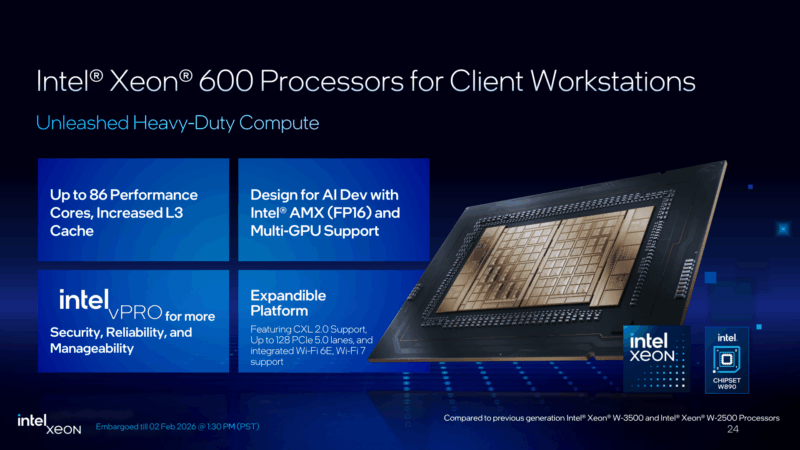
So just what does the Xeon 600 series bring to the table for workstation users? As outlined by Intel when they announced the chip family earlier in the year, the big-ticket improvements in the Xeon 600 family include the newer, faster Redwood Cove CPU cores and broader core counts overall, with top Xeon 600 chips now hitting 86 CPU cores. The Granite Rapids hardware at the heart of the latest processors also brings more PCIe lanes, CXL 2.0 support, and even MRDIMM support for higher transfer rates. Ultimately, the end product is meant to be a thorough generational update that brings more I/O, more memory bandwidth, and more multi-threaded performance to Intel’s high-end P-core workstation platform.
| Xeon Workstation Generational Comparison | ||||
| Xeon 600 (Granite Rapids) |
Xeon W-3500 (Sapphire Rapids) |
|||
| CPU Architecture | Redwood Cove | Golden Cove | ||
| Max CPU Core Count | 86 | 60 | ||
| L3 Cache | 336MB | 112.5MB | ||
| Memory Channels | 8 | 8 | ||
| Max Memory Frequency | DDR5-6400 MRDIMM-8000 |
DDR5-4800 | ||
| Memory Bandwidth | 410GB/sec 512GB/sec |
307GB/sec | ||
| PCIe Lanes | 128 | 112 | ||
| Socket | LGA4710 | LGA4677 | ||
| Base TDP (Top SKU) | 350W | 350W | ||
Compared to the Raptor Cove cores that Redwood Core replaced, Redwood itself is not a massive step up in either IPC or attainable clock speeds. What it has going for it instead are both area and power efficiency, which, combined with the use of the company’s Intel 3 fab node, have allowed Intel to pack a much larger number of CPU cores into a single Granite Rapids chip. As a result, while the top Xeon W-3500 chip offered 60 CPU cores, the top Xeon 600 chip brings that to 86 cores, or about a 43% increase in core counts, running at roughly the same peak frequency as before.
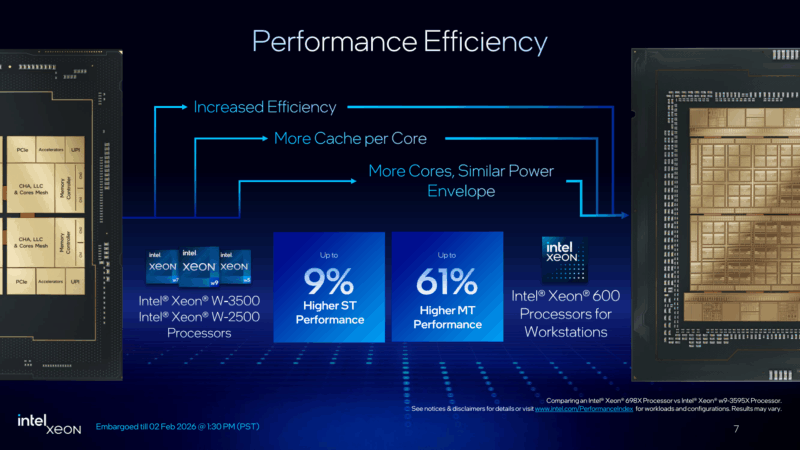
The end result is that the bulk of the Xeon 600’s performance gains come from multi-threaded workloads that can take advantage of those additional cores. Intel’s own promotional material is pretty straightforward on this, listing the single-threaded performance gains for Intel’s top SKU at just 9%, versus 61% higher multi-threaded performance. Single-threaded gains are hard to get these days, period, and with the Xeon 600 series that is even more true.
The other half of the Granite Rapids story is the I/O and memory bandwidth available to the processor. On the I/O front, Intel now offers a full 128 lanes of PCIe Gen5 coming from the host CPU, which is up from 112 lanes on the previous-generation Xeons – in practice allowing for one more x16 slot. The PCIe controller on Granite Rapids also gains improved CXL capabilities with CXL 2.0 support, enabling memory pooling and single-level switching.
The Xeon 600 family also supports higher memory speeds in a couple of ways. All Xeon 600 SKUs will support DDR5-6400 speeds for 1 DPC, or slower speeds at 2 DPC. Conversely, for users who need even more bandwidth, the top half of the Xeon 600 series (28 cores and higher) also supports Multiplexed Rank DIMMs (MRDIMMs), enabling effective memory speeds up to DDR5-8000. (Intel has also announced DDR5-8000 RDIMM support for some of its Granite Rapids server SKUs, but there is currently no announcement of that being extended to the workstation parts)
Not all Xeon 600 SKUs will get the entirety of these features, however. Lower-end chips (16 cores and below) will be limited to just 80 PCIe lanes and 4 memory channels, which is very similar to the outgoing Xeon W-2400/2500 parts. So while Intel has removed the Xeon W-2×xx family from its official lineup, they have not stopped offering more limited chips on the low end. A minimal buy-in of 18 cores (~$1199) is required to access the remaining DDR5 memory channels and PCIe lanes.
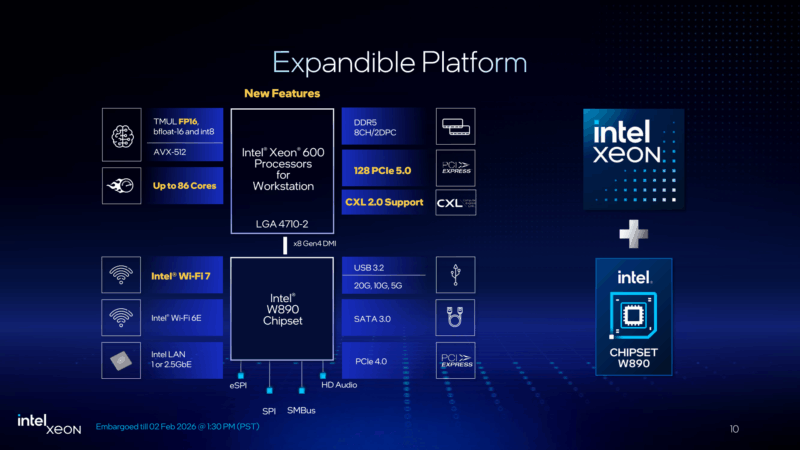
Finally, paired with all of the Xeon 600 processors will be Intel’s new W890 chipset. This is connected to the host CPU via a DMI Gen4 x8 link, offering just shy of 16GB/second of bandwidth between the two. Compared to the new Xeon CPUs, the W890 is admittedly unremarkable here: Intel’s USB speeds still top out at 20Gbps USB 3.2 (Gen 2×2), with BMCs, SATA ports, additional PCIe Gen4 lanes, and networking all hanging off of the chip. Wired Ethernet users can look forward to 1Gbps or 2.5Gbps ports, while wireless users can use a discrete Wi-Fi radio to add Wi-Fi 7 support to a system. (The W890 chipset also offers CNVIo2 integrated Wi-Fi 6E, but given the premium nature of the product, system vendors will largely go the discrete route)
Intel Xeon 600 SKUs
The complete Xeon 600 chip stack comprises 11 SKUs, with core counts ranging from 12 to 86. With the entire platform being a workstation configuration of Granite Rapids-SP, server customers should be quick to clue in on what is going on here, with Intel offering chips based on their low (LCC), high (HCC), and extreme (XCC) Granite Rapids configurations, which respectively use either 1 or 2 Granite Rapids compute tiles on a single socket LGA 4710 chip.
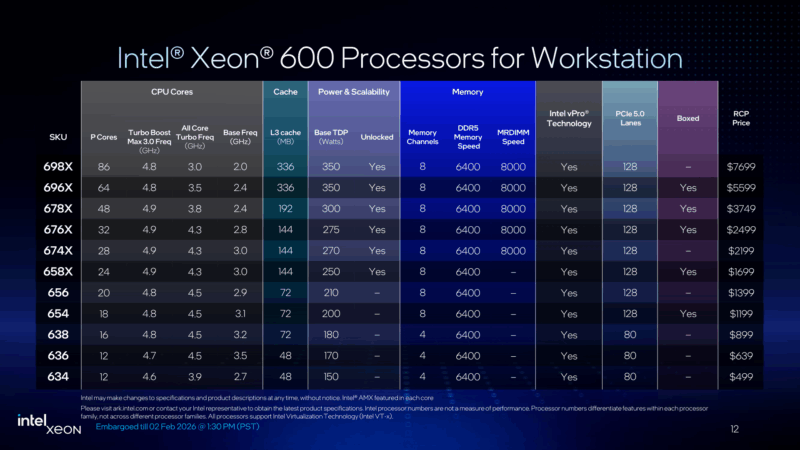
Overall, TDPs are very similar to the previous generation, with Intel essentially investing all of their efficiency gains into providing more CPU cores at the same tier. The top two chips, the 698X and 696X, will have base TDPs of 350 Watts and peak TDPs of 420 Watts. Meanwhile, the rest of the stack steps down with the core count, with the lightest 12-core chip, 634, coming in at 150 Watts for its base TDP.
Meanwhile, for retail customers in particular, a selection of chips is also available in boxed form. These are the 654 (18C), 658X (24C), 676X (32C), 678X (48C), and 696X (64C). And the X-tier chips are unlocked for overclocking.
Though in true Intel fashion, the overall lineup is a bit messy if you do not have a SKU table handy. All of the X-tier chips, sans the 658X, also get MRDIMM support, so going X alone is not enough to get everything the platform offers. Meanwhile, we have the three low-end chips that also feature reduced PCIe lane and memory channel counts. Though at least everything here is sharing the same socket.



Anyone know why core 0 is such an outlier in the latency graph?
Not sure why anyone would pick this over AMD’s offering. We are not in 2006 anymore where games or apps would run slower on AMD due to software optimisation.
@justsomeguy
I have a suspicion it’s power management-related. But we admittedly haven’t had a chance to do any further diagnostics on the issue to properly isolate it.
It is good to see Intel somewhat back in the game.
Quite possible in the workstation market we are approaching a point where gains in CPU just really do not matter all that much. Can you really keep 30, 60, or 100 cores busy all the time? That is an immense amount of compute (of that sort), and for quite a lot of use we are likely to see diminishing return.
The next episode may be more about hosting one or more GPUs or LLM-custom PCIe cards, and the bandwidth to shuffle data to memory of across the PCIe bus. Need lots of PCIe lanes … but maybe not so much more CPU compute.
For many of us, current high prices limit our choices. But when the AI-bubble bursts, there will be a flood of disused GPUs on the market, and lots of folk wanting to lash together rigs that can make use.