

Intel Xeon 658X Power Consumption
Now that we have reviewed performance, let us examine power consumption. Even though it is an X-class processor, the Xeon 658X is one of the lower-power Xeon 600 SKUs due to its lower core count. Consequently, the 250 Watt base TDP is roughly in the middle of the pack and about 100W lower than the top Xeon 600 chips.
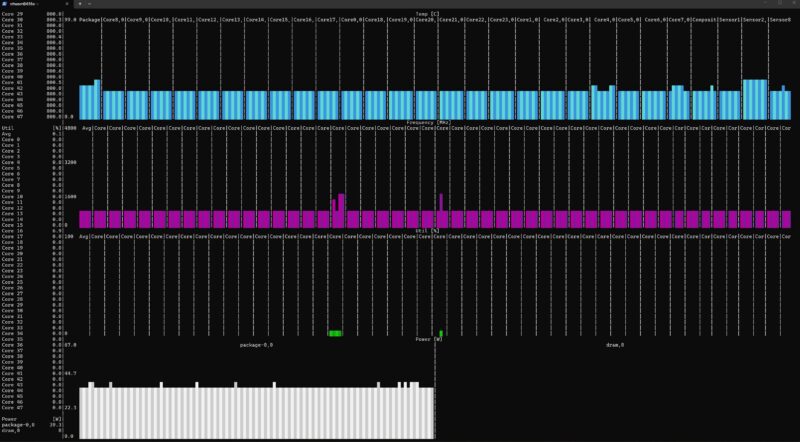
At idle, the chip reports a package power consumption of 39 Watts.
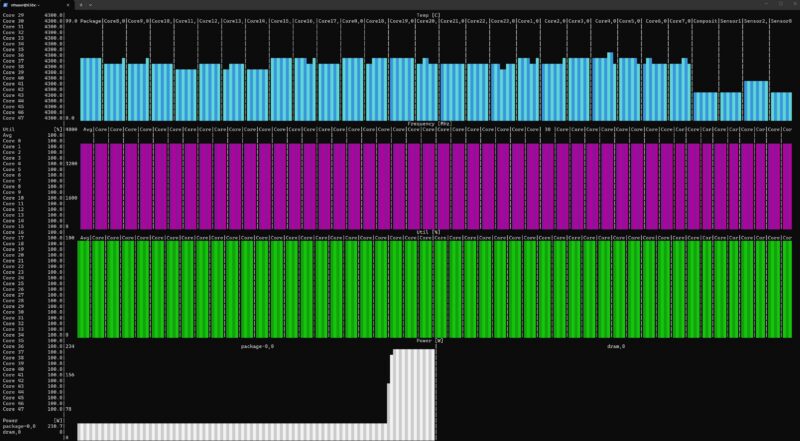
Ramping that up to full load, we find that the chip’s telemetry actually tops out just below Intel’s official TDP using stress-ng, with package power reported at 230 Watts versus the official specification of 250 Watts. Meanwhile, the chip is right on the money with its all-core turbo frequency, with the system having little trouble maintaining better than 4GHz. This is one of the benefits of a lower-core-count SKU.
Final Words
Intel’s Xeon 600 platform represents an important update to the company’s flagship workstation platform – and a long overdue one, as well. With Intel skipping Emerald Rapids for its workstation lineup, the Xeon workstation world has been getting by on Sapphire Rapids for longer than usual, and while the Sapphire Rapids platform has proven its merit as a workhorse for Intel over the years, in 2026 its time has come and gone.
The Xeon 600 platform, in turn, gives the Xeon workstation family a much-needed shot in the arm in terms of features and technologies. The Redwood Cove CPU cores at the heart of the chip provide a modest IPC boost. Meanwhile, the Intel 3 process node on which the compute tiles are fabbed often provides a greater boost in energy efficiency and reduces the power consumption of larger-core-count chip configurations.
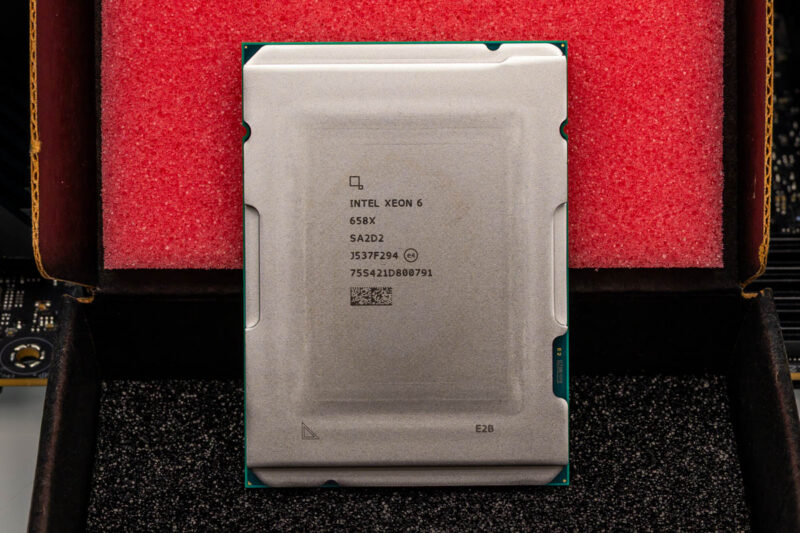
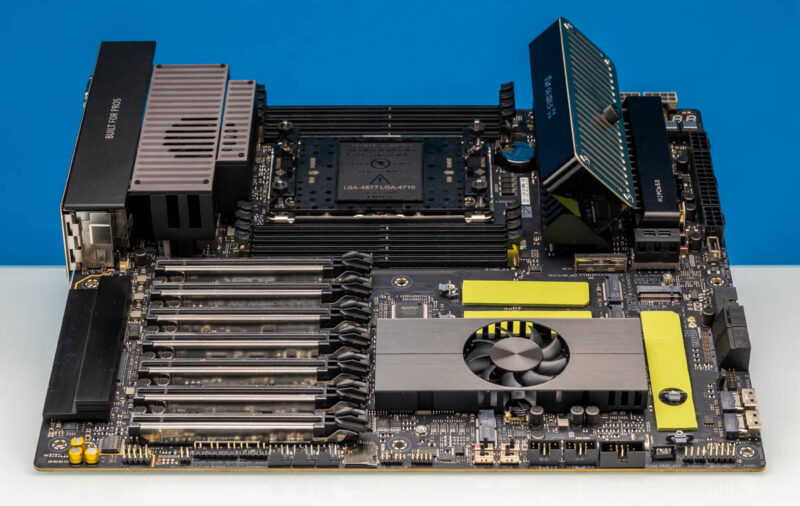
Both of these aspects are further flanked by the rest of the platform. Though the W890 chipset is not a particularly remarkable product, it brings some much-needed all-around improvements to the larger Xeon workstation platform. More significant, on the other hand, is the platform’s memory support, particularly with first-generation MRDIMMs. Though spendy in a period already marked by expensive memory, 8 channels of what is effectively DDR5-8000 memory is perhaps the single greatest advantage that the Xeon 600 series carries over its competition.
With that said, there is no getting around the fact that, while the Xeon 600 is a competent platform, it is not very exciting. The performance gains we are seeing over the Sapphire/Emerald Rapids duo are decent, but, as with Intel’s equivalent Meteor Lake consumer chips, the generational uplift is not immense. Redwood Cove is a modest improvement over its predecessor in performance, and Intel has been reasonably forthcoming in that regard. But it means that unless you are taking advantage of the larger core counts offered by the Xeon 600 platform, it does little to immediately differentiate itself from the Xeon W-3500 platform that preceded it. In that respect, as we have only tested the 24-core Xeon 658X for today’s review, we have only scratched the surface on the total performance the Xeon 600 platform can offer.
At the end of the day, the Xeon 600 platform is a much-needed upgrade for Intel’s Xeon workstation lineup. And for many of Intel’s customers, that alone will be a big boon. But looking at the larger competitive landscape, the relatively late launch of the Xeon 600 platform means that Intel finds itself playing second fiddle to AMD’s latest Threadripper platform, and consequently the Xeon 600 has a very narrow window of opportunity to outshine it.




Anyone know why core 0 is such an outlier in the latency graph?
Not sure why anyone would pick this over AMD’s offering. We are not in 2006 anymore where games or apps would run slower on AMD due to software optimisation.
@justsomeguy
I have a suspicion it’s power management-related. But we admittedly haven’t had a chance to do any further diagnostics on the issue to properly isolate it.
It is good to see Intel somewhat back in the game.
Quite possible in the workstation market we are approaching a point where gains in CPU just really do not matter all that much. Can you really keep 30, 60, or 100 cores busy all the time? That is an immense amount of compute (of that sort), and for quite a lot of use we are likely to see diminishing return.
The next episode may be more about hosting one or more GPUs or LLM-custom PCIe cards, and the bandwidth to shuffle data to memory of across the PCIe bus. Need lots of PCIe lanes … but maybe not so much more CPU compute.
For many of us, current high prices limit our choices. But when the AI-bubble bursts, there will be a flood of disused GPUs on the market, and lots of folk wanting to lash together rigs that can make use.