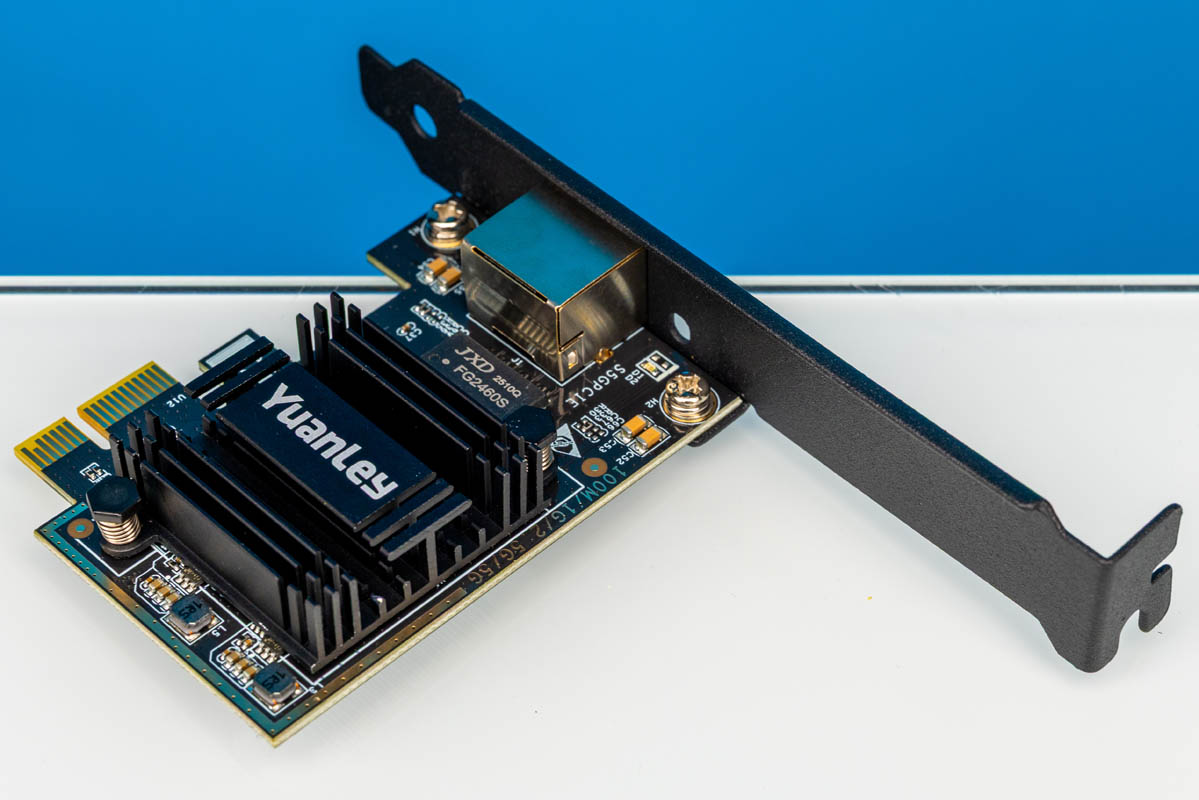
The YuanLey 5GbE PCIe adapter is generally an inexpensive and easy way to add an additional higher-speed network port to a system. With a PCIe Gen3 x1 connector and a Realtek RTL8126 NIC chip, this is an easy card to add to systems. This also came in a very generic packaging, and we paid $38 for it. As a result, we would normally buy the BrosTrend over this since we paid less and it felt a bit more premium. Still, prices change over time, and so we wanted to test this one to give us more coverage in the market.
If you want to check prices or purchase, here is an Amazon Affiliate link to what we purchased.
YuanLey 5GbE NIC Hardware Overview
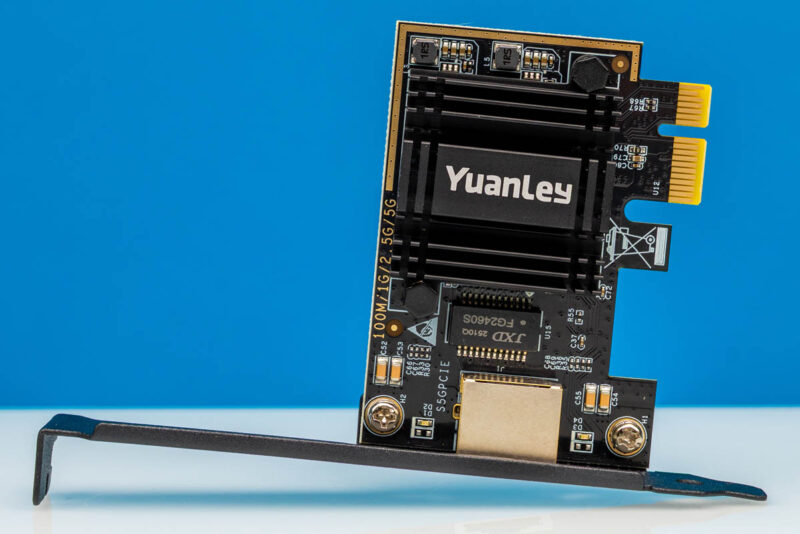
The card itself is low profile and barely longer than the PCIe Gen3 x1 card slot.
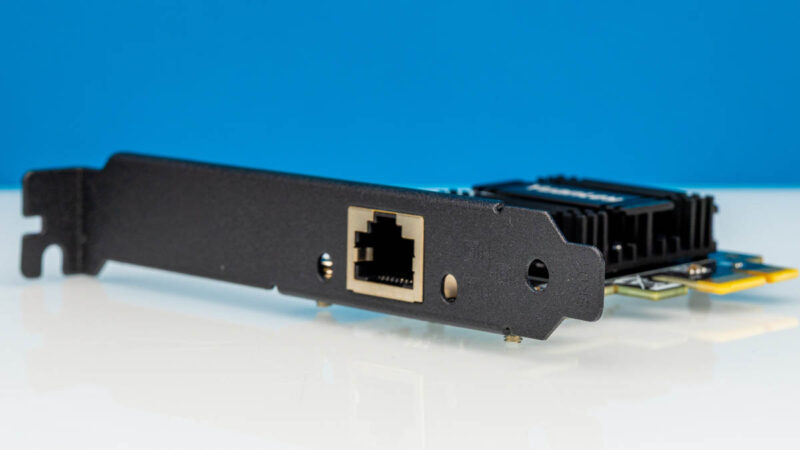
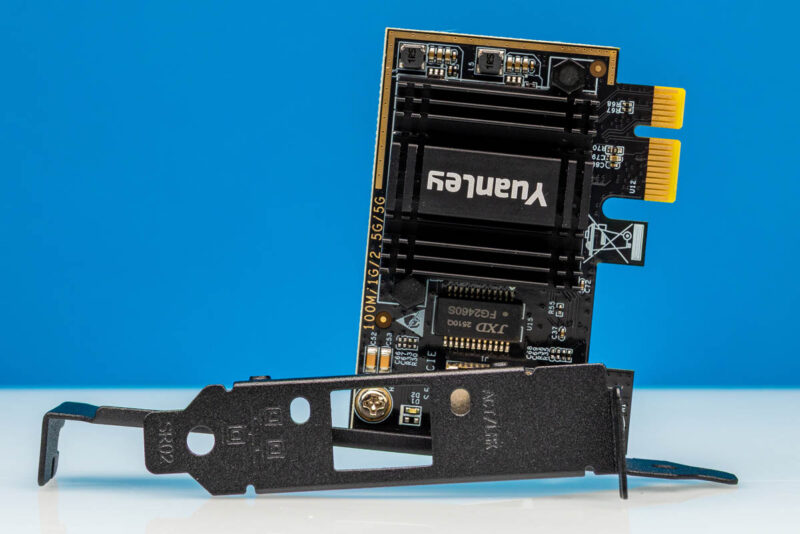
We get a rear I/O bracket with a single port slot and holes for status LEDs. The status LED situation is not what I would consider “nice.” Instead, this is more of what I would call “functional and cheap.”
Here is the heatsink that is not set for front-to-back but instead up-and-down airflow.
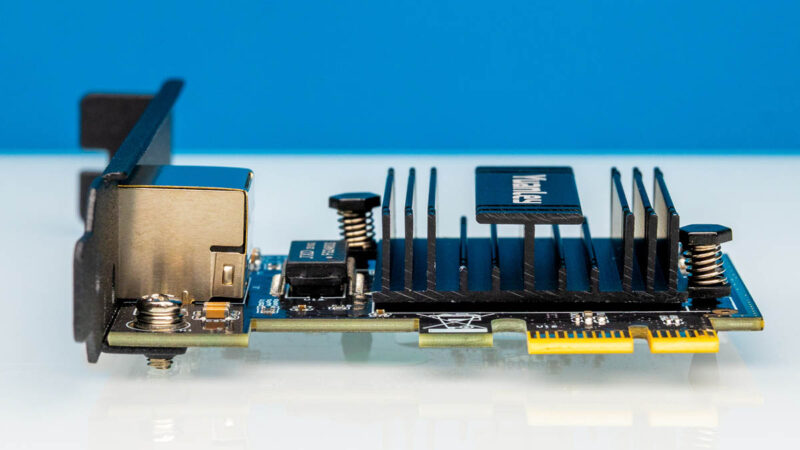
One nice aspect of this card is that with a PCIe Gen3 x1 slot and being so small, it is easy to put into systems because you do not need a lot of space to get one of these into a system.
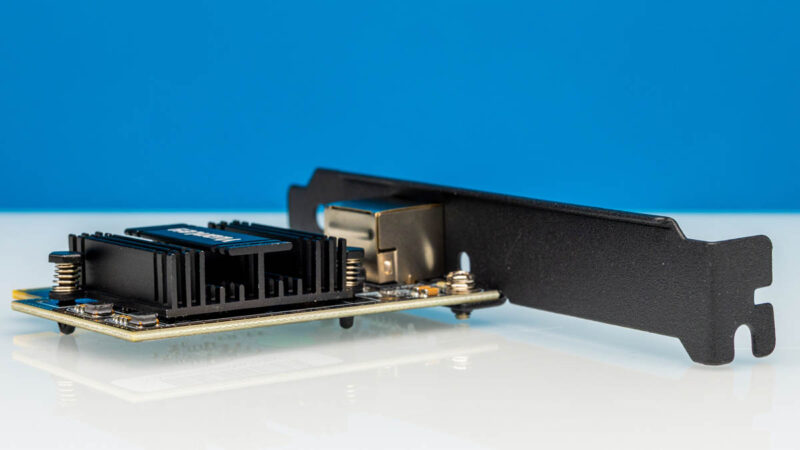
Here is another look at the heatsink.
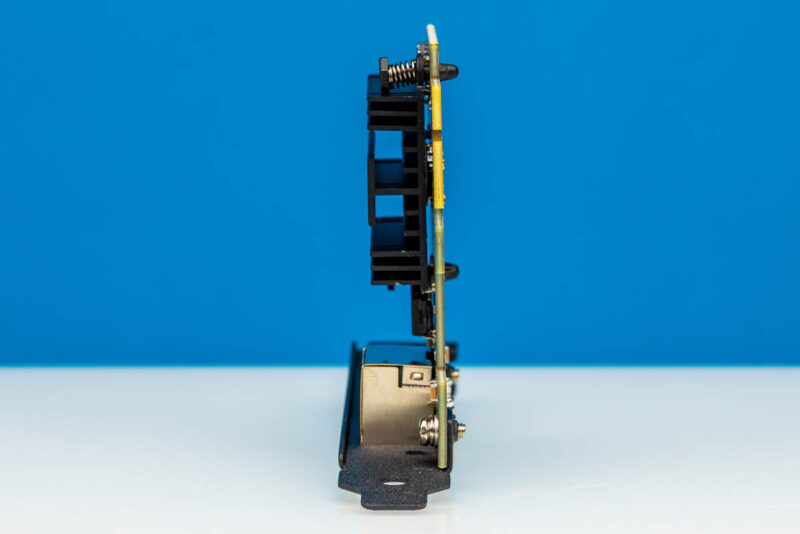
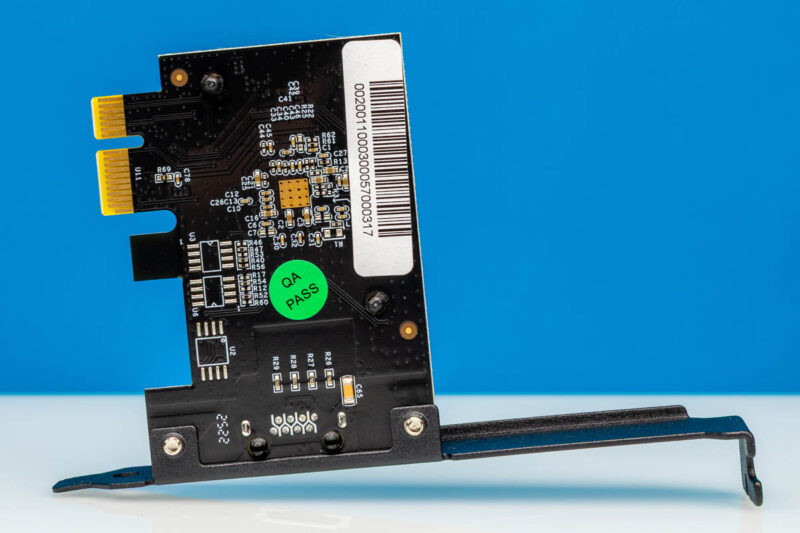
Here is a quick look at the rear, where there is not much going on.
We also got a low-profile bracket with this card slot.
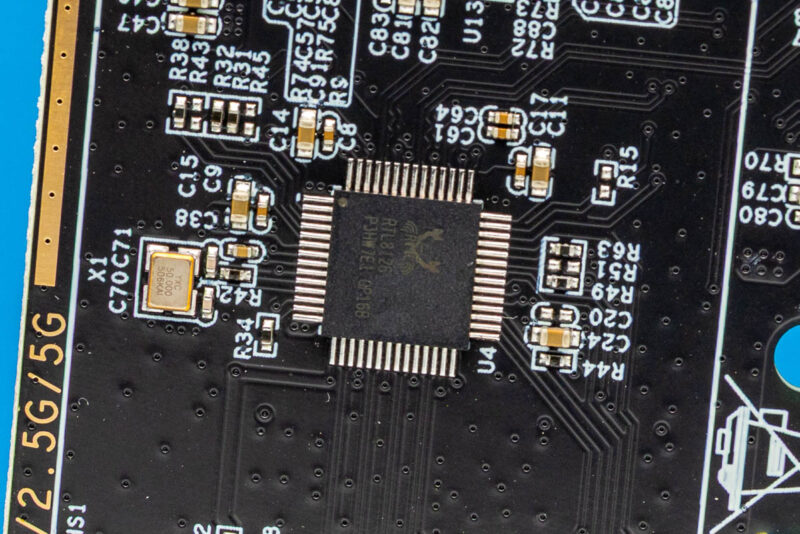
We took the heatsink off, and here is the Realtek RTL8126 NIC chip.
Next, let us plug the card in and see how it works.
YuanLey 5GbE Realtek RTL8126 Performance
After installing this card, depending on your OS generation, you may have to install drivers, but the overall support is getting much better. These were released in 2023, and we started seeing cards in 2024. You can search for your OS and “RTL8126” and check for support.
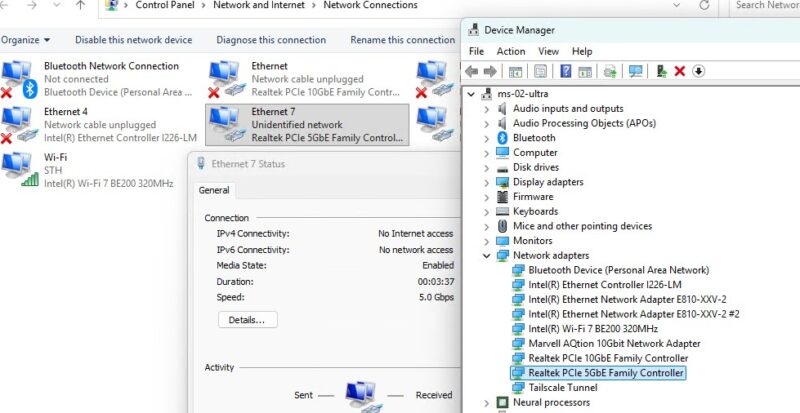
For these, we are just using our simple iperf3 testing.
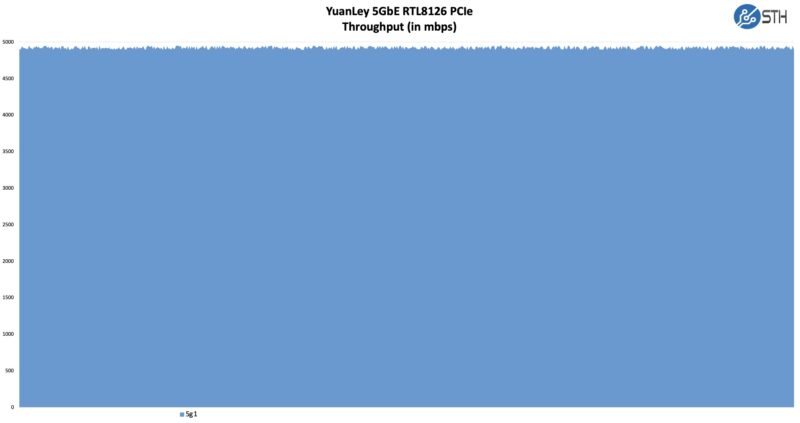
The performance was almost spot-on with the other Realtek RTL8126 adapters we have tested in this setup and series.
Final Words
There are two major things we have learned in this 5GbE NIC series. First, the BrosTrend seems to be the nicest and is sometimes the cheapest. Both of those are usually by very small margins. Still, they are all very similar, and often we would purchase based on price. What we really learned is that if we were thinking of getting a 2.5GbE adapter and had a PCIe Gen3 x1 slot, then we would probably get an RTL8126-based 5GbE NIC these days, even if it costs $13-16 more. It just adds a bit more flexibility later.
Overall, this worked OK, so we are mostly suggesting that folks purchase based on price.
Where to Buy
If you want to check prices or purchase, here is an Amazon Affiliate link to what we purchased.