

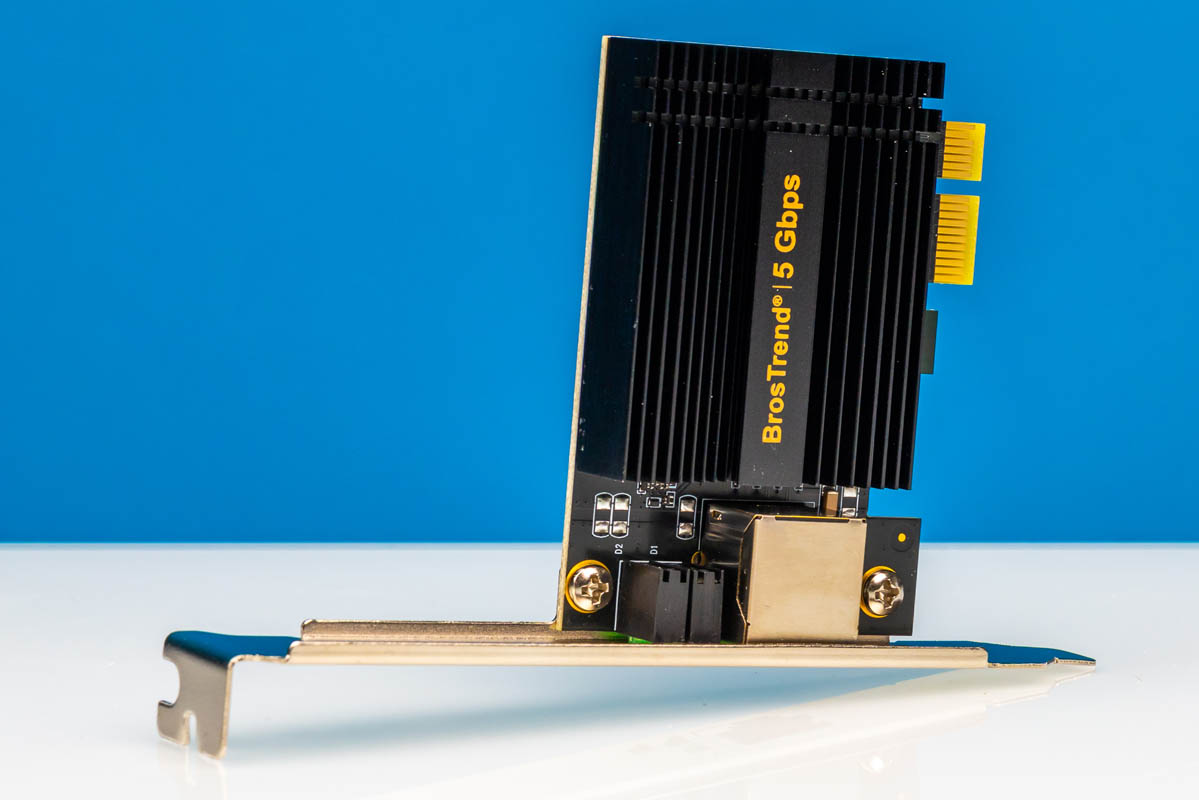
It is finally time to start reviewing 5GbE products. To kick us off, we have the BrosTrend 5GbE adapter. This is enabled by the newer Realtek RTL8126 chip, and provides a relatively inexpensive way to step up from 1GbE networking. Pricing varies, but we purchased ours for under $35, which makes it quite reasonable. Since this adapter also supports 2.5GbE, it is a decent way to get 2.5GbE now and easily have an upgrade path to 5GbE down the line. We have not yet seen many switch reviews with 5GbE, so please stay tuned for those, as we have several already tested, and those will follow this adapter review. We previously reviewed the BrosTrend S3 8-port 2.5GbE switch, which was a very interesting low-power 2.5GbE option. Still, we need to get our 5GbE series going, so it is time to review this NIC.
If you want to purchase one, here is an Amazon affiliate link to what we purchased.
BrosTrend 5GbE PCIe Adapter Hardware Overview
Here is the card. Although it comes with a full-height bracket, you can see just how small it is.
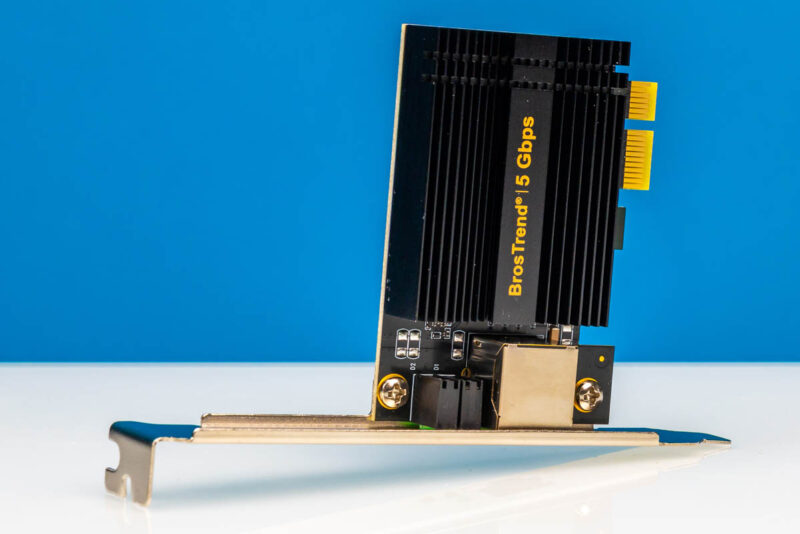
One of the big features is the PCIe Gen3 x1 slot. When we did our recent Realtek RTL8127 NIC Review, we noted that we needed a Gen4 x1 slot to run 10Gbps. Let us face it, there are many systems that do not have a Gen4 x1 slot open, but perhaps have a Gen3 x1 slot. This is for those situations.
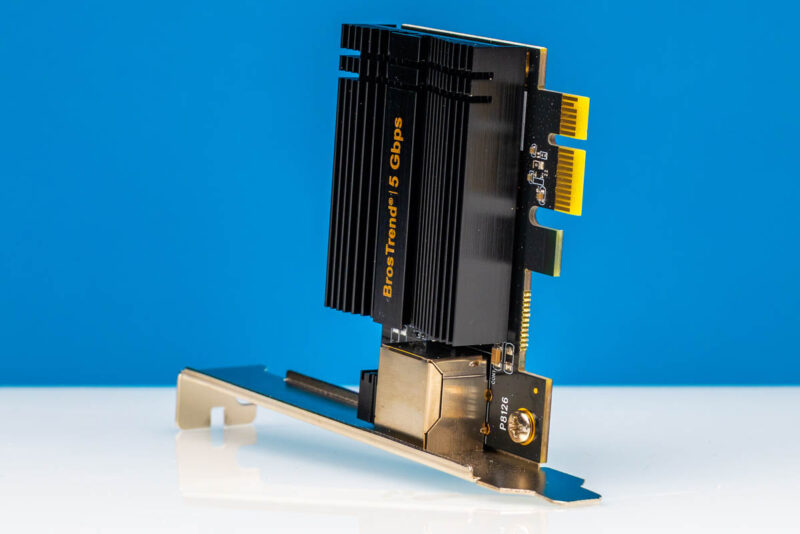
Small but notable touches are that the heatsink and the PCIe bracket are both branded. This might sound small, but many of the bargain basement priced NICs we have seen do not have this.
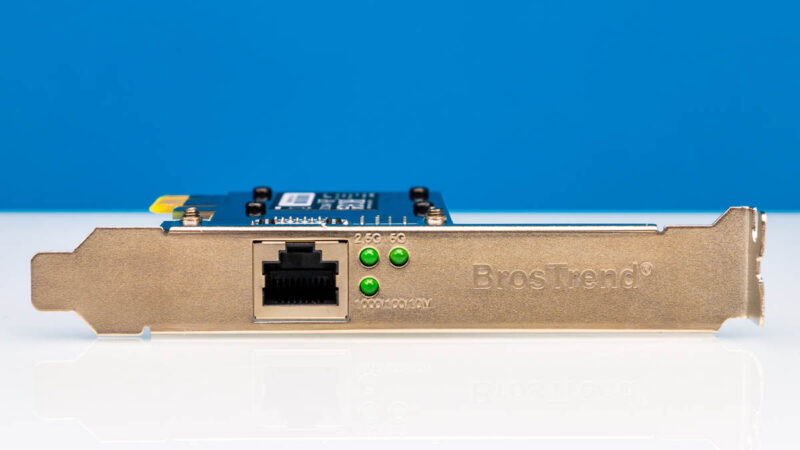
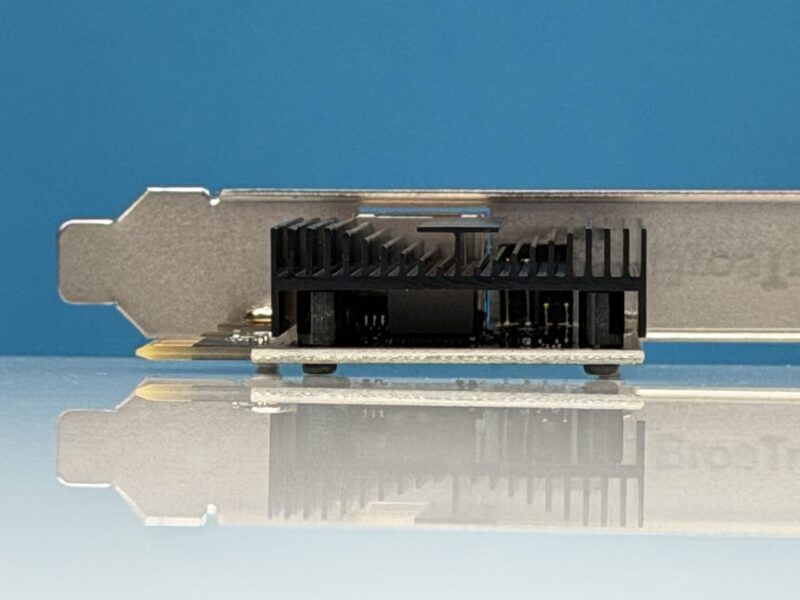
Here is a quick look at the heatsink. It is actually not solid. Just to give you some sense, these cards use something like 1.5-2.5W, so they do not require a lot of cooling. Put another way, we have seen cards with the RTL8126 without any heatsinks.
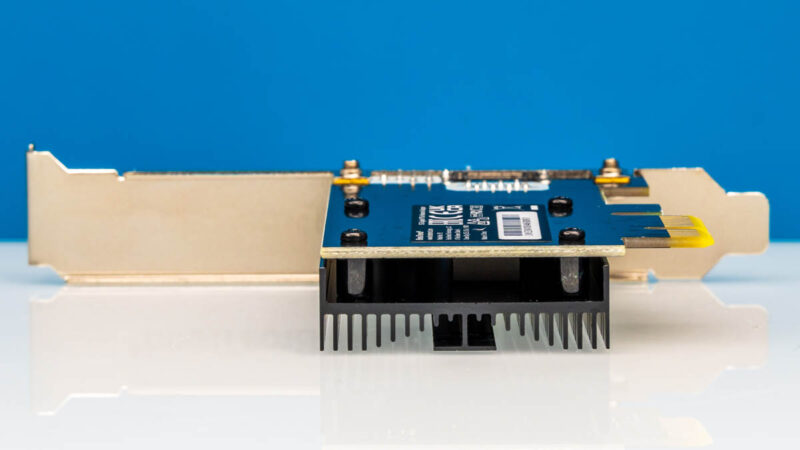
Here is another look at the heatsink. You can see how thin it actually is in the center.
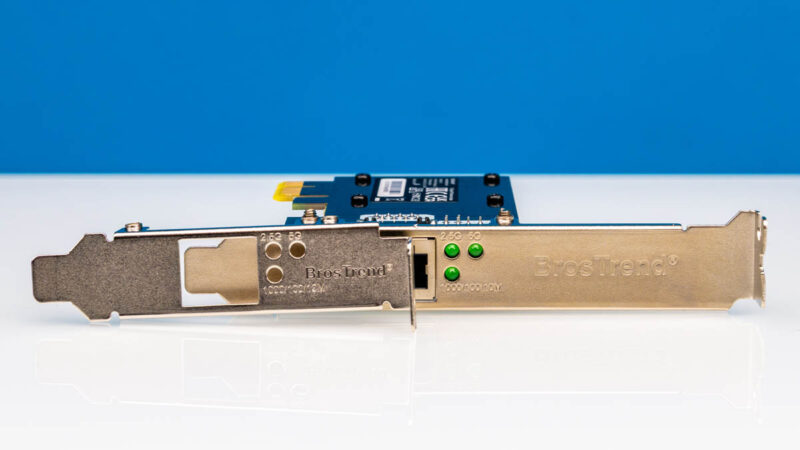
We also get a low-profile bracket.
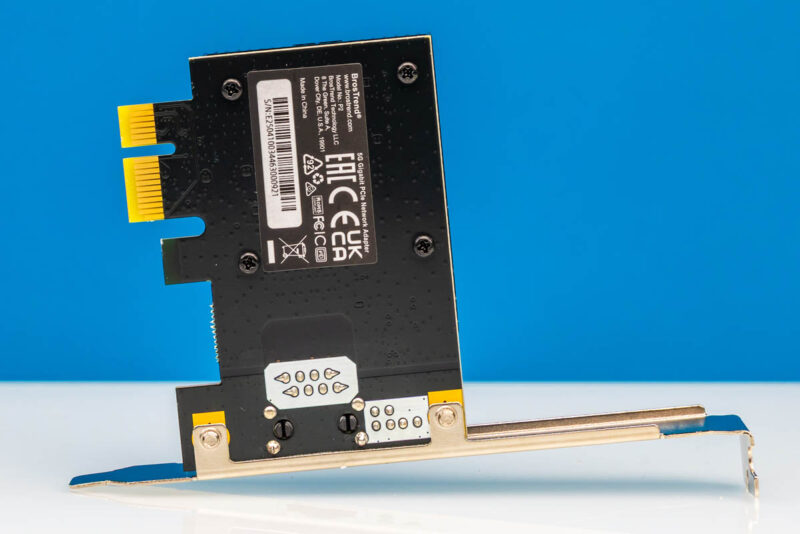
Here is the back of the card.
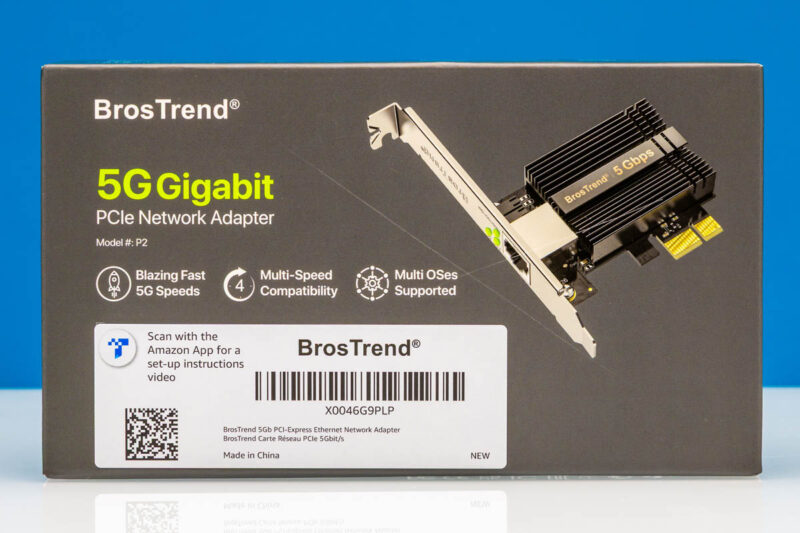
Some of the NICs we have received do not come with branded boxes. This actually came with one that is branded and specific to this 5GbE NIC.
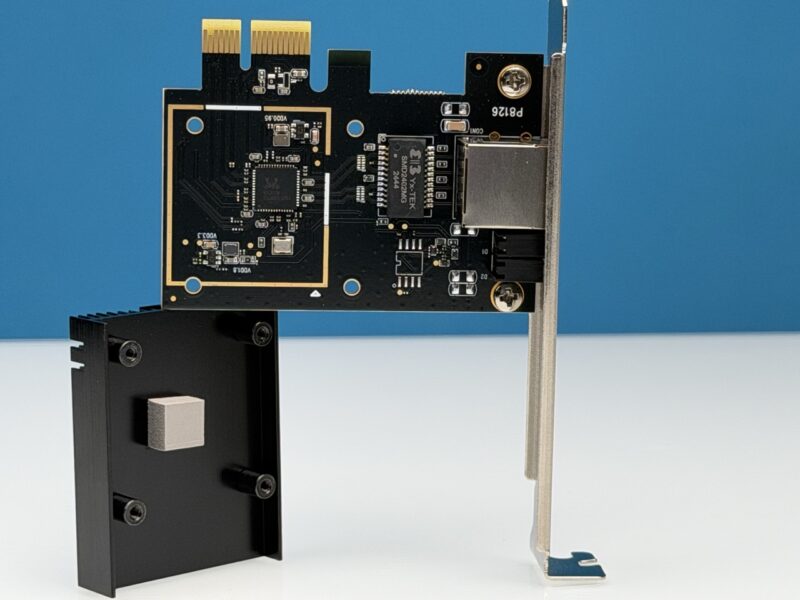
Taking off the heatsink, we can see how simple this card is. We can also see how thick the thermal pad is.
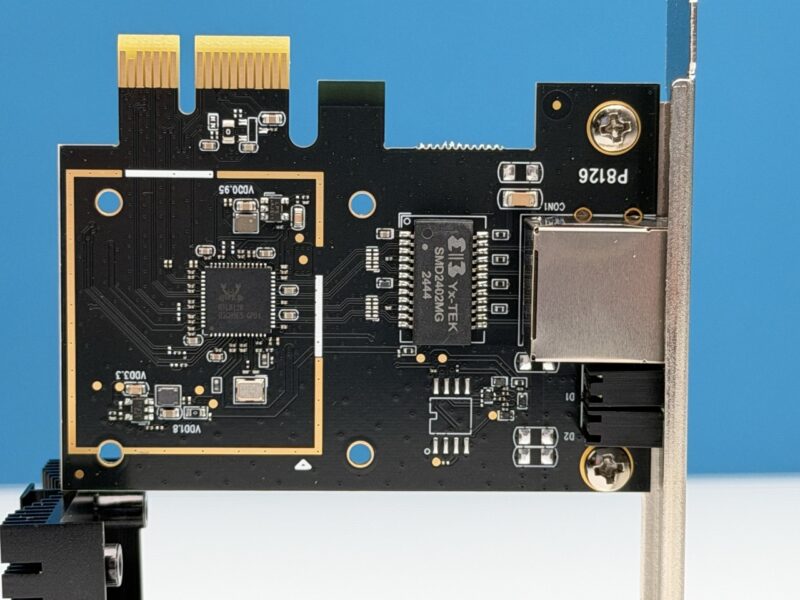
Here is a closer look at the PCB.
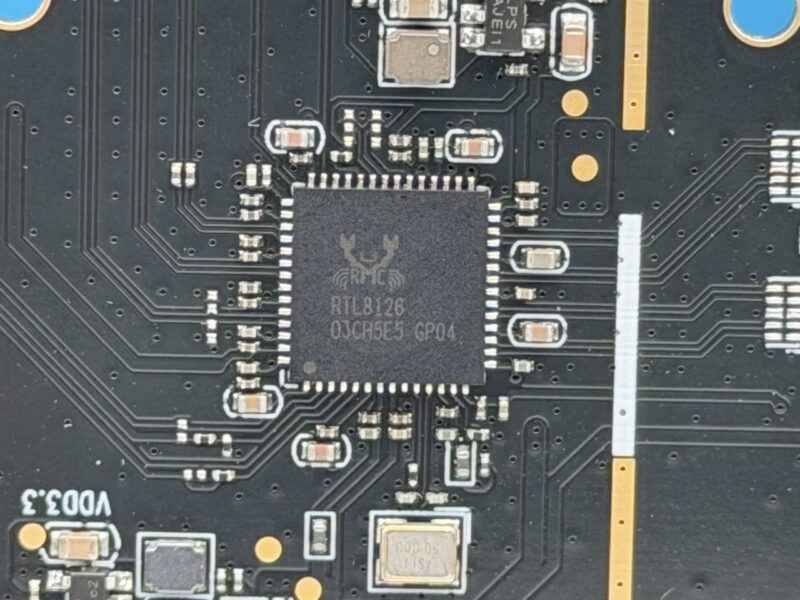
Here is the Realtek RTL8126 chip.
Next, let us get to the performance
BrosTrend 5GbE PCIe Adapter Performance
After installing this card, depending on your OS generation, you may have to install drivers, but the overall support is getting much better as these were released in 2023 and we started seeing cards in 2024.
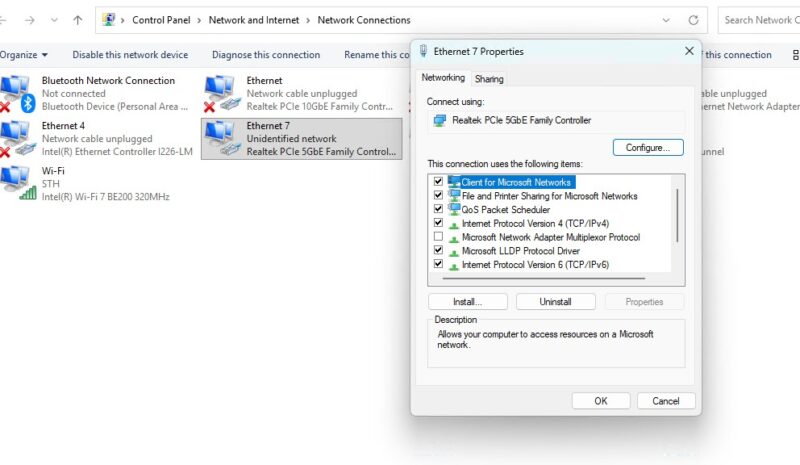
We used our standard iperf3 test just to validate 5Gbps performance.
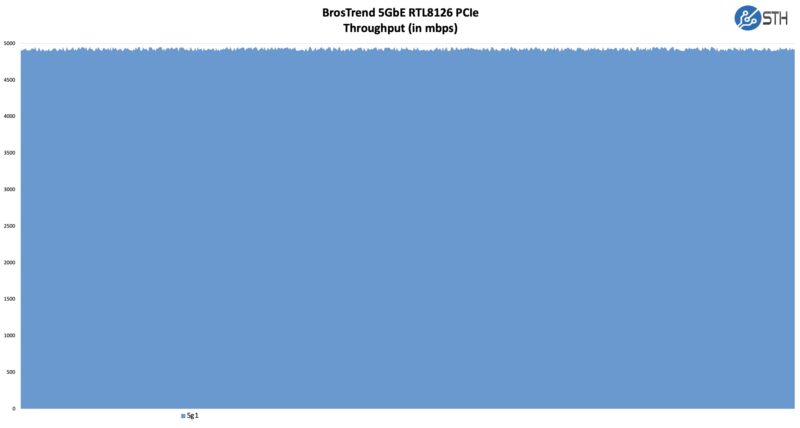
We certainly saw the performance that we would expect. What is also a little bit neat is that, despite having very high-end network testing gear, these lower-end NICs are actually challenging to test, so we might still use iperf3 for this class of device.
Final Words
I think the hardest part for this NIC is that it is 5GbE. These days, 2.5GbE NICs are $20 or so. This is roughly $34, and then 10GbE NICs are $49. Perhaps the key point is that if you only have a PCIe Gen3 x1 slot, this is about the fastest NIC you can install. As a low profile x1 card, it is also very easy to fit into almost any system.
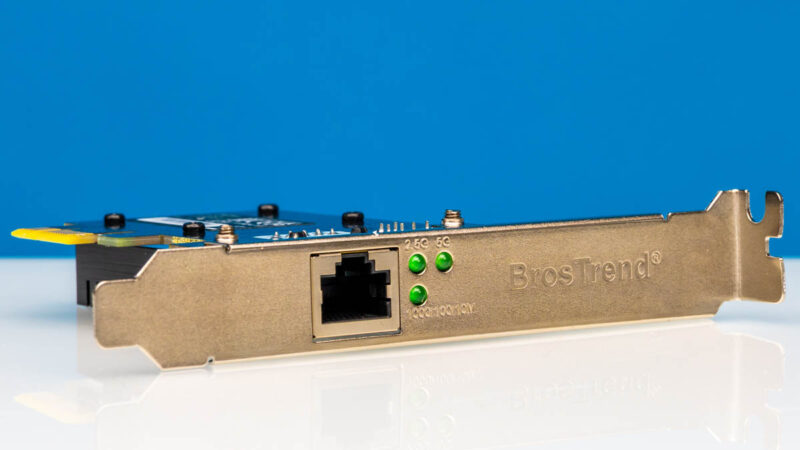
This BrosTrend 5GbE NIC looks good, works as expected, and is priced well. To us, this is one that we will probably buy a few more of to upgrade older systems.
Where to Buy
If you want to purchase one, here is an Amazon affiliate link to what we purchased.

Backstory: Currently most of my stuff is running Intel i225’s, with a few having some i226’s.
How is the Linux/FreeBSD support for these networking chips?
If they are stable as old Intel GbE products, then they might be worth investing in for some of the systems in my home lab. If they are as stable as old Realtek products, I’ll skip them.
“What is also a little bit neat is that, despite having very high-end network testing gear, these lower-end NICs are actually challenging to test, so we might still use iperf3 for this class of device.”
…what?? That’s more interesting than anything in the review. Explain?
“Perhaps the key point is that if you only have a PCIe Gen3 x1 slot, this is about the fastest NIC you can install.”
Really? What’s stopping you from using a 10G PCIe4x1 in a PCIe3 slot? You can’t use all the bandwidth, but it should work.
That can have advantages, like being able to plug into 10g switches that don’t support 2.5/5G.
I have this NIC and use it in a older HP Z440. But I also use NBASE switches, so taking on 5GbE is easy.
While the price compare to 10GbE is easy now, it always wasn’t.
Marvell Aquantia was the only path for awhile in the world of NBASE, but with no BSD support, people had to go directly to 10GbE with other brands.
There are a few of these offbrand RTL8126 PCIe adapters that will keep your older PC from booting. This one is fine, but I went through a couple before I found this one.
@STH: The price of 34USD seems a bit steep. Is that due to current US tariffs? I bought 2 unbranded RTL8126 PCIe cards on AliExpress more than a year ago for ~12.50EUR each (~15USD) shipped (to Europe) and they still go for similar amounts on AliExpress today. I think for that price, they are great value. The stated price of the BrosTrend adapter is too close to RTL8127 or ACQ113C 10GbE adapters, in my opinion. (And if you don’t care about power consumption, you can even find cheaper 10GbE adapters with older chips.)
@James: I use these adapters for more than a year now and they work great under Linux if your kernel is not too old. Support was added some time between the 6.1 and 6.12 longterm kernel releases. I.e. if you run a current Debian, Ubuntu (LTS with HWE) or Proxomox installation, it works out of the box. In general, Realtek ethernet support in mainline has matured quite well over the years and I haven’t had any issues with any Realtek ethernet device on Linux in the last decade. And with 2.5GbE in particular, some (many?) folks have actually preferred Realteak over Intel due to reported issues with the i225/i226 chips.
Economical deployments of Ethernet started at 29.4 Mbps, then 10 Mbps, 100 Mbps and 1 Gbps. Since the next power of 10 is available and cheap I don’t understand the point in 2.5 and 5 Gbps. These intentionally small increments in performance remind me of the pace Intel set when they were monetising a monopoly market share.
Said another way, given the price increases in RAM, GPUs, storage and everything else, it makes no sense to me to save $10 on a network card.
@Eric Olson
2.5G an 5G are a way to reuse existing 1G Cat 5e cabling. 10G pretty much requires Cat6/6E. It usually works on 5e for smaller distances, but not in building deployments unless the cables themselves exceed 5e in parameters.
When you have business buildings with hundreds existing Cat 5e runs then using 10G NICs that aren’t guaranteed to even reach those speeds is a giant waste of money. 2.5/5G provide an economical increase of available bandwidth in this case.
@Timo, thanks for the info! I will admit to being a) old, and b) gun shy on trying out Realtek NICs after being burned in the past.
I need to research the FreeBSD (OPNSense/PFSense) support for the NICs as well.
@Eric Olsen: Exactly what @Kyle said. It’s a way to reuse existing runs of cables, and allow a somewhat graceful fallback to lower speeds should the run not support 10GbE. I.e. rather than dropping straight from 10GbE to 1GbE there are faster stops along the way that your cabling might support without replacement.
justsomeguy – That is a reference to the fact that we have a single card that does 1/10G, but not 2.5GbE/5GbE in the XGS2. Then we have the 100GbE cards, one for each XGS2. On the CyPerf box, we have more 400GbE or even 50GbE ports than we have 10Gbase-T. So the challenge with 2.5GbE/ 5GbE is that we have the fewest ports that can handle those lower speeds. I think we have a video scheduled for Wednesday if you want to see what one of these NOVUS cards looks like.
Timo – You know what is strange, the price on these has started to creep up. It might be a tariff impact. Just to give you an idea, we purchased UGREEN 2.5GbE USB adapters a few weeks ago and paid around 20% more than we did in 2021. If you think about it, in the last 5 years, 2.5GbE has hit higher volumes, so you would not think costs would increase.
Regarding 5GbE adapter pricing, we purchased about 4 of these, and they have been the cheapest whenever we have looked. It also probably has the best packaging. That is why this review is going first.
On the switch side, we have 2-3 5Gbase-T switches tested now. Hopefully, we can sneak one review in later this week or early next week, as the cheap ones are built in a very interesting manner. I think both Rohit and I are becoming more of the opinion that you buy a 10Gbase-T/ Nbase-T switch and then run ports at 5GbE if needed for a few items, rather than buying a small 5GbE switch. We should have more of that in the review.