

Equinix SV11: Power Delivery and Power Generation
Powering all of these servers, in turn, is a multi-layer power delivery and power generation system. At the highest level, utility power comes in at 21,600V.
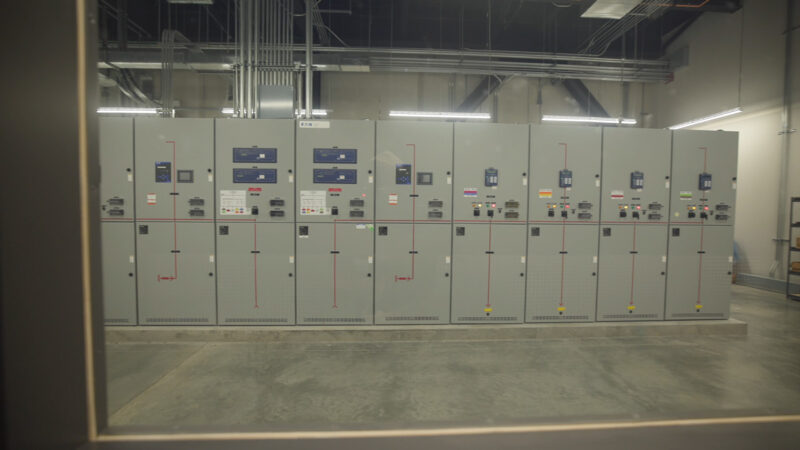
This power has to be stepped down to 480V for distribution throughout the data center.
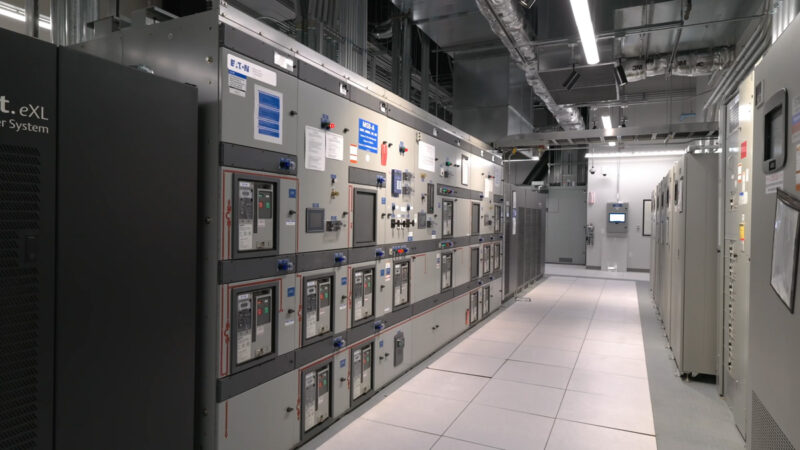
Between here and the data center floor, there are also the redundant systems and switching gear needed to switch between power sources and potentially failed components.
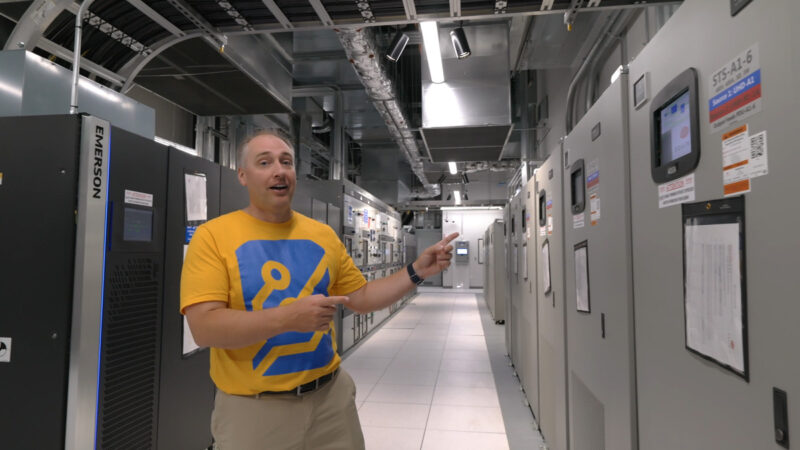
Even then, the 480V power going out into the data center still needs to be stepped down further in order to be suitable for going into the individual racks. PDUs will step this down to either 415V or 240V, with equipment on the racks themselves converting it to DC as necessary.
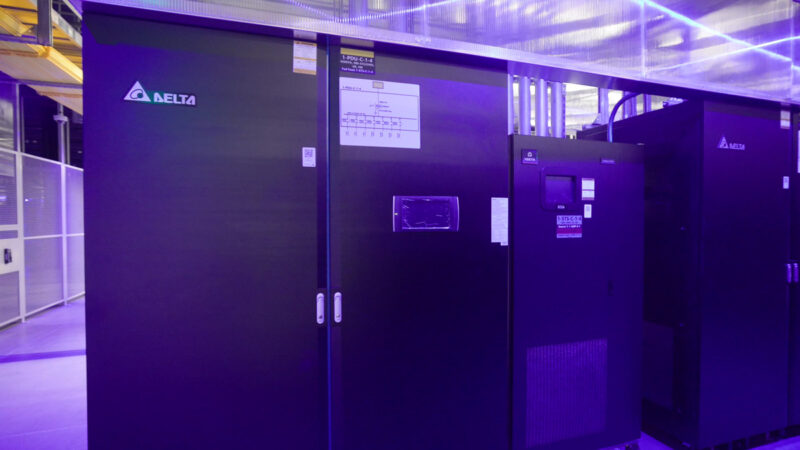
With all of these transformers and their resulting heat generation, even the PDUs require special handling for cooling. Heat from the PDUs enters an overhead hood that keeps the PDU heat out of the data center’s floor.
Equinix does not just rely on outside utility power, either. The company has local power generation capabilities, both to help power their data centers during normal operations and as backup power sources if utility power goes down.
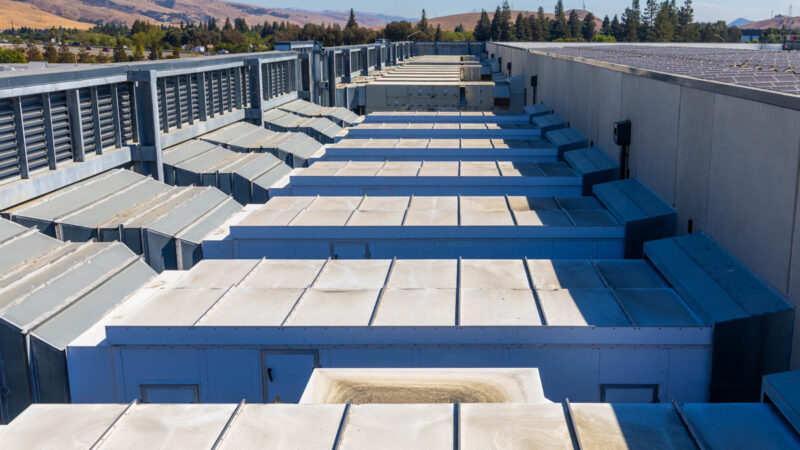
Alongside UPSes for short-term power, diesel generators provide for intermediate-term power when utility power is unavailable.
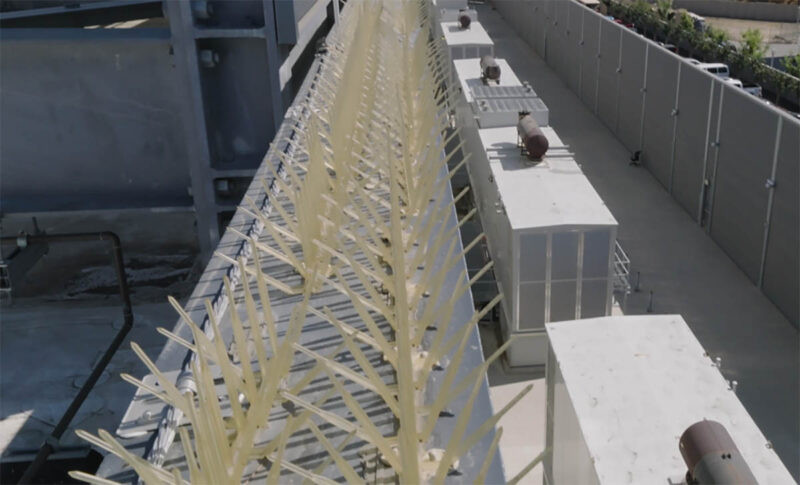
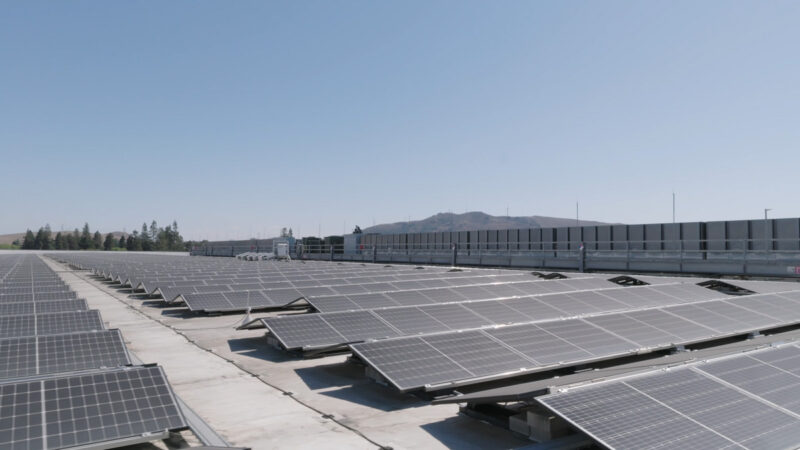
Equinix also has multiple solar panel arrays for providing power during sunny California days.
Finally, the company has natural gas-fueled full cells by Bloom Energy for additional power generation. Fuel cells are a more efficient and quieter way to generate power from natural gas, compared with burning it in a turbine or similar system. It produces far fewer secondary pollutants (e.g., nitrous oxides) than combustion.

Equinix currently has 6.4MW of electrical generation capacity installed at its Silicon Valley site, and another tower is currently being built to install further fuel cells in.

The low-profile, low-noise nature of the fuel cells also allows them to be located directly adjacent to the data centers, minimizing transmission losses.
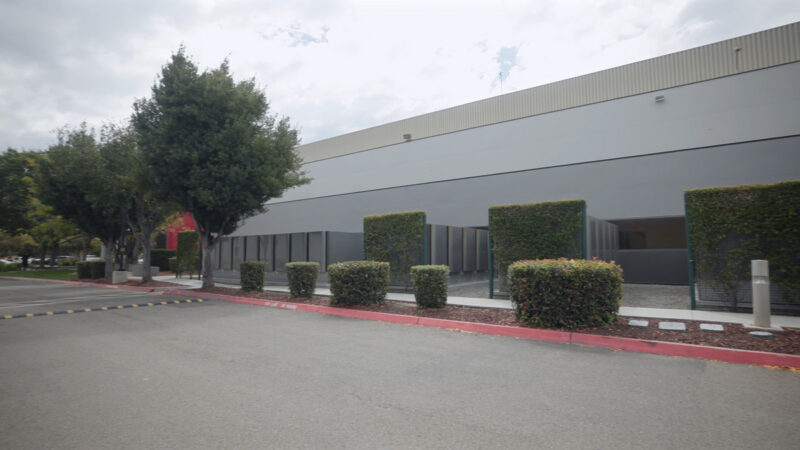
Equinix has signed deals exploring nuclear power for future data centers, as power is a major constraint for AI.
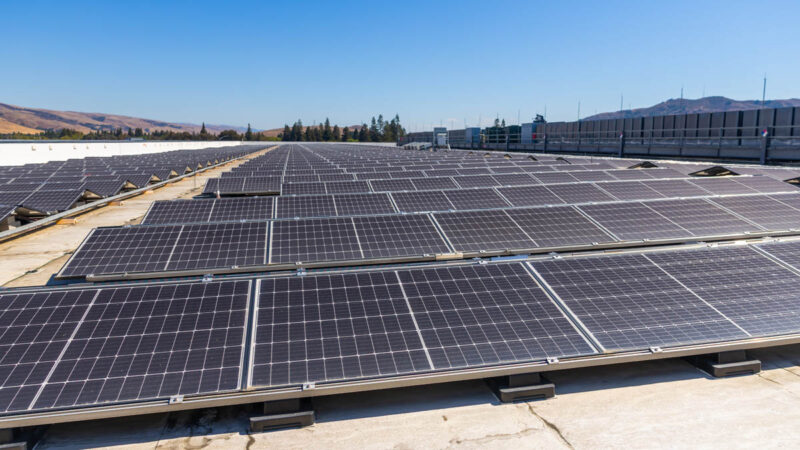
Here, though, the alternative primary energy sources beyond the utility power are solar and fuel cells.
Final Words
When I pitched this idea to Equinix, the goal was clear. I wanted to show what a traditional connectivity data center looks like. Having lived for a long time in Silicon Valley, Equinix SV1 was a place that folks always talked about because it really is “the” place to be if you wanted high-density interconnects. SV1 is also neat because it has so much history and a design philosophy from a quarter century ago, retrofitted to operate in the modern world while keeping legacy services online.
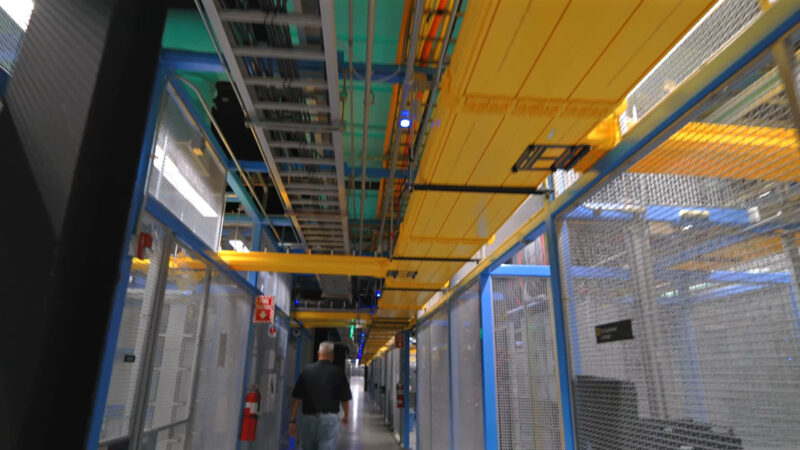
Today, we are in the middle of an AI data center boom. These modern data centers take a different approach to power and cooling, and I thought a great way to show this was a behind-the-scenes look at the NVIDIA DGX SuperPOD running NVIDIA GTC demos we get to see in person. It illustrates why the design of SV1 and SV11 is almost entirely different. They were designed in two different eras, and really for two different applications.

This is likely to be our last tour article and video of the year, but stay tuned next year for some awesome tour videos, as we are going to be doing a lot more.
Also, I just wanted to thank the Equinix and NVIDIA folks who helped make this happen. We could not do pieces like this without their help, as normally, you cannot film in data centers, especially in customer racks. A quick thanks to Joe, Sam, George, Ryan, and Virginia on our team for making this possible. I think folks often overlook how much work goes into making these tour pieces. If you are reading this and want to get involved, the space is rapidly growing, and so it is a great area to build a career in. If seeing those ISDN, T1, and DS3 lines in SV1 taught us anything, it is that this is infrastructure that needs to be supported for a long time.

You gotta visit the One Wilshire meet-me room sometime! (And: awesome!)
Super stellar video sth
Those less technical stories usually refer to open evaporative cooling, used at many hyper scalers, where they use swamp coolers and then humid air enters the servers via air cooling and is then discharged. They often air cool their ai servers
I have fond memories of working on servers and networking in SV1! Being there felt like being in the absolute center of the coolest part of the Internet. Equinix data centers like SV1 had style, and lots of it – shapes, patterns, colors, and just gobs of cool everywhere. Most other data centers were sterile, horrible places to be.