

Equinix SV11: Cooling
How does Equinix provide the cooling and power delivery that NVIDIA and other AI customers need? For the cooling of air-cooled components – which is significant, even for systems employing liquid cooling – Equinix relies on a hot aisle/cold aisle containment setup. In short, the intake (front) and exhaust (rear) sides of racks are sealed off from each other, isolating them in their own compartments. In practice, this means the hot aisles are specifically sealed, while the rest of the data center functions as the cold aisle.
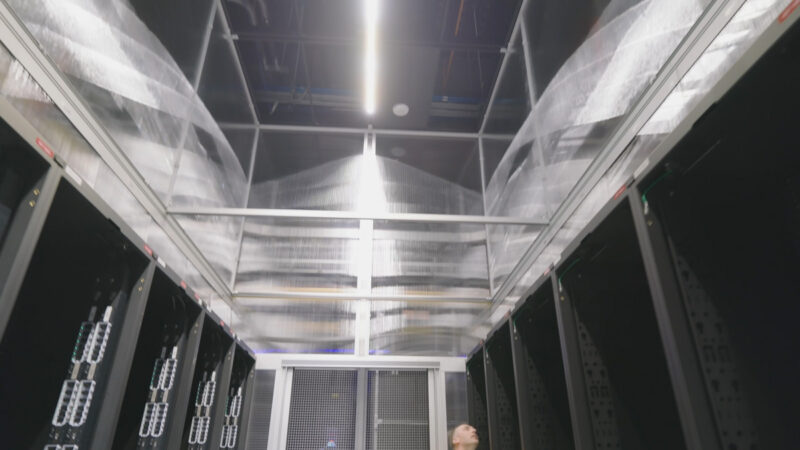
As a result of this setup, cold air floods the data center floors, eventually pulled through and warmed by the equipment. The resulting hot air can be sucked up and out of the hot aisles to be cooled again.
Naturally, this requires doors as well, so that employees and other users can enter the cold and hot aisles to work on the appropriate end of a server.
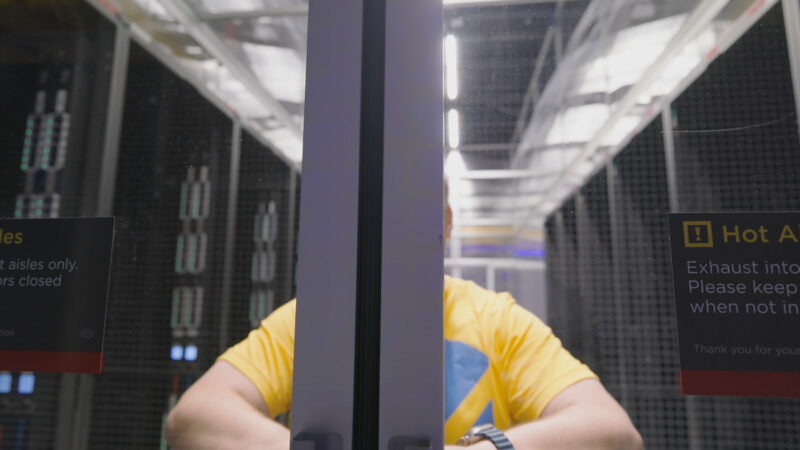
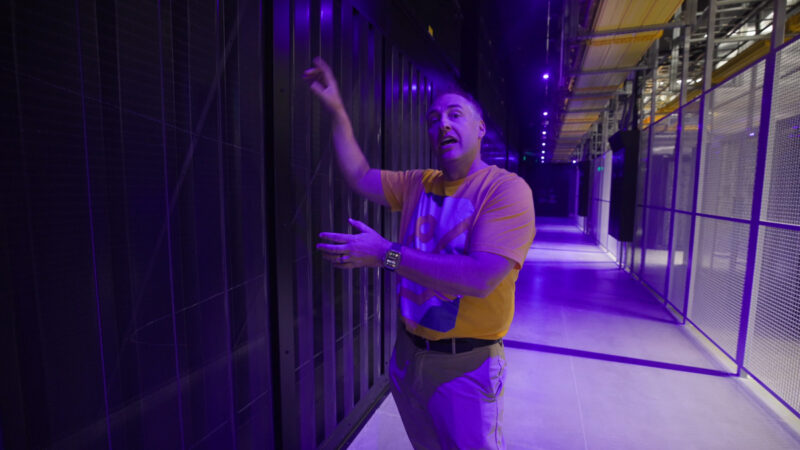
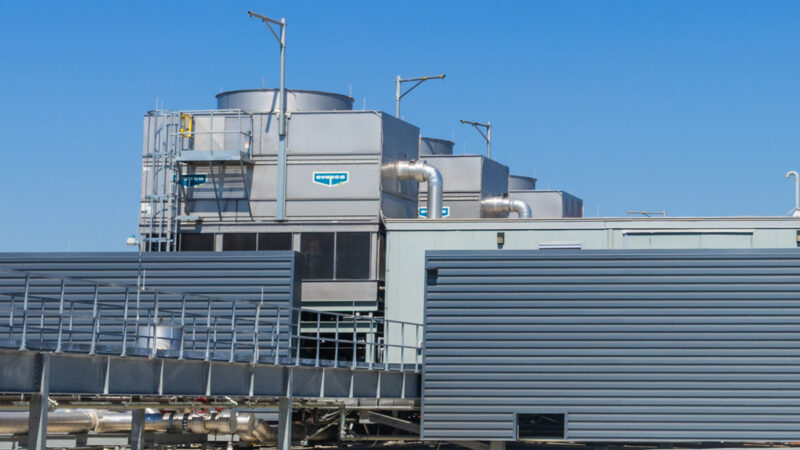
From the hot aisle, that heat is eventually pumped up and then through heat exchangers on the walls of the data centers. These heat exchangers operate like traditional HVAC systems, with coils and fins capturing heat to cool the air. That heat is transferred to a cooling loop, which extracts it using chillers on the building’s roof.
The chillers then finally exchange the heat with the outside air.
The process is much the same for liquid-cooled gear, as well. Racks have their own liquid cooling loops. Those loops have fluid circulated within the rack loops by CDUs or coolant distribution units.
There, the rack loops have warmed fluid that exchanges heat to the facility loop that then brings heat to chillers on the roof.
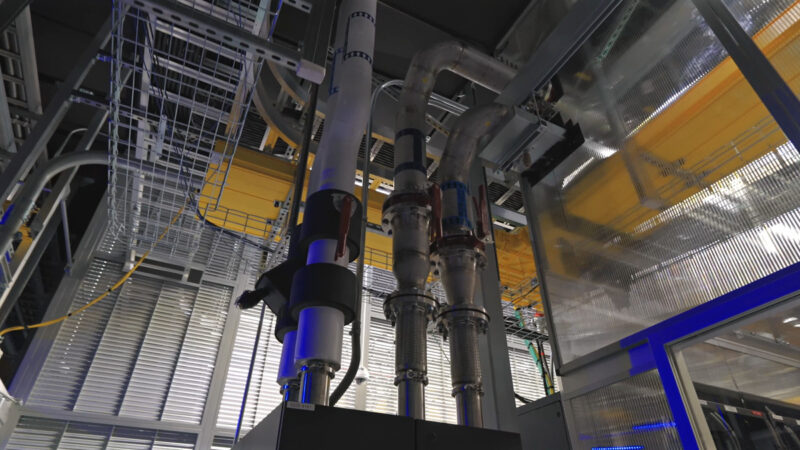
We have heard some less technical sources claim that water enters the AI servers and is then discharged into the environment. In data center liquid cooling, there are almost always different loops and heat exchangers in the process, and that is by design. If you have an air conditioner at home, or a mini-split, data center cooling uses many of the same principles. Since data centers and AI are hot topics these days, we just wanted to cover this (again.)


You gotta visit the One Wilshire meet-me room sometime! (And: awesome!)
Super stellar video sth
Those less technical stories usually refer to open evaporative cooling, used at many hyper scalers, where they use swamp coolers and then humid air enters the servers via air cooling and is then discharged. They often air cool their ai servers
I have fond memories of working on servers and networking in SV1! Being there felt like being in the absolute center of the coolest part of the Internet. Equinix data centers like SV1 had style, and lots of it – shapes, patterns, colors, and just gobs of cool everywhere. Most other data centers were sterile, horrible places to be.