

Networking In Layers
With so many wires running throughout the data center, a great deal of thought is required to keep those wires organized. It is not just local fiber lines that need sorted, but copper lines, power lines, and even those long-run carrier connections.
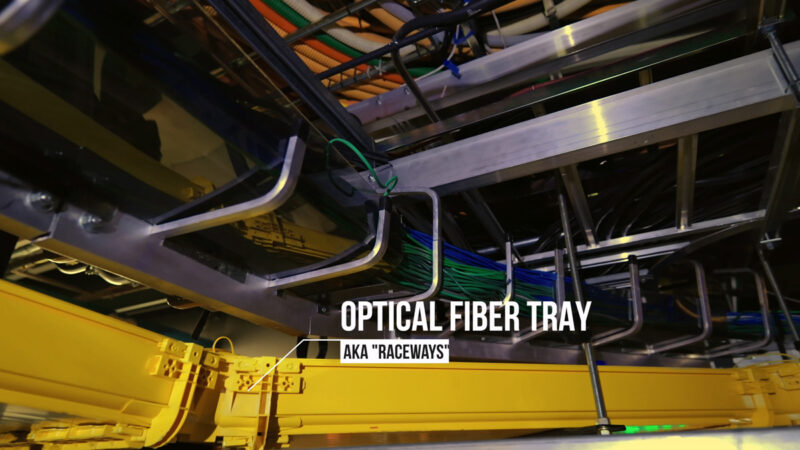
Equinix sorts these into roughly four layers of cables. The physically lowest level is yellow optical fiber trays – AKA optical fiber raceways.
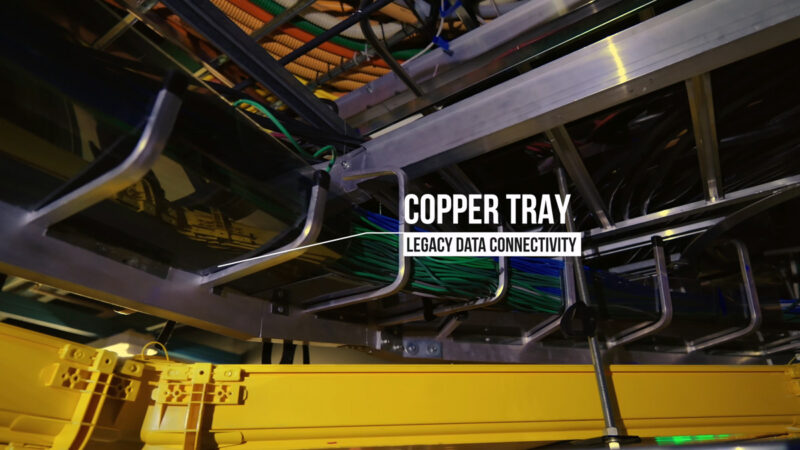
Above that is a tray for copper data cables for legacy connectivity needs.
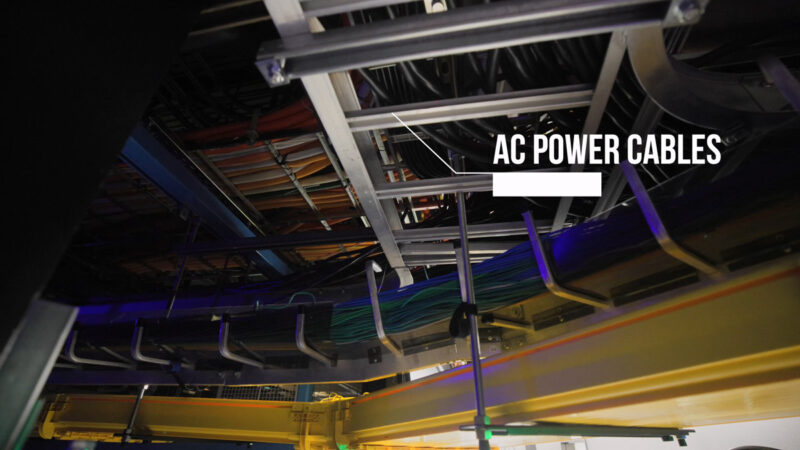
And going a layer further above that are trays for AC power cables to actually provide power to all the equipment in the data center.
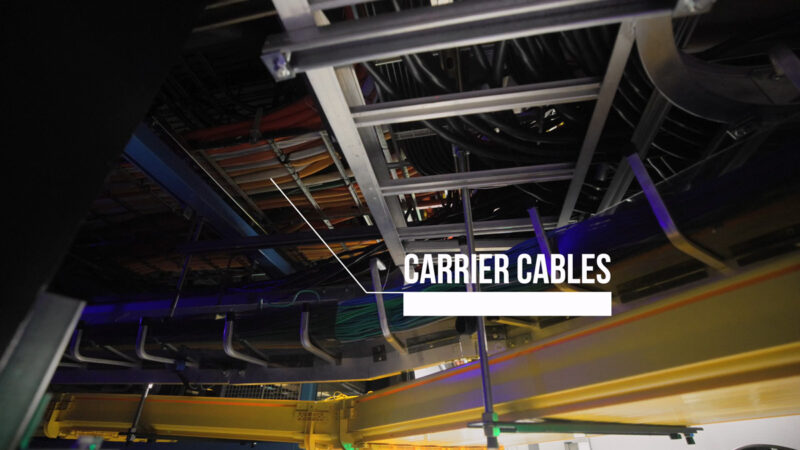
Finally, above those other layers is the layer for the carrier connection cables.
In the case of copper cables, these go hand-in-hand with copper media converters stationed in the data center.
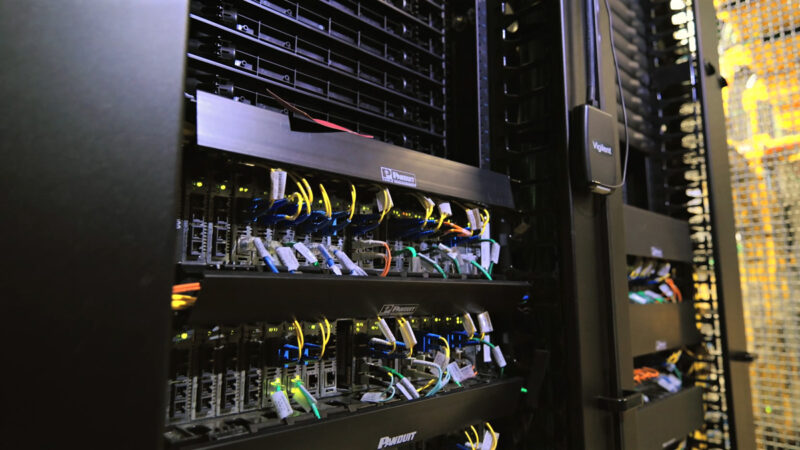
While the bulk of the cabling used these days is optical in some fashion, there are still local service providers offering legacy connectivity options such as T1 lines and even 128kbps ISDN lines, all of which need to be converted to connect to more modern equipment. To me, this was an “ah ha!” moment. We often talk about new data center builds on STH. This is an example of where someone built a service around a link a quarter century ago, and that service still needs that link. One of the key takeaways I will never forget from this tour was how this is a place that evolved over so many technological generations, but it is still operating with many of them.
Since the building has been retrofitted and upgraded over the years, there are still signs of the evolution of industry standards and customer needs. For example, while Equinix started with 6-inch-wide fiber trays, the number of cables in use eventually necessitated 12-inch trays, and then even wider 24-inch trays.
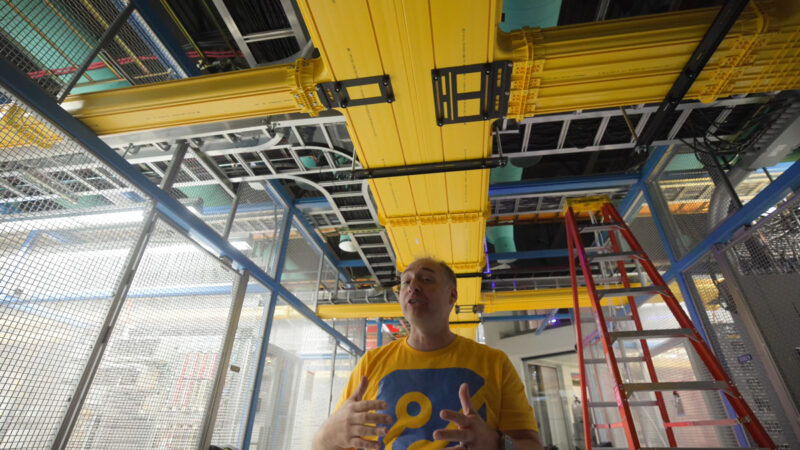
SV1 still has 6-inch and 12-inch trays in service, along with the newest 24-inch trays.
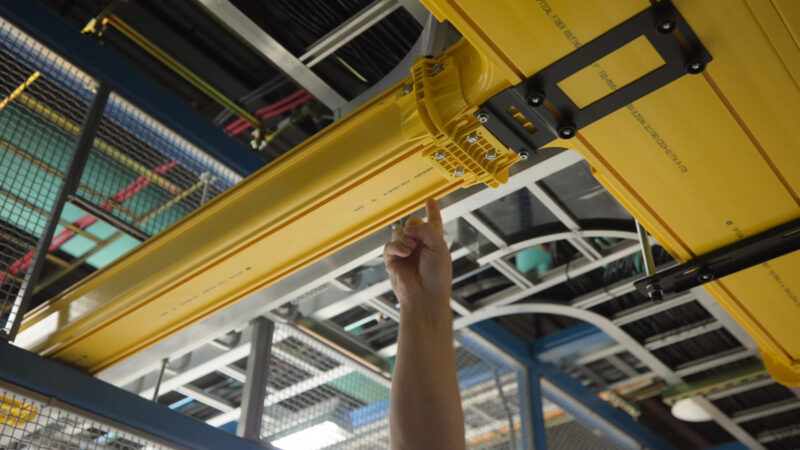
In the video, we found a spot where all of these intersected. Remember that installing a new tray is not an easy task in an operating data center.
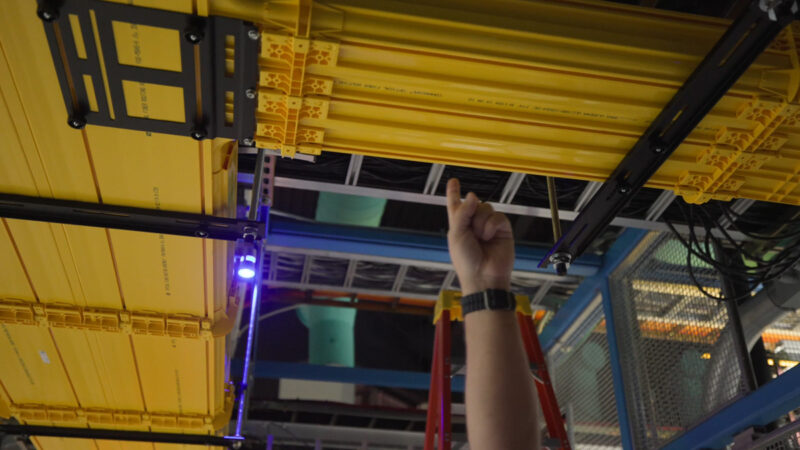
If you are like me, you are probably thinking about over 200 carriers, so many customers, technology generations, and 25 years of building, “What does it look like in those fiber trays?” Equinix arranged a ladder so we could capture it.
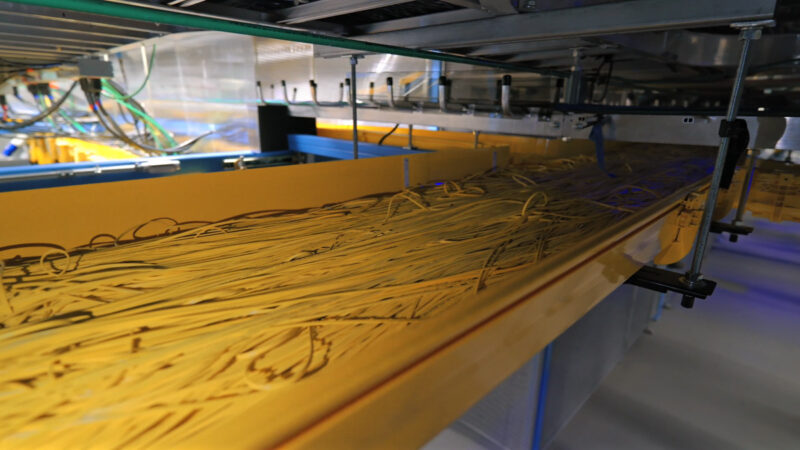
If you have seen some of our AI data center tours, the above might be shocking, as AI build-outs typically use pre-sized, pre-manufactured bundles that drop in perfectly for the cluster. This is really the opposite case. Instead of one customer building, many customers are here. Instead of being a net new build, this is a quarter-century of building generations of stacks.
At times, even a 24-inch fiber tray is not enough. At this point, you can find pairs of 24-inch trays running parallel.

In between all of this, Equinix also squeezes in lighting. Allegedly, the blue lights were used here to make SV1 feel like Studio 54. If you were looking for a neat nerdy fact, there you go.



You gotta visit the One Wilshire meet-me room sometime! (And: awesome!)
Super stellar video sth
Those less technical stories usually refer to open evaporative cooling, used at many hyper scalers, where they use swamp coolers and then humid air enters the servers via air cooling and is then discharged. They often air cool their ai servers
I have fond memories of working on servers and networking in SV1! Being there felt like being in the absolute center of the coolest part of the Internet. Equinix data centers like SV1 had style, and lots of it – shapes, patterns, colors, and just gobs of cool everywhere. Most other data centers were sterile, horrible places to be.